
Skip to content
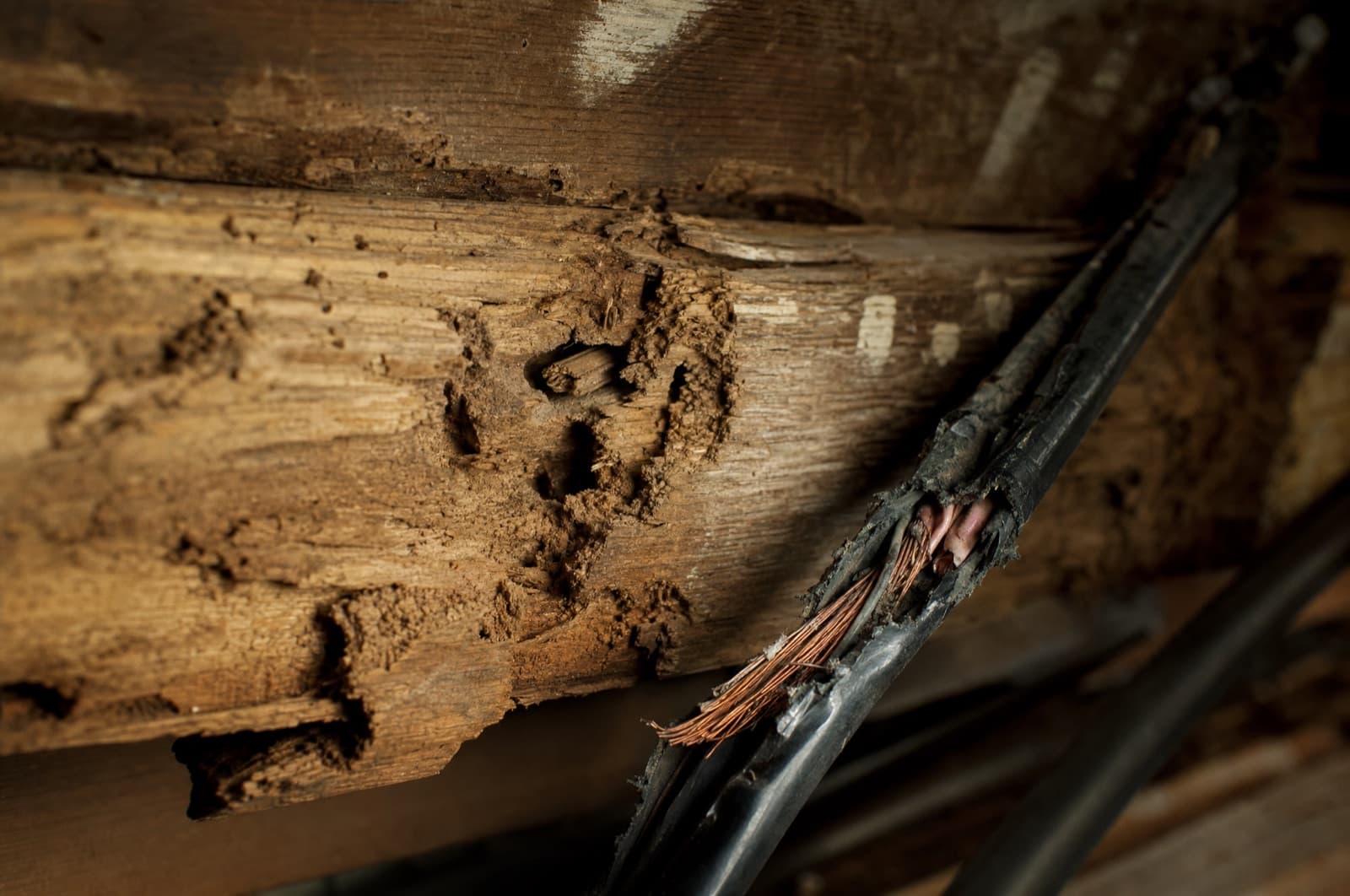
Pest damage evidence — a gnawed structural beam and a chewed electrical wire
Daniel Brady · NH-Licensed Pesticide Applicator · License #782664
Reviewed by Daniel Brady

Do pests harm decks or outdoor furniture?

Functional damage — real, modest, and slow
Yes, but modestly and slowly. Carpenter bees bore nest tunnels into unpainted deck rails and wooden furniture; powderpost beetles can infest wooden outdoor furniture, especially hardwood pieces; and subterranean termites attack deck posts that stay in contact with soil. Painted, sealed, pressure-treated, or composite wood is far more resistant to all three. Mud daubers and other wasps only leave cosmetic marks — a dried mud tube or faint scrape lines — with no structural consequence at all. The honest picture is cumulative, preventable-by-finishing damage, not rapid ruin.

At a glance

  • Can it?: Yes, but
  • How common: Routine
  • Hype: Overstated
  • Evidence: Plausible, under-documented
The honest answer

The short of it

The verdict
Functional damage — real, modest, and slow

Yes, but modestly and slowly. Carpenter bees bore deck rails and furniture, powderpost beetles can infest hardwood pieces, and ground-contact deck posts are vulnerable to termites — but painted, sealed, treated, or composite wood is far more resistant, and mud daubers or wasps leave only cosmetic marks.

The correction

What they claim vs. what the evidence supports

One shared severity track, two markers. The span between them is the hype delta — named out loud.

The claim — pests destroying decks and outdoor furniture

That pests will 'destroy your deck and patio set' within a season or two, treating every deck and every piece of outdoor wood furniture as equally and urgently at risk from any pest that shows up.

Where the claim comes from: General pest-control marketing copy that lists deck and furniture damage together without distinguishing which pest, which wood, and which finish is actually involved.

Severity, 0–100
Hype says60
30Evidence says
Hype delta30point gapPlausible, under-documented
The evidence

The damage is real but incremental and material-dependent. Carpenter bees target unpainted softwood specifically. Powderpost beetles attack the starch-rich sapwood of hardwoods like oak and ash, and infestations usually arrive already present in the wood. Subterranean termites attack ground-contact deck posts, not above-ground boards. Mud daubers and wasps leave only cosmetic marks with no structural role. Composite, metal, and finished wood are largely spared across all of these.

The gap

Real but incremental — the honest picture is cumulative, preventable-by-finishing damage, not rapid ruin. A finished deck and a properly stored furniture set face a fraction of the risk that unpainted, untreated wood does.

Damage assessment

What is actually harmed

Damage verdict
Functional damage — real, modest, and slow
FunctionalCan it?Yes, but
The specimen
Pest
Carpenter bees, powderpost beetles, and (at ground-contact posts) subterranean termites
What is in question
Unpainted softwood deck rails and posts, and wooden outdoor furniture (particularly hardwood pieces)
How common
Routine
Evidence
Plausible, under-documented
Mechanism

Three distinct mechanisms apply to outdoor wood. Carpenter bees bore roughly half-inch nest tunnels into unpainted softwood, reusing and extending the same gallery across seasons if the wood is never sealed. Powderpost beetles lay eggs in the pores of untreated hardwood, and larvae tunnel internally for months to years before emerging, typically arriving already present in the wood rather than infesting a finished piece outright. Subterranean termites reach a deck's structure only where a post sits in or near soil contact, building mud tubes up from the ground the same way they would to a fence post. None of these three attack composite, metal, or well-sealed finished wood the way they attack bare, untreated material.

Actually at risk4
  • Unpainted, unsealed softwood deck rails, posts, and fascia (carpenter bees)
  • Wooden outdoor furniture, especially hardwood pieces like oak or ash (powderpost beetles)
  • Ground-contact deck posts and footings (subterranean termites)
  • Cosmetic surfaces where mud daubers or wasps leave marks or scrape lines
Not at risk — despite the myth4
  • Composite, metal, or vinyl decking and railing — none of these pests can bore into or infest any of them
  • Painted, stained, or sealed wood surfaces — carpenter bees and powderpost beetles strongly prefer bare, untreated material
  • Above-ground deck framing with no soil contact — subterranean termites need contact with the ground
  • Overall deck or furniture-set structural integrity from a single pest or single season's activity
Worst realistic case
A multi-year carpenter-bee gallery network enlarged by woodpecker activity in a deck rail, or a rotted, termite-hit deck post at soil contact — both real repairs, but both the product of years of unpainted, unaddressed exposure rather than a fast or universal outcome.

Assessed from: University of Maryland Extension — Carpenter Bees; Oklahoma State Extension — Powderpost Beetle; Connecticut Agricultural Experiment Station — Eastern Subterranean Termite fact sheet

The compounding clock

Does it get worse if you ignore it?

Over time
Compounds slowly

Compounds slowly and seasonally, gated by moisture and finish — spent mud-dauber or wasp marks are static and never worsen at all.

The timeline
3 stages
  1. One seasonReversible

    Carpenter bees bore a new tunnel, powderpost beetle larvae begin developing inside hardwood already carrying eggs, or termites establish a mud tube at a ground-contact post. No meaningful structural change yet.

  2. YearsReversible

    Reused carpenter-bee galleries extend on unpainted wood, powderpost beetle emergence holes appear as adults exit hardwood furniture, and a termite-hit post develops internal hollowing. Still reversible with treatment and material replacement.

  3. DecadesReversible

    The rare untreated endpoint: a deck rail or post genuinely weakened by years of reuse, or a piece of furniture riddled internally after multiple beetle generations. Still repairable, but by now a replacement rather than a patch.

What stops the clock
Paint or seal exposed wood, replace ground-contact posts with pressure-treated or composite material, and treat any active infestation. A finished surface and a soil-separated post remove nearly all of the ongoing risk for all three pests.
Repair scope

Who actually fixes this

Scope, not dollars — the honest answer to “how expensive is it,” routed to the right trade.

Who fixes it
Pest pro first
Effort
An afternoon

Active carpenter bees, powderpost beetles, or termites need to be resolved before any refinishing or replacement is worth doing — otherwise the new or repaired material faces the same conditions that attracted the pest in the first place.

The right order
  1. 1
    Identify which pest and which piece (deck post, rail, or furniture item) is involved
  2. 2
    Resolve active carpenter-bee, powderpost-beetle, or termite activity (Anchor's lane)
  3. 3
    Seal, paint, or replace the affected wood with treated or composite material where practical
Route by symptom
  • You — a DIY patchDamage is cosmetic only — a mud-dauber tube, a wasp's surface scrape marks, or a few filled and painted carpenter-bee holes after activity has ended
  • Licensed contractorA ground-contact deck post shows termite damage severe enough to affect the deck's support
Do not
  • Don't refinish or paint over wood with active carpenter-bee or powderpost-beetle activity — treat first, then seal
  • Don't assume a finished, composite, or metal piece needs the same vigilance as bare, untreated wood — it largely doesn't
Where we help — and where we don't

Anchor treats the active pest — carpenter bees, powderpost beetles, or termites. Refinishing furniture, painting a deck, or replacing a structural post is a homeowner or contractor task, and we'll tell you plainly which one applies.

In depth

The full picture

01

Three different pests, three different targets

'Do pests harm decks or outdoor furniture' actually bundles together three separate, well-documented mechanisms. Carpenter bees bore nest tunnels into unpainted softwood rails and posts, reusing the same gallery across seasons if it's never sealed. Powderpost beetles infest the starch-rich sapwood of hardwoods like oak and ash, and most infestations in furniture were present in the wood before it became a finished piece, developing slowly over months to years. Subterranean termites reach a deck's structure only at points where a post sits in or near soil contact, using the same mud-tube mechanism they'd use against a house's sill plate or a fence post.

02

What genuinely protects a deck or furniture set

Across all three mechanisms, the same short list of materials and finishes does most of the protective work: paint or sealant on exposed softwood deters carpenter bees, which strongly prefer bare, weathered surfaces; well-sealed or finished hardwood is far less hospitable to powderpost beetle egg-laying than raw, untreated wood; and pressure-treated or composite material at any ground-contact point removes the moisture and cellulose that draw termites in the first place. Composite decking and metal railings simply aren't a target for any of these three pests.

03

The cosmetic cases that need no repair at all

Not everything that shows up on a deck is a functional problem. Mud daubers leave a small, dried mud tube that's inert once the solitary wasp has moved on — wipe it off or leave it, either way it never worsens. Paper wasps and hornets scrape a thin layer of surface fiber from weathered deck boards to build nest paper, leaving faint scrape marks that affect appearance only, never structure. These are the cluster's clearest 'static, cosmetic, no repair needed' cases, and they shouldn't be conflated with the slower but genuine functional risks above.

04

The honest timeline

Every functional mechanism here — carpenter-bee reuse, powderpost beetle generations, termite feeding at a ground-contact post — plays out over multiple years, not a single season. That gives a homeowner real room to catch and correct the problem: paint an exposed rail before next spring, check a hardwood furniture piece for fresh emergence holes each year, and inspect ground-contact posts periodically rather than waiting for visible sagging or a hollow sound underfoot.

Key takeaways
5 points
  • Yes, pests can harm decks and outdoor furniture — but modestly and slowly, not the fast ruin marketing copy implies.
  • Carpenter bees target unpainted softwood, powderpost beetles target hardwood sapwood, and termites need ground contact — three distinct mechanisms, not one shared threat.
  • Composite, metal, and painted or sealed wood are far more resistant across all three pests.
  • Mud daubers and wasps leave only cosmetic marks with zero structural consequence — no repair is needed for these.
  • Painting exposed wood, using treated or composite ground-contact material, and periodic checks address nearly all of the genuine risk.
New Hampshire context

What this looks like on New Hampshire decks

Southern and central New Hampshire's long outdoor season and freeze-thaw winters put real wear on unfinished decking and furniture left unprotected year-round. Unpainted cedar rail caps and fence-adjacent deck posts are the classic local carpenter-bee and termite targets, respectively, and hardwood patio furniture stored in an unheated garage or shed over a New Hampshire winter is exactly the kind of setting where a powderpost beetle infestation already present in the wood can continue developing undisturbed. A spring check of rail undersides, ground-contact posts, and any hardwood furniture pieces catches most of what this page covers before it becomes more than cosmetic.

  • NH-licensed #782664

    Southern New Hampshire

  • Family-owned

    Since 2017

  • Honest routing

    Even when it isn’t us

We serve these communities

ManchesterNashuaConcordDerryBedfordSalemHudsonAmherstAuburnGoffstownHooksettLitchfieldLoudonMilfordBristol

Service Area Map

Southern New Hampshire

BristolPop. 3,200LoudonPop. 5,500ConcordPop. 43,900HooksettPop. 14,800GoffstownPop. 18,000AuburnPop. 5,700ManchesterPop. 115,600BedfordPop. 23,300LitchfieldPop. 8,500AmherstPop. 11,300DerryPop. 34,500MilfordPop. 15,700HudsonPop. 25,600NashuaPop. 91,100SalemPop. 30,000HQCityHover for info

Carpenter bees, beetles, or termites on your deck or furniture? Get the right treatment for the right pest.

Anchor treats carpenter bees, powderpost beetles, and termites at ground-contact posts across southern and central New Hampshire.

Follow-up questions

Frequently asked

Sources & citations(3)
  1. University of Maryland Extension — Carpenter Bees

    Unpainted softwood as the primary target; painted/sealed wood rarely attacked

    extensionverified 2026-07-16
  2. Oklahoma State Extension — Powderpost Beetle

    Furniture infestations typically present in the wood before the piece was finished; slow multi-year development

    extensionverified 2026-07-16
  3. Connecticut Agricultural Experiment Station — Eastern Subterranean Termite fact sheet

    Ground-contact wood as the susceptible target for subterranean termites

    govverified 2026-07-16

Written & reviewed by

Verified

Daniel Brady

NH-Licensed Pesticide Applicator · License #782664 (NHDAMF, RSA 430)

Daniel Brady is the New Hampshire–licensed applicator behind Anchor Pest Services, a family-owned pest control company serving the Manchester area since 2017.

Verify license

Last updated Jul 2026

Honest pest help for New Hampshire homes

We Treat the Pest. You Handle the Paint and the Patio Set.

Deck and outdoor-furniture pest damage is real, but it's slow, incremental, and largely preventable with the right finish and material. Anchor Pest Services resolves the active carpenter bees, powderpost beetles, or termites; refinishing, painting, and furniture care is a homeowner task once the pest is gone. Family-owned since 2017, NH license #782664, serving Manchester, Nashua, Concord and nearby towns.

  • Honest advice — we'll tell you when a mark is cosmetic and needs no treatment at all
  • NH-licensed applicators (#782664) — free inspection, same-day service
  • Carpenter bee, powderpost beetle, and termite treatment across southern and central New Hampshire

NH License #782664 · No obligation · We answer in person