
Skip to content
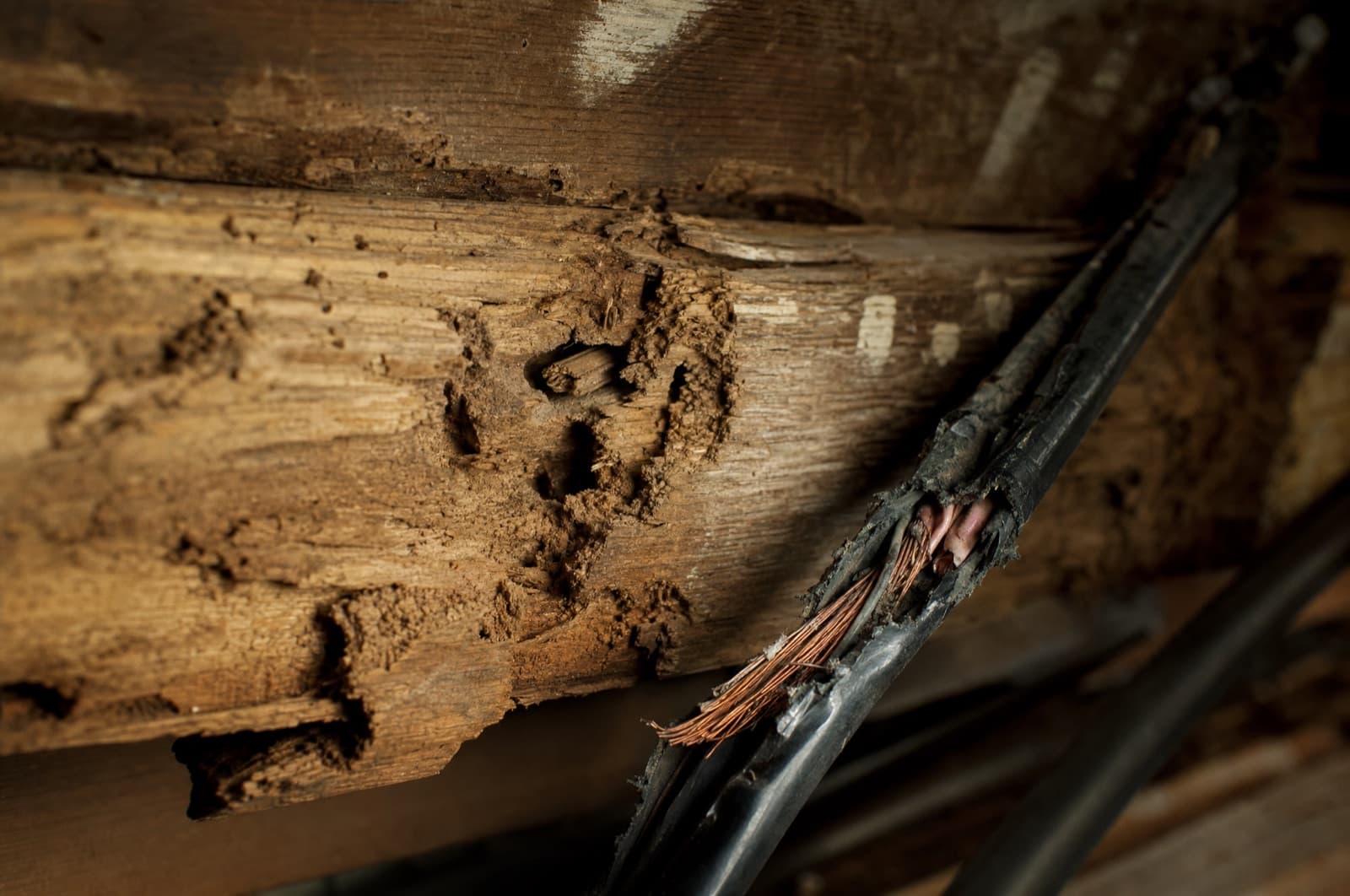
Pest damage evidence — a gnawed structural beam and a chewed electrical wire
Daniel Brady · NH-Licensed Pesticide Applicator · License #782664
Reviewed by Daniel Brady

Do silverfish eat paper, fabrics, or photos?

Cosmetic damage — real but slow
Yes. Silverfish digest starch and cellulose, so they graze book bindings, wallpaper paste, starched cotton and linen, and the gelatin or starch layer on older photographs, leaving notched edges, small irregular holes, and surface etching. But they do not eat plastic, wood framing, or clean synthetic fabric, and they cannot touch your building's structure. The honest verdict is a slow cosmetic nuisance confined to paper and starch-based items — not a whole-house content-loss event.

At a glance

  • Can it?: Yes, but
  • How common: Occasional
  • Hype: Wildly overstated
  • Evidence: Well documented
The honest answer

The short of it

The verdict
Cosmetic damage — real but slow

Yes, silverfish genuinely eat paper, glue, and starched fabric — but the damage is surface etching over months, not the heirloom-destroying rampage the internet describes.

The correction

What they claim vs. what the evidence supports

One shared severity track, two markers. The span between them is the hype delta — named out loud.

The claim — silverfish eating paper, fabrics, and photographs

That silverfish will "destroy" books, photos, and heirlooms and "cause serious problems inside homes," framing any sighting as an emergency threat to irreplaceable belongings.

Where the claim comes from: Pest-company blog copy and AI-generated home-maintenance content that repeats "destroys your keepsakes" language because it drives urgency.

Severity, 0–100
Hype says70
30Evidence says
Hype delta40point gapWell documented
The evidence

University extension sources describe surface feeding on starch, glue, and sizing that notches edges and etches surfaces — real, but slow and typically limited to the paper or starch-sized portion of an item, not the whole object. Genuine loss is mostly confined to unbacked archival paper, unprotected photographs, and glazed bookbindings left undisturbed for a long time.

The gap

The feeding is real. The "destruction" is overstated — for an ordinary book or a folded shirt, this is surface grazing that takes months to become noticeable, not sudden ruin.

Damage assessment

What is actually harmed

Damage verdict
Cosmetic damage — real but slow
CosmeticCan it?Yes, but
The specimen
Pest
Common silverfish (Lepisma saccharina) and the drier-tolerant gray/long-tailed silverfish (Ctenolepisma longicaudatum)
What is in question
Paper, book bindings, wallpaper paste, starched fabric, and older photographs
How common
Occasional
Evidence
Well documented
Mechanism

Silverfish digest polysaccharides — starch, cellulose, and dextrin — and are drawn to wallpaper paste, bookbinding glue, and the starch-based sizing used to stiffen fabric. They scrape surfaces with chewing mouthparts rather than tunneling through material, which is why the damage shows up as notched edges and shallow etching instead of holes punched clean through.

Actually at risk5
  • Glazed or coated paper, and unprotected book bindings and their glue
  • Wallpaper paste (the paper itself is secondary to the adhesive underneath)
  • Starched linen, cotton, or rayon fabric — plain, unstarched fabric is far less attractive
  • The gelatin or starch layer on some older photographs and photo-album adhesive
  • Dry pantry staples like flour and cereal, if boxes are left open in a damp area
Not at risk — despite the myth4
  • Wood framing and the building's structure — silverfish have no mechanism to touch either
  • Plastic, vinyl, and most modern synthetic fabric
  • Most photo prints made today — non-gelatin, digitally printed photos lack the food layer that made old silver-gelatin prints vulnerable
  • Human health — silverfish do not bite and transmit no disease
Worst realistic case
A long-undetected population in a damp basement or closet etches and holes a box of stored documents, an old wallpapered wall, or an unprotected photo album over the course of many months. It is a real loss for that specific item — it is not a sudden or house-wide event.

Assessed from: NC State Extension; UF/IFAS EENY-705; Virginia Tech VCE ENTO-24; Ohio State Ohioline ENT-64

The compounding clock

Does it get worse if you ignore it?

Over time
Compounds slowly

Compounds slowly — a population builds quietly over months in damp, undisturbed storage.

The timeline
3 stages
  1. WeeksReversible

    A handful of silverfish graze glue and starch in a specific damp spot — a basement box, a bathroom cabinet, a closet with poor ventilation. Feeding is usually too subtle to notice yet.

  2. MonthsReversible

    The population grows in sustained humidity. Notched edges, small irregular holes, and surface etching become visible on paper, starched fabric, or a photo album left undisturbed.

  3. One seasonPermanent

    In a chronically damp space, feeding can reach an unprotected archival item or heirloom textile enough to be a genuine, if localized, loss for that specific object.

What stops the clock
Dehumidification. Silverfish eggs and nymphs require high relative humidity to develop, so drying the space collapses their reproduction faster than any spot treatment does — and removing the population stops new feeding immediately.
Repair scope

Who actually fixes this

Scope, not dollars — the honest answer to “how expensive is it,” routed to the right trade.

Who fixes it
You — a DIY patch
Effort
An afternoon

This is a moisture-and-storage problem with a homeowner-grade fix, not a structural or trade job — dehumidify the space and move valuable paper into sealed, dry storage.

The right order
  1. 1
    Reduce humidity in the affected space (dehumidifier, ventilation, fixing any nearby leak) and remove the existing population
  2. 2
    Move valuable paper, photos, and starched fabric into sealed plastic or archival containers, off a damp floor
  3. 3
    Vacuum and clean cracks and storage areas where silverfish were feeding
Route by symptom
  • Pest pro firstThe population is large or recurring despite dehumidifying — an established indoor population is worth professional treatment before you re-store anything
Do not
  • Don't store irreplaceable documents or photos in damp cardboard on a basement floor
  • Don't fog or blanket-spray a closet as a first response — dehumidifying works better and doesn't risk the stored items
Where we help — and where we don't

Interior treatment and moisture-driven exclusion are genuinely in Anchor's lane. Restoring an already-damaged heirloom document, book, or photograph is not — that's a paper or photo conservator's job, and we'll tell you that rather than quote you for it.

In depth

The full picture

01

What silverfish actually eat, and why paper is the target

Silverfish digest polysaccharides — starch, cellulose, and dextrin — which is exactly what makes paper, wallpaper paste, and bookbinding glue attractive to them. Per UF/IFAS, silverfish are a documented pest of paper and library/museum collections precisely because of this starch-and-cellulose diet, not because they have any interest in the paper's fiber for its own sake. Wallpaper is a good example: the paste underneath is usually the real target, and the paper itself is collateral damage.

Starched fabric works the same way. Plain cotton, linen, or rayon left unstarched is far less attractive to silverfish than the same fabric with starch sizing in it — which is why old-fashioned starched collars and tablecloths show up in the damage reports more than everyday clothing does.

02

The photo question, and why it's mostly outdated

The "silverfish eat photos" claim is real for a specific reason: older silver-gelatin photographic prints have a gelatin (protein/starch-adjacent) emulsion layer that silverfish can graze, and older photo-album adhesives are often starch-based paste. That combination made pre-digital photo collections a genuine target.

Modern printed photos are a different material almost entirely — most consumer photo printing today does not use a gelatin emulsion, so the specific food source silverfish were exploiting isn't there in the same way. The claim isn't wrong historically; it's just being applied to a much smaller category of items than most readers assume when they hear "silverfish eat photos."

03

Why the damage is slow, and confined to cosmetic

Silverfish scrape surfaces with chewing mouthparts rather than tunneling or boring, which is why the resulting damage looks like notched edges, small irregular holes, and shallow surface etching — not the item eaten through. That mechanism, combined with populations that build up slowly in sustained humidity, is why this is honestly a cosmetic, slow-developing problem rather than a sudden loss.

It's also worth being precise about the boundary: silverfish cannot chew wood framing, plastic, or the building itself. Nothing about their feeding mechanism reaches structure. If you're worried about a stored box of documents or an old wallpapered room, the actual ceiling of the problem is that specific box or that specific wall — not your house.

04

Presence signals dampness more than it signals ruin

Silverfish need high relative humidity to develop — eggs and nymphs in particular require moist conditions — which is why they concentrate in bathrooms, basements, and laundry rooms. Finding silverfish is a genuinely useful signal that a space is too damp, more useful, honestly, than it is a signal that your keepsakes are already ruined.

That reframes the fix: dehumidifying the space does more to stop silverfish reproduction than any spot treatment, and it protects the paper and fabric stored there at the same time. The gray/long-tailed silverfish (Ctenolepisma longicaudatum) is a growing exception — it tolerates lower humidity and has been expanding indoors via central heating in Europe and North America — but the core fix is the same: dry the space, seal the storage.

Key takeaways
5 points
  • Yes — silverfish genuinely eat starch, glue, and cellulose in paper, book bindings, wallpaper paste, and starched fabric.
  • The damage is cosmetic surface etching and notched edges, not the item eaten through, and it develops over months, not days.
  • Wood, plastic, and the building's structure are not at risk. Neither is most modern printed photography.
  • Presence signals a damp space more reliably than it signals ruined belongings — dehumidifying is the real fix.
  • Move valuable paper and starched fabric into sealed, dry storage; an established indoor population is worth professional treatment.
New Hampshire context

Why New Hampshire basements are prime silverfish territory

Southern and central New Hampshire's older housing stock runs heavy on unfinished or partially finished basements — exactly the humid, undisturbed storage silverfish need to establish. As outdoor humidity drops toward Manchester's first hard frost (historically around October 19 to 29, per NOAA), many homeowners move seasonal storage into basements and closets, which is also when a quiet silverfish population gets the least disturbance.

If you store family documents or photo albums in a New Hampshire basement, the single highest-value habit is checking humidity, not checking for bugs — a dehumidifier keeping the space below the level silverfish eggs need does more for your keepsakes than anything else on this page.

  • NH-licensed #782664

    Southern New Hampshire

  • Family-owned

    Since 2017

  • Honest routing

    Even when it isn’t us

We serve these communities

ManchesterNashuaConcordDerryBedfordSalemHudsonAmherstAuburnGoffstownHooksettLitchfieldLoudonMilfordBristol

Service Area Map

Southern New Hampshire

BristolPop. 3,200LoudonPop. 5,500ConcordPop. 43,900HooksettPop. 14,800GoffstownPop. 18,000AuburnPop. 5,700ManchesterPop. 115,600BedfordPop. 23,300LitchfieldPop. 8,500AmherstPop. 11,300DerryPop. 34,500MilfordPop. 15,700HudsonPop. 25,600NashuaPop. 91,100SalemPop. 30,000HQCityHover for info

A damp basement is the real silverfish problem. Anchor helps with the population.

We treat the indoor infestation — drying the space and protecting your stored belongings is a partnership between our treatment and your dehumidifier.

Follow-up questions

Frequently asked

Sources & citations(6)
  1. NC State Extension — Silverfish and Firebrats

    Silverfish feeding on paper, glue, and bookbindings

    extensionverified 2026-07-16
  2. UF/IFAS EENY-705 — Silverfish (Lepisma saccharina)

    Starch/cellulose feeding; museum and library pest status

    extensionverified 2026-07-16
  3. Virginia Tech VCE ENTO-24 — Silverfish and Firebrats

    Feeding on paper and textiles; classified as mostly harmless, no disease

    extensionverified 2026-07-16
  4. Ohio State Ohioline ENT-64 — Silverfish and Firebrats

    Feeding on photographs, bookbindings, and fabric

    extensionverified 2026-07-16
  5. Pest Management Professional — Polish your silverfish skills (citing Sweetman 1939)

    Humidity and temperature requirements for silverfish development

    academicverified 2026-07-16
  6. PMC8471186 — Ctenolepisma longicaudatum became a common pest in Europe

    Drier-tolerant gray silverfish range expansion indoors

    academicverified 2026-07-16

Written & reviewed by

Verified

Daniel Brady

NH-Licensed Pesticide Applicator · License #782664 (NHDAMF, RSA 430)

Daniel Brady is the New Hampshire–licensed applicator behind Anchor Pest Services, a family-owned pest control company serving the Manchester area since 2017.

Verify license

Last updated Jul 2026

Honest pest help for New Hampshire homes

We Treat the Silverfish. You Won't Need to Replace Your Keepsakes.

Silverfish damage is slow, cosmetic, and confined to paper and starched fabric in damp storage — not a house-wide threat. Anchor Pest Services treats the indoor population; for an already-damaged heirloom document or photo, we'll point you to a conservator instead of overselling our own service. Family-owned since 2017, NH license #782664, serving Manchester, Nashua, Concord and nearby towns.

  • Honest advice — we say when it's a moisture fix, not a pest-control job
  • NH-licensed applicators (#782664) — free inspection, same-day service
  • Interior and moisture-driven pest treatment across southern and central New Hampshire

NH License #782664 · No obligation · We answer in person