
Skip to content
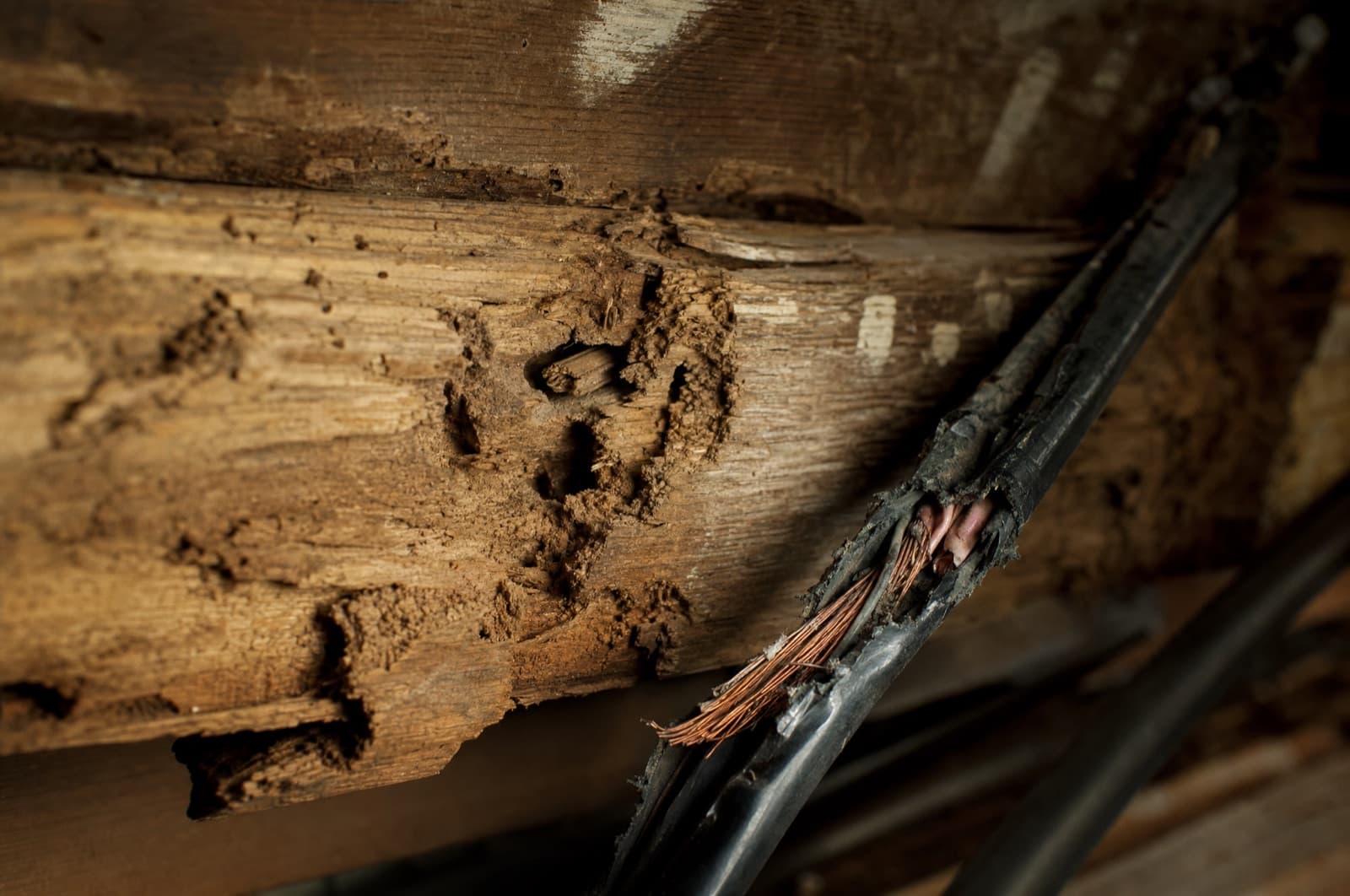
Pest damage evidence — a gnawed structural beam and a chewed electrical wire
Daniel Brady · NH-Licensed Pesticide Applicator · License #782664
Reviewed by Daniel Brady

Why do silverfish live in bathrooms and basements?

Negligible on its own — presence signals dampness, not damage
Silverfish concentrate in bathrooms, basements, and laundry rooms because they are highly humidity-dependent — the common silverfish reproduces best between about 71.6 and 80 degrees Fahrenheit and 75 to 97 percent relative humidity, and its eggs and nymphs require moisture to develop at all. Warmth, darkness, and a starchy food source (paper, glue, sizing) complete the appeal, and an adult can survive nearly a year without food as long as water is available — moisture, not food, is the real master switch. Just being present in these rooms causes no property damage by itself; it mainly tells you the space is too damp.

At a glance

  • Can it?: Rarely
  • How common: Routine
  • Hype: Overstated
  • Evidence: Well documented
  • 71.6-80°F

    Temperature range where the common silverfish reproduces best

    Pest Management Professional

  • 75-97% RH

    Relative-humidity range the common silverfish needs to thrive

    Pest Management Professional

The honest answer

The short of it

The verdict
Negligible on its own — presence signals dampness, not damage

Silverfish live in bathrooms and basements because they need high humidity to survive and reproduce — their presence there is a moisture signal first and a damage risk only a distant second.

The correction

What they claim vs. what the evidence supports

One shared severity track, two markers. The span between them is the hype delta — named out loud.

The claim — silverfish showing up in a bathroom or basement

That silverfish in the bathroom or basement mean a serious infestation is underway and that belongings in that room are already being damaged.

Where the claim comes from: Pest-company blog copy and general home-maintenance content that treats any silverfish sighting as an active-damage emergency.

Severity, 0–100
Hype says50
20Evidence says
Hype delta30point gapWell documented
The evidence

Their presence in these specific rooms is a humidity signal, not a damage signal — extension sources describe the habitat preference in terms of temperature and relative humidity requirements for survival and reproduction, not feeding intensity. Damage, where it does occur, is slow, cosmetic, and confined to paper and starched items left undisturbed for months in the damp space, not an immediate threat to the room itself.

The gap

The moisture-seeking behavior is completely real and well documented. The leap to "serious infestation and damage" the moment you spot one in the bathroom is overstated — the more useful reading of that sighting is that your humidity is too high, which is a cheaper problem to fix than the fear implies.

Damage assessment

What is actually harmed

Damage verdict
Negligible on its own — presence signals dampness, not damage
NegligibleCan it?Rarely
The specimen
Pest
Common silverfish (Lepisma saccharina) and the drier-tolerant gray/long-tailed silverfish (Ctenolepisma longicaudatum)
What is in question
The bathroom or basement environment itself, plus any paper or starched fabric stored nearby
How common
Routine
Evidence
Well documented
Mechanism

Silverfish lose water through their cuticle easily and depend on humid microclimates to survive; per Pest Management Professional (citing Sweetman 1939), the common silverfish 'develops and reproduces best at temperatures of 71.6 degrees Fahrenheit to 80 degrees Fahrenheit, and relative humidity of 75 percent to 97 percent,' and egg and nymph development specifically requires moisture. Bathrooms and basements reliably supply that combination through condensation, plumbing, and poor ventilation, which is why silverfish cluster there rather than anywhere else in the house. The gray/long-tailed silverfish tolerates lower humidity and is documented expanding indoors via central heating in Europe and North America, making it a growing exception to the humidity rule.

Actually at risk2
  • Paper, books, and starched fabric stored in the same damp room, if left undisturbed for months
  • Nothing about the room itself — silverfish don't feed on tile, tub surrounds, drywall, or concrete
Not at risk — despite the myth4
  • The building's structure — silverfish have no mechanism to touch framing, concrete, or masonry
  • Human health — they do not bite people or transmit any known disease
  • Plastic, metal, and most modern synthetic fabric stored in the same space
  • Dry-stored belongings kept off a damp floor and away from prolonged humidity
Worst realistic case
A chronically damp basement or bathroom closet where a population goes unnoticed for months and slowly etches or notches an undisturbed box of stored paper — a real but localized, slow-developing loss, not a room-wide problem.

Assessed from: Pest Management Professional (Sweetman 1939 humidity data); MU Extension G7376; Ohio State Ohioline ENT-64; PMC8471186 Ctenolepisma longicaudatum spread in Europe

The compounding clock

Does it get worse if you ignore it?

Over time
Compounds slowly

Compounds slowly with sustained dampness — and is self-limiting the moment humidity drops.

The timeline
3 stages
  1. WeeksReversible

    A small population establishes in a consistently damp corner — under a bathroom vanity, behind a washing machine, or in an unfinished basement storage area.

  2. MonthsReversible

    The population grows as long as humidity stays high, and sightings become more frequent, especially at night when silverfish are most active.

  3. One seasonReversible

    In a chronically damp, undisturbed space, feeding can reach stored paper or starched fabric left in that room, producing the slow cosmetic damage described on the sibling paper/fabric page.

What stops the clock
Dehumidifying the space. Silverfish eggs and nymphs require high relative humidity to develop at all, so drying the room out collapses reproduction faster than any spot treatment, and it's the single most effective control available.
Repair scope

Who actually fixes this

Scope, not dollars — the honest answer to “how expensive is it,” routed to the right trade.

Who fixes it
You — a DIY patch
Effort
An afternoon

This is a humidity-management task, not a repair or a pest-elimination emergency — a dehumidifier and better ventilation address the root cause directly.

The right order
  1. 1
    Run a dehumidifier in the bathroom or basement and improve ventilation (a fan, a cracked window, or an exhaust vent)
  2. 2
    Fix any active leak or condensation source contributing to the dampness
  3. 3
    Move stored paper, books, and starched fabric into sealed containers, off the floor
  4. 4
    Vacuum cracks, baseboards, and storage corners where silverfish were seen
Route by symptom
  • Pest pro firstThe population is large, established, or keeps recurring despite dehumidifying — an indoor population that persists after the moisture is fixed is worth professional treatment
  • Licensed contractorThe dampness traces to a waterproofing or grading problem rather than simple condensation or ventilation
Do not
  • Don't fog or blanket-spray a damp bathroom or basement as a first response — dehumidifying works better and doesn't put chemical in a room you use daily
  • Don't store keepsakes in cardboard directly on a damp basement floor
Where we help — and where we don't

Interior treatment and moisture-driven exclusion for an established population are genuinely in Anchor's lane. A larger waterproofing or foundation-moisture project is not — that's a contractor's job, and we'll say so rather than treat the symptom on repeat.

In depth

The full picture

01

Humidity is the master switch, not food

Silverfish are unusually dependent on moisture for a household insect. They lose water through their cuticle readily, and per research cited by Pest Management Professional (Sweetman 1939), the common silverfish reproduces best between roughly 71.6 and 80 degrees Fahrenheit and 75 to 97 percent relative humidity — a narrow, distinctly damp comfort zone. Critically, their eggs and nymphs require high humidity just to develop; without it, a population simply doesn't get established, regardless of how much starchy paper or fabric happens to be nearby.

That's the real reason bathrooms and basements are the two rooms where silverfish concentrate: they are the most reliably humid spaces in an ordinary house, thanks to showers, plumbing, condensation, and, in many basements, direct contact with damp earth or slab. An adult silverfish can survive nearly a year without food as long as water is available, which tells you plainly which resource actually controls where they live.

02

Why these two rooms specifically

Bathrooms supply humidity directly and constantly — steam from showers, condensation on tile and mirrors, and often poor ventilation that lets moist air linger. Basements supply it more passively but just as reliably: below-grade concrete, minimal air exchange, and proximity to plumbing runs and sump areas keep relative humidity elevated even when the rest of the house is dry. Add warmth and darkness — both of which silverfish also prefer — and both rooms check every box on a silverfish's habitat checklist at once, which is why they show up there far more consistently than in, say, a sunny living room.

A growing exception is the gray or long-tailed silverfish (Ctenolepisma longicaudatum), which tolerates noticeably lower humidity than the common silverfish and has been documented spreading indoors across Europe and North America, aided by central heating that keeps homes warm and dry year-round. That species is worth knowing about specifically because it breaks the "just dehumidify and they'll leave" rule somewhat — it's more tolerant of ordinary indoor conditions than its cousin.

03

What their presence actually tells you

The honest, useful reframe is this: finding silverfish in a bathroom or basement is a more reliable signal that the space is too damp than it is a signal that your belongings are already ruined. The location behavior described here — habitat, not diet — causes no property damage by itself. Any real damage to paper, book bindings, wallpaper paste, or starched fabric is a separate, slower story covered on this hub's sibling page about what silverfish actually eat, and it requires an undisturbed damp space over months, not the simple fact of a silverfish crossing your bathroom floor at night.

That reframing changes the response, too. Instead of reaching for an insecticide, the higher-value move is running a dehumidifier and improving ventilation — steps that address the actual driver of both the silverfish and any risk to items stored nearby, at the same time.

Key takeaways
5 points
  • Silverfish live in bathrooms and basements because those rooms reliably supply the high relative humidity their eggs and nymphs require to develop.
  • An adult can survive nearly a year without food if water is available — moisture, not food, is the real habitat driver.
  • Finding silverfish there causes no property damage by itself; it's a signal the space is too damp, not proof that anything is already ruined.
  • The gray/long-tailed silverfish tolerates lower humidity than the common species and is expanding indoors via central heating — a growing exception to watch for.
  • Dehumidifying the space is the single most effective control, because it stops reproduction rather than just removing the insects you can see.
New Hampshire context

Why New Hampshire basements and bathrooms are prime silverfish territory

Southern and central New Hampshire's older housing stock runs heavy on unfinished or partially finished basements — exactly the humid, undisturbed environment silverfish depend on. As outdoor humidity swings with the seasons and many homeowners close up the house ahead of Manchester's first hard frost (historically around October 19 to 29, per NOAA), indoor humidity in poorly ventilated bathrooms and basements can climb further, giving silverfish an easier season to establish.

A simple, high-value habit for New Hampshire homes: check basement and bathroom humidity levels directly with an inexpensive hygrometer rather than relying on sightings alone. Keeping relative humidity below the range silverfish eggs need does more to prevent both the insects and any downstream risk to stored belongings than any spot treatment.

  • NH-licensed #782664

    Southern New Hampshire

  • Family-owned

    Since 2017

  • Honest routing

    Even when it isn’t us

We serve these communities

ManchesterNashuaConcordDerryBedfordSalemHudsonAmherstAuburnGoffstownHooksettLitchfieldLoudonMilfordBristol

Service Area Map

Southern New Hampshire

BristolPop. 3,200LoudonPop. 5,500ConcordPop. 43,900HooksettPop. 14,800GoffstownPop. 18,000AuburnPop. 5,700ManchesterPop. 115,600BedfordPop. 23,300LitchfieldPop. 8,500AmherstPop. 11,300DerryPop. 34,500MilfordPop. 15,700HudsonPop. 25,600NashuaPop. 91,100SalemPop. 30,000HQCityHover for info

A damp bathroom or basement is the real silverfish story. Anchor helps with the population.

We treat an established indoor infestation — drying the space out is the partnership between our treatment and your dehumidifier.

Follow-up questions

Frequently asked

Sources & citations(5)
  1. Pest Management Professional — Polish your silverfish skills (citing Sweetman 1939)

    Humidity and temperature requirements for silverfish development and reproduction

    academicverified 2026-07-16
  2. MU Extension G7376 — Silverfish and Firebrats

    Humidity/temperature habitat preferences and species table

    extensionverified 2026-07-16
  3. Ohio State Ohioline ENT-64 — Silverfish and Firebrats

    Nocturnal, humidity-dependent habitat behavior

    extensionverified 2026-07-16
  4. PMC8471186 — Ctenolepisma longicaudatum became a common pest in Europe

    Drier-tolerant gray silverfish range expansion indoors via central heating

    academicverified 2026-07-16
  5. Norwegian Institute of Public Health — Long-tailed silverfish biology and control (2019)

    Egg and early-stage moisture requirements for Ctenolepisma longicaudatum

    govverified 2026-07-16

Written & reviewed by

Verified

Daniel Brady

NH-Licensed Pesticide Applicator · License #782664 (NHDAMF, RSA 430)

Daniel Brady is the New Hampshire–licensed applicator behind Anchor Pest Services, a family-owned pest control company serving the Manchester area since 2017.

Verify license

Last updated Jul 2026

Honest pest help for New Hampshire homes

We Treat the Silverfish. Your Dehumidifier Does the Rest.

Silverfish live in bathrooms and basements because those rooms are humid — their presence signals dampness more than damage. Anchor Pest Services treats an established population; the bigger waterproofing or ventilation fix, if there is one, belongs to a contractor, and we'll tell you when that's the case. Family-owned since 2017, NH license #782664, serving Manchester, Nashua, Concord and nearby towns.

  • Honest advice — we say when it's a moisture fix, not a pest-control job
  • NH-licensed applicators (#782664) — free inspection, same-day service
  • Interior and moisture-driven pest treatment across southern and central New Hampshire

NH License #782664 · No obligation · We answer in person