
Skip to content
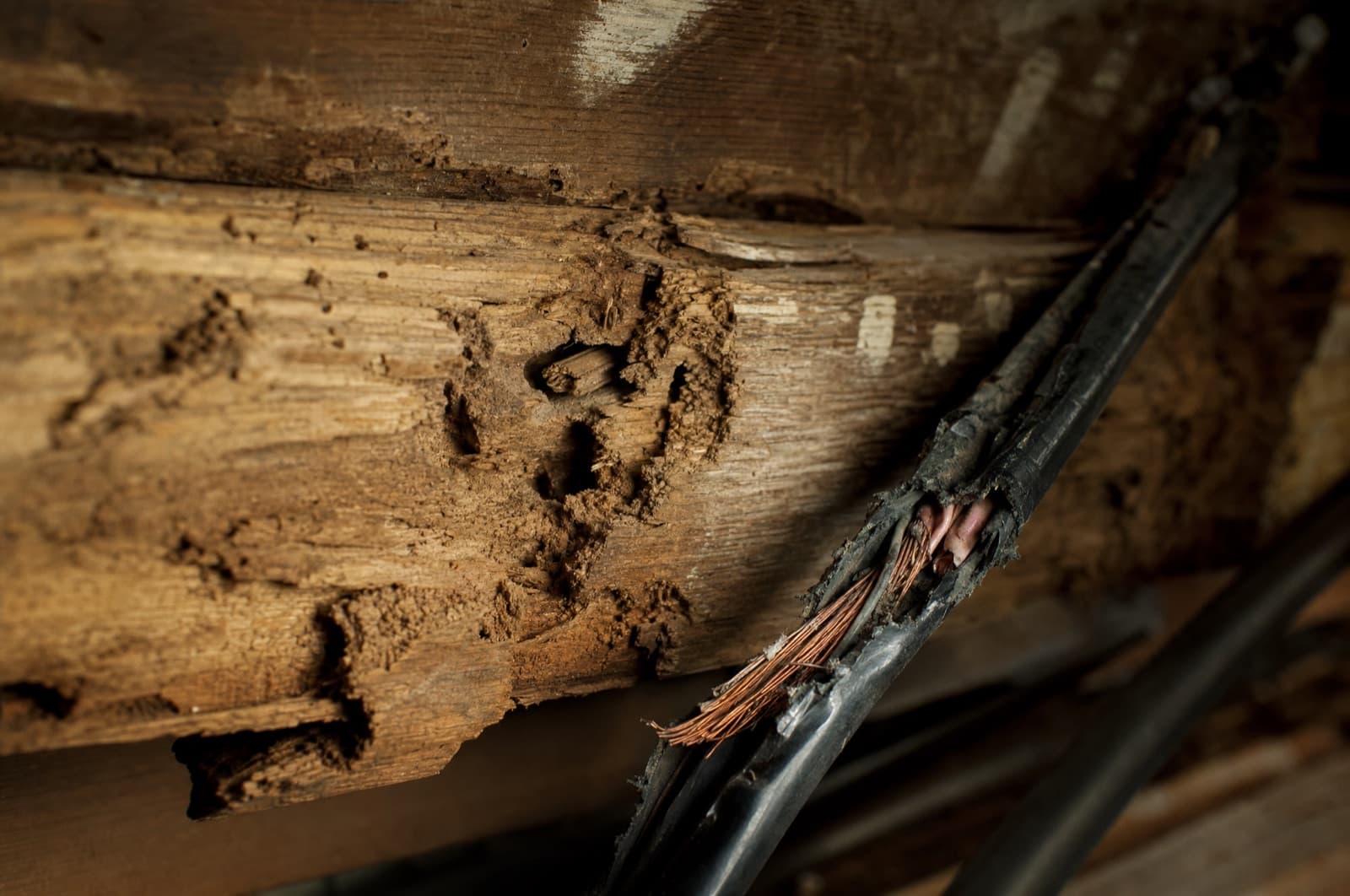
Pest damage evidence — a gnawed structural beam and a chewed electrical wire
Daniel Brady · NH-Licensed Pesticide Applicator · License #782664
Reviewed by Daniel Brady

What damage do voles and gophers cause outdoors?

Ranked by evidence-backed severity to real NH plants
In New Hampshire, the meadow vole and the pine (woodland) vole are the real concern outdoors: under winter snow cover, they gnaw bark and girdle young fruit trees, shrubs, and ornamentals closely enough to the ground to kill the plant, and this fear is genuinely earned. Pocket gophers are a Western and Southeastern animal and are not established in New Hampshire at all, so 'gopher damage' reported here is almost always misidentified vole or mole activity. This ledger ranks by documented severity to real plants, not by which name sounds scarier.

At a glance

  • Who fixes it: ISA-certified arborist
The honest answer

The short of it

The verdict
Ranked by evidence-backed severity to real NH plants

In New Hampshire, voles are the genuinely serious animal — they girdle and can kill young trees under snow cover. Gophers are not established here at all, and 'gopher damage' in a New Hampshire yard is almost always a misidentified vole or mole.

Repair scope

Who actually fixes this

Scope, not dollars — the honest answer to “how expensive is it,” routed to the right trade.

Who fixes it
ISA-certified arborist
Effort
A trade visit

Where the real damage is (vole girdling and root injury), the genuine fix is protecting and, where necessary, replacing affected young trees and shrubs — an ISA-certified arborist's or orchard-management call, not a pest-control treatment. Prevention (trunk guards) is more effective than any after-the-fact repair.

The right order
  1. 1
    Inspect trunks at ground level in early spring, right after snowmelt, while girdling from the winter is still visible and before new growth masks it
  2. 2
    For a fully girdled young tree, consult an arborist about bridge grafting or replacement — a completely encircled trunk usually cannot recover on its own
  3. 3
    Install hardware-cloth trunk guards extending a few inches below and above expected snow depth before the following winter, on any young or valued tree or shrub
Route by symptom
  • You — a DIY patchThe only damage is cosmetic lawn runways from meadow voles — raking and reseeding once the snow is gone is the entire fix
  • Wildlife / exclusion specialistVole populations are large enough that trapping or habitat modification (mowing tall grass, clearing mulch away from trunks) is worth professional help to implement broadly
Do not
  • Don't assume a New Hampshire lawn or garden problem is a 'gopher' — the animal responsible is virtually always a vole (plant damage) or a mole (tunnels only), and treating for the wrong one wastes effort
  • Don't wait until spring to think about trunk guards — they need to be in place before the first snow, since girdling happens under cover of snow all winter
Where we help — and where we don't

This is genuinely not an Anchor job. Vole and gopher damage is a wildlife-and-landscape matter, not a structural or household pest-control issue — we'll point you to an ISA-certified arborist for tree injury and UNH Cooperative Extension for prevention guidance rather than sell a treatment plan that doesn't fit.

The ledger

The ranked damage ledger

Outdoor plant and turf damage from voles and gophers as they actually occur (or don't) in New Hampshire, ranked by evidence-backed severity and repair scope rather than by which animal has the scarier reputation

Ranked by
Documented severity and repair scope to real New Hampshire plants — young-tree death from girdling ranks above underground root injury, which ranks above cosmetic turf runways, which ranks above an animal that isn't present in the state at all. Never ranked by dollars or by which name sounds more alarming.
RankPestClassWhat it wrecksWho fixes itEvidence
01

Meadow vole (Microtus pennsylvanicus)

This is the one genuinely earned fear in this ledger. UNH Extension documents severe girdling in peak vole years and states young trees are especially vulnerable, with much of the damage occurring under the cover of snow where it goes unnoticed until spring.

StructuralBark and cambium at the base of young fruit trees, shrubs, and ornamentals — apple, peach, plum, cherry, blueberry, juniper, dogwood, and rose are all named vulnerable species. Girdling happens at or near ground level, hidden under snow cover, and a fully girdled trunk kills the plant because the ring of living tissue that carries water and nutrients has been chewed all the way around.ISA-certified arboristWell documented
02

Pine / woodland vole (Microtus pinetorum)

Real and serious, but ranked below meadow-vole girdling here because it's slower to kill a mature tree outright and more often shows as declining vigor than sudden loss — though it can still be fatal to a young or already-stressed tree.

FunctionalRoots and the below-ground root collar of orchard and ornamental trees, gnawed from tunnels rather than at the visible trunk surface. Harder to detect than meadow-vole girdling since the damage is underground; it typically shows up first as poor vigor or a tree that sits loosely in the soil.ISA-certified arboristWell documented
03

Meadow vole (Microtus pennsylvanicus)

Unsightly but genuinely minor — the turf recovers on its own or with light raking and reseeding. This is the vole damage most homeowners actually see, and it's the least consequential row on this entire ledger.

CosmeticSurface 'runway' trails through lawn grass, visible as flattened, dead-grass paths once snow melts in spring.You — a DIY patchWell documented
04

Pocket gopher (family Geomyidae)

If someone in New Hampshire says 'gopher,' the animal actually responsible is a vole if plants are being eaten, or a mole if only tunnels and mounds are involved — never an actual pocket gopher.

NoneNothing in New Hampshire. The established US range for pocket gophers is the Great Plains, the West, and parts of the Southeast — not New England. Any tunneling or mound activity attributed to a 'gopher' in a New Hampshire yard is almost always a mole (insectivore, cosmetic tunneling) or a vole (herbivore, the real plant-eating animal in the rows above).Nobody — nothing to repairWell documented
What people get wrong
Readers expect 'gophers' to be the big New Hampshire lawn threat and assume voles are a minor mouse-like nuisance. The honest ranking flips that completely: voles are the real, tree-killing New Hampshire animal, gophers aren't established here at all, and mole tunnels — a separate insectivore entirely — get blamed for both animals' damage.
In depth

The full picture

01

The animal that actually matters in New Hampshire: voles

Of the two animals in this question, only one lives here and does real damage: the vole. New Hampshire has two species that matter for outdoor plant damage — the meadow vole, which is the more common lawn-and-orchard concern, and the pine (or woodland) vole, which tunnels and feeds underground. Both are true herbivores, and both are capable of genuinely killing a young tree or shrub, which sets them apart from every other animal covered elsewhere in this hub's yard-and-garden cluster.

02

Why winter is when the real damage happens

UNH Extension's own orchard guidance is direct about the mechanism: meadow voles do much of their bark-gnawing and girdling under the cover of snow, where it's invisible until the snow melts and reveals the damage in spring. A tree girdled all the way around its trunk — the bark and the living cambium layer beneath it chewed away in a complete ring — cannot move water and nutrients past that point and typically dies, even though the rest of the tree may have looked perfectly healthy all winter. Young fruit trees, blueberries, and ornamentals like juniper, dogwood, and rose are named as especially vulnerable in university extension guidance, precisely because their bark is thinner and more accessible than a mature tree's.

03

The pine vole's quieter, underground version of the same problem

The pine, or woodland, vole causes a related but harder-to-catch version of the same harm: instead of girdling visibly at the trunk, it tunnels below ground and gnaws roots and the root collar. Because none of that is visible from above, the first sign is often simply a tree that looks less vigorous than it should, or one that sits more loosely in the soil than a healthy tree would. It's a real threat to orchard and ornamental trees, and it's exactly the kind of damage that gets misattributed to a 'gopher' because underground root injury sounds like what people assume gophers do.

04

Why gophers don't belong in this conversation at all

Pocket gophers are a real, and in their own range genuinely damaging, animal — but their established range in the United States covers the Great Plains, the West, and parts of the Southeast, and stops well short of New England. There is no established pocket gopher population in New Hampshire. When a New Hampshire homeowner reports 'gopher damage,' the animal actually responsible for eaten roots and bark is a vole, and the animal responsible for tunnels and mounds with no plant-eating involved is a mole — a third, unrelated insectivore covered on its own page in this hub. Getting the animal right matters because the fix is completely different for each: trunk guards and vole-specific trapping for voles, simple lawn repair for mole tunnels, and nothing at all for a gopher that was never actually here.

Key takeaways
5 points
  • Voles, not gophers, are the real New Hampshire threat — meadow voles girdle and can kill young trees and shrubs under winter snow cover.
  • Pine (woodland) voles cause a similar, harder-to-detect version underground, gnawing roots and the root collar.
  • Pocket gophers are not established in New Hampshire at all; the established US range is the Great Plains, the West, and the Southeast.
  • Cosmetic vole lawn runways are the least serious row on this ledger — they recover with light raking and reseeding.
  • Hardware-cloth trunk guards installed before winter are the most effective prevention; an arborist is the right call for a tree that's already girdled.
New Hampshire context

New Hampshire's snow cover is exactly what makes vole girdling possible

Southern and central New Hampshire's reliable winter snowpack is the specific condition that lets meadow voles girdle tree trunks undetected for months at a time — the snow both insulates the voles from predators and cold, and hides the damage from homeowners until spring thaw. Girdling risk builds through the winter as snow accumulates around unprotected trunks, well before Manchester's growing season resumes.

The practical window for prevention is narrow and easy to miss: trunk guards need to go on before the first significant snow, which typically follows Manchester's first hard frost (historically around October 19 to 29, per NOAA) by only a few weeks in an average year. Waiting until you can see snow on the ground is often already too late for that season.

  • NH-licensed #782664

    Southern New Hampshire

  • Family-owned

    Since 2017

  • Honest routing

    Even when it isn’t us

We serve these communities

ManchesterNashuaConcordDerryBedfordSalemHudsonAmherstAuburnGoffstownHooksettLitchfieldLoudonMilfordBristol

Service Area Map

Southern New Hampshire

BristolPop. 3,200LoudonPop. 5,500ConcordPop. 43,900HooksettPop. 14,800GoffstownPop. 18,000AuburnPop. 5,700ManchesterPop. 115,600BedfordPop. 23,300LitchfieldPop. 8,500AmherstPop. 11,300DerryPop. 34,500MilfordPop. 15,700HudsonPop. 25,600NashuaPop. 91,100SalemPop. 30,000HQCityHover for info

Vole and gopher damage is a wildlife-and-landscape matter, not a pest control one.

An ISA-certified arborist and UNH Cooperative Extension are the right call for tree protection and repair.

Follow-up questions

Frequently asked

Sources & citations(5)
  1. UNH Cooperative Extension — Managing Voles in New Hampshire Orchards and Highbush Blueberries

    New Hampshire vole species, girdling under snow cover, vulnerable plant species

    extensionverified 2026-07-16
  2. UMass — New England Tree Fruit Management Guide, Voles

    Meadow vole and pine vole feeding behavior and orchard damage detail

    extensionverified 2026-07-16
  3. Penn State Extension — Orchard Wildlife: Integrated Management of Voles in Orchards

    Vole tree injury mechanisms and hardware-cloth trunk-guard prevention

    extensionverified 2026-07-16
  4. Internet Center for Wildlife Damage Management — Pocket Gophers

    Pocket gopher established US range, which excludes New England

    academicverified 2026-07-16
  5. UC IPM — Voles (Meadow Mice)

    Girdling behavior under snow cover and the distinction between voles and gophers

    extensionverified 2026-07-16

Written & reviewed by

Verified

Daniel Brady

NH-Licensed Pesticide Applicator · License #782664 (NHDAMF, RSA 430)

Daniel Brady is the New Hampshire–licensed applicator behind Anchor Pest Services, a family-owned pest control company serving the Manchester area since 2017.

Verify license

Last updated Jul 2026

Honest pest help for New Hampshire homes

We'll Tell You When It's Not Our Job.

Vole girdling and gopher confusion are landscape and wildlife matters, not structural or household pest problems — we won't sell you a treatment plan for either. If pests are also a problem inside your home, Anchor Pest Services genuinely helps with that. Family-owned since 2017, NH license #782664, serving Manchester, Nashua, Concord and nearby towns.

  • Honest advice — we route tree and wildlife questions to arborists and UNH Extension
  • NH-licensed applicators (#782664) — free inspection, same-day service
  • Household and structural pest control across southern and central New Hampshire

NH License #782664 · No obligation · We answer in person