
Skip to content
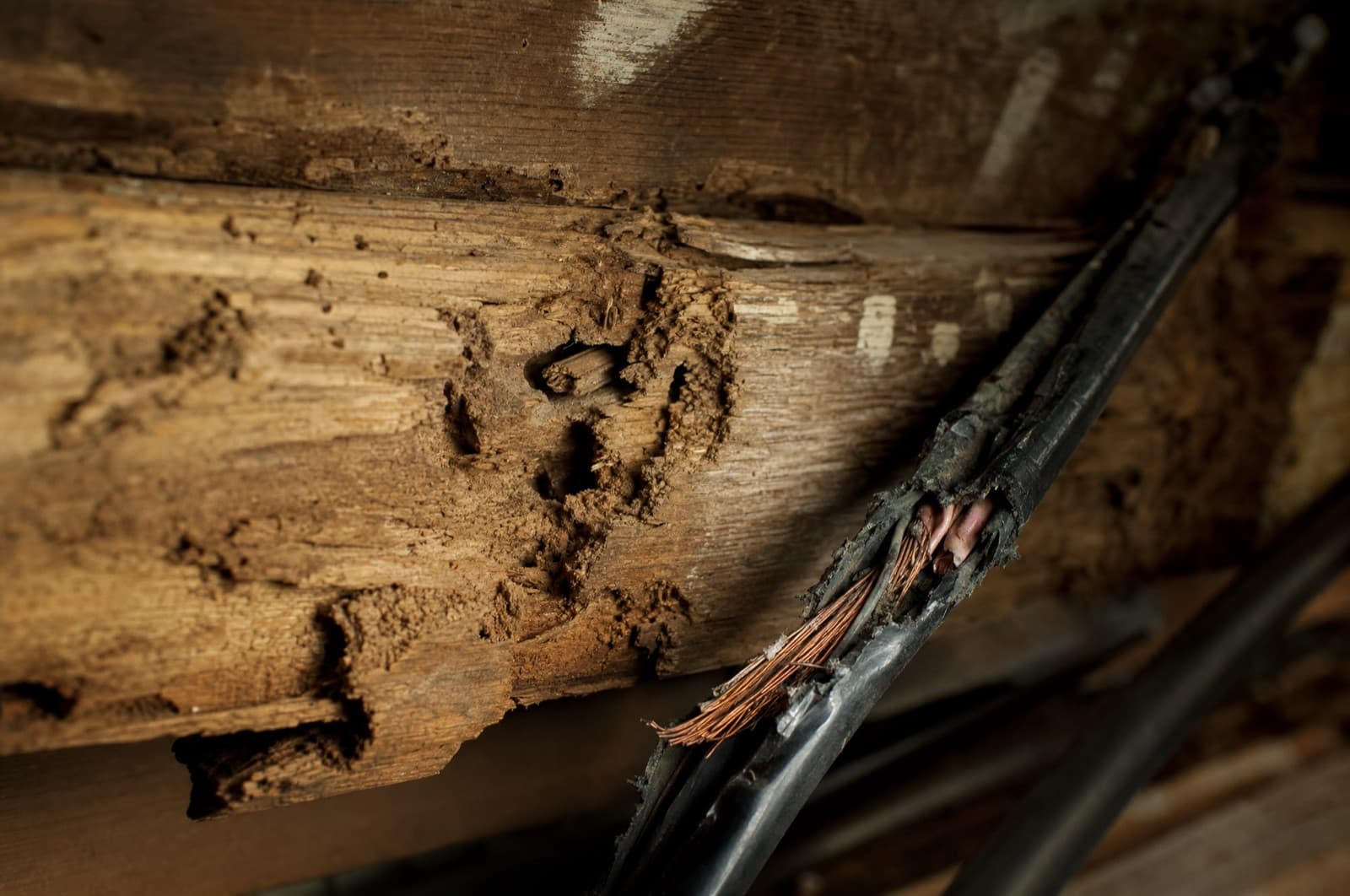
Pest damage evidence — a gnawed structural beam and a chewed electrical wire
Daniel Brady · NH-Licensed Pesticide Applicator · License #782664
Reviewed by Daniel Brady

Why do bat droppings smell so bad?

Cosmetic odor — real smell, no structural harm
Bat guano and urine smell strongly of ammonia because the nitrogen compounds in bat waste break down under bacterial and fungal action, releasing ammonia and other volatile compounds. Warm, humid, poorly ventilated attics concentrate the smell and slow drying, so it intensifies through the New Hampshire summer. Most of what you're actually smelling is urine that has soaked into insulation and wood, not the droppings alone. The odor itself does not damage your house — it's a signal that guano is accumulating, and the genuine health concern (histoplasmosis) comes from disturbing dried droppings, not from the smell.

At a glance

  • Can it?: Yes, but
  • How common: Routine
  • Hype: Overstated
  • Evidence: Well documented
The honest answer

The short of it

The verdict
Cosmetic odor — real smell, no structural harm

Bat guano smells like ammonia because bacteria and fungi break down its nitrogen compounds — and the smell itself is a warning sign, not the hazard. That's histoplasmosis, and it's a separate, real risk tied to disturbing dried guano, not to breathing the odor.

The correction

What they claim vs. what the evidence supports

One shared severity track, two markers. The span between them is the hype delta — named out loud.

The claim — bat guano odor in an attic or wall void

That the ammonia smell itself is a toxic-gas emergency requiring immediate whole-attic remediation — as if the odor were the poison.

Where the claim comes from: Wildlife-removal and guano-remediation marketing copy, which uses the alarming smell to sell urgent whole-attic decontamination.

Severity, 0–100
Hype says70
35Evidence says
Hype delta35point gapWell documented
The evidence

The odor is a genuine nuisance and a reliable sign of accumulation, but the smell itself is not the hazard. The real, named health concern is Histoplasma capsulatum spores released when dried guano is physically disturbed — swept, vacuumed, or kicked up — not the ammonia you're smelling in the air. CDC notes that most people who breathe in the fungus do not get sick.

The gap

The smell is real and the histoplasmosis risk is real — but they aren't the same thing. The odor is a signal that guano is accumulating; the actual airborne risk comes from disturbing it, not from smelling it.

Damage assessment

What is actually harmed

Damage verdict
Cosmetic odor — real smell, no structural harm
CosmeticCan it?Yes, but
The specimen
Pest
Bats roosting in attics, soffits, or wall voids (New Hampshire's resident species, including the little brown bat — state-endangered in NH, per NH Fish & Game)
What is in question
Indoor air quality, attic insulation, and exposed wood or drywall beneath a roost
How common
Routine
Evidence
Well documented
Mechanism

Bats produce urine and feces at the roost site. Guano contains uric acid, nitrogen compounds, and undigested insect remains; bacteria and fungi break these down, releasing ammonia and other volatile organic compounds, and heat and humidity accelerate the process. What you smell is mostly urine that has soaked into insulation, wood, and drywall over time — not fresh droppings alone. The odor tells you guano is accumulating; it does not, by itself, weaken anything the bats are roosting above.

Actually at risk3
  • Indoor air comfort and livability, especially in living space beneath or adjacent to a roost
  • Attic insulation, once urine-saturated — it loses R-value and holds the smell
  • Wood and drywall directly beneath a long-term roost, which can stain and absorb odor
Not at risk — despite the myth3
  • Framing, rafters, and roof structure — guano odor does not weaken wood
  • Wiring — the smell has no electrical mechanism
  • The building's structural integrity generally — this is an air-quality and insulation issue, not a structural one
Worst realistic case
Persistent ammonia odor reaching living space, plus insulation so saturated it needs professional removal and replacement — not structural failure.

Assessed from: CDC histoplasmosis fact sheets; NH Fish & Game Homeowners and Bats; UNH Extension bats brochure

The compounding clock

Does it get worse if you ignore it?

Over time
Compounds slowly

The odor builds as long as the colony roosts — and stops accumulating the day they're excluded.

The timeline
3 stages
  1. WeeksReversible

    A small or new roost produces a faint, intermittent smell, usually noticed only in the attic itself.

  2. One seasonReversible

    An established colony saturates insulation with urine across a full summer season; odor becomes noticeable in living space below.

  3. YearsReversible

    A colony that returns season after season builds up a deep guano layer and heavily contaminated insulation that professional remediation is needed to remove.

What stops the clock
Professional exclusion of the colony — timed outside the maternity period — followed by removal of contaminated insulation. The smell does not resolve on its own while bats are still roosting.
Repair scope

Who actually fixes this

Scope, not dollars — the honest answer to “how expensive is it,” routed to the right trade.

Who fixes it
Wildlife / exclusion specialist
Effort
A project

Bats are protected in New Hampshire, so the odor's source can only be legally resolved by a wildlife exclusion specialist using one-way devices — never extermination, and never on a homeowner's own timeline.

The right order
  1. 1
    Wildlife exclusion specialist exclude the colony, timed outside the maternity period
  2. 2
    Qualified remediation removes and replaces urine- and guano-saturated insulation
  3. 3
    Entry points are sealed to prevent the colony from returning
Route by symptom
  • Qualified remediationGuano or urine has visibly soaked into insulation, drywall, or exposed wood
Do not
  • Don't seal a suspected bat entry point during the maternity period (roughly mid-May to mid-August in NH) — flightless pups can be trapped inside and die, which makes the smell far worse
  • Don't sweep or vacuum dry guano yourself — that's how disturbed dust becomes an inhalation risk
Where we help — and where we don't

Bats are not an Anchor kill-service, and there isn't one anywhere — New Hampshire law only allows exclusion. Guano cleanup is also not an Anchor job; it goes to qualified remediation. Anchor's lane is general perimeter pest exclusion, not bat-specific work, and we'll say so plainly rather than quote you for either.

Health risk

The health angle

Histoplasmosis — a respiratory infection caused by inhaling spores of the fungus Histoplasma capsulatum, which can grow in accumulated bat guano

Caution
Who is at risk
  • Anyone who physically disturbs dried, accumulated guano (sweeping, vacuuming, handling insulation)
  • People with weakened immune systems, who can develop more severe disease if exposed
Precautions
  • Don't disturb, sweep, or vacuum dry guano yourself
  • Keep the attic space closed off from living areas until the colony is excluded and the area is professionally cleaned
  • Leave heavy accumulations to qualified remediation professionals rather than handling them as a household chore
Do not
  • Don't attempt guano removal without professional remediation
  • Don't assume a lack of smell means no risk, or that a strong smell alone means high risk — the two are not directly correlated
When to seek care

See a doctor if you develop flu-like respiratory symptoms after any attic or guano disturbance, and call the Northern New England Poison Center at 1-800-222-1222 with general exposure questions.

Health guidance from: CDC — Histoplasmosis (NIOSH related risks)

Legal status

A protected species

Protected speciesNH Fish & Game
The species & its standing

Bats (New Hampshire's resident species, including the little brown bat)

State-endangered (little brown bat), per NH Fish & Game — protected under New Hampshire wildlife law, exclusion only, never extermination

There is no legal kill-it pest-control service for bats in New Hampshire. The only lawful remedy is professional exclusion — one-way devices that let bats leave a roost and prevent them from returning — paired with sealing entry points once the colony is out.

Timing constraint
Exclusion must happen outside the summer maternity period, roughly mid-May through mid-August, when flightless pups are present in the roost and cannot follow adults out
In depth

The full picture

01

Where the smell actually comes from

Bat guano is rich in uric acid, nitrogen compounds, and undigested insect fragments. Left in place, bacteria and fungi break those compounds down, releasing ammonia and a mix of other volatile organic compounds — the sharp, acrid smell people describe. Importantly, most of what you're smelling in a long-occupied roost isn't the droppings themselves; it's urine that has soaked into insulation, wood, and drywall over repeated seasons, which holds odor far longer than dry guano pellets do.

This is why the smell often seems to come from everywhere in an attic rather than from one obvious pile — the source is saturated material, not a single spot you can simply scoop up.

02

Why it gets worse in summer

Ammonia release accelerates with heat and humidity, and New Hampshire attics run hot and poorly ventilated through the summer — exactly the maternity period when colonies are most active and producing waste continuously. Warm, humid air also slows drying, which keeps the microbial breakdown process going longer than it would in a cool, dry space. The result is a smell that peaks in summer and fades somewhat as the attic cools and the colony's activity drops off going into fall.

03

The smell versus the real risk — they aren't the same thing

It's worth separating two things that get conflated constantly: the odor, and histoplasmosis. The odor is ammonia and other VOCs off-gassing from decomposing waste — unpleasant, but not itself a toxic exposure. Histoplasmosis is a fungal respiratory infection from inhaling Histoplasma capsulatum spores, and CDC is direct about this: most people who breathe in the spores do not get sick at all. The real exposure risk comes from physically disturbing dried, accumulated guano — sweeping it, vacuuming it, handling contaminated insulation — which aerosolizes spores. Simply smelling a strong odor from below is not the same event as that kind of disturbance. That distinction matters because it changes what you should actually do: leave the material alone and get the colony excluded and the space professionally cleaned, rather than trying to "clean out the smell" yourself.

04

Why you can't just remove the bats to fix it

Because bats are a protected species in New Hampshire, there's no lawful extermination option — and no service, from Anchor or anyone else, that can legally kill a colony to solve an odor problem. The fix is exclusion: one-way devices installed by a wildlife specialist that let bats leave to feed and prevent them from re-entering, timed to avoid the maternity period when pups can't yet fly. Once the colony is out, the odor stops accumulating, and remediation can address the material that's already saturated. Trying to seal an active roost yourself — especially during summer — risks trapping pups inside, which makes both the smell and the underlying problem considerably worse.

Key takeaways
5 points
  • The ammonia smell comes from bacterial and fungal breakdown of nitrogen in guano and urine — it intensifies with heat and humidity.
  • Most of the persistent smell is urine soaked into insulation and wood, not the droppings alone.
  • The odor itself does not damage your house's structure — the real cosmetic/functional risk is saturated insulation.
  • Histoplasmosis is a genuine, separate risk tied to disturbing dried guano — not to smelling the odor from a distance.
  • Bats are protected in NH — exclusion, timed around the maternity period, is the only lawful fix; there is no kill-it service.
New Hampshire context

Why New Hampshire attics make this worse

Southern and central New Hampshire's attics run hot and humid through the maternity period (roughly mid-May to mid-August), which is exactly when colonies are most active and the ammonia-release process runs fastest. That's also the window during which NH Fish & Game and UNH Extension both advise against exclusion, since flightless pups are present. Homeowners who notice the smell in June or July are often noticing an active, growing colony rather than an old, dormant one — which is useful to know when scheduling a wildlife specialist for the fall exclusion window.

  • NH-licensed #782664

    Southern New Hampshire

  • Family-owned

    Since 2017

  • Honest routing

    Even when it isn’t us

We serve these communities

ManchesterNashuaConcordDerryBedfordSalemHudsonAmherstAuburnGoffstownHooksettLitchfieldLoudonMilfordBristol

Service Area Map

Southern New Hampshire

BristolPop. 3,200LoudonPop. 5,500ConcordPop. 43,900HooksettPop. 14,800GoffstownPop. 18,000AuburnPop. 5,700ManchesterPop. 115,600BedfordPop. 23,300LitchfieldPop. 8,500AmherstPop. 11,300DerryPop. 34,500MilfordPop. 15,700HudsonPop. 25,600NashuaPop. 91,100SalemPop. 30,000HQCityHover for info

Bats aren't an Anchor job — but the rest of your perimeter often is.

We'll tell you honestly that bat exclusion needs a wildlife specialist. What Anchor handles is the general pest entry points around the rest of your home.

Follow-up questions

Frequently asked

Sources & citations(4)
  1. CDC — Histoplasmosis (NIOSH related risks)

    Histoplasmosis mechanism, exposure via disturbed guano, low overall illness rate from inhaled spores

    govverified 2026-07-16
  2. NH Fish & Game — Homeowners and Bats

    NH bat protected status, exclusion-only remedy, maternity-season timing

    govverified 2026-07-16
  3. UNH Cooperative Extension — Bats in New Hampshire

    NH exclusion window (mid-May to mid-August), roost behavior

    extensionverified 2026-07-16
  4. Illinois Department of Public Health — Health Hazards of Bird and Bat Droppings

    Guano decomposition and odor mechanism; risks often exaggerated relative to actual residential exposure

    govverified 2026-07-16

Written & reviewed by

Verified

Daniel Brady

NH-Licensed Pesticide Applicator · License #782664 (NHDAMF, RSA 430)

Daniel Brady is the New Hampshire–licensed applicator behind Anchor Pest Services, a family-owned pest control company serving the Manchester area since 2017.

Verify license

Last updated Jul 2026

Honest pest help for New Hampshire homes

We'll Tell You When It Isn't Us.

Bats are protected in New Hampshire, so bat exclusion and guano remediation aren't services Anchor performs — we'll point you to a wildlife specialist and a remediation professional instead. What Anchor Pest Services does is general perimeter pest exclusion for the rest of your home. Family-owned since 2017, NH license #782664, serving Manchester, Nashua, Concord and nearby towns.

  • Honest advice — we route you to the right specialist, even when it isn't us
  • NH-licensed applicators (#782664) — free inspection, same-day service
  • General pest exclusion and perimeter defense across southern and central New Hampshire

NH License #782664 · No obligation · We answer in person