
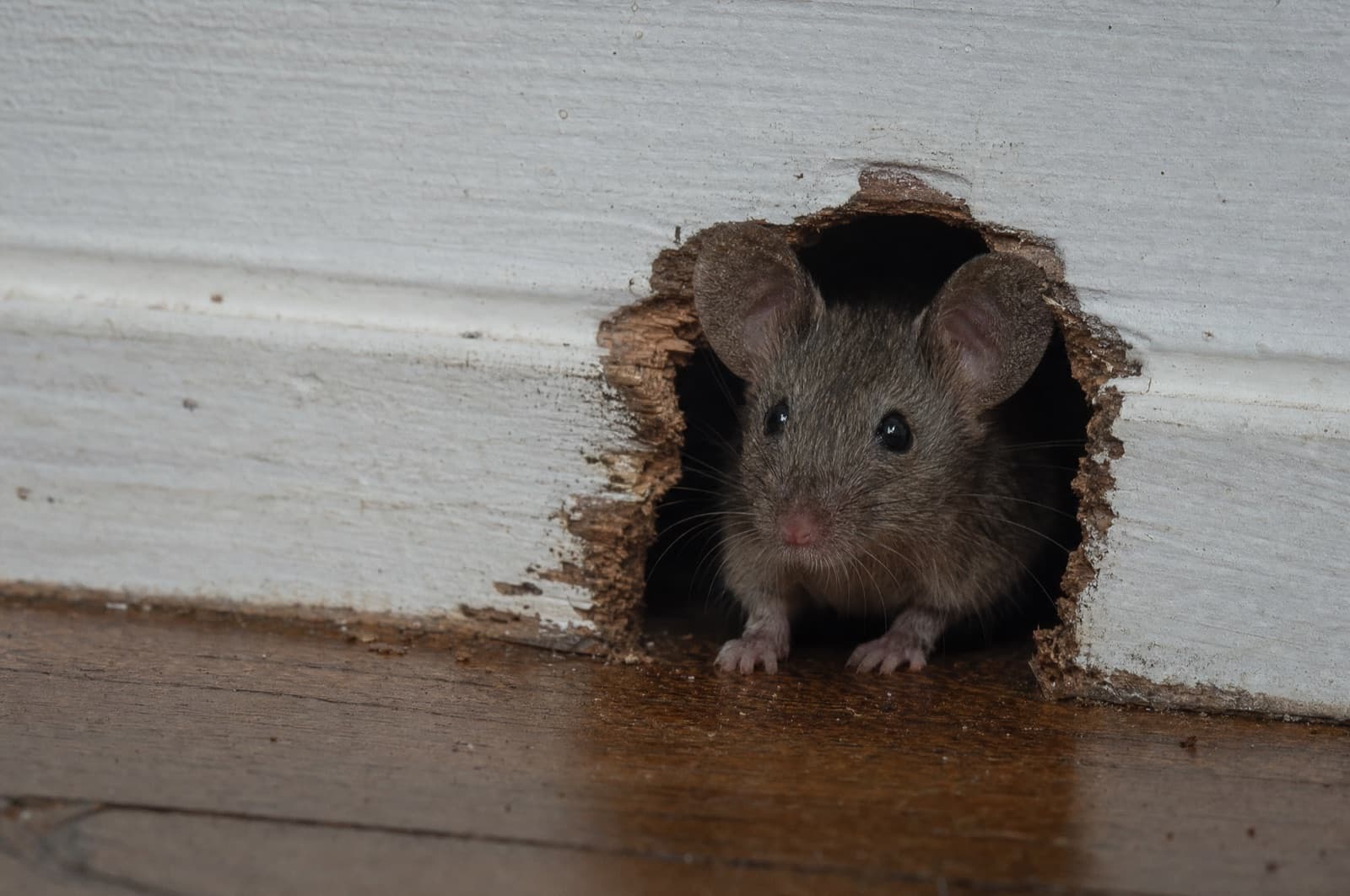
Can Mice Live in Cars?
At a Glance
- Short answer: Yes — engine bays offer warmth and enclosed shelter, especially in cold months.
- Key fact: About 29% of Americans have personally experienced rodent-related vehicle damage (2017 NPMA survey, via Terminix).
- NH relevance: Engine-bay nesting spikes as NH temperatures drop around the first hard frost (~Oct 19); a heated attached garage is a prime overwintering site.
- Action needed: If you find nests or chewed wiring, address the source — rodents in the garage or home — not just the car.
The short of it
A parked car is, to a mouse, a warm cavity full of nesting material. Engine bays offer residual heat from a recently driven engine and enclosed protection from predators and weather, which makes them attractive shelter in cold months. Once inside, rodents build nests and gnaw on wiring, hoses, and insulation, because their incisors grow continuously and chewing is a biological need, not a preference. Damage can range from a warning light to a car that won't start.
Can Mice Live in Cars — By the Numbers
29%
Americans who've experienced rodent vehicle damage (NPMA survey via Terminix)
3 in
Approx. pipe/hose diameter mice can climb around
Cold months
Peak season for engine-bay nesting
5 min
CDC-recommended disinfectant soak time before wiping a nest
The full picture
Why rodents move into engine bays
Pest and automotive sources agree rodents are drawn to engine compartments in cold weather because a recently driven engine stays warm and the bay offers enclosed protection. Once inside, rodents chew — their incisors grow continuously, so gnawing is a biological need, not a preference for any particular material. Damage concentrates on wiring harnesses, insulation, and plastic hoses, and can produce electrical malfunctions, dashboard warning lights, or failure to start.
The scale of the problem and the signs
The scale is not trivial: a widely cited 2017 National Pest Management Association survey found roughly 29% of Americans have personally experienced rodent-related vehicle damage. Telltale signs include shredded-material nests tucked into engine-bay crevices, droppings near the battery or air filter housing, gnaw marks, and a foul smell.
Cleaning a rodent nest from a car safely
Because rodents can carry pathogens, the CDC warns against vacuuming or sweeping droppings, which can aerosolize virus particles. The safer approach is to spray the area with disinfectant, let it soak for about 5 minutes, then wipe with disposable paper towels while wearing gloves, and dispose of the materials afterward.
Bottom line — Mice and rats genuinely live in and nest inside cars, especially in cold months, and the resulting wiring damage is common enough to be a real risk. Prevention centers on denying access — keep the garage clean and food-free, park in a sealed garage where possible, and move the car regularly. If you find a nest or chewed wiring, address the rodent source nearby, not just the car.
Found a nest under the hood?
A rodent in your engine bay usually means more nearby, in the garage or home. Anchor's licensed NH technicians find and clear the source.
Why this matters in New Hampshire
Engine-bay nesting activity spikes as NH temperatures fall around Manchester's first hard frost — about October 19 (50%) to October 29 (80%), NOAA 1991–2020. A heated attached garage is a prime overwintering site for rodents seeking shelter, and a vehicle parked there is directly exposed.
Key local data
Deer mice (Peromyscus) are the hantavirus-relevant species in NH; NH DHHS reports no confirmed case acquired in-state to date.
- NH-licensed applicator · #782664
- Same-day service
- Family-owned since 2017
Service Area Map
Southern New Hampshire
Frequently asked
Sources (3)
- [1]
- [2]
- [3]
Written & reviewed by
VerifiedDaniel Brady
NH-Licensed Pesticide Applicator · License #782664 (NHDAMF, RSA 430)
Daniel Brady is the New Hampshire–licensed applicator behind Anchor Pest Services, a family-owned pest control company serving the Manchester area since 2017.
Professional Rodent Control
Chewed Wiring Is a Symptom — Not the Whole Problem
A mouse nesting in your engine bay almost always has a home base nearby. Anchor Pest Services finds where rodents are getting into your garage or house and shuts it down. Family-owned since 2017, NH license #782664.
- Same-day service across southern NH
- NH-licensed applicators (#782664)
- Free inspection — no flat-price guesswork
NH License #782664 · No obligation · We answer in person
Your next step
- Book a NH pro
Rodent Control in New Hampshire
Mice and rats move indoors every fall. We trap, seal entry points and keep them out.
Book now - Next step
Do rodents nest in walls during autumn?
Read the answer - Related guide
Do Rats Move Indoors During Cold Weather?
Read the answer - Related guide
How Do I Get Rid of Rats in a Car Engine?
Read the answer - Related guide
Where Do Mice Usually Hide Indoors?
Read the answer - Also relevant
Can mice damage cars or vehicle wiring?
Read the answer