
Skip to content
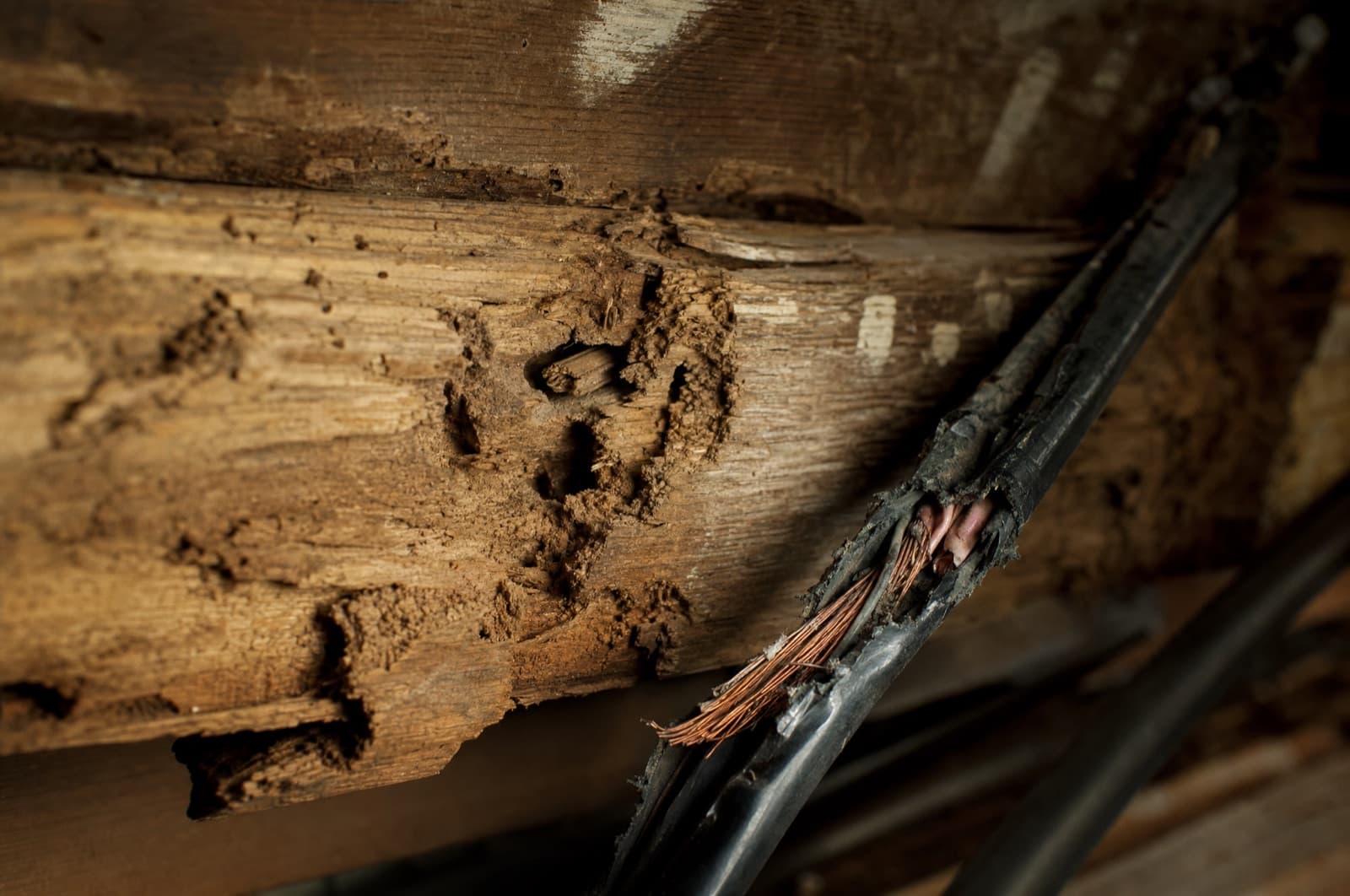
Pest damage evidence — a gnawed structural beam and a chewed electrical wire
Daniel Brady · NH-Licensed Pesticide Applicator · License #782664
Reviewed by Daniel Brady

Why do raccoons break into attics?

Functional damage, motive-driven — a maternity den, not malice
Raccoons break into attics chiefly for shelter and to raise young. An attic mimics their natural elevated tree-cavity den almost exactly: warm, dry, dark, quiet, and safe from predators. Females seeking a maternity site are the most motivated and destructive, tearing vents, soffits, and roof returns to get in and defending the den once young are present. Once inside, raccoons establish latrines and nesting areas that contaminate insulation, and they are a documented rabies-vector species whose droppings can carry raccoon roundworm — real, specific risks worth naming rather than a vague warning about wildlife.

At a glance

  • Can it?: Yes
  • How common: Routine
  • Hype: About right
  • Evidence: Well documented
  • up to ~80%

    Share of raccoons carrying roundworm in Northeast, Midwest, and West Coast regions

    CDC — How Raccoon Roundworm Spreads

The honest answer

The short of it

The verdict
Functional damage, motive-driven — a maternity den, not malice

Raccoons break into attics because an attic is a warm, dry, elevated, predator-free den — practically a manmade hollow tree — and a female seeking a place to raise young is the most determined, destructive visitor you'll get.

The correction

What they claim vs. what the evidence supports

One shared severity track, two markers. The span between them is the hype delta — named out loud.

The claim — why raccoons break into attics, and how destructive the resulting den is

That every raccoon entering an attic is maximally destructive and will devastate the space overnight — total insulation loss, torn ductwork, and a guaranteed expensive tear-out.

Where the claim comes from: Wildlife-removal marketing, which frames every raccoon as the worst-case animal to justify an urgent call.

Severity, 0–100
Hype says78
67Evidence says
The hype is fairWell documented
The evidence

The denning motive and the entry damage that comes with it are both genuinely well documented — this isn't an invented mechanism. But how destructive an individual raccoon actually is varies a lot: some tear up an entire attic and establish a large latrine, and some barely disturb the space beyond the entry point itself.

The gap

The behavior and its risks are earned — this is one of the pages where the fear matches the evidence. The one honest nuance worth adding is that destructiveness varies animal to animal; it isn't a uniform catastrophe every time.

Damage assessment

What is actually harmed

Damage verdict
Functional damage, motive-driven — a maternity den, not malice
FunctionalCan it?Yes
The specimen
Pest
Raccoons (Procyon lotor)
What is in question
Roof/attic entry points (vents, soffits, roof returns, flashing, shingles); attic insulation and ductwork once denned; human and pet health
How common
Routine
Evidence
Well documented
Mechanism

The driver is denning behavior, not appetite. In the wild, raccoons den in high tree cavities for warmth and predator protection, and an attic replicates that almost exactly: elevated, dark, dry, insulated, and quiet. A female seeking a maternity site is the most motivated and will breach aggressively and defend the den once young are present — which is also why she is the animal most likely to re-breach a repair made while she's still trying to reach her litter. Once established, the den's occupants use the same latrine area repeatedly, contaminating and compressing insulation nearby.

Actually at risk4
  • Roof vents, soffits, roof returns, flashing, and shingles at the entry point
  • Attic insulation, where latrines and nesting compress and contaminate it
  • Ductwork running through the denned area
  • Human and pet health, via rabies (bite or scratch) and raccoon roundworm (contact with feces)
Not at risk — despite the myth3
  • Poured concrete and steel framing, which raccoons breach around, not through
  • The house's structural frame generally — the animal dens in a space, it does not consume or structurally undermine framing members
  • Areas of the attic well away from the actual den site
Worst realistic case
A maternity litter established in the attic, with extensive envelope damage at the entry point, contaminated insulation, and a genuine rabies or roundworm exposure risk for whoever eventually cleans it up.

Assessed from: NH Fish & Game (species, rabies); CDC (Baylisascaris prevalence and transmission); wildlife-exclusion field literature on denning behavior

The compounding clock

Does it get worse if you ignore it?

Over time
Compounds

Compounds while the den is active — and goes static the moment the raccoon is excluded and the entry sealed.

The timeline
3 stages
  1. DaysReversible

    A raccoon investigates and tests likely entry points at the roofline; a motivated female can breach one within a single night.

  2. WeeksReversible

    Once denned, she returns nightly, establishes a latrine area, and may enlarge the opening further to move nesting material or young.

  3. One seasonReversible

    An unresolved den through breeding season can mean multiple litters using the same space, with insulation contamination and entry damage accumulating the whole time.

What stops the clock
Confirming no young remain, excluding the raccoon, and sealing the entry point with material it can't re-open — the moment the den is empty and closed, the damage stops accumulating.
Repair scope

Who actually fixes this

Scope, not dollars — the honest answer to “how expensive is it,” routed to the right trade.

Who fixes it
Wildlife / exclusion specialist
Effort
A project

This is fundamentally a live-animal denning situation before it's a repair job — a wildlife professional has to confirm whether young are present and handle exclusion safely and legally.

The right order
  1. 1
    Wildlife professional confirms whether kits are present before any exclusion
  2. 2
    Raccoon(s) excluded, timed so no litter is trapped or orphaned
  3. 3
    Roofer repairs the entry point
  4. 4
    Remediation addresses contaminated insulation
Route by symptom
  • Rooferthe entry point has torn shingles, decking, or soffit that needs structural repair
  • Qualified remediationa latrine or heavily soiled insulation is found
Do not
  • Don't seal an entry point without confirming no young are trapped inside
  • Don't try to handle or relocate a raccoon yourself
Where we help — and where we don't

The raccoon itself, and the roof and cleanup work that follow, are all outside Anchor's lane — a wildlife specialist, a roofer, and a remediation crew are the right calls, in that order. We'll say so plainly rather than take a call we can't actually resolve.

Health risk

The health angle

Rabies — raccoons are a primary Northeast rabies-vector species — and raccoon roundworm (Baylisascaris procyonis). CDC notes infection is typically asymptomatic in raccoons themselves, with up to roughly 80 percent of raccoons in the Northeast, Midwest, and West Coast regions affected, though human illness from it is rare and can be severe when it occurs.

See a doctor or vet
Who is at risk
  • Anyone bitten or scratched during an encounter
  • Anyone handling attic insulation, nesting material, or latrine debris without a professional
  • Pets that confront a denning raccoon
Precautions
  • Never approach or attempt to handle a denning raccoon, especially a female with young
  • Keep pets current on rabies vaccination
  • Leave latrine cleanup and heavily soiled insulation to a wildlife or remediation professional
Do not
  • Don't attempt DIY trapping or removal
  • Don't dry-sweep or vacuum droppings or nesting material
When to seek care

Any bite or scratch needs immediate medical attention and a report to NH Fish & Game. Discuss any suspected droppings exposure with a doctor.

Health guidance from: CDC — About Raccoon Roundworm; CDC — How Raccoon Roundworm Spreads; NH Fish & Game — Rabies precautions

In depth

The full picture

01

The motive is shelter, not appetite

Raccoons don't break into attics for food the way a mouse might raid a pantry. The driver is harborage — the search for a warm, dry, dark, quiet, elevated space that's safe from predators. In the wild, that space is a hollow tree cavity high off the ground; a residential attic offers nearly the same profile, minus the tree. Once a raccoon recognizes an attic meets those needs, the roofline becomes the obstacle standing between the animal and shelter, and that's what gets torn open.

This matters because it explains why sealing an entry point sometimes fails and sometimes works permanently. A raccoon passing through for shelter alone will usually move on once excluded. A female actively seeking or defending a maternity den will not — she is solving a specific, urgent problem (where to raise her young), and she'll re-breach a hastily sealed opening if she believes her litter is on the other side.

02

Why females are the most determined case

The single most destructive scenario in this whole cluster is a female raccoon seeking a maternity site. She is more motivated than a raccoon just passing through, more willing to breach aggressively, and — once young are present — more defensive of the den itself. This is also the scenario with the highest stakes for getting the sequence right: excluding a female before her kits can leave on their own risks orphaning them inside the attic, which is both inhumane and creates a much worse cleanup and odor problem later. Timing the exclusion around whether young are present is not a bureaucratic nicety — it's the difference between a clean resolution and a compounding one.

03

Why this earns its severity rating

Most of this hub exists to correct an inflated claim. This page is one of the exceptions. The denning behavior, the entry damage, and the health risks that follow are all genuinely well documented, and the internet's fear roughly matches what the evidence supports. The one place to add nuance rather than correction is variability: not every raccoon that dens in an attic causes the same scale of damage, and the worst-case scenarios — a full maternity litter, an established latrine, extensive envelope tearing — are real but not universal outcomes. The honest answer keeps both facts in view: the motive and the mechanism are real, and the severity still depends on the individual animal.

Key takeaways
5 points
  • Raccoons break into attics for shelter — warmth, dryness, darkness, quiet, and safety from predators — not for food.
  • A female seeking a maternity den is the most motivated and destructive case, and the one most likely to re-breach a hasty repair.
  • This is an honest 'about_right' page — the fear here largely matches the evidence, unlike most of this hub.
  • Health risks are specific and named: rabies (bite/scratch) and raccoon roundworm (Baylisascaris) from droppings — never vague 'diseases.'
  • The sequence matters: confirm no young are present, exclude the raccoon, then repair and decontaminate, in that order.
New Hampshire context

Raccoon denning season in New Hampshire

Raccoon maternity denning in southern and central New Hampshire typically peaks in spring, with a secondary push for shelter as animals prepare for winter in the fall. NH Fish & Game tracks raccoons among the state's confirmed rabies-vector species, and NH DHHS publishes annual positive-rabies reporting by county — a reminder that an attic raccoon in New Hampshire is a health-and-safety matter as much as a property one, and one reason exclusion should go through a wildlife professional rather than a DIY attempt.

  • NH-licensed #782664

    Southern New Hampshire

  • Family-owned

    Since 2017

  • Honest routing

    Even when it isn’t us

We serve these communities

ManchesterNashuaConcordDerryBedfordSalemHudsonAmherstAuburnGoffstownHooksettLitchfieldLoudonMilfordBristol

Service Area Map

Southern New Hampshire

BristolPop. 3,200LoudonPop. 5,500ConcordPop. 43,900HooksettPop. 14,800GoffstownPop. 18,000AuburnPop. 5,700ManchesterPop. 115,600BedfordPop. 23,300LitchfieldPop. 8,500AmherstPop. 11,300DerryPop. 34,500MilfordPop. 15,700HudsonPop. 25,600NashuaPop. 91,100SalemPop. 30,000HQCityHover for info

A denning raccoon needs a wildlife professional first — every time.

We'll route you honestly, and handle the general perimeter pest defense that's genuinely Anchor's lane.

Follow-up questions

Frequently asked

Sources & citations(3)
  1. CDC — About Raccoon Roundworm (Baylisascaris)

    Raccoon roundworm risk, transmission, and rarity of severe human cases

    govverified 2026-07-16
  2. CDC — How Raccoon Roundworm Spreads

    Prevalence of Baylisascaris in Northeast raccoon populations and latrine transmission

    govverified 2026-07-16
  3. NH Fish & Game — Public reminded about rabies and other disease precautions

    Raccoons as a primary NH rabies-vector species

    govverified 2026-07-16

Written & reviewed by

Verified

Daniel Brady

NH-Licensed Pesticide Applicator · License #782664 (NHDAMF, RSA 430)

Daniel Brady is the New Hampshire–licensed applicator behind Anchor Pest Services, a family-owned pest control company serving the Manchester area since 2017.

Verify license

Last updated Jul 2026

Honest pest help for New Hampshire homes

We Route Raccoons to Wildlife Professionals — Not Around Them.

A raccoon denning in your attic, especially a female with young, needs a licensed wildlife professional to confirm and exclude safely, followed by a roofer for the entry repair. Neither is an Anchor service, and we'd rather say so than take a call we can't finish. What Anchor Pest Services genuinely does is general pest exclusion and perimeter defense across southern and central New Hampshire. Family-owned since 2017, NH license #782664.

  • Honest advice — we route you to the right trade, even when it isn't us
  • NH-licensed applicators (#782664) — free inspection, same-day service
  • General pest exclusion and perimeter defense across southern and central New Hampshire

NH License #782664 · No obligation · We answer in person