
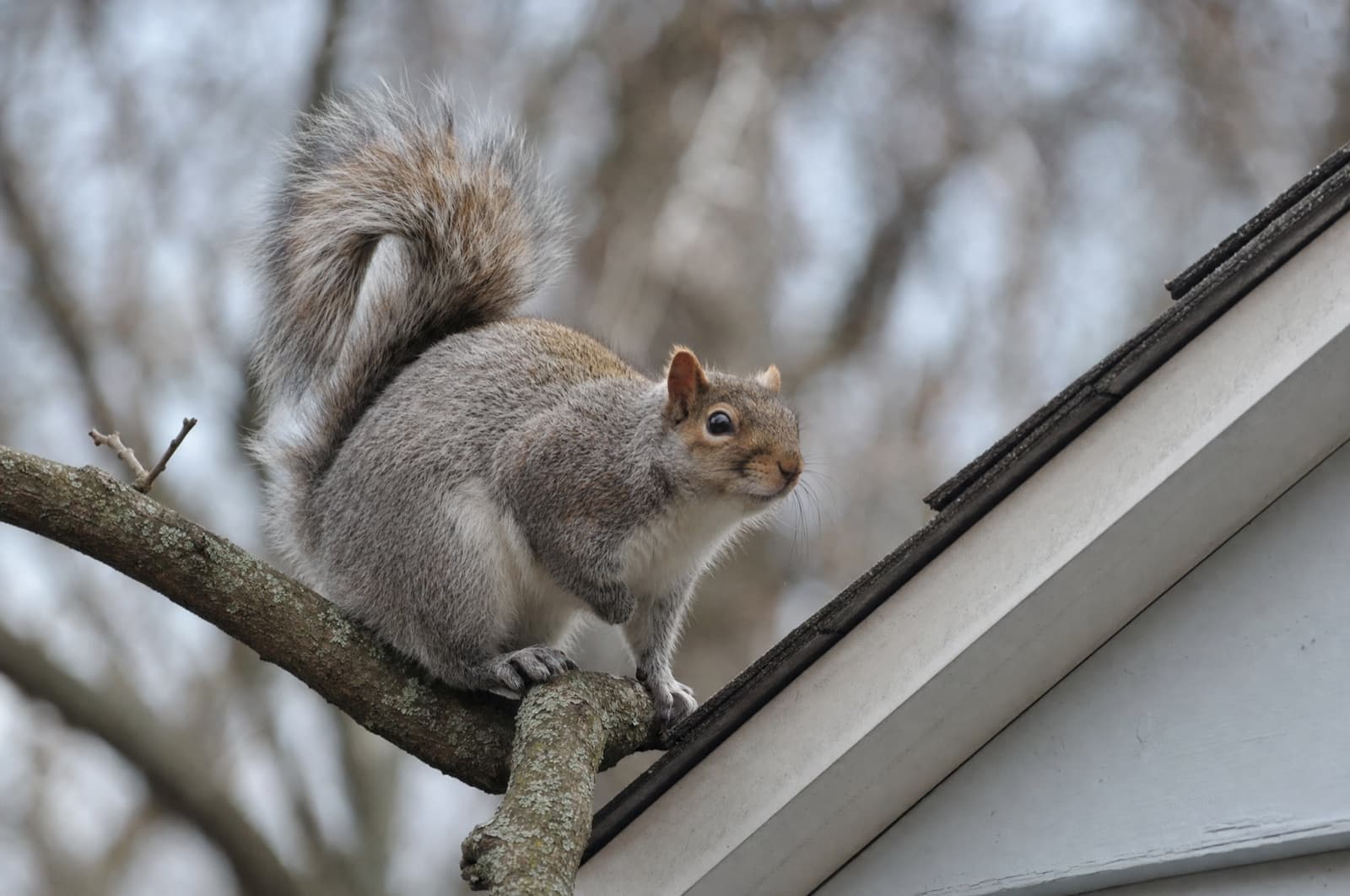
Where Do Squirrels Go in the Winter? NH Timing Guide
At a glance
- Activity pattern: DiurnalMost active early morning and late afternoon; does not hibernate — Illinois DNR / Indiana DNR
- Winter strategy: Homeotherm, no hibernationScatter-hoards nuts, adds ~25% body weight in fall (eats an estimated ~30% more than needed), grows a thicker coat, shares dreys — JP Pest Services / A-Z Animals
- Breeding: Two seasons: late winter (Dec–Feb) + summer (Jun–Aug)Gestation ~44 days; 2–4 young per litter — Illinois DNR
- Peak attic-entry: Fall + just before each birthing seasonCaching and shelter-seeking drive the surge — Affordable Wildlife Control
Activity pattern
Diurnal
Most active early morning and late afternoon; does not hibernate — Illinois DNR / Indiana DNR
Winter strategy
Homeotherm, no hibernation
Scatter-hoards nuts, adds ~25% body weight in fall (eats an estimated ~30% more than needed), grows a thicker coat, shares dreys — JP Pest Services / A-Z Animals
Breeding
Two seasons: late winter (Dec–Feb) + summer (Jun–Aug)
Gestation ~44 days; 2–4 young per litter — Illinois DNR
Peak attic-entry
Fall + just before each birthing season
Caching and shelter-seeking drive the surge — Affordable Wildlife Control
The short of it
Eastern gray squirrels do NOT hibernate — they stay active every winter day in New Hampshire, living on cached nuts in dreys, tree cavities, and often attics.
When are they active — the whole year at a glance
Gray squirrels are active every month in New Hampshire. The calendar below tracks the two annual breeding peaks and the fall caching/attic-entry surge that drives most homeowner calls.
Best window to act · Early fall before the frost-driven surge, or late fall once fall young are mobile — always outside the two breeding windows (late Feb–Mar and Jun–Aug).
Peaks track the two birthing seasons (Dec–Feb and Jun–Aug) and the fall caching/attic-entry surge, anchored to Manchester's ~Oct 19 first hard frost (50% probability, NOAA 1991–2020).
Winter behavior
The most common question about squirrels is where they go once it turns cold. The honest answer: nowhere. They don't leave and they don't sleep it off.
Active all winter
Squirrels don't leave. They stay active in leaf-nest dreys, tree cavities, and often attics — which mimic warm tree hollows — living on scatter-hoarded nuts, extra fat, thicker fur, and shared body heat.
Move in
Fall (caching and shelter-seeking ahead of the ~Oct 19 first frost) and again just before each breeding season.
Active all winter
Squirrels don't leave. They stay active in leaf-nest dreys, tree cavities, and often attics — which mimic warm tree hollows — living on scatter-hoarded nuts, extra fat, thicker fur, and shared body heat.
Spring exit
There is no true exit — squirrels are active year-round. Winter-litter juveniles disperse March–April, and attic females may relocate their young after both the Dec–Feb and Jun–Aug litters.
A year in the life
Squirrel behavior shifts through the New Hampshire year, but the animals themselves never go dormant.
- 01
Spring
Winter-litter juveniles disperse and begin foraging on their own, while adults switch to buds and early greenery as cached nuts run low. Sightings climb noticeably as young squirrels explore.
- 02
Summer
The second breeding peak (roughly June–August) brings a fresh round of attic nesting as females seek secure den sites for a new litter. Juveniles from spring are fully independent by mid-summer.
- 03
Fall
The highest-risk season for homeowners. Squirrels scatter-hoard thousands of nuts and seek warm shelter ahead of the frost, driving the year's biggest surge in attic entry — this is the best exclusion window if no young are present.
- 04
Winter
Squirrels remain fully active, relying on caches, added body fat, and a thicker coat. During extreme cold they may stay in the drey for several days at a stretch, then emerge to feed — meaning an attic squirrel can still be evicted even in January.
Squirrels in southern New Hampshire
Eastern gray squirrels are everywhere in Manchester, Nashua, and Concord neighborhoods, wherever mature trees meet rooflines. Because they never truly hibernate, NH's long, cold winters make attics — which trap heat like a tree cavity — one of the most attractive den sites in the region, especially once the fall scatter-hoarding season collides with falling temperatures.
Key local data
First hard frost in Manchester averages October 19 (50% probability), the point at which fall caching and attic-entry sharply accelerate — NOAA 1991–2020.
We serve these communities
- NH-licensed applicator · #782664
- Same-day service
- Family-owned since 2017
Service Area Map
Southern New Hampshire
Timing your treatment
Because squirrels never go dormant, timing an exclusion is about avoiding the two litter windows, not waiting out winter.
Wildlife & Exclusion
Free inspection and same-day wildlife & exclusion service across southern New Hampshire. NH-licensed #782664.
Learn more about this pestFrequently asked
Sources & references
- Illinois Department of Natural Resources — Eastern Gray Squirrel
diurnal activity pattern, breeding seasons, gestation and litter size
- Indiana Department of Natural Resources — Gray Squirrel
no true hibernation, homeotherm biology
- JP Pest Services — Eastern Gray Squirrel
scatter-hoarding, fall fat gain, shared dreys
- A-Z Animals — Do Grey Squirrels Hibernate?
winter activity, fat and coat changes
- Affordable Wildlife Control — Do Squirrels Hibernate in Attics?
peak attic-entry timing
- Squirrels at the Feeder — Do Squirrels Hibernate?
winter drey behavior, cold-weather dormancy bouts
- Garden.org — Frost Dates, Manchester NH (NOAA 1991–2020)
Manchester first hard frost ~Oct 19
Editorial disclaimer: This content is provided for informational purposes only and does not constitute pest control advice. Every property is unique — consult a licensed professional for guidance specific to your situation. Anchor Pest Services is licensed in New Hampshire (#782664).
Written & reviewed by
VerifiedDaniel Brady
NH-Licensed Pesticide Applicator · License #782664 (NHDAMF, RSA 430)
Daniel Brady is the New Hampshire–licensed applicator behind Anchor Pest Services, a family-owned pest control company serving the Manchester area since 2017.
Last updated Jul 2026
Anchor Pest Services
Whatever the season — we handle the timing for you.
Same-day service across Southern New Hampshire. NH-licensed #782664, family-owned since 2017. We track the local calendar so you don't have to guess the right window.
- NH-licensed applicator
- Same-day service
- Pet & family-conscious
NH License #782664 · No obligation · We answer in person
Your next step
- What to do next
Eastern Gray Squirrel in New Hampshire — ID & Attic Control
Read the answer - Related guide
When Are Raccoons Active? Winter, Night & NH Timing
Read the answer - Related guide
Where Do Opossums Live in the Winter? NH Timing Guide
Read the answer - Related guide
When Are Rats Most Active? NH Rat Timing Guide
Read the answer - Also relevant
Eastern Gray Squirrel in New Hampshire — ID & Attic Control
Read the answer - Also relevant
Why do squirrels damage attics and insulation?
Read the answer