
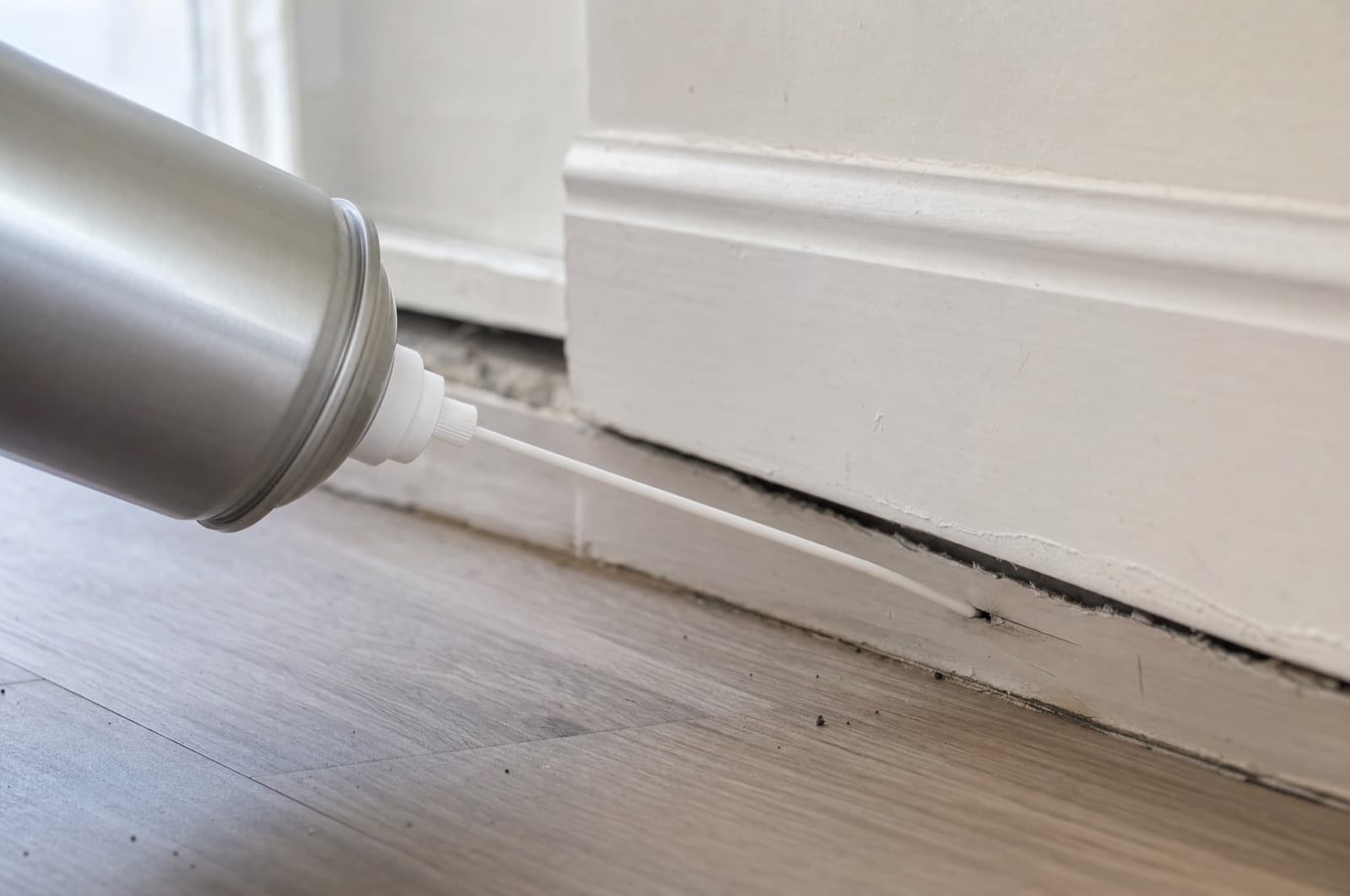
How to Use Ant Dust Insect Killer (T600) by Terro
At a glance
- Efficacy: Workhorse
- Best job: Long-lasting residual protection in dry, undisturbed wall voids, cracks, and crawl spaces that a wet spray can't stay in
- Format: Ready-to-use waterproof dust in a shaker canister — this is a DUST, not a wet spray or aerosol, despite living in the same product cluster as one. No mixing.
- Technique: Moderate technique
Does this product actually work?
A genuine workhorse for dry voids and crack-and-crevice work — situational, not a cure, if you're counting on it alone to stop a foraging ant colony.
University of Maine Cooperative Extension is explicit that dusts 'disperse deeply into cracks, walls, voids and other inaccessible areas that are not treatable with other formulations,' and Terro's deltamethrin dust genuinely delivers on that in a dry, undisturbed void — that's a real advantage a wet spray's fading residual can't match. But applied over an ant trail or used as a general surface treatment, a repellent contact dust behaves like any pyrethroid: it kills what walks through it and can scatter foragers away from the colony rather than through it. Use it for what dusts do best — deep, dry, out-of-sight placement — and don't expect it to replace baiting for a colony you're trying to eliminate at the source.
Best for
A long-lasting residual in dry wall voids, cracks, crawl spaces, and pipe penetrations that a liquid spray's residual can't match.
Skip it for
Damp basements, open living surfaces, or as your only tool against an established, foraging ant colony — it's a repellent contact insecticide, not a bait.
What it is — and what it's really for
The label is the law. Here's the honest read on the format, the one job it does well, and the job people wrongly buy it for.
The technique walkthrough
Where DIY succeeds or fails is in the placement, patience, and the small pro moves the label never mentions. Follow the label; these are the technique details on top of it.
This is a moderate-difficulty product precisely because the instinct to apply 'more' is wrong — the whole technique is a thin, dry, out-of-sight film, not a visible line of powder.
Confirm the target area is dry
Check that the crack, void, or crawl space you're about to treat is dry and likely to stay dry — dust clumps and loses effectiveness the moment it gets wet.
Common mistakeDusting a damp basement corner or an area exposed to rain or sprinklers — the dust mats down and stops working almost immediately.Apply a thin, barely-visible film — not a pile
Use the shaker (or a hand duster for precision) to lay down a light dusting into cracks, crevices, voids, and along hidden runways.
Pro moveLess is more: a light film clings to an insect's body as it walks through, which is the entire mechanism. A heavy, visible mound is both wasteful and repellent.Common mistakeLaying a thick, visible line of dust along a baseboard. Insects detour around visible piles instead of walking through them, and it becomes a mess to clean up.Puff into voids, not onto open surfaces
Direct the dust into pipe penetrations, under/behind appliances, crawl spaces, and wall voids — the enclosed, undisturbed spaces where the long residual life actually pays off.
Keep it out of living-surface areas and air currents
Confine dust to cracks and voids people and pets don't walk through or breathe near; don't apply where airflow could carry particles into the room.
CautionAvoid generating airborne dust and don't breathe it in during application.Leave it undisturbed; reapply only where it's been disturbed or wet
Once placed, leave the film alone. Reapply only to spots that have been cleaned, gotten wet, or visibly thinned — not on a fixed calendar.
Do & don't
- Apply a thin, barely-visible film into dry voids and cracks.
- Confirm the space is dry before dusting and likely to stay that way.
- Use a hand duster for precise placement in tight voids.
- Reapply only where the film has been disturbed or gotten wet.
- Don't create heavy, visible piles — they repel insects and waste product.
- Don't dust damp basements, exposed patios, or open living surfaces.
- Don't dust directly over an active ant trail you're trying to bait separately.
- Don't let dust become airborne where people or pets breathe.
Where it works vs. where it fails
No product fixes everything. This is the honest boundary — the situations it genuinely handles, and the ones it simply won't.
Where it works
- Dry wall voids, crawl spaces, and pipe/utility penetrations need a long-lasting residual
- A crack-and-crevice void is undisturbed enough for a dry film to persist for months
- Occasional invaders — spiders, silverfish, crickets — travel through a treatable dry void
- You're supplementing (not replacing) a baiting program with dry-void residual protection
Where it fails
- The area is damp, exposed to rain, or gets cleaned/disturbed regularly
- You're relying on it alone to eliminate a foraging ant colony — it's repellent contact, not a bait ants carry home
- You apply it as a thick, visible pile that insects simply avoid
- The nest or colony is somewhere the dust was never placed
Mistakes that waste the product
Applying a heavy, visible layer instead of a thin film
A thick pile is both wasteful and repellent — insects detour around visible dust instead of walking through the light film that actually kills them.
Dusting a damp or exposed area
Moisture clumps the dust and destroys the residual almost immediately, wasting the long-lasting advantage that makes dust worth using in the first place.
Treating the dust like an ant bait ants will carry to the colony
This is a repellent contact residual, not an attractant toxicant — foragers that contact a heavy application can scatter rather than transfer the active back to the nest.
Dusting over or near an active bait placement
Like any repellent pyrethroid, it can drive foragers away from a bait you want them to carry back to the colony.
What to expect — and when
This is a slow-and-steady residual tool, not an instant knockdown — judge it on how long a dry, undisturbed film keeps working, not on how fast ants disappear.
Hours after contact
Insects that walk through the thin film pick up a lethal dose over subsequent hours; manufacturer materials cite maximum visible results within a few days.
First few days
Fewer insects crossing the treated voids and cracks as the film keeps contacting new foragers.
Weeks to months (if kept dry and undisturbed)
The residual can genuinely persist for months in an undisturbed dry void — but a colony nesting elsewhere keeps sending new foragers, so ongoing activity outside the treated zone is expected, not a sign of failure.
When to stop DIY & call a pro
A shaker-can dust only reaches the voids you can physically get powder into, and a colony nesting past them stays untouched. These are the honest signals the job has outgrown a shaker canister:
Carpenter-ant activity in structural wood — rustling in walls, frass piles, or winged swarmers indoors
Carpenter ants are among New Hampshire's most troublesome structural pests, and a void dust can't verify or eliminate a nest inside a wall or joist.
An ant trail keeps returning to the same spot despite correct, dry, undisturbed dust placement
Recurring activity points to an established or satellite colony a contact residual can't reach — that needs baiting or professional treatment, not more dust.
The problem area can't realistically be kept dry
Dust loses its core advantage the moment it's wet, so a chronically damp space needs a different tool entirely.
Any suspected termite activity — mud tubes, swarmers, or damaged wood
A consumer dust product is not labeled or capable of addressing a termite colony.
When correctly placed dust isn't holding the line, Anchor's licensed NH technicians identify the actual colony or nest and treat it with targeted professional void, dust, and baiting methods. Free inspection, same-day service across southern and central New Hampshire.
Ant trail keeps coming back despite the dust?
Is it safe for pets & kids?
The short version lives here; the full per-species verdict lives on this product's pet-safety page.
This is a deltamethrin pyrethroid dust — avoid generating airborne particles, keep kids and pets out of treated void areas, and never breathe the dust in. Never treat a suspected exposure at home.
Re-entry: Keep children and pets out of dusted areas until the dust has settled and is confined to the treated crack or void.
Not a fire-ant product here — carpenter and pavement ants are the NH reality
The T600 label lists fire ants because it's sold nationally, but fire ants are essentially absent from New Hampshire. What southern and central NH homeowners actually deal with are carpenter ants (the state's dominant structural ant, alongside termites) and pavement or odorous house ants foraging indoors. A thin dust film in a dry crawl space or wall void is a genuinely useful tool against these, but rustling in a wall, frass piles, or winged swarmers indoors point to a carpenter-ant nest that dust alone won't finish. Anchor Pest Services treats the actual source across Manchester, Nashua, Concord, and the surrounding towns.
Service area
Southern New Hampshire
Anchor Pest Services · NH license #782664 · NEPMA member · family-owned since 2017.
Frequently asked
Sources & further reading(5)
- [1]TERRO — Ant Dust (T600) product page
Verified active (deltamethrin 0.05%), waterproof dust format, listed target pests, up-to-8-months marketing claim (facts only, not the efficacy verdict)
manufacturerverified 2026-07-14 - [2]NPIC — Deltamethrin General Fact Sheet
Deltamethrin pyrethroid class, contact/ingestion mode of action, formulation types including dusts
npicverified 2026-07-14 - [3]University of Maine Cooperative Extension — Pest Management Fact Sheet #5011 (Cockroaches)
Dusts disperse deeply into cracks, walls, voids and inaccessible areas not treatable with other formulations; dusts and baits are most adversely affected by damp conditions
extensionverified 2026-07-14 - [4]UC IPM — Ants (Home & Landscape)
Perimeter/contact insecticide treatments kill only foragers, not the colony or queen
extensionverified 2026-07-14 - [5]UNH Cooperative Extension — Carpenter Ants Fact Sheet
Carpenter ants nest in structural wood — a call-a-pro escalation, not a void-dust target
extensionverified 2026-07-14
Written & reviewed by
VerifiedDaniel Brady
NH-Licensed Pesticide Applicator · License #782664 (NHDAMF, RSA 430)
Daniel Brady is the New Hampshire–licensed applicator behind Anchor Pest Services, a family-owned pest control company serving the Manchester area since 2017.
Last updated July 2026
Related products in this category
Same shelf, different jobs — the dot shows each product's honest efficacy verdict at a glance.
Professional Pest Control
When a Void Dust Isn't Enough
A contact dust protects the crack or void you treat, but it can't reach a colony nesting somewhere else. Anchor Pest Services treats the actual source with targeted, licensed methods across southern and central New Hampshire. Family-owned since 2017, NH license #782664.
- Targeted source treatment, not just void dusting
- NH-licensed applicators (#782664)
- Free inspection — same-day service across southern NH
NH License #782664 · No obligation · We answer in person
Your next step
- Book a NH pro
Ant Pest Control
Book now - Book a NH pro
Pest Control Services
Licensed, family-owned pest control across southern NH.
Book now - What to do next
Is Terro Ant Dust Insect Killer (T600) Safe for Pets?
Read the answer - Also relevant
Is Terro Ant Dust Insect Killer (T600) Safe for Pets?
Read the answer - Also relevant
Chemical Ant Control: Why Bait Beats Spray
Read the answer - Related guide
How to Use Outdoor Ant Killer Granules (T901-6) by Terro
Read the answer