
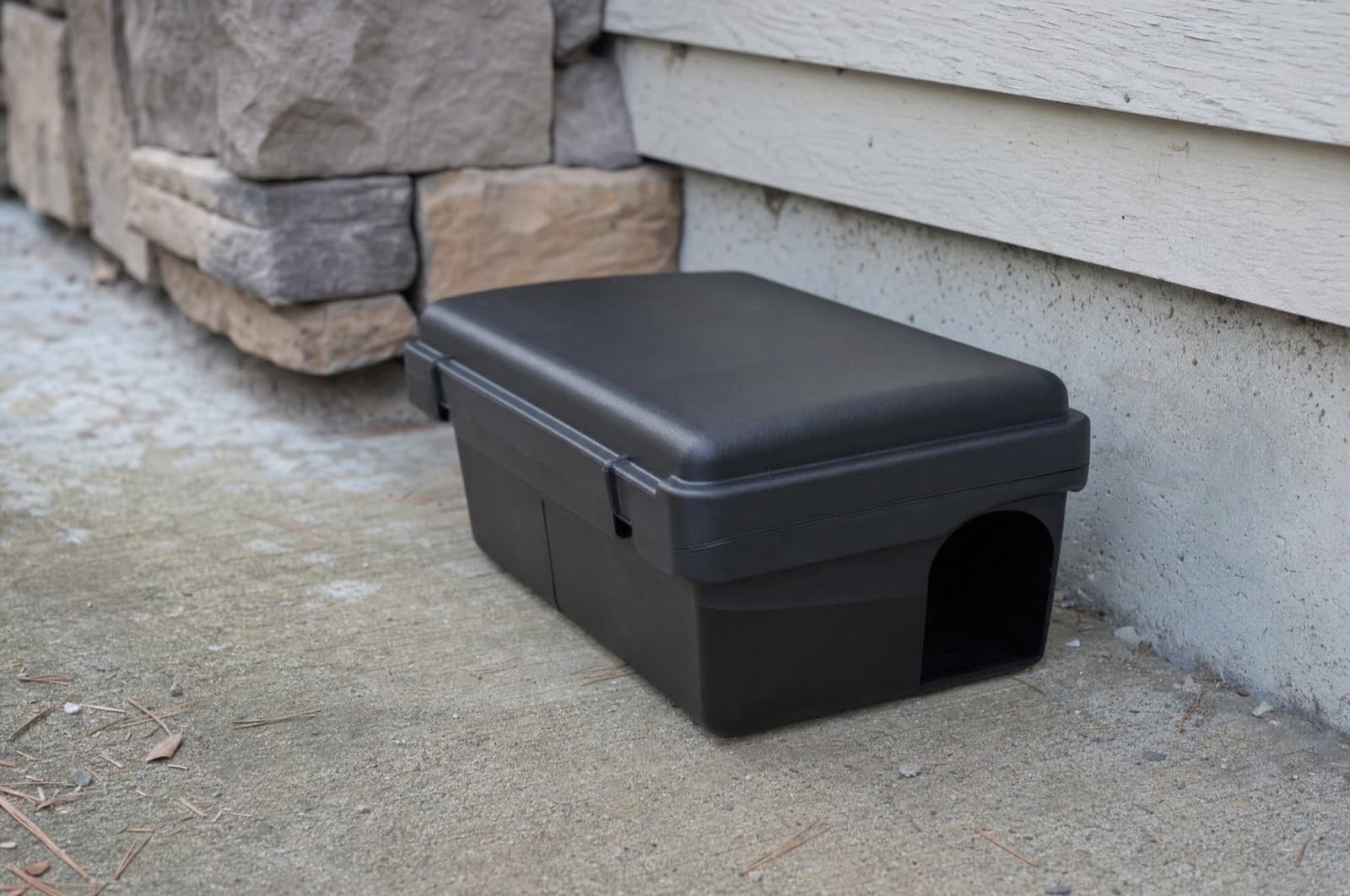
How to Use JT Eaton Bait Block Rodenticide with Peanut Butter Flavor
At a glance
- Efficacy: Situational
- Best job: Maintenance baiting in a station where a first-generation anticoagulant with a well-known, vet-administered antidote is preferred over a faster or higher-risk active
- Format: Peanut-butter-flavored bait block with a center hole for securing on a rod inside a tamper-resistant station; labeled for Norway rats, roof rats, and house mice
- Technique: Moderate technique
Does this product actually work?
A real anticoagulant with a well-known antidote — but slow and multi-feed, so it's only as good as your station discipline.
Secured on the rod inside a tamper-resistant station along real rodent runways, with the supply kept fresh and uninterrupted, JT Eaton's peanut-butter bait block does exactly what a first-generation anticoagulant is built to do: kill on a normal schedule with an antidote a vet can administer. But diphacinone is multi-feed — per EPA, first-generation actives usually require multiple feedings, with death generally within 5-7 days — so pulling the bait early, letting a station run empty, or expecting a one-and-done result wastes it. It's a maintenance tool, not a fast fix, and it does nothing about the gap letting rodents in.
Best for
Maintenance baiting in a tamper-resistant station where an anticoagulant with a known, vet-administered antidote is specifically preferred.
Skip it for
Fast knockdown, heavy mouse-specific pressure, or a set-it-once-and-forget-it approach — diphacinone needs repeated feedings over several days.
What it is — and what it's really for
The label is the law. Here's the honest read on the format, the one job it does well, and the job people wrongly buy it for.
The technique walkthrough
Where DIY succeeds or fails is in the placement, patience, and the small pro moves the label never mentions. Follow the label; these are the technique details on top of it.
This is an easy block to load and a slower one to trust — the entire result depends on keeping a continuous supply available for the several feedings diphacinone requires.
Inspect and identify active runways
Walk the interior perimeter and look for droppings, gnaw marks, and grease-rubbed runways along walls before placing anything.
Pro moveCheck behind large appliances and along foundation lines first — the most common indoor and exterior runway junctions.Secure the block inside a tamper-resistant station
Thread the block onto the securing rod inside a locked, tamper-resistant station — never place it loose.
Common mistakeSetting bait loose on the floor or in an unsecured container, which is unsafe and against label direction.CautionWear gloves; never handle bait with bare hands.Place stations flush along walls
Position stations tight against the wall on the runways you identified — closer spacing for mice, wider for rats.
Keep the supply continuous, not intermittent
Because diphacinone requires repeated feedings, check every few days and replace consumed bait immediately so animals never encounter an empty station.
Pro moveResist pulling bait early just because you don't see immediate results — multi-feed baits work over days, not one visit.Common mistakeTreating it like a single-feed bait and letting the station run dry after the first refill, which under-doses feeding rodents instead of finishing the job.Remove competing food
Clean up spilled pet food, birdseed, and accessible garbage so the bait isn't competing with an easier meal.
Seal entry points alongside baiting
Locate and close gaps rodents are using to get in — a station controls what's already inside, not what's still arriving.
Do & don't
- Secure blocks on the rod inside a locked, tamper-resistant station.
- Keep a continuous, uninterrupted supply until feeding stops.
- Place stations flush to walls on evidence-based runways.
- Wear gloves when handling bait.
- Pair baiting with sanitation and exclusion.
- Don't set bait loose or outside a station.
- Don't let a station run empty and call it 'done.'
- Don't expect a single feeding to work — this is a multi-feed bait.
- Don't skip sealing entry points.
- Don't leave competing food sources out nearby.
Where it works vs. where it fails
No product fixes everything. This is the honest boundary — the situations it genuinely handles, and the ones it simply won't.
Where it works
- Rodent activity is light-to-moderate and traceable to specific runways
- The household is comfortable maintaining a fresh supply over several days, not a one-time set
- An anticoagulant with a known, vet-administered antidote is specifically preferred
- Baiting is paired with sanitation and exclusion work
Where it fails
- You need a fast, single-feeding result — diphacinone is multi-feed by design
- The infestation is established or recurring across multiple rooms
- The entry point stays unsealed, so new rodents keep replacing the ones the bait removes
- An ongoing food source competes with the bait
Mistakes that waste the product
Letting the station run empty between refills
Feeding rodents get an interrupted, sub-lethal dose instead of the full course diphacinone needs.
Placing bait loose instead of secured in a station
It's unsafe around kids, pets, and non-targets, and doesn't meet label direction.
Expecting overnight results
First-generation anticoagulants generally take 5-7 days of feeding before death occurs.
Skipping exclusion
Without sealing gaps, new rodents keep entering as fast as the bait removes existing ones.
What to expect — and when
Diphacinone works on a multi-feed schedule — judge it on sustained, declining sign over days, not a fast knockdown.
First few days
Rodents locate and begin feeding on the secured block if the station sits on an active runway.
About days 5-7
First deaths typically occur as feeding accumulates a lethal dose, per EPA guidance on first-generation anticoagulants.
1-2 weeks
Visible decline in droppings, gnawing, and sightings if supply stayed continuous and entry points are addressed.
When to stop DIY & call a pro
Diphacinone maintenance baiting keeps a known population suppressed but never tells you where the animals are getting in — a station can't close an entry point. These are the signals the job has outgrown a DIY station:
Rodent sign continues after 2-3 weeks of correctly maintained, continuous baiting
Persistent activity despite proper feeding conditions usually means the population or entry-point problem exceeds homeowner-scale baiting.
You find evidence of rats, not just mice
Rat-scale infestations typically need denser professional placement and inspection than a homeowner can match.
Activity is heard or seen in wall voids or other inaccessible spaces
A station can't reach rodents living in a void, and a rodent dying there creates an odor problem beyond DIY reach.
Sign spans multiple rooms or floors
That pattern points to an established colony, not a single incursion, and needs a professional program's placement density and exclusion work.
When maintenance baiting alone isn't holding the line, Anchor's licensed NH technicians combine inspection, professional-grade placement density, and exclusion work to close the entry points feeding the problem — not just reduce the rodents already inside. Free inspection, same-day service across southern and central New Hampshire.
Bait maintained correctly but rodents still around?
Is it safe for pets & kids?
The short version lives here; the full per-species verdict lives on this product's pet-safety page.
Diphacinone is a first-generation anticoagulant, so both primary ingestion (a pet or child eating the bait) and secondary poisoning (a pet eating a rodent that fed on it) are real risks — the antidote is Vitamin K1, administered by a vet or doctor, never at home. Keep bait secured in a locked, tamper-resistant station at all times.
Re-entry: Keep the bait station locked, anchored, and out of reach of children and pets at all times, not just during placement.
Rodent pressure timing in New Hampshire
New Hampshire's cold winters don't kill off house mice or Norway rats — the fall temperature drop just drives them from woodpiles, compost, and burrows against foundations into heated southern-NH homes. Because diphacinone needs several consecutive days of feeding to work, the payoff comes from stocking stations along active runways early and never letting them run empty, so the bait is already established when that indoor push begins. Anchor Pest Services treats both the population and the entry points across Manchester, Nashua, Concord, and the surrounding towns.
Service area
Southern New Hampshire
Anchor Pest Services · NH license #782664 · NEPMA member · family-owned since 2017.
Frequently asked
Sources & further reading(5)
- [1]JT Eaton — Safety Data Sheet, Bait Block Rodenticide (704PN/709PN)
Verified active (diphacinone 0.005%), format, and target pests (facts only, not the efficacy verdict)
manufacturerverified 2026-07-14 - [2]EPA — Restrictions on Rodenticide Products
First-generation anticoagulants (warfarin, chlorophacinone, diphacinone) usually require multiple feedings; death generally within 5-7 days
govverified 2026-07-14 - [3]NPIC — Rodenticides General Fact Sheet
Anticoagulant rodenticide mechanism and first- vs. second-generation distinction
npicverified 2026-07-14 - [4]University of Missouri Extension — Controlling House Mice (G9444)
Runway/rub-mark identification and correct bait-station placement principles
extensionverified 2026-07-14 - [5]CDC — Seal Up! Rodent Control Guidance
Exclusion as the long-term fix alongside bait-based population reduction
govverified 2026-07-14
Written & reviewed by
VerifiedDaniel Brady
NH-Licensed Pesticide Applicator · License #782664 (NHDAMF, RSA 430)
Daniel Brady is the New Hampshire–licensed applicator behind Anchor Pest Services, a family-owned pest control company serving the Manchester area since 2017.
Last updated July 2026
Related products in this category
Same shelf, different jobs — the dot shows each product's honest efficacy verdict at a glance.
Professional Pest Control
When Maintenance Baiting Isn't Enough
A multi-feed anticoagulant reduces the rodents already inside, but it can't close the gap letting the next ones in. Anchor Pest Services combines inspection, professional placement density, and exclusion across southern and central New Hampshire. Family-owned since 2017, NH license #782664.
- Inspection + exclusion, not just bait placement
- NH-licensed applicators (#782664)
- Free inspection — same-day service across southern NH
NH License #782664 · No obligation · We answer in person
Your next step
- Book a NH pro
Rodent Control in New Hampshire
Mice and rats move indoors every fall. We trap, seal entry points and keep them out.
Book now - Book a NH pro
Pest Control Services
Licensed, family-owned pest control across southern NH.
Book now - What to do next
Is Bait Block Rodenticide with Peanut Butter Flavor by JT Eaton Safe for Pets?
Read the answer - Also relevant
Is Bait Block Rodenticide with Peanut Butter Flavor by JT Eaton Safe for Pets?
Read the answer - Also relevant
Chemical Rodent Control: Rodenticides, Risks & the Rules
Read the answer - Related guide
How to Use Amdro Ant Block Home Perimeter Ant Bait
Read the answer