
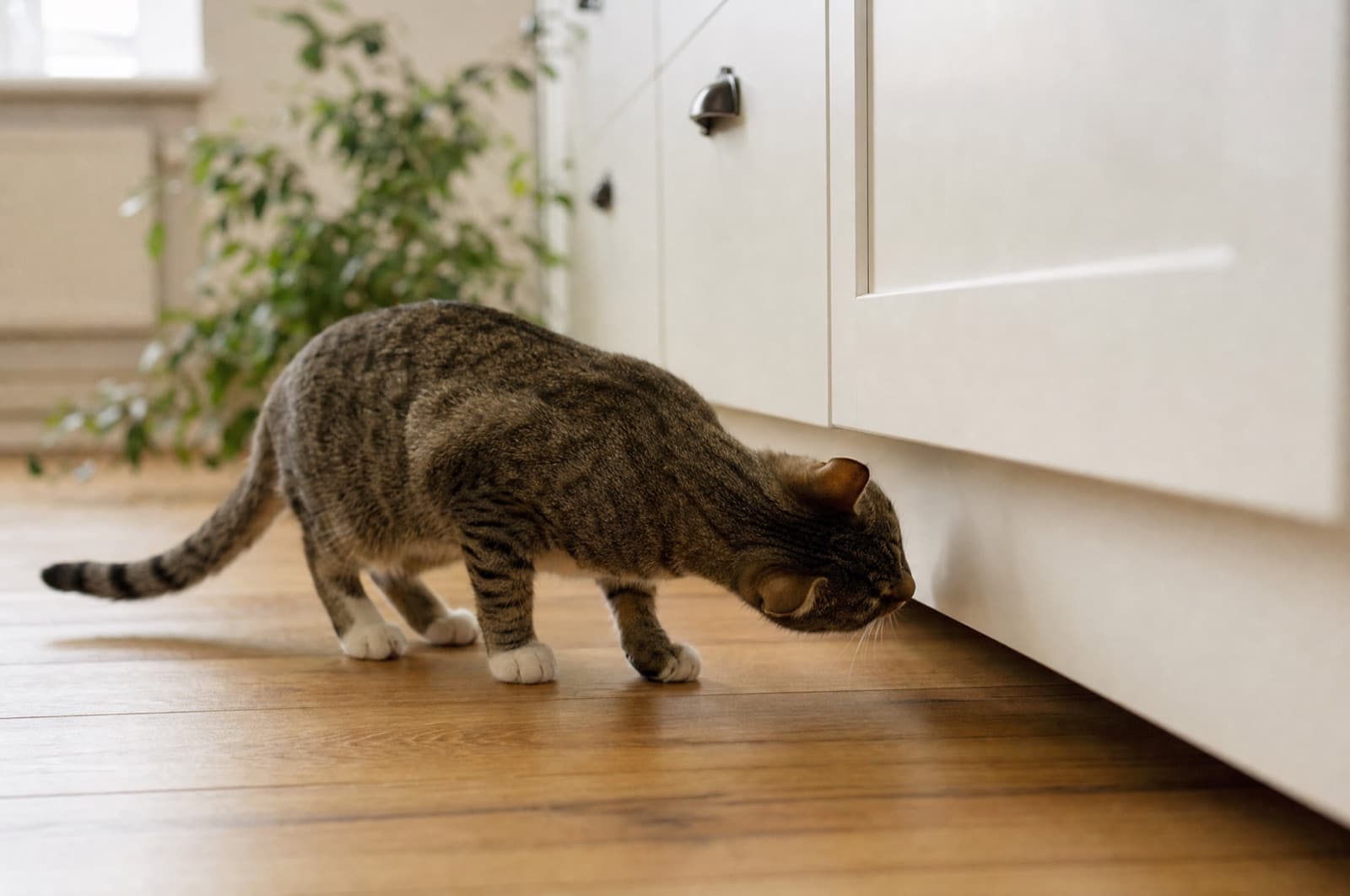
Is Kaput Ground Squirrel Bait Safe for Pets?
At a Glance
- Product: Kaput Ground Squirrel Bait by Scimetrics · Scimetrics
- Active ingredient: Diphacinone 0.0025%, Imidacloprid 0.0250%
- Re-entry: Ongoing — for the full duration the bait is placed and active.
- Cat owners: Cats differ — read the cat card below
The short, honest answer
The score rolls up every per-species verdict below, weighted by the honest exposure that matters — a chewed-open tube, not a hidden dab — and is checked against the EPA label and veterinary toxicology.
A real anticoagulant rodenticide placed near burrows — the label itself warns of secondary poisoning.
Kaput Ground Squirrel Bait carries the insect-bait-station cluster's placement, but it is a genuine rodenticide (EPA Reg. No. 72500-24) built on diphacinone, a first-generation anticoagulant. The EPA label states plainly that the product "is highly toxic to mammals and birds" and that predators or scavengers — including dogs and cats — "might be poisoned if they feed upon animals that have eaten this bait." It's legally restricted to tamper-resistant stations near burrows, but underground/near-burrow placement is not adequate protection on its own, because dogs dig.
General information, not veterinary advice. For a suspected exposure, contact your veterinarian or a pet-poison hotline. Verdict checked 2026-07-13 against the EPA label and veterinary toxicology.
It's not one answer — it's one per animal
Cats, birds, and fish routinely differ sharply from dogs. That contrast is the whole point of this scorecard, and no manufacturer page draws it.
- DogsAvoid
- CatsAvoid
- Small mammalsAvoid
- BirdsAvoid
- FishAvoid
Digging and predation are both documented exposure pathways
Per the Merck Veterinary Manual (with ASPCA APCC), anticoagulant rodenticides are the most frequent cause of poisoning in pets, and poisoning happens both from bait itself and from digging it up near a burrow. Internal bleeding results, though vitamin K1 is an effective antidote when a vet starts it promptly.
Merck Veterinary Manual — Anticoagulant Rodenticide Poisoning in Animals; EPA PPLS Kaput Label 72500-24
Secondary poisoning from a poisoned squirrel is a real risk
A cat that catches and eats a diphacinone-affected ground squirrel can be poisoned secondarily (a relay effect), in addition to any direct bait access. The label's predator/scavenger warning applies directly to outdoor cats.
EPA PPLS Kaput Label 72500-24
Highly susceptible — any access is unacceptable
A pet rabbit, guinea pig, or rodent is close enough to the target species that any accessible bait is a direct, undiminished poisoning risk.
Merck Veterinary Manual — Anticoagulant Rodenticide Poisoning in Animals
Documented raptor and scavenger secondary poisoning
The label explicitly warns of secondary poisoning, and USGS and UC Davis research documents raptors and scavenging birds being poisoned by eating dead rodents and squirrels exposed to diphacinone-class baits.
USGS raptor diphacinone study; UC Davis — Raptors and Rodenticides
Label prohibits contaminating water
The label prohibits water contamination and lists toxicity to aquatic invertebrates; keep bait, runoff, and treated-carcass material away from ponds, aquaria, or drains.
EPA PPLS Kaput Label 72500-24
What's in it — and what it does to pets
A first-generation anticoagulant that blocks the vitamin K cycle the body needs to clot blood, leading to internal bleeding over one to several days. First-generation actives like diphacinone generally metabolize faster and persist less in tissue than second-generation actives, which somewhat lowers — but does not eliminate — secondary-poisoning risk from eating a poisoned squirrel. Vitamin K1 is an effective antidote, but only with prompt, veterinarian-directed treatment.
Merck Veterinary Manual — Anticoagulant Rodenticide Poisoning in Animals; California DPR Diphacinone Product List
A neonicotinoid added to this product specifically to kill fleas on treated ground squirrels, not as the primary rodenticide. It is a lower-acute-toxicity active in general use, but it is still a pesticide, and this bait's overall verdict is driven by the diphacinone component.
EPA PPLS Kaput Label 72500-24
How to use it safely around pets
This is a professional-framed outdoor bait legally restricted to tamper-resistant stations near burrows. Near-burrow or underground placement is not, by itself, protection against a digging dog.
Use only in a genuinely tamper-resistant station
The label requires use in secured, tamper-resistant bait stations placed within a limited distance of buildings — never as loose granules a pet could scoop up.
Assume a digging dog can still reach buried or near-burrow bait
Because ground squirrels burrow, treated areas are exactly where a dog is likely to dig. Fence off or closely supervise any yard area under treatment.
Collect and dispose of dead squirrels promptly
Wearing gloves, collect and dispose of any dead ground squirrels quickly to reduce the window for a dog, cat, or bird of prey to eat one.
Treat this as a professional job in homes with pets
Given the outdoor, near-burrow placement and secondary-poisoning risk, a licensed applicator's placement and monitoring is the safer route for a yard with dogs, cats, or free-roaming pets.
There is no safe re-entry timing for an active anticoagulant bait station near burrows — pets should never have unsupervised access to a treated area for as long as bait is in service.
Ongoing — for the full duration the bait is placed and active.
If a dog has been digging in a treated area, or a pet may have eaten a dead squirrel, treat it as an active exposure and call a vet or poison hotline.
Ground squirrels in the yard and pets that dig?
Anchor's licensed NH technicians weigh non-toxicant options first and place any bait with pet-aware protocols.
Symptoms to watch for
A sign, its urgency, and what to do — never a diagnosis. When in doubt, the emergency panel below is one tap away.
- Moderate
Lethargy or weakness
- Moderate
Pale gums
- Serious
Unexplained bruising
- Serious
Bleeding from the nose or gums
- Serious
Blood in vomit, urine, or stool
- Emergency
Coughing or labored breathing (internal/chest bleeding)
Seek emergency veterinary care immediately; onset is often delayed 1–5 days
Act now — call a vet or a pet-poison line
Do not induce vomiting unless told to
If your pet dug up bait, ate a treated ground squirrel, or may have been exposed, act now — bring the packaging or a photo of the label when you call. This page is general information, not veterinary advice — for a suspected poisoning, contact your veterinarian or ASPCA Animal Poison Control (888-426-4435) right away.
What each situation calls for
Your dog was digging in a yard area treated for ground squirrels
Call your vet or ASPCA Animal Poison Control immediately, even with no visible signs — anticoagulant symptoms are typically delayed 1–5 days, and vitamin K1 treatment is most effective started early.
Your cat or dog may have eaten a dead or dying ground squirrel
Treat as a real secondary-poisoning risk — the product label explicitly warns of this. Call your vet or a pet poison hotline right away and describe what happened.
In the next 60 seconds
- Get your pet away from the bait station, burrow area, or any dead/dying squirrel.
- Do NOT induce vomiting or attempt any home treatment unless a veterinarian or poison expert tells you to.
- Save the packaging — the EPA registration number (72500-24) and active ingredient (diphacinone, an anticoagulant) tell the vet exactly which treatment pathway to start.
- Call your veterinarian or one of the hotlines below right away, even if your pet seems fine — anticoagulant symptoms are often delayed 1–5 days.
ASPCA Animal Poison Control
(888) 426-4435
24/7; a consultation fee may apply
Pet Poison Helpline
(855) 764-7661
24/7; a per-incident fee applies
Northern New England Poison Center
(800) 222-1222
24/7 human poison control — for household/child exposure context; call a vet or the pet lines above for pet guidance
Safer pet-friendly alternatives
Honest options that reduce or remove pet-toxicity — no affiliate hype, real caveats included.
Havahart live-catch cage trap
SaferLive-catch, no toxicant
No poison and no lethal mechanism — ground squirrels are captured alive, removing both the primary and secondary poisoning risks entirely.
Requires frequent checks and a lawful relocation or disposition plan; check NH wildlife regulations.
Burrow collapse and habitat modification
SaferNon-chemical, preventive
Removing food sources and collapsing inactive burrows reduces ground squirrel activity with zero pet-toxicity.
Slower than baiting and needs consistency; best for smaller or emerging populations.
Snap-trapping in a protected box
SaferMechanical, no toxicant
A trap enclosed in a box sized for the target species has no chemical toxicant and limited pet accessibility when placed correctly.
Still a mechanical entrapment risk if a small pet can access the box — place carefully.
Professional wildlife/rodent control (Anchor Pest Services)
SaferLicensed professional service
A licensed applicator can weigh whether a non-toxicant option fits a burrow situation, or place and monitor toxicant bait with pet-aware protocols beyond typical DIY placement.
A service, not a product — ask for a pet-safety-focused plan.
Pet-safe ground squirrel and rodent control in New Hampshire
Ground squirrels are a less common but real nuisance in parts of southern and central New Hampshire, and a diphacinone bait placed near burrows can poison more than the target — the state's red-tailed hawks, great horned owls, and barred owls scavenge dead and dying rodents, making a poisoned squirrel a secondary-exposure risk. Applying a pesticide for hire in New Hampshire requires an applicator licensed under RSA 430 through the NH Department of Agriculture, Markets & Food. Anchor Pest Services provides that licensed, pet-conscious control across Manchester, Nashua, Concord, and the surrounding towns.
NH-licensed applicator #782664 (NHDAMF, RSA 430) · NEPMA member · family-owned since 2017.
Service Area Map
Southern New Hampshire
Frequently asked questions
Sources(7)
- [1]EPA PPLS — Kaput Ground Squirrel Bait Label (Reg. No. 72500-24)
Verified actives (diphacinone 0.0025%, imidacloprid 0.0250%), secondary-poisoning warning, tamper-resistant station requirement
epa_labelverified 2026-07-13 - [2]Kaput Products — Ground Squirrel Bait Label
Label confirmation of actives and predator/scavenger warning
manufacturerverified 2026-07-13 - [3]California DPR — Diphacinone Product List
First-generation anticoagulant classification
govverified 2026-07-13 - [4]Merck Veterinary Manual — Anticoagulant Rodenticide Poisoning in Animals
Mechanism, clinical signs, vitamin K1 treatment
veterinaryverified 2026-07-13 - [5]Pet Poison Helpline — Long-Acting Anticoagulants (Mouse and Rat Poison)
Clinical signs and exposure guidance
pet_poisonverified 2026-07-13 - [6]USGS — Raptor Diphacinone Exposure Study
Documented secondary poisoning in raptors
govverified 2026-07-13 - [7]UC Davis — Raptors and Rodenticides
Secondary poisoning in birds of prey
veterinaryverified 2026-07-13
Written & reviewed by
VerifiedDaniel Brady
NH-Licensed Pesticide Applicator · License #782664 (NHDAMF, RSA 430)
Daniel Brady is the New Hampshire–licensed applicator behind Anchor Pest Services, a family-owned pest control company serving the Manchester area since 2017.
Last updated 2026-07-13
Pet-Safe Professional Pest Control
Skip the Secondary-Poisoning Guesswork
DIY anticoagulant bait near burrows puts placement, monitoring, and pet-safety on you. Anchor Pest Services handles rodent and wildlife control with licensed, pet-conscious methods across southern and central New Hampshire. Family-owned since 2017, NH license #782664.
- Pet-conscious placement and monitoring
- NH-licensed applicators (#782664)
- Free inspection — same-day service across southern NH
NH License #782664 · No obligation · We answer in person
Your next step
- Book a NH pro
Pest Control Services
Licensed, family-owned pest control across southern NH.
Book now - What to do next
How to Use Kaput Ground Squirrel Bait by Scimetrics
Read the answer - What to do next
How to Use Kaput Rat & Mouse Bait with Warfarin by Scimetrics
Read the answer - What to do next
Natural Small Mammal Control: Exclusion Works, Repellents Mostly Don't
Read the answer - Also relevant
Chemical Rodent Control: Rodenticides, Risks & the Rules
Read the answer - Also relevant
Mechanical Rodent Control: Snap Traps + Exclusion That Works
Read the answer