
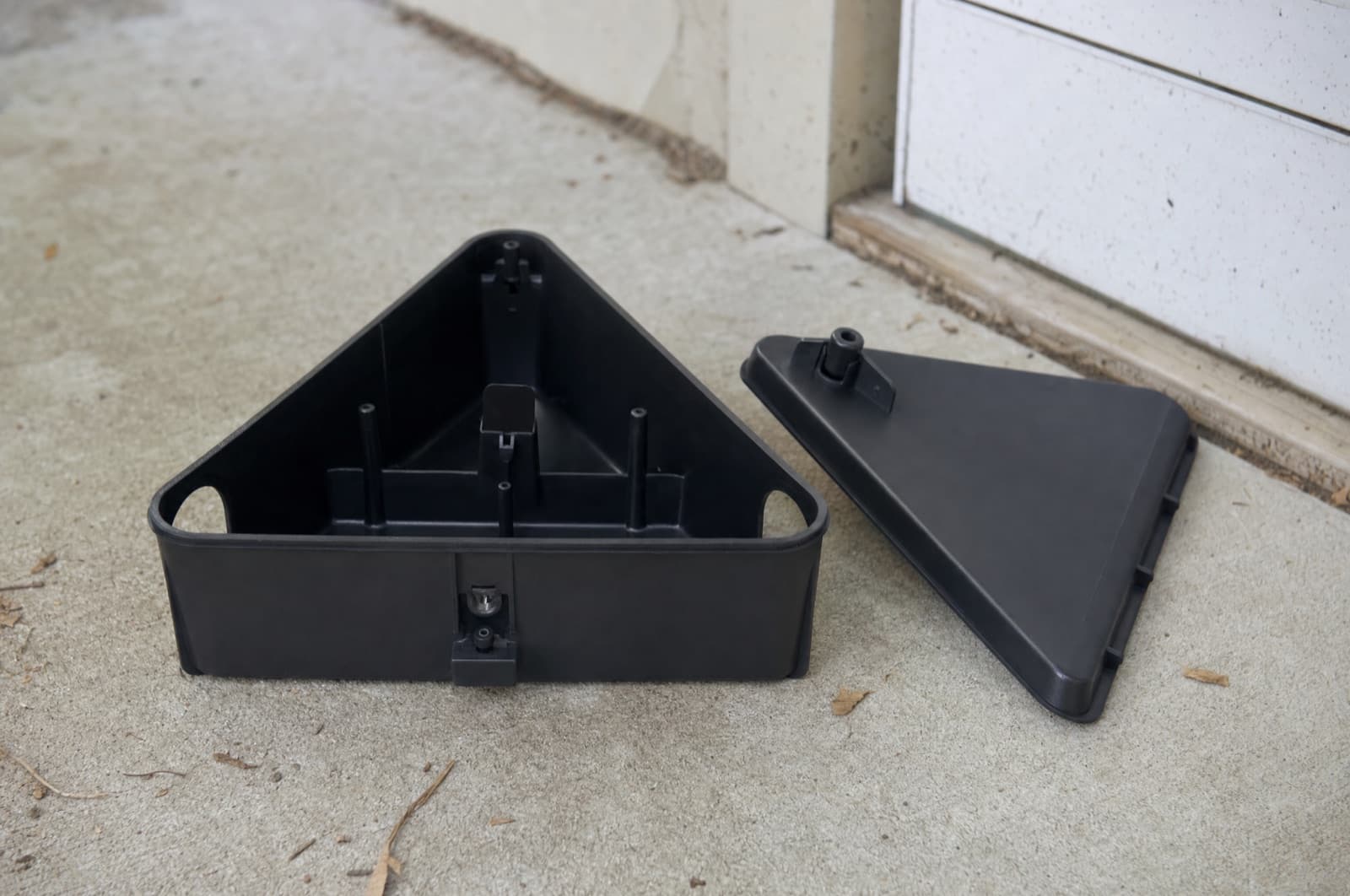
How to Use Kaput Ground Squirrel Bait by Scimetrics
At a glance
- Efficacy: Situational
- Best job: Reducing California ground squirrel burrowing within 100 feet of a structure, in states where that species is present
- Format: Specialty outdoor rodenticide bait, labeled specifically for California ground squirrels near structures
- Technique: Moderate technique
Does this product actually work?
Effective for its actual, narrow job — California ground squirrels near structures — and simply the wrong product for New Hampshire.
Where the labeled species actually lives, an anticoagulant bait placed correctly within 100 feet of a structure can genuinely reduce California ground squirrel activity — that's a legitimate, narrow job the product is built for. In New Hampshire, though, the honest verdict has nothing to do with the chemistry: the target animal simply isn't present. The digging or burrowing NH homeowners see is virtually always an eastern chipmunk, an eastern gray squirrel, a woodchuck, a vole, or a mole — none of which this label covers — and applying any pesticide outside its labeled species and region is not just ineffective, it's against the law. The label is the law; for NH, that means skip this product and identify the animal first.
Best for
California ground squirrels within the labeled 100-foot structure zone, in the western states where that species is a real pest.
Skip it for
New Hampshire yards, full stop. The label's target species doesn't live here, and NH's burrowing/climbing 'squirrels' are eastern chipmunks and eastern gray squirrels — different animals not covered by this label.
What it is — and what it's really for
The label is the law. Here's the honest read on the format, the one job it does well, and the job people wrongly buy it for.
The technique walkthrough
Where DIY succeeds or fails is in the placement, patience, and the small pro moves the label never mentions. Follow the label; these are the technique details on top of it.
There is no correct NH technique for this product, because there is no legal, labeled New Hampshire target for it. What follows is the label's actual use case, so you understand what this product does where it applies — and why that's not here.
Confirm your actual species first
Before considering any burrow or den treatment, identify what's actually digging in your yard — in New Hampshire, that's almost always a chipmunk, gray squirrel, woodchuck, vole, or mole, none of which this product is labeled for.
Pro moveUse burrow size, entrance shape, and daytime activity patterns to narrow down the species, or get a professional identification before buying any product.Read the label's species and geographic restrictions
This product's label restricts use to California ground squirrels and only within 100 feet of a structure vulnerable to rodent invasion — read those restrictions before purchasing, regardless of where you live.
CautionUsing any pesticide outside its labeled species or region is a federal label violation, not just an efficacy problem.Where the species is actually present (outside NH)
In states where California ground squirrels are a labeled problem, bait is placed in bait stations within the 100-foot structure zone per the label's station-density and monitoring directions.
In New Hampshire: stop here and choose an NH-appropriate method
Since there is no legal target species for this product in NH, do not apply it here. Identify the actual animal and select a method or professional service matched to it instead.
Do & don't
- Identify the actual animal in your NH yard before buying any rodenticide.
- Read a product's label species and geographic restrictions before purchase.
- Treat 'the label is the law' as a real legal constraint, not a suggestion.
- Choose an NH-appropriate, correctly labeled method for chipmunks, gray squirrels, woodchucks, voles, or moles.
- Ask a licensed professional for identification if you're unsure which animal you have.
- Don't buy this product for an NH chipmunk or gray squirrel problem.
- Don't assume 'ground squirrel' means any digging yard animal.
- Don't apply any rodenticide off-label — it's both illegal and won't work.
- Don't assume anticoagulant baits are low-risk to pets and wildlife.
- Don't broadcast bait beyond a label's structure-distance restriction, even where the species is present.
Where it works vs. where it fails
No product fixes everything. This is the honest boundary — the situations it genuinely handles, and the ones it simply won't.
Where it works
- The target is a confirmed California ground squirrel population within the labeled 100-foot structure zone, in a state where that species occurs
- Bait stations are placed and monitored per the label in a legally applicable location
Where it fails
- Used anywhere in New Hampshire — the labeled species is not present
- The actual animal is a chipmunk, gray squirrel, woodchuck, vole, or mole — none are covered by this label
- Applied beyond the 100-foot structure distance restriction even where the species is present
- Used without first confirming species identification
Mistakes that waste the product
Buying this product for an NH chipmunk or gray squirrel problem
The label doesn't cover either species, so the application is both off-label (illegal) and won't be effective — you're using the wrong tool entirely.
Broadcasting bait beyond 100 feet of a structure, even in a state with California ground squirrels
The label specifically restricts placement to within 100 feet of a structure vulnerable to rodent invasion; broadcasting beyond that is a label violation.
Assuming anticoagulant baits are low-risk because they're 'just for rodents'
Diphacinone is highly toxic to non-target mammals and birds, including pets and any predator or scavenger that eats a poisoned animal.
What to expect — and when
There is no results timeline to give for New Hampshire, because there is no legal application here — the honest expectation is that this product does nothing appropriate for an NH yard.
In New Hampshire
No appropriate use case exists; the labeled target species is not present, so there is no result to expect from applying this product here.
Where the species is legitimately present (outside NH)
Per the label, an anticoagulant bait taken over multiple feedings within the 100-foot structure zone reduces ground squirrel activity over days to weeks.
When to stop DIY & call a pro
Persistent burrowing wildlife in an NH yard is a species-identification and, often, a wildlife-regulation question — not a job for a product built for a species NH doesn't have.
You can't confidently identify the animal digging in your yard
Chipmunks, gray squirrels, woodchucks, voles, and moles all leave different signs and need different approaches — misidentifying the animal wastes time and money on the wrong tool.
Burrowing or den activity is extensive or recurring each season
A persistent, established population usually needs more than a single consumer product, regardless of species.
You're unsure whether a species is protected or regulated under NH Fish & Game rules
Some wildlife is protected or has specific legal handling requirements; a licensed professional can navigate that correctly.
For any NH burrowing-wildlife question — chipmunks, gray squirrels, woodchucks, voles, or moles — Anchor's licensed NH technicians identify the actual animal and apply a method that's both effective and legal for New Hampshire. Free inspection, same-day service across southern and central New Hampshire.
Not sure what's digging in your NH yard?
Is it safe for pets & kids?
The short version lives here; the full per-species verdict lives on this product's pet-safety page.
Diphacinone is an anticoagulant the label itself calls highly toxic to mammals and birds, including pets and any predator or scavenger that eats a poisoned animal — this is a genuine hazard product, not a low-risk one, wherever it's legally used. In New Hampshire, the safest and correct choice is simply not to use it, since there's no labeled target here.
Re-entry: Where legally applicable, keep bait stations locked and inaccessible to children, pets, and non-target wildlife at all times.
New Hampshire doesn't have ground squirrels
California ground squirrels are essentially a western/plains species and do not occur in New Hampshire. What NH homeowners actually see digging, burrowing, or climbing around a yard is almost always an eastern chipmunk (small, striped, ground-burrowing) or an eastern gray squirrel (larger, tree-dwelling, not a burrower) — genuinely different animals with different biology, different damage patterns, and different legal/product options. Woodchucks, voles, and moles round out NH's common burrowing wildlife. Before buying any rodenticide or bait, confirm which of these you actually have — Anchor Pest Services serves Manchester, Nashua, Concord, and the surrounding towns with correct wildlife identification and NH-appropriate, legal treatment options.
Service area
Southern New Hampshire
Anchor Pest Services · NH license #782664 · NEPMA member · family-owned since 2017.
Frequently asked
Sources & further reading(3)
- [1]EPA Pesticide Product Label — Kaput Ground Squirrel Bait (diphacinone 0.0025% + imidacloprid 0.0250%), Reg. No. 72500-24
Verified actives, the labeled species restriction to California ground squirrels, and the 100-foot structure-distance restriction
epa_labelverified 2026-07-14 - [2]Pomerix Pesticide Database — Kaput Ground Squirrel Bait
Product format and use-directions facts (facts only, not the efficacy verdict)
manufacturerverified 2026-07-14 - [3]NH Fish & Game — Nuisance Wildlife
New Hampshire's actual burrowing/nuisance wildlife species and legal handling context, confirming California ground squirrels are not among them
govverified 2026-07-14
Written & reviewed by
VerifiedDaniel Brady
NH-Licensed Pesticide Applicator · License #782664 (NHDAMF, RSA 430)
Daniel Brady is the New Hampshire–licensed applicator behind Anchor Pest Services, a family-owned pest control company serving the Manchester area since 2017.
Last updated July 2026
Related products in this category
Same shelf, different jobs — the dot shows each product's honest efficacy verdict at a glance.
Professional Pest Control
The Right Species ID Before the Right Treatment
New Hampshire doesn't have ground squirrels — but it does have chipmunks, gray squirrels, woodchucks, voles, and moles that all dig differently and need different treatment. Anchor Pest Services identifies the real problem across southern and central New Hampshire. Family-owned since 2017, NH license #782664.
- Correct NH wildlife identification
- NH-licensed applicators (#782664)
- Free inspection — same-day service across southern NH
NH License #782664 · No obligation · We answer in person
Your next step
- Book a NH pro
Rodent Control
Book now - Book a NH pro
Pest Control Services
Licensed, family-owned pest control across southern NH.
Book now - What to do next
Is Kaput Ground Squirrel Bait Safe for Pets?
Read the answer - Also relevant
Is Kaput Ground Squirrel Bait Safe for Pets?
Read the answer - Also relevant
Chemical Rodent Control: Rodenticides, Risks & the Rules
Read the answer - Related guide
How to Use Kaput Rat & Mouse Bait with Warfarin by Scimetrics
Read the answer