
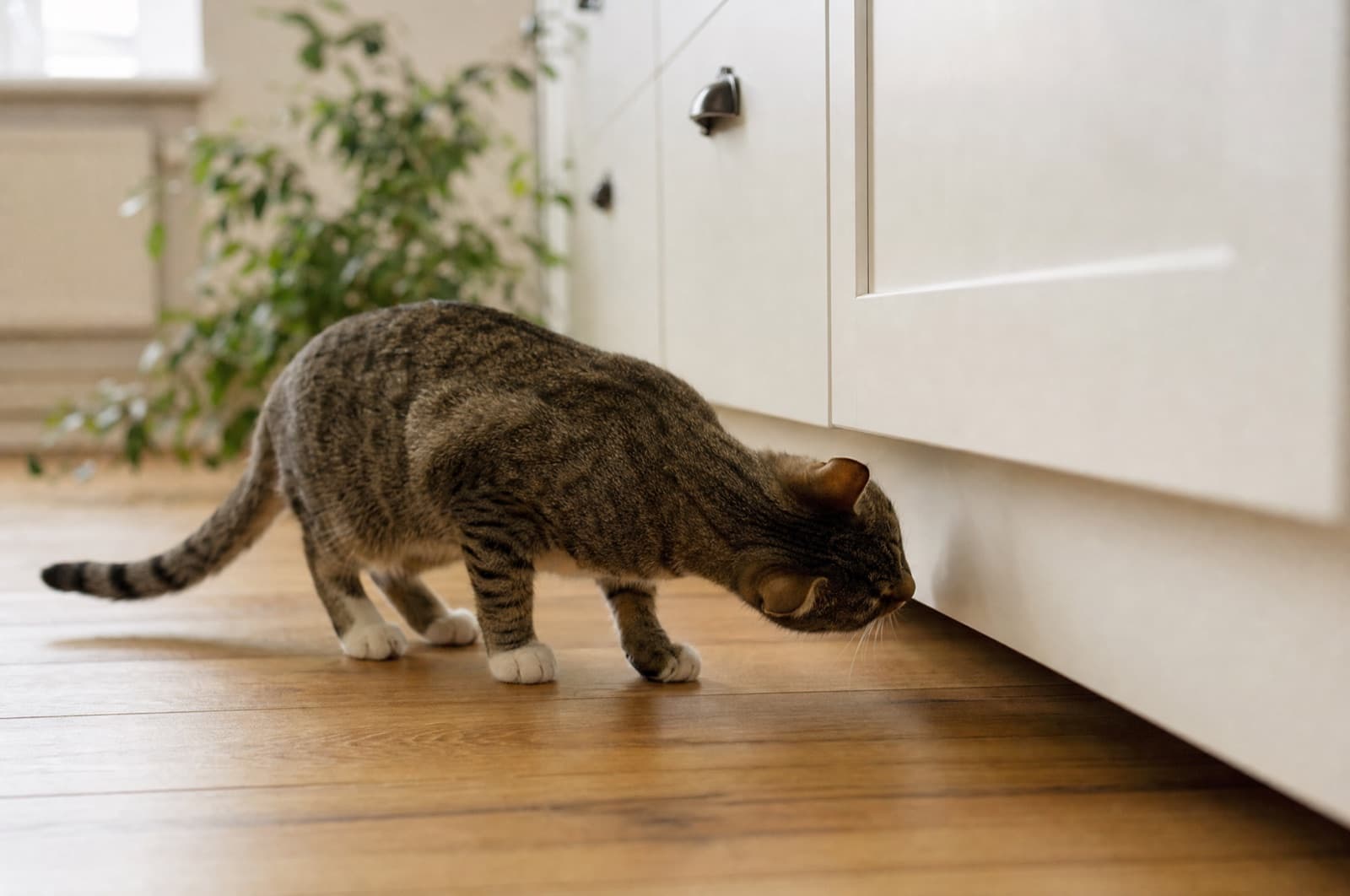
Is Amdro Kills Ants Bait Stations Safe for Pets?
At a Glance
- Product: Kills Ants Ant Killing Bait Stations by Amdro · Amdro
- Active ingredient: Hydramethylnon
- Re-entry: Ongoing for stations; for outdoor granular formats, follow the specific product label's watering-in or drying guidance.
- Cat owners: Cats differ — read the cat card below
The short, honest answer
The score rolls up every per-species verdict below, weighted by the honest exposure that matters — a chewed-open tube, not a hidden dab — and is checked against the EPA label and veterinary toxicology.
One of the lower-toxicity bait actives — still keep a chewed-open station out of the question.
Amdro's ant bait stations use hydramethylnon, which the manufacturer characterizes as having very low toxicity to people, animals, and birds. That makes it among the gentler actives in this hub's bait-station cluster, but it's still an enclosed pesticide dose, not a treat — a dog or cat that chews open and eats multiple stations still warrants a vet or hotline call. Place stations where pets can't reach and don't break them open to check them.
General information, not veterinary advice. For a suspected exposure, contact your veterinarian or a pet-poison hotline. Verdict checked 2026-07-13 against the EPA label and veterinary toxicology.
It's not one answer — it's one per animal
Cats, birds, and fish routinely differ sharply from dogs. That contrast is the whole point of this scorecard, and no manufacturer page draws it.
- DogsCaution
- CatsCaution
- Small mammalsAvoid
- BirdsCaution
- FishAvoid
Low acute toxicity, but multiple stations still warrant a call
Hydramethylnon has comparatively low acute toxicity per the manufacturer, but a dog chewing open and eating the bait from one or more stations still warrants a vet or poison-hotline call rather than a wait-and-see approach.
Amdro manufacturer statement on hydramethylnon toxicity
Ingestion of the matrix is a low, but not zero, risk
Cats are less likely to chew open plastic stations than dogs, but if the bait matrix is reached, low acute toxicity still doesn't mean no monitoring is needed.
Amdro manufacturer statement on hydramethylnon toxicity
Keep entirely out of reach
Pet rodents and rabbits are small-bodied; any access to the bait matrix is an unacceptable risk regardless of the active's comparatively low toxicity.
General bait-station pet-safety guidance
Manufacturer cites low bird toxicity — still keep free-flying birds away
The manufacturer describes hydramethylnon as low-toxicity to birds, but a pet bird shouldn't have access to a station or any spilled bait matrix as a matter of course.
Amdro manufacturer statement on hydramethylnon toxicity
Do not contaminate aquariums or drains
Never rinse a station or dispose of bait near an aquarium, drain, or waterway — pesticide contact with aquatic systems should always be avoided regardless of the active's land-animal toxicity profile.
General bait-station pet-safety guidance
What's in it — and what it does to pets
An amidinohydrazone-class metabolic inhibitor that the manufacturer describes as very low toxicity to people, animals, and birds — among the gentler actives used across bait stations in this hub. In pets, ingestion can still cause vomiting, drooling, lethargy, or loss of appetite, and multiple stations' worth of bait warrants professional guidance.
Amdro manufacturer statement; EPA PPLS hydramethylnon label (class reference)
How to use it safely around pets
This is a permanent enclosed placement — the safety question is where it sits, not a drying window.
Place where pets can't reach
Set enclosed stations along walls, under appliances, or in cabinets a pet cannot access or chew on.
Don't break stations open
The housing is the primary safety barrier; don't cut, crush, or pry one open to inspect it.
If using outdoor granular Amdro near a perimeter
Keep pets off treated bands until any label-specified drying or watering-in conditions are met.
Keep the packaging
Retain the box so a vet or poison hotline can confirm the exact active and formulation if exposure occurs.
For the enclosed indoor station, there's no drying window — keep it out of pet reach permanently, not just after placement.
Ongoing for stations; for outdoor granular formats, follow the specific product label's watering-in or drying guidance.
If a station is found chewed or missing, treat it as a possible exposure and call a hotline.
Want ant bait placed where pets truly can't reach it?
Anchor's licensed NH technicians handle placement and monitoring across your whole property.
Symptoms to watch for
A sign, its urgency, and what to do — never a diagnosis. When in doubt, the emergency panel below is one tap away.
- Mild
Vomiting
- Mild
Drooling
- Moderate
Lethargy
- Moderate
Loss of appetite
Following ingestion of bait from multiple stations
Act now — call a vet or a pet-poison line
Do not induce vomiting unless told to
If your pet chewed open a station or may have eaten bait from more than one, call for guidance — hydramethylnon's low acute toxicity doesn't mean skip the call. This page is general information, not veterinary advice — for a suspected exposure, contact your veterinarian or ASPCA Animal Poison Control (888-426-4435) right away.
What each situation calls for
Your pet chewed open one or more stations
Gather any remaining bait and the packaging, then call your vet or a pet poison hotline for guidance, especially if more than one station was reached.
Your pet is vomiting or lethargic after possible exposure
Do not induce vomiting unless a professional tells you to. Call your vet or a poison hotline and describe how many stations may have been involved.
In the next 60 seconds
- Move your pet away from the station and any remaining bait.
- Do NOT induce vomiting unless a veterinarian or poison expert tells you to.
- Note how many stations were reached and keep the packaging.
- Watch for vomiting, drooling, lethargy, or appetite loss.
- Call your veterinarian or one of the hotlines below.
ASPCA Animal Poison Control
(888) 426-4435
24/7; a consultation fee may apply
Pet Poison Helpline
(855) 764-7661
24/7; a per-incident fee applies
Northern New England Poison Center
(800) 222-1222
24/7 human poison control — for household/child exposure context; call a vet or the pet lines above for pet guidance
Safer pet-friendly alternatives
Honest options that reduce or remove pet-toxicity — no affiliate hype, real caveats included.
Terro borax liquid ant baits
SaferEnclosed bait (comparably low-toxicity active)
Borax is another comparatively lower-toxicity active option, useful if you want to alternate chemistries or one product isn't working.
Still a pesticide in an enclosed dose — place out of reach regardless.
Non-toxic glue board monitoring
SaferMechanical / adhesive (no toxicant)
Contains no insecticide at all, useful for confirming ant activity before or alongside baiting.
Monitors rather than eliminates a colony.
Sanitation + sealing entry points
SaferNon-chemical
Removing food access and sealing gaps addresses the underlying cause with zero pet-toxicity.
Slower than baiting; pairs well with a secured, low-toxicity bait.
Professional targeted baiting (Anchor Pest Services)
SaferLicensed professional service
A licensed applicator can place and monitor bait with pet-aware placement across a whole property.
A service, not a product — ask for pet-aware placement.
Pet-safe ant control in New Hampshire
Ants are among the most common indoor pest complaints in New Hampshire homes, with carpenter ants — NH's most destructive structural ant — and pavement ants leading the list as the weather warms. Enclosed bait stations reduce, but don't erase, the risk of a pet chewing one open. In NH, pest control performed for hire must be done by an applicator licensed by NHDAMF under RSA 430; Anchor Pest Services (NH License #782664) serves Manchester, Nashua, Concord, and surrounding towns.
NH-licensed applicator #782664 (NHDAMF, RSA 430) · NEPMA member · family-owned since 2017.
Service Area Map
Southern New Hampshire
Frequently asked questions
Sources(2)
- [1]Amdro — Manufacturer Statement on Hydramethylnon Toxicity
"Very low toxicity to people, animals and birds" characterization
manufacturerverified 2026-07-13 - [2]EPA PPLS — Hydramethylnon Bait Station Label (class reference, Reg. No. 64240-3)
Class-level hydramethylnon bait-station label facts
epa_labelverified 2026-07-13
Written & reviewed by
VerifiedDaniel Brady
NH-Licensed Pesticide Applicator · License #782664 (NHDAMF, RSA 430)
Daniel Brady is the New Hampshire–licensed applicator behind Anchor Pest Services, a family-owned pest control company serving the Manchester area since 2017.
Last updated 2026-07-13
Pet-Safe Professional Pest Control
Low-Toxicity Doesn't Mean No Supervision
Even a gentler active still needs deliberate placement. Anchor Pest Services treats ant problems with targeted, pet-aware methods across southern and central New Hampshire. Family-owned since 2017, NH license #782664.
- Pet-conscious targeted placement
- NH-licensed applicators (#782664)
- Free inspection — same-day service across southern NH
NH License #782664 · No obligation · We answer in person
Your next step
- Book a NH pro
Ant Pest Control
Book now - Book a NH pro
Pest Control Services
Licensed, family-owned pest control across southern NH.
Book now - Next step
What Attracts Acrobat Ants to Your House?
Read the answer - What to do next
How to Use Kills Ants Ant Killing Bait Stations by Amdro
Read the answer - What to do next
How to Use Amdro Ant Block Home Perimeter Ant Bait
Read the answer - Also relevant
Chemical Ant Control: Why Bait Beats Spray
Read the answer