
Do Piles of Tree Leaves Attract Termites?
Subterranean termites feed on wood, not leaves, and need constant soil moisture — a dry leaf pile alone doesn't draw them; leaves trapping moisture against the foundation is the real, indirect risk.
At a glance
- The verdict: Low risk — a leaf pile alone is not a termite magnet
- Who fixes it: You
- Category: Fallen Leaves, Yard & Structural Pest Risk
The short answer
Largely no. Subterranean termites — the only termite of structural concern in New Hampshire — feed on wood, not leaves, and need constant moisture and soil contact to survive. A dry leaf pile is not their food source and doesn't by itself draw them in. The legitimate, indirect risk is moisture: leaves banked against the foundation that keep soil and wood chronically wet, plus mulch or leaf litter bridging over a treated soil barrier, create the damp wood-and-soil conditions termites actually exploit.
Is this a pest-harborage risk?
Pest-harborage risk
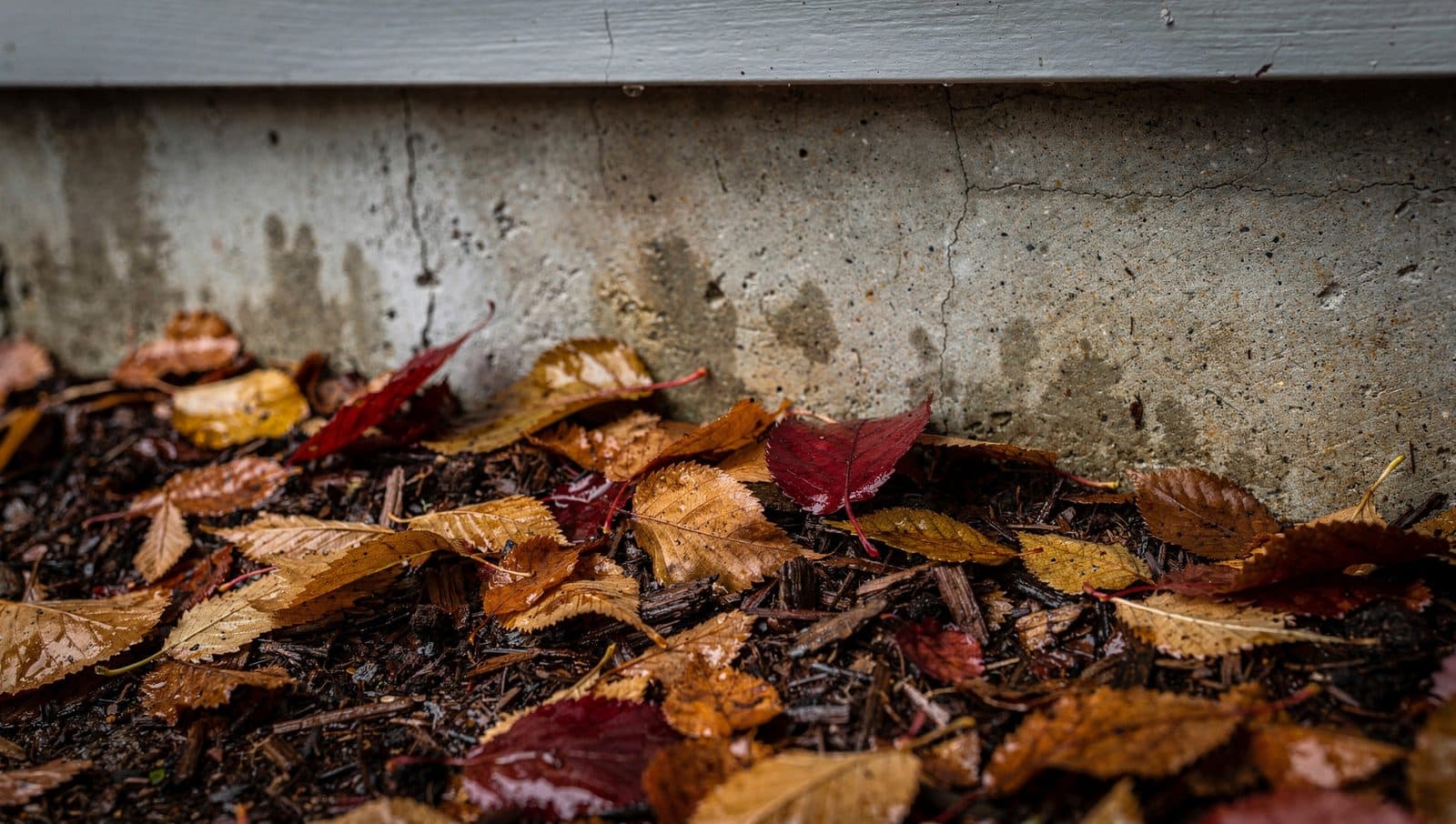
low riskLeaf litter or leaf-based mulch piled directly against a foundation wall, trapping moisture against soil and wood
- Why it matters
- Termites forage for wood in moist soil, not for leaf litter itself. Eastern subterranean termites 'require moist environments' and nest in or near soil, maintaining a connection to it for moisture, per UC IPM. Missouri Extension stresses the true danger zones are 'earth/wood contact' and 'areas of consistently moist soil along a foundation wall' — not the presence of leaves on their own. Where leaves become a genuine (indirect) contributor is when they act like mulch: UF/IFAS Extension warns mulch 'may create a bridge for termites to cross over treated areas around the foundation,' recommending no more than two inches of depth within twelve inches of the foundation.
- When it's low risk
- A dry, mid-yard leaf pile with no wood-to-soil contact and no foundation moisture is not a termite driver at all — this is the single most over-hyped leaf fear in this whole hub. Even leaves near the house are low risk as long as they aren't kept damp against the foundation or bridging over a treated soil barrier.
- What to do
- Keep leaves and mulch off the foundation, grade soil to slope away from the house, direct downspouts away from walls, and keep firewood off the ground and away from the structure. Suspected termite activity — mud tubes, damaged or hollow-sounding wood — is Anchor's work; call for an inspection rather than guessing from a leaf pile alone.
Who actually fixes this?
Start here
You
Keeping leaves and mulch off the foundation, grading soil away from the house, and managing downspouts are all preventive steps a homeowner handles without any professional termite treatment.
- Pest-control pro — You find mud tubes, damaged or hollow-sounding wood, or other signs of actual termite activity — that calls for a proper inspection, not more yard cleanup.
The details, straight
Why the leaf-pile termite fear is overblown
Termites are wood-feeders with an absolute requirement for moisture and a physical connection to soil — leaf litter provides neither the food source nor the reliable moisture pathway they need to sustain a colony. Missouri Extension is direct about where the real danger lies: earth-to-wood contact and consistently moist soil along a foundation, not a pile of dry leaves sitting in the yard. A leaf pile with no wood nearby and no chronic dampness simply isn't part of the termite equation.
The real, indirect risk — moisture, not leaves
Where leaves do matter is when they behave like mulch banked against the house: a thick layer traps moisture in the soil and can bridge over a termiticide barrier the same way store-bought mulch can. UF/IFAS's guidance to keep mulch shallow and off the foundation applies just as much to leaf litter that's allowed to build up in the same spot. The fix isn't avoiding leaves altogether — it's keeping any organic layer thin and away from direct foundation contact, and making sure water drains away from the house rather than soaking into the soil right at the wall.
Key takeaways
- Subterranean termites feed on wood and need constant soil moisture — leaves aren't their food or their moisture source.
- A dry, mid-yard leaf pile is not a termite driver at all.
- The real risk is leaves or leaf-mulch trapping moisture against the foundation or bridging a treated soil barrier.
- Keep leaves and mulch off the foundation, grade soil away from the house, and manage downspouts.
- Mud tubes or damaged wood mean it's time for a real termite inspection, not more raking.
Seeing mud tubes or damaged wood, not just leaves?
That's a different question from a leaf pile. Get a real termite inspection before guessing.
Get a Free QuoteTermites in New Hampshire
Eastern subterranean termites are present in New Hampshire and remain active in warmer months, retreating below the frost line in winter but staying tied to moist soil and wood contact year-round. A dry leaf pile in a New Hampshire yard, away from the house, isn't a meaningful termite concern in this climate any more than in warmer regions — the moisture-at-the-foundation mechanism is what matters here too.
NH-licensed applicator #782664 (NHDAMF, RSA 430) · NEPMA member · family-owned since 2017.
Related questions
Sources(3)
- [1]UC Statewide IPM Program — Subterranean and Other Termites
Subterranean termites require moist environments and maintain soil connection
extensionverified 2026-07-14 - [2]University of Missouri Extension — Termites (G7420)
True termite danger zones are earth/wood contact and consistently moist soil along foundations
extensionverified 2026-07-14 - [3]UF/IFAS Extension — Ask IFAS (Mulch and Termites)
Mulch can bridge over treated soil barriers; keep it shallow near the foundation
extensionverified 2026-07-14
Written & reviewed by
VerifiedDaniel Brady
NH-Licensed Pesticide Applicator · License #782664 (NHDAMF, RSA 430)
Daniel Brady is the New Hampshire–licensed applicator behind Anchor Pest Services, a family-owned pest control company serving the Manchester area since 2017.
Last updated 2026-07-14
Your next question
Honest pest help for New Hampshire homes
A Leaf Pile Isn't a Termite Call — Real Termite Signs Are Our Job
We'll tell you plainly that a dry leaf pile alone isn't a termite risk. Anchor Pest Services steps in for genuine termite inspections when you see mud tubes, damaged wood, or other real activity, and for the moisture-management work that keeps termites and other pests away from your foundation. Family-owned since 2017, NH license #782664, serving Manchester, Nashua, Concord and nearby towns.
- Honest calibration — we debunk the leaf-pile termite myth
- Genuine termite and structural inspections by NH-licensed applicators (#782664)
- Subterranean-termite and moisture-pest work across southern and central New Hampshire
NH License #782664 · No obligation · We answer in person
Your next step
- Book a NH pro
Pest Control Services
Licensed, family-owned pest control across southern NH.
Book now - Next step
Do termites really eat wood inside houses?
Read the answer - Related guide
Can Leaf Piles Attract Rats or Insects?
Read the answer - Related guide
Can Leaf Pests Spread to My Home?
Read the answer - Related guide
Can Composting Leaves Spread Pests?
Read the answer - Related guide
Do Fallen Leaves Attract Pests?
Read the answer