
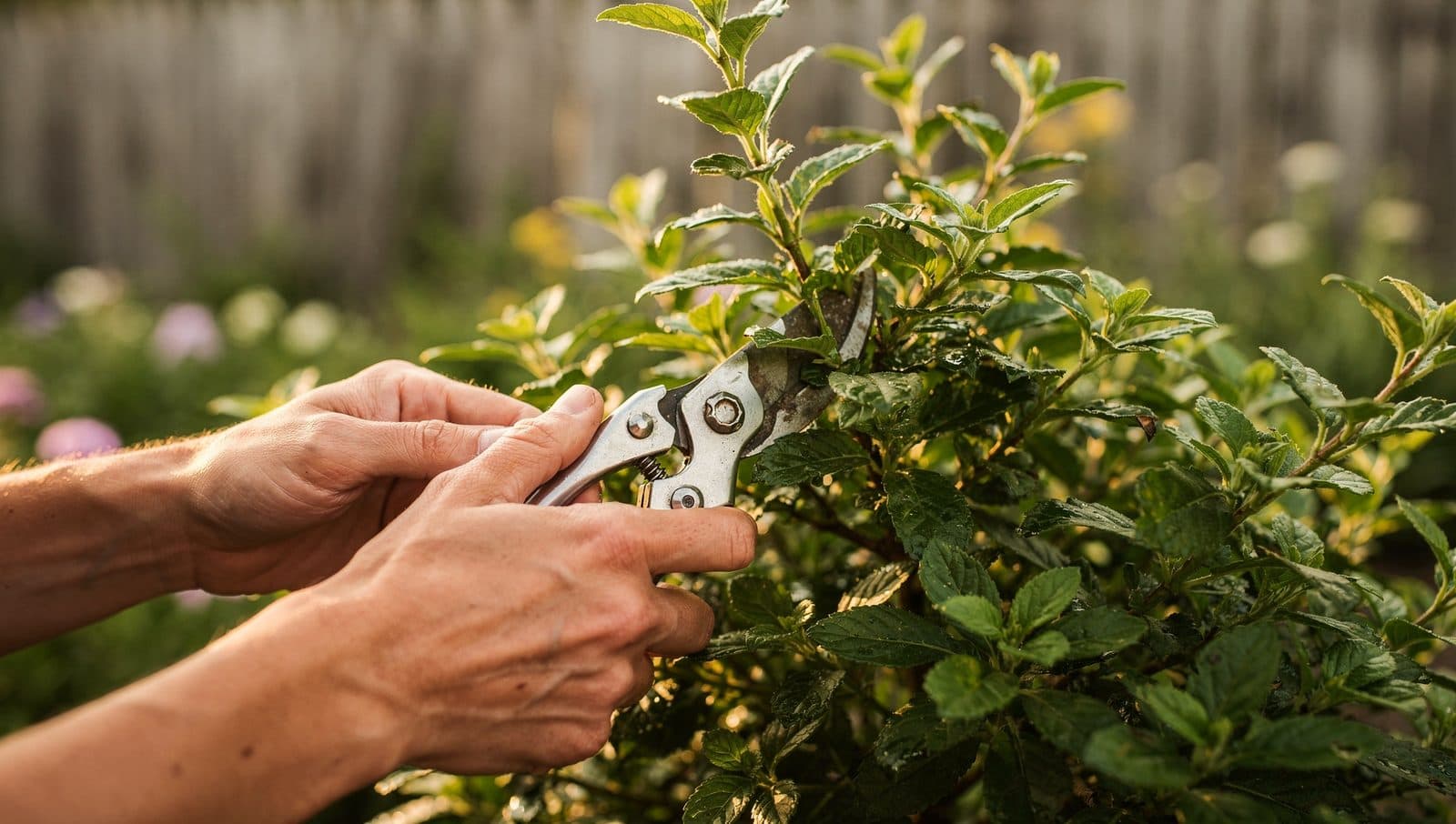
How Do Arborists Treat Leaf Fungus?
For most shade-tree leaf fungus, an honest arborist's answer is culture, sanitation, and patience — fungicides are preventive, need specialized equipment on big trees, and are reserved for repeat severe defoliation or high-value trees.
At a glance
- The verdict: A tree job, for an ISA-certified arborist
- Who fixes it: Certified arborist
- Category: Leaf Disease & Fungus Management
The short answer
Arborists treat tree leaf fungus mostly through cultural means and monitoring, not routine spraying. For anthracnose and leaf spot, University of Minnesota Extension says fungicides "are unnecessary unless a tree has lost most or all of its leaves several years in a row," and they're protective, applied before symptoms appear. Because large trees need high-pressure equipment for full coverage, the Morton Arboretum and UMN both advise hiring a certified arborist rather than DIY spraying. For diseases inside the vascular system, arborists may use trunk injection of a systemic product — a specialized procedure. This is a job for an ISA-certified arborist, not a pest-control company.
Who actually fixes this?
Start here
Certified arborist
Tree-scale fungal disease, especially anything involving spraying large canopies or trunk injection, genuinely requires an ISA-certified arborist's equipment and judgment.
- UNH Extension — you want a diagnosis before deciding whether treatment is even warranted
The details, straight
Diagnose first
Before treating anything, an arborist confirms it's actually a foliar fungus and not decline from another cause, such as root stress, drought, or a different pathogen. The UNH Plant Diagnostic Lab or the arborist's own inspection typically handles this step — getting the ID right determines whether treatment is even warranted.
Cultural and sanitation measures are the front line
For anthracnose specifically, UMN Extension recommends raking and destroying fallen leaves, pruning for better airflow, watering properly, and avoiding over-fertilization. These are the same low-tech, high-value steps a homeowner would use on a shrub, scaled up to tree size.
Fungicides are preventive and often unwarranted
UMN states fungicides "are unnecessary unless a tree has lost most or all of its leaves several years in a row," and that they "need to be applied before symptoms appear" to do any good. Morton Arboretum adds that once injury is already visible, "fungicide sprays are usually ineffective" — so an arborist's honest recommendation is frequently to skip spraying entirely.
Large trees need professional-grade equipment
When a fungicide is warranted, UMN notes that "for large trees, high-pressure spraying equipment is needed," and recommends hiring a professional arborist rather than attempting DIY coverage on a full canopy. Timing also matters and can vary year to year depending on weather, which is another reason this isn't a simple homeowner task at tree scale.
Trunk injection for vascular disease
For diseases that live inside a tree's vascular system rather than just on the leaf surface, arborists may use trunk injection of a systemic product — a specialized procedure that involves drilling into the tree and is not a DIY or general pest-control task. This level of intervention is reserved for confirmed, serious cases on trees worth the investment.
Key takeaways
- Arborists lean on culture and sanitation first — raking debris, pruning for airflow, correct watering — not automatic spraying.
- Fungicides on trees are preventive, applied before symptoms, and often unnecessary unless defoliation repeats for several years.
- Once leaf damage is already visible, fungicide sprays are usually described as ineffective.
- Large trees need high-pressure professional equipment for adequate coverage — this isn't a homeowner DIY spray job.
- Trunk injection of a systemic product is a specialized arborist procedure reserved for vascular disease in high-value trees.
Wondering if the fungus could actually kill the tree?
See the honest, calibrated answer on when leaf fungus is cosmetic and when it's genuinely dangerous.
See if leaf fungus can kill a plantFinding an arborist in New Hampshire
For tree leaf-fungus problems, UNH Cooperative Extension is the authority New Hampshire homeowners can start with — its Plant Diagnostic Lab identifies tree diseases and its published guidance covers when treatment is worthwhile versus when sanitation and airflow are enough. From there, an ISA Certified Arborist can carry out canopy work. Anchor Pest Services doesn't treat tree diseases; we handle the structural and yard pests around your home — rodents, ants, ticks, moisture pests — so for leaf fungus we'd point you to Extension or a certified arborist.
NH-licensed applicator #782664 (NHDAMF, RSA 430) · NEPMA member · family-owned since 2017.
Related questions
Sources(3)
- [1]University of Minnesota Extension — Anthracnose of Trees and Shrubs
Fungicide necessity threshold, preventive timing, high-pressure equipment for large trees
extensionverified 2026-07-14 - [2]Morton Arboretum — Anthracnose of Shade Trees
Fungicide sprays usually ineffective once injury is visible
academicverified 2026-07-14 - [3]UNH Cooperative Extension — Plant Diagnostic Lab
NH plant-disease diagnostic routing
extensionverified 2026-07-14
Written & reviewed by
VerifiedDaniel Brady
NH-Licensed Pesticide Applicator · License #782664 (NHDAMF, RSA 430)
Daniel Brady is the New Hampshire–licensed applicator behind Anchor Pest Services, a family-owned pest control company serving the Manchester area since 2017.
Last updated 2026-07-14
Honest pest help for New Hampshire homes
Leaf Diseases Are Plant Care — But Your Home Is Our Job
Diagnosing and treating a plant disease is garden and tree care, and we'll always tell you so. Where Anchor Pest Services genuinely helps is the pests around your home — rodents, ants, ticks, and moisture pests drawn to leaf litter and debris against the foundation. Family-owned since 2017, NH license #782664, serving Manchester, Nashua, Concord and nearby towns.
- Honest routing — tree-disease work belongs with a certified arborist, not us
- NH-licensed applicators (#782664) for the structural and yard pests around the home
- Serving Manchester, Nashua, Concord and nearby NH towns — free quote
NH License #782664 · No obligation · We answer in person
Your next step
- Related guide
Can Leaf Fungus Kill a Plant?
Read the answer - Related guide
Can Wet Leaves Cause Fungus or Rot?
Read the answer - Related guide
How Do Professionals Treat Leaf Pests?
Read the answer - Related guide
What’s the Difference Between Leaf Blight and Leaf Spot?
Read the answer - Related guide
What Insects Live on Tree Leaves?
Read the answer