
How Can I Stop Fungal Growth on Leaves?
Start with airflow, spacing, and base watering — a fungicide only protects healthy tissue before infection, it won't cure spots already there, and several popular home remedies are useless or harmful.
At a glance
- The verdict: Culture first, fungicide as backup
- Who fixes it: You
- Category: Leaf Disease & Fungus Management
The short answer
The reliable approach is cultural first: improve air circulation and spacing, water at the base early in the day, and remove and destroy infected leaves, per UMass and University of Minnesota Extension. If you do use a fungicide, understand it protects healthy tissue before infection — UMN is explicit that fungicides "will not cure or remove existing" infections. Skip the vinegar: University of Maryland Extension confirms acetic-acid sprays are non-selective and phytotoxic, burning the very foliage you're trying to save. This is a garden task, not a pest-control call.
Who actually fixes this?
Start here
You
Culture — sanitation, spacing, watering practice — handles most cases, and a labeled fungicide from a garden center covers the rest. There's no insect to treat.
- Garden center — culture alone isn't controlling a repeat or severe fungal problem and a labeled fungicide is warranted
- UNH Extension — you want an exact ID before choosing a treatment
- Certified arborist — the affected plant is a large tree
The details, straight
Sanitation first
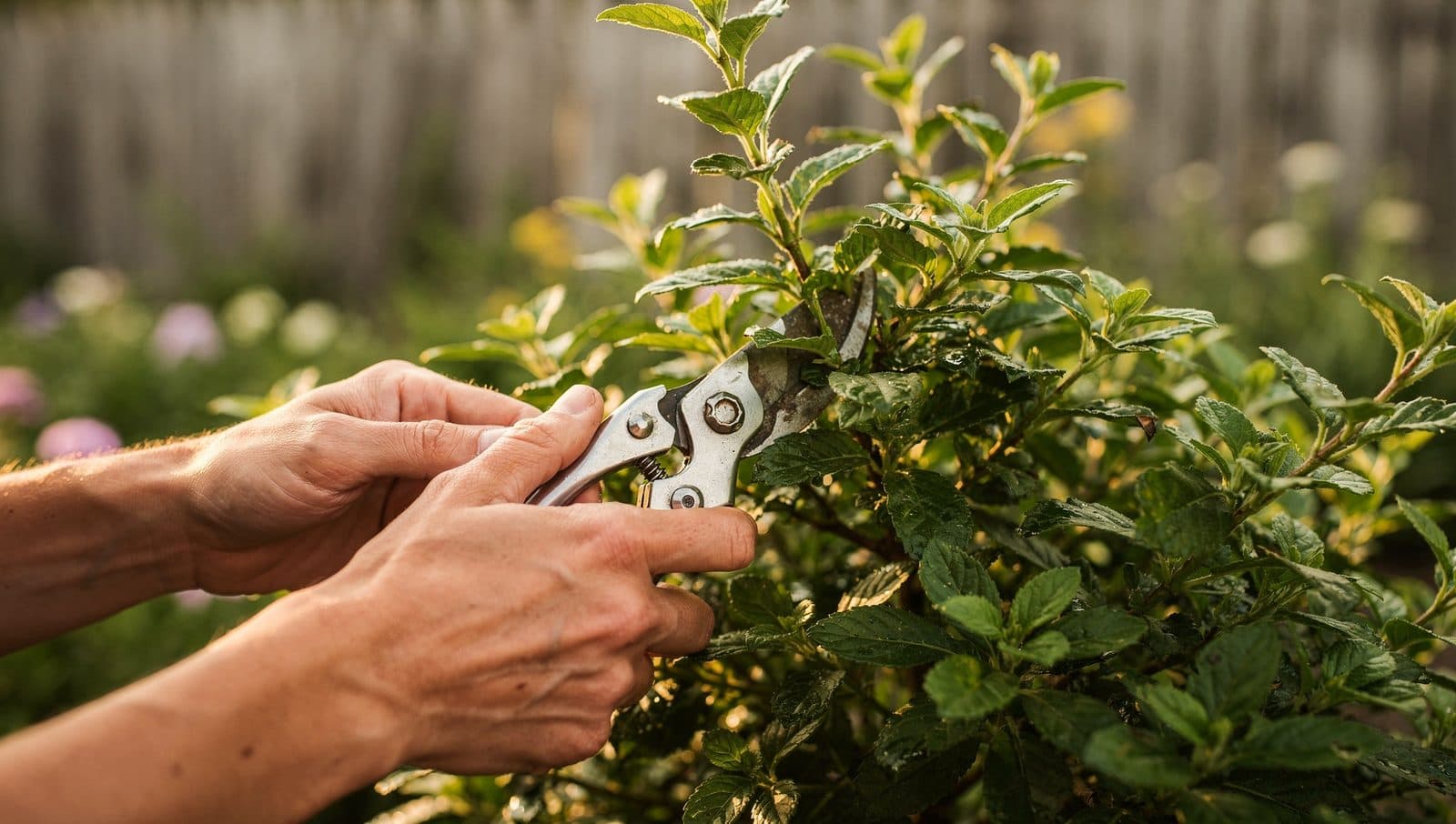
UMN Extension's baseline recommendation is to rake and destroy fallen infected leaves and remove severely infected shoots. This breaks the cycle where the pathogen overwinters in debris and reinfects the same plant, and it's the single lowest-cost, highest-value step in the whole routine.
Airflow and dryness
UMass Extension recommends pruning and spacing plants to improve air circulation and light, so foliage dries faster after rain or dew. Watering the soil instead of the leaves, and watering early in the day, keeps leaf-wetness time short — and leaf-wetness duration is the main trigger for most foliar fungal infections.
Resistant varieties and the right site
UMN and Colorado State University Extension both point to choosing resistant cultivars and avoiding heavy shade or overcrowding as durable, low-effort prevention. A plant sited and spaced well simply gets fewer of the long, humid, low-airflow wetness windows that fungi need.
If you use a fungicide, it's preventive, not curative
UMN is direct: fungicides "protect healthy green leaves and shoots" and must be applied before disease becomes severe — they don't reverse damage already done to infected tissue. As with any product, the label is the law; follow it exactly and don't guess at concentrations.
Grading the popular home remedies honestly
Insecticidal soap and horticultural or neem oil are built for soft-bodied insects like aphids and whiteflies, not fungal leaf spots — Cornell Cooperative Extension notes soaps work only on contact and aren't effective as a residue, so they simply don't address a fungus. Potassium bicarbonate has real extension-documented efficacy as a preventive contact fungicide against powdery mildew and some other fungi; plain baking soda (sodium bicarbonate) is weaker and adds sodium to soil with repeated use. Vinegar as a fungus or pest killer is a harmful myth — UMD Extension confirms it's a non-selective foliar burn that damages desirable plants and offers no real disease cure, and MSU Extension has documented phytotoxicity from misapplied home vinegar sprays. Garlic and coffee-ground sprays have no credible extension-backed efficacy against leaf fungus either.
Key takeaways
- Sanitation — raking and destroying infected leaves — is the highest-value, lowest-cost first step.
- Improve airflow and spacing, and water at the base of the plant early in the day, to shorten leaf-wetness time.
- A fungicide protects healthy tissue before infection; it does not cure spots that are already there.
- Potassium bicarbonate has real preventive efficacy against powdery mildew; plain baking soda is weaker.
- Vinegar, garlic, and coffee-ground sprays are not effective fungicides — vinegar actively burns the leaves you're trying to protect.
White powder specifically, not spots?
Powdery mildew has its own honest triage — see why it's a disease, not a bug, and what actually helps.
See why leaves get powdery mildewFungal weather in New Hampshire
New Hampshire's humid summers and wet spring and fall stretches favor leaf-fungus problems like powdery mildew, apple scab, and various leaf spots, and UNH Cooperative Extension publishes New Hampshire–specific guidance on managing them through sanitation and airflow rather than reflexive spraying. If you can't identify the disease, UNH Extension's Plant Diagnostic Lab is the authority to consult. Anchor Pest Services handles the structural and yard pests around your home, not leaf disease, so this one belongs with Extension or an arborist.
NH-licensed applicator #782664 (NHDAMF, RSA 430) · NEPMA member · family-owned since 2017.
Related questions
Sources(6)
- [1]University of Minnesota Extension — Powdery Mildew on Trees and Shrubs
Fungicides as preventive, not curative; sanitation first
extensionverified 2026-07-14 - [2]UMass Extension — Diseases of Trees and Shrubs
Airflow, spacing, and base watering to reduce leaf wetness
extensionverified 2026-07-14 - [3]Colorado State University Extension — Powdery Mildews
Resistant varieties and site selection
extensionverified 2026-07-14 - [4]Garden Professors (Extension Faculty Blog) — Beneficial Bicarbonate
Potassium bicarbonate efficacy vs. baking soda against powdery mildew
academicverified 2026-07-14 - [5]University of Maryland Extension — Vinegar: An Alternative to Glyphosate?
Vinegar as a non-selective, phytotoxic foliar burn
extensionverified 2026-07-14 - [6]Cornell Cooperative Extension (Monroe County) — Low-Impact Pesticides
Insecticidal soap contact-only, not effective as residue
extensionverified 2026-07-14
Written & reviewed by
VerifiedDaniel Brady
NH-Licensed Pesticide Applicator · License #782664 (NHDAMF, RSA 430)
Daniel Brady is the New Hampshire–licensed applicator behind Anchor Pest Services, a family-owned pest control company serving the Manchester area since 2017.
Last updated 2026-07-14
Honest pest help for New Hampshire homes
Leaf Diseases Are Plant Care — But Your Home Is Our Job
Diagnosing and treating a plant disease is garden and tree care, and we'll always tell you so. Where Anchor Pest Services genuinely helps is the pests around your home — rodents, ants, ticks, and moisture pests drawn to leaf litter and debris against the foundation. Family-owned since 2017, NH license #782664, serving Manchester, Nashua, Concord and nearby towns.
- Honest advice — leaf fungus is a plant disease, not our line of work
- NH-licensed applicators (#782664) for the structural and yard pests we do treat
- Free quote across southern and central New Hampshire
NH License #782664 · No obligation · We answer in person
Your next step
- Related guide
Can Wet Leaves Cause Fungus or Rot?
Read the answer - Related guide
Can I Use Vinegar to Kill Pests on Leaves?
Read the answer - Related guide
Should I Use Insecticidal Soap on Leaves?
Read the answer - Related guide
Why Do Leaves Get Brown Edges or Spots?
Read the answer - Related guide
What Causes Brown or Black Leaf Spots?
Read the answer - Related guide
Do Coffee Grounds or Garlic Repel Leaf Insects?
Read the answer