
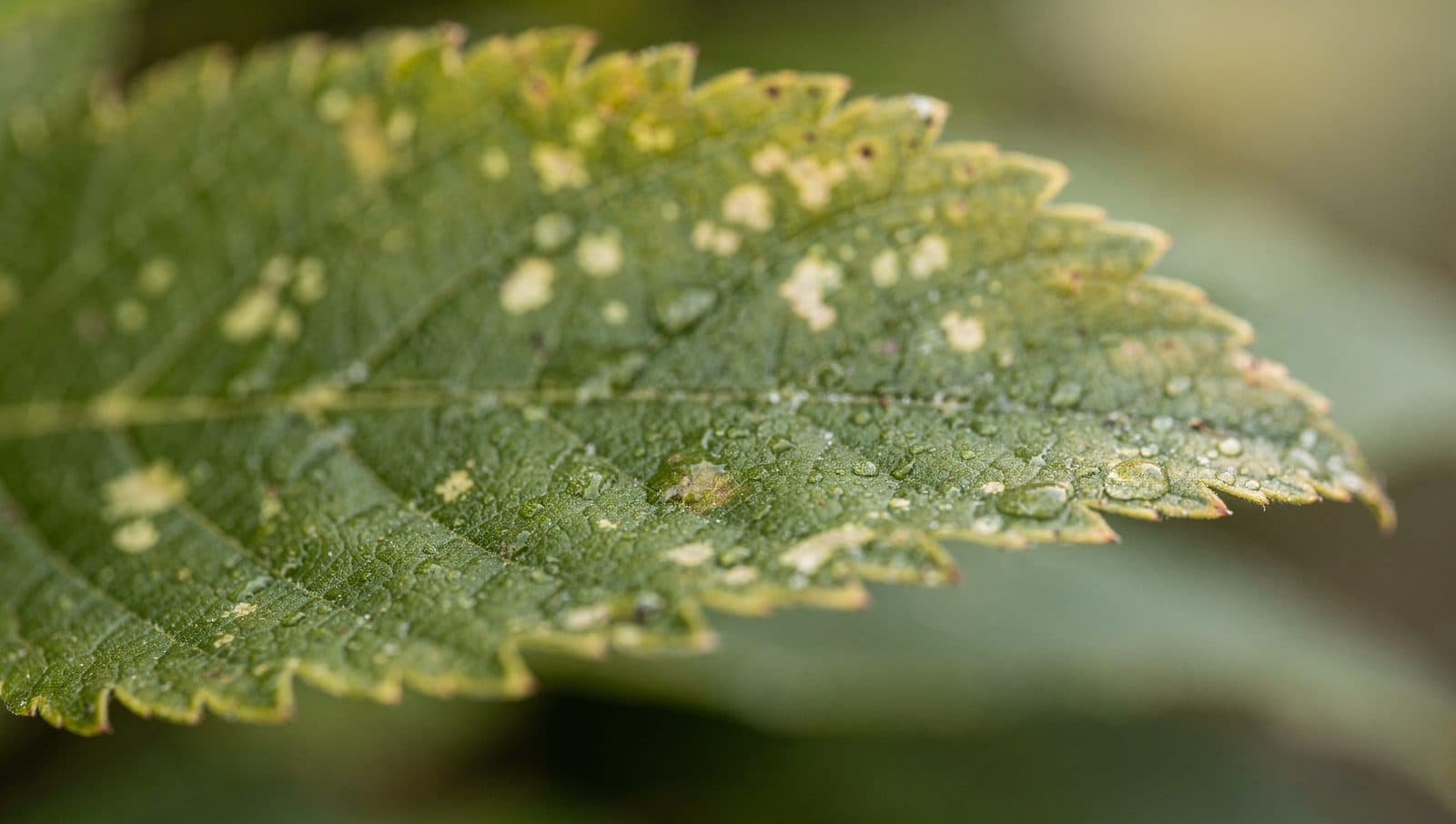
How Do I Know if Leaf Damage Is From Pests or Disease?
Pests leave physical evidence — insects, webbing, frass, chewing — diseases leave patterned lesions that spread in wet weather, and a large share of 'damage' is actually cultural, not biological at all.
At a glance
- The verdict: It depends — run the five checks
- Who fixes it: You
- Category: Leaf-Symptom Diagnosis (pest vs disease vs care)
The short answer
There's no single sign that separates pest damage from disease, but there's a reliable method. Pests leave physical evidence: visible insects or mites, webbing, sticky honeydew, chewed or skeletonized tissue, frass, or slime trails. Diseases leave patterned lesions: defined spots with rings or halos, powdery or fuzzy growth, and symptoms that spread to new leaves faster in wet or humid weather, often starting on lower or older growth. A large share of what looks like damage is neither: uniform yellowing, crisp margins, or wilting tied to watering, light, or feeding is cultural, not biological. Run through five quick checks before you treat anything, since across this whole hub, most leaf problems turn out not to be pests at all.
Pest, disease, or how you're caring for it?
Most leaf problems aren't pests at all. Here's the honest split — the most likely cause, the less likely ones, and how to tell them apart before you treat anything.
- Care / environmentMost likelythe usual cause
Uniform symptoms tied to exposure: crisp margins, sun-side scorch, whole-plant wilting or yellowing, or damage matching a recent change in watering, light, or feeding.
Over- or under-wateringFertilizer or salt burnLight or temperature stressNutrient deficiencyThe tell:No biological structures (no insects, no lesions with halos), and the pattern correlates with watering, feeding, or a recent environmental change rather than spreading from leaf to leaf.
- Diseasea less common cause
Defined spots, rings, halos, or powdery/fuzzy growth on the leaf surface, often starting on lower or older leaves and progressing to more leaves during humid or wet weather.
Fungal leaf-spot diseasesPowdery or downy mildewBacterial leaf spot or blightRoot or crown rotThe tell:A defined lesion shape with a ring or halo, a pattern that spreads over days to weeks, and a link to humidity or wet foliage.
- Pesta rare cause
Visible insects or mites, webbing, sticky honeydew residue, chewed or skeletonized tissue, frass, or slime trails.
Aphids, scale, whitefly, mealybug (honeydew)Spider mites (webbing, stippling)Beetles, caterpillars, slugs (chewing)Leaf miners (winding trails)The tell:Flip the leaf and check stem joints and undersides; a pest problem almost always leaves a physical trace you can find with a close look.
Run five at-home checks in order: (1) flip the leaf and check undersides and stem joints for insects, mites, or webbing; (2) feel the residue — sticky means honeydew and points to a pest; (3) compare new growth to old growth, since pests often concentrate on tender new tissue while nutrient and disease patterns often show old-versus-new differently; (4) look at the pattern — is it spreading to more leaves over time (favors disease) or static and tied to one exposure event (favors cultural)?; (5) try to wipe the mark off — sooty mold and powdery mildew often wipe or smear, while a true leaf-spot lesion is embedded in the tissue and won't budge.
This page is the routing framework itself rather than a single symptom, so the shares above are a general, editorial estimate of how leaf-problem questions across this hub actually resolve, not a measurement of any one plant's damage.
Who actually fixes this?
Start here
You
The five-check method above is something any homeowner can run in a few minutes with nothing more than a hand lens or a close look, and it's enough to point you to the right next step before you spend money on any product.
- Garden center — You've confirmed a pest or a mild disease and want a soap, oil, or fungicide appropriate to what you found.
- UNH Extension — The checks don't give you a clear answer, or you want an insect or disease confirmed before treating a valuable plant.
- Certified arborist — The affected plant is a mature tree and the damage is widespread across the canopy.
- Pest-control pro — The 'leaf' problem is actually leaf litter, debris, or mulch harboring rodents, ticks, ants, or moisture pests near your home's foundation, which is a structural pest issue rather than a plant-health one.
The details, straight
Check one: flip the leaf
Most leaf pests hide on the underside of the leaf or in the crook where a leaf meets the stem, since that's protected from rain, wind, and predators. Turn several leaves over and look closely, ideally with a hand lens, for insects, mites, eggs, webbing, or waxy clumps. Spider mites show up as fine dots and delicate webbing; aphids and mealybugs cluster in visible groups; scale insects look like small immobile bumps. If you find nothing on multiple leaves across the plant, a pest becomes much less likely and you should weight the disease and cultural buckets more heavily.
Check two: feel the residue, and check new versus old growth
If the leaf feels sticky or glossy, that's honeydew, the sugary waste of sap-sucking insects like aphids, scale, and whiteflies, and it's one of the more reliable single tells in this whole hub: sticky leaves are usually a pest problem, and any black sooty mold on top of that residue is a downstream symptom of the pest, not the cause. Separately, compare the newest growth to older leaves. Pests like aphids and mites often concentrate on tender new shoots first, while a nutrient deficiency or watering problem may show a distinct old-leaf-versus-new-leaf pattern of its own, so noting where the damage started helps narrow things down.
Checks four and five: the spreading pattern, and the wipe test
Step back and look at the whole plant over a few days if you can. Symptoms that are static, tied to one exposure like a sunny window or a recent feeding, and don't spread to new leaves usually point to a cultural cause. Symptoms that keep appearing on more leaves, especially after humid or wet weather, point to an active fungal or bacterial disease. Finally, try to wipe the mark: sooty mold and powdery mildew both smear or wipe off the leaf surface, revealing the honeydew or healthy tissue underneath, while a true leaf-spot lesion is embedded in the leaf tissue itself and won't come off no matter how you rub it.
Key takeaways
- There's no single sign that separates pest from disease damage — run the five checks together.
- Sticky, glossy residue is one of the most reliable single tells: it usually means a pest, not a disease.
- Spots with rings or halos that spread in wet weather point to disease; uniform damage tied to watering or feeding points to cultural causes.
- A mark that wipes off (sooty mold, powdery mildew) is different from a lesion embedded in the tissue (leaf spot).
- Most leaf problems across this hub are cultural or disease, not pests — don't default to 'it's bugs.'
Run the five checks on your own plant
Flip the leaf, feel the residue, compare new vs. old growth, watch the pattern, and try the wipe test — most leaf problems sort themselves out in a few minutes.
See a specific symptom's triageA note for New Hampshire growers
When your own inspection doesn't produce a clear answer, New Hampshire has strong authorities to lean on: UNH Cooperative Extension's Insect & Arthropod Identification service can confirm a suspected pest, and its Plant Diagnostic Lab handles suspected leaf diseases. Because sample-handling arrangements change over time, it's worth checking UNH Extension's current instructions before mailing a physical sample. Anchor Pest Services handles the structural and yard pest side; a houseplant, garden, or tree leaf problem routes to Extension, a garden center, or an arborist, and we'd say so on the phone.
NH-licensed applicator #782664 (NHDAMF, RSA 430) · NEPMA member · family-owned since 2017.
Related questions
Sources(4)
- [1]University of Maryland Extension — Honeydew and Sooty Mold
Sticky, glossy residue as a reliable pest tell; sooty mold as a downstream symptom of a pest, not the cause
extensionverified 2026-07-14 - [2]Virginia Cooperative Extension — Master Gardener Handbook, Chapter 6: Diagnosing Plant Damage
General method for distinguishing pest, disease, and abiotic (cultural) plant damage
extensionverified 2026-07-14 - [3]UNH Cooperative Extension — Plant Diagnostic Lab
NH diagnostic routing for confirming a pest or disease (verify current lab status before publishing routing instructions)
extensionverified 2026-07-14 - [4]CDC — Mold (About)
Health-conservative framing for mold/disease symptoms on leaves affecting allergy or asthma sufferers
govverified 2026-07-14
Written & reviewed by
VerifiedDaniel Brady
NH-Licensed Pesticide Applicator · License #782664 (NHDAMF, RSA 430)
Daniel Brady is the New Hampshire–licensed applicator behind Anchor Pest Services, a family-owned pest control company serving the Manchester area since 2017.
Last updated 2026-07-14
Your next question
Honest pest help for New Hampshire homes
Most Leaf Problems Aren't Pest Problems — We'll Tell You So
This page exists so you don't spray a plant that has a watering or fungal problem. Where Anchor Pest Services genuinely helps is the pests around your home: rodents, ants, ticks, and moisture pests drawn to leaf litter and debris against the foundation. Family-owned since 2017, NH license #782664, serving Manchester, Nashua, Concord and nearby towns.
- Honest triage — we help you tell pest from disease, then take only the pest jobs
- NH-licensed applicators (#782664) for the structural and yard pests around the home
- Serving southern and central New Hampshire — free quote
NH License #782664 · No obligation · We answer in person
Your next step
- Related guide
What Causes Brown or Black Leaf Spots?
Read the answer - Related guide
Can Poor Drainage Cause Leaf Disease?
Read the answer - Related guide
Can Leaf Buildup Cause Lawn Diseases?
Read the answer - Related guide
Can Leaf Fungus Kill a Plant?
Read the answer - Related guide
What Are the Signs It's Time to Call a Pest Expert for Leaf Problems?
Read the answer