
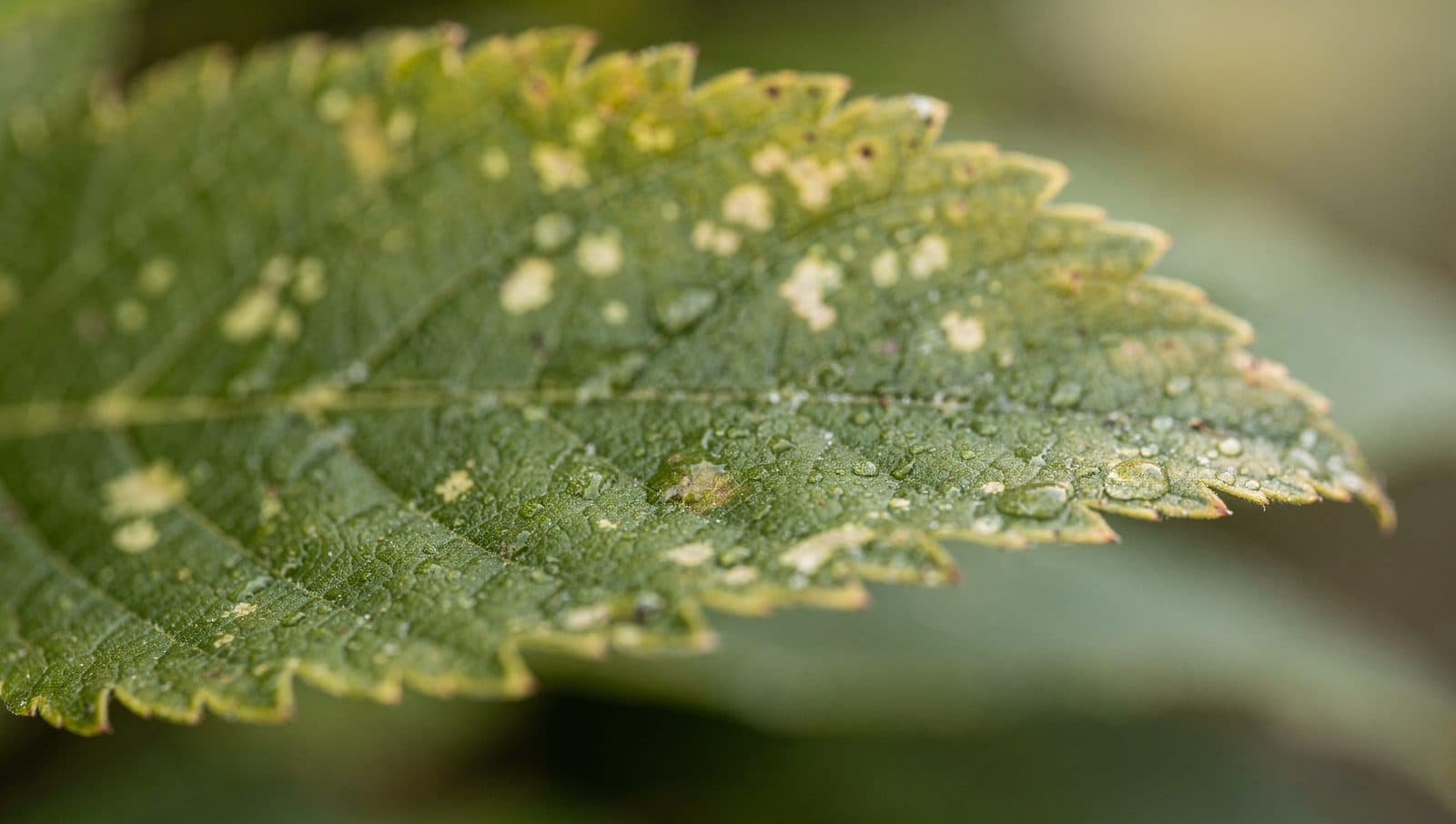
Why Do Leaves Get Brown Edges or Spots?
Brown edges are usually a water or salt problem, and brown spots are usually a fungal or bacterial disease — the shape of the browning is what tells you which.
At a glance
- The verdict: Mixed — depends on the shape
- Who fixes it: You
- Category: Leaf-Symptom Diagnosis (pest vs disease vs care)
The short answer
This symptom actually covers two different patterns with two different usual causes, so the shape of the browning matters more than anything else. Brown edges and margins, crisp and fairly uniform around the outside of the leaf, are typically cultural: drought, salt or fertilizer burn, wind, or root damage pulling water away from the leaf's farthest tissue first. Brown spots, discrete and scattered across the leaf surface, are more often a fungal or bacterial leaf-spot disease, especially when they have a defined ring or halo and spread faster in wet weather. A smaller share of round, sunken spots come from a chewing or piercing insect instead. Look at the shape before assuming either cause.
Pest, disease, or how you're caring for it?
Most leaf problems aren't pests at all. Here's the honest split — the most likely cause, the less likely ones, and how to tell them apart before you treat anything.
- Care / environmentMost likelythe usual cause
Crisp, uniform brown margins or tips around the outside edge of the leaf, with no ring, halo, or fungal texture.
Drought or underwateringFertilizer or salt burnWind exposureRoot damage limiting water uptakeThe tell:The margin is crisp and uniform all the way around, matches recent watering or feeding history, and shows no ring or halo.
- Diseasea less common cause
Discrete, roughly circular spots scattered across the leaf surface, often with a defined ring or yellow halo, that tend to spread to more leaves during humid or wet stretches.
Septoria and Cercospora leaf spotAnthracnoseBacterial leaf spotTar spot on mapleThe tell:Spots have a defined edge or halo, appear on lower or older leaves first, and multiply or spread after rain or high humidity.
- Pesta rare cause
Small, round, sunken spots from insect feeding, or a bronzed, stippled look from mite feeding, rather than a fungal lesion.
Four-lined plant bug feedingSpider mite or lace bug stipplingThe tell:The spot is a sunken feeding wound rather than a fungal lesion, or it's accompanied by fine stippling and webbing typical of mites.
Look at the shape and location first. A crisp, uniform brown margin around the whole leaf edge, with no ring or texture, points to a water, salt, or wind problem. Discrete round spots with a defined ring or halo, especially starting on lower or older leaves and worsening in wet weather, point to a fungal or bacterial disease. Small sunken round spots without a halo, especially with any stippling nearby, point to insect feeding.
Edges and spots are genuinely different symptoms with different typical causes, which is why this page splits into two shapes rather than forcing one bucket for both.
Who actually fixes this?
Start here
You
Whether the browning is cultural or disease, the first step is the same: look at the shape and pattern, then adjust watering and feeding for margin browning or start sanitation (removing affected leaves) for spotted disease.
- Garden center — Spots are confirmed as a fungal or bacterial disease and you want a labeled fungicide or resistant variety for next season.
- UNH Extension — You want confirmation of a suspected disease, or soil testing to rule out a nutrient or salt issue behind marginal browning.
- Certified arborist — The affected plant is a mature tree and the spotting is widespread across the canopy.
The details, straight
Why brown edges are usually about water, not disease
A leaf's margin and tip are the farthest tissue from the water supply coming up through the stem, so when a plant can't move enough water to keep every cell hydrated, whether because of drought, root damage, wind exposure, or excess fertilizer and salt pulling water back out of root tissue, that farthest tissue is usually the first to dry out and die. University of Maryland Extension describes this exact pattern for salt and fertilizer damage: soluble salts pull moisture out of roots and cause marginal yellowing and scorch, producing a crisp, fairly uniform brown edge rather than a scattered spotted pattern. Because the mechanism is about water movement, not infection, marginal browning doesn't spread the way a disease does; it stays where the water shortfall was worst.
Why discrete spots usually mean a disease
Fungal and bacterial leaf-spot pathogens infect individual points on the leaf surface, often through wounds, stomata, or splashing water carrying spores, and then the infection expands outward from that point in a roughly circular lesion, frequently with a darker ring or a yellow halo where the plant's tissue is reacting to the infection. University of Maryland Extension's diagnostic key for tomato leaf problems, for example, walks through several of these spotted diseases and notes they typically start on lower, older leaves and progress upward, and spread faster during wet or humid weather that favors spore germination and splash dispersal. That progression over time and the defined shape of each lesion is what separates disease spots from a one-time cultural scorch.
What to actually do about either pattern
For margin browning, check your watering consistency, back off recent fertilizing and flush the soil if you suspect salt buildup, and consider whether wind exposure or root disturbance explains it, since the fix is almost always a care adjustment rather than a spray. For spotted disease, remove and dispose of the most heavily affected leaves to reduce spore load, water at the soil line rather than overhead to limit splash dispersal, improve airflow around the plant, and consider a labeled fungicide from a garden center if the disease is spreading and the plant is valuable. Either way, note whether the pattern is one-time and static (favors cultural) or progressive and spreading (favors disease) before deciding your next step.
Key takeaways
- Brown edges and brown spots are two different symptoms with two different usual causes.
- Crisp, uniform margin browning is usually cultural: water, salt, fertilizer, or wind.
- Discrete spots with a ring or halo that spread in wet weather are usually fungal or bacterial disease.
- Small sunken round spots without a halo can be insect feeding, a smaller share of cases.
- This is rarely a pest-control job; it routes to your own care, a garden center, or UNH Extension diagnostics.
Edge or spot? The shape tells you which.
Brown edges and brown spots point to different causes. See the full pest-vs-disease-vs-care triage to confirm which one you're looking at.
See the full pest-vs-disease-vs-care triageA note for New Hampshire gardeners
Leaf-spot diseases tend to flare up in New Hampshire during humid summer stretches and after periods of overhead watering or heavy rain, while marginal browning climbs in late-season dry spells and again in late fall and winter near roads and walkways where de-icing salt runs into nearby beds. UNH Cooperative Extension's Plant Diagnostic Lab and soil testing services (Ask UNH Extension Infoline, 1-877-EXT-GROW, free) can confirm whether you're dealing with a specific disease or a soil salt and nutrient issue — worth checking current lab status before sending a physical sample, since disease samples have at times been referred to University of Maine or Cornell labs.
NH-licensed applicator #782664 (NHDAMF, RSA 430) · NEPMA member · family-owned since 2017.
Related questions
Sources(3)
- [1]University of Maryland Extension — Excess Fertilizer or Salt Damage on Flowers
Soluble salts pulling water from roots causing marginal leaf browning
extensionverified 2026-07-14 - [2]University of Maryland Extension — Key to Common Problems of Tomatoes
Fungal and bacterial leaf-spot disease patterns: lower-leaf-first, spreading in wet weather
extensionverified 2026-07-14 - [3]University of Minnesota Extension — Fourlined Plant Bugs
Sunken round spots from insect feeding versus disease-caused spotting
extensionverified 2026-07-14
Written & reviewed by
VerifiedDaniel Brady
NH-Licensed Pesticide Applicator · License #782664 (NHDAMF, RSA 430)
Daniel Brady is the New Hampshire–licensed applicator behind Anchor Pest Services, a family-owned pest control company serving the Manchester area since 2017.
Last updated 2026-07-14
Your next question
Honest pest help for New Hampshire homes
Leaf Browning Is Plant Care — But Your Home Is Our Job
Brown edges and spots almost always trace back to watering, salt, or a fungal disease, and we'll always say so rather than oversell a treatment you don't need. Where Anchor Pest Services genuinely helps is the pests around your home: rodents, ants, ticks, and moisture pests drawn to leaf litter and debris against the foundation. Family-owned since 2017, NH license #782664, serving Manchester, Nashua, Concord and nearby towns.
- We read brown edges as water or nutrient stress, not a bug
- Fully NH-licensed under #782664, with same-day scheduling and free quotes
- Covering Manchester and the surrounding southern and central New Hampshire towns
NH License #782664 · No obligation · We answer in person
Your next step
- Related guide
What Causes Brown or Black Leaf Spots?
Read the answer - Related guide
Why Are My Hydrangea Leaves Brown?
Read the answer - Related guide
What Causes White Spots on Rose Leaves?
Read the answer - Related guide
How Can I Stop Fungal Growth on Leaves?
Read the answer - Related guide
Why Do Leaves Turn Black After Watering?
Read the answer