
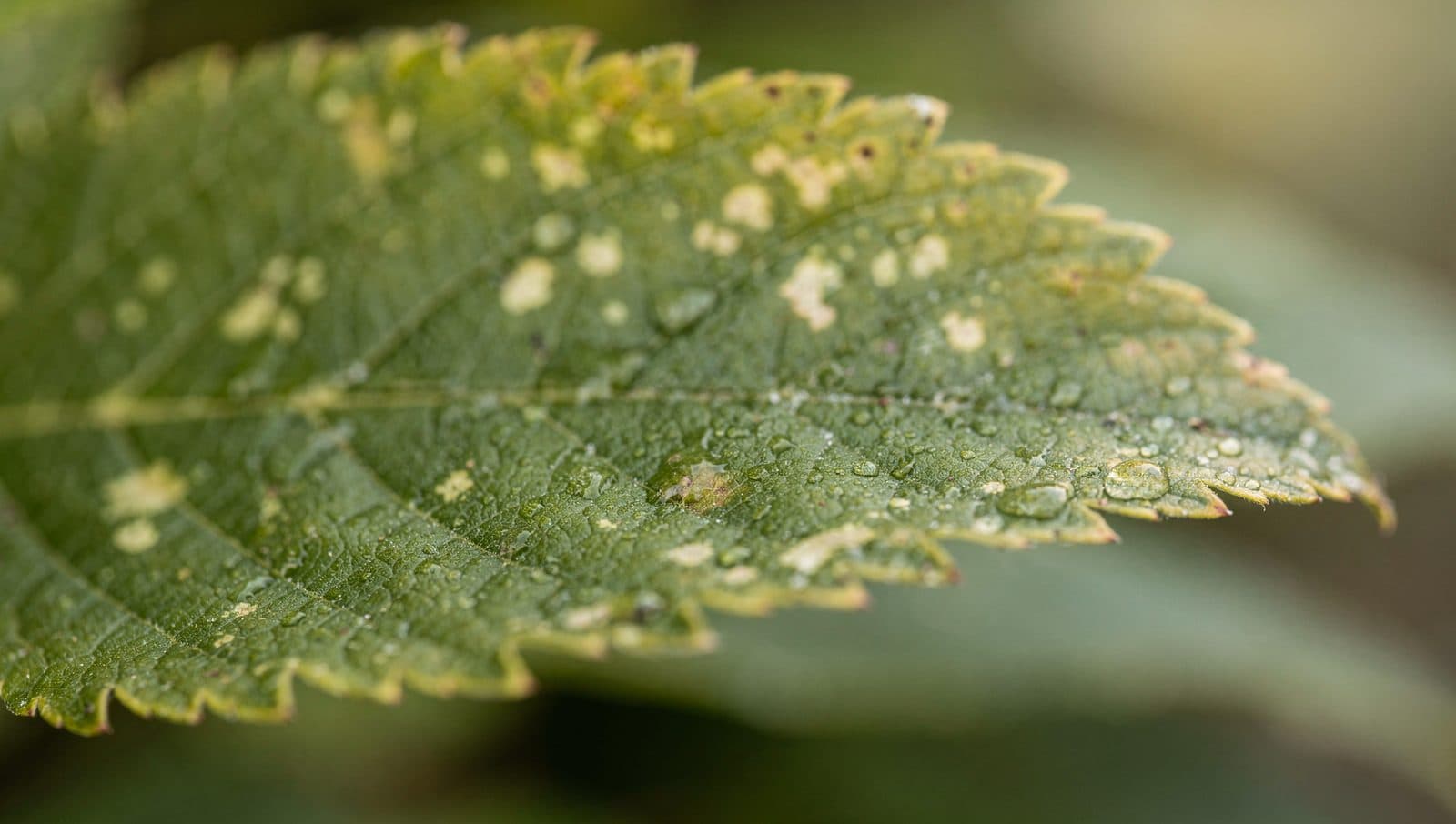
What Causes Sticky Residue on Leaves?
Sticky residue is honeydew, the calling card of aphids, scale, whiteflies, and mealybugs, and it's one of the few leaf symptoms that really is a pest problem.
At a glance
- The verdict: Usually a pest — honeydew
- Who fixes it: You
- Category: Leaf-Symptom Diagnosis (pest vs disease vs care)
The short answer
Sticky, glossy residue on leaves is almost always honeydew, the sugary liquid waste that aphids, scale insects, whiteflies, and mealybugs excrete after feeding on plant sap. These sap-sucking insects take in far more sugar than they can use and release the excess onto the leaf surface below, coating it with a thin, tacky film that can also drip onto lower leaves, furniture, or pavement beneath an infested tree. A black fungus called sooty mold often grows on top of the honeydew afterward, but that mold is a downstream effect, not the cause. Less often, the stickiness comes from sap dripping out of a wound or from a plant that leaks sap naturally. Flip the leaf and check for insects before assuming anything else.
Pest, disease, or how you're caring for it?
Most leaf problems aren't pests at all. Here's the honest split — the most likely cause, the less likely ones, and how to tell them apart before you treat anything.
- PestMost likelythe usual cause
A thin, glossy, tacky film on the upper surface of leaves, often worse on lower leaves beneath an infested plant, sometimes with ants patrolling the stems and black sooty mold developing on top over time.
Aphids clustering on new growthSoft scale insects on stems and leaf undersidesWhiteflies (flutter when disturbed)Mealybugs (cottony white masses)The tell:Flip the leaves and check stem joints and new growth for clusters of small insects; ants moving up and down the plant are a strong secondary clue since they farm these pests for the honeydew.
- Care / environmenta less common cause
Sticky residue with no insects present, typically an external source like sap dripping from a wound, a cut branch, or an overhead tree, or natural sap exuded by certain plants.
Sap dripping from a pruning cut or mechanical woundHoneydew raining down from an infested tree canopy overheadNatural sap on certain conifers or ficusThe tell:No insects found on the affected plant itself, and looking up reveals another plant or tree directly overhead as the true source.
- Diseasea rare cause
Negligible on its own; stickiness is not a direct disease symptom, though the sooty mold that grows on honeydew is technically a fungus.
Sooty mold growing on existing honeydew (a downstream fungus, not the original cause)The tell:The mold only appears after honeydew is already present, confirming a pest source rather than an independent disease process.
Wipe a leaf clean and check again in a day or two. If it turns sticky again, an active pest is still feeding, and you should flip nearby leaves and check stem joints and new growth for the insects themselves. If it doesn't return, or if you never find insects on the plant, look up: overhead honeydew drip from a tree canopy is a common and easily missed source.
Sticky leaves are one of the few leaf symptoms in this hub where the pest answer really is the right one most of the time — this is not a case where the honest triage points away from bugs.
Who actually fixes this?
Start here
You
Once you've confirmed a pest by flipping the leaf, a garden-center insecticidal soap or horticultural oil applied to leaf undersides and stem joints, with attention to thorough coverage, is the standard homeowner fix for the sap-suckers causing the honeydew.
- Garden center — You need an insecticidal soap or horticultural oil suited to the specific pest and plant.
- Certified arborist — The honeydew source is a large tree canopy rather than a shrub or houseplant, since spraying a mature tree isn't practical for a homeowner.
- UNH Extension — You can't confirm which insect is responsible from a visual check.
The details, straight
Why sticky leaves really are usually a pest problem
University of Maryland Extension describes honeydew directly as the sugary liquid excreted by aphids, scale insects, whiteflies, and other sap-feeding insects that consume more plant sugar than they can process, releasing the excess as a sticky waste product onto the leaf surface below. Because these insects often feed in clusters and over extended periods, the honeydew builds up into a noticeable, tacky film that coats not just the leaf they're feeding on but often the leaves and surfaces beneath them as well. This is genuinely one of the more reliable pest tells across the whole leaf-problem hub, since stickiness on its own has very few other common explanations.
The sooty mold that often follows
Once honeydew accumulates, a group of dark fungi collectively called sooty mold frequently colonizes the sugary residue, coating affected leaves and surfaces in a black, powdery-looking film. UF/IFAS Extension is clear about the relationship: these fungi are not plant pathogens themselves, but by blocking light from the leaf surface they can interfere with photosynthesis, adding a secondary stress on top of whatever the sap-suckers are already doing directly. The practical point extension sources emphasize is that treating the mold without addressing the insects doesn't solve the underlying problem, since new honeydew will simply support new mold growth as long as the pest is still feeding.
What to do about it
Start by identifying the insect: flip leaves, check stem joints and new growth, and look for ants patrolling the plant, since they're often farming the honeydew producers in exchange for the food source. Once you've confirmed a sap-sucking pest, a firm spray of water can dislodge light populations, and an insecticidal soap or horticultural oil, applied thoroughly to leaf undersides and out of hot direct sun, is the standard next step for heavier infestations. If the honeydew is dripping from a large tree overhead rather than the plant itself, treating the smaller understory plant won't solve anything; that's a job for a certified arborist assessing the tree, not a homeowner spray.
Key takeaways
- Sticky, glossy leaf residue is almost always honeydew from sap-sucking insects like aphids, scale, whiteflies, or mealybugs.
- This is one of the few leaf symptoms where the pest answer is genuinely the most likely one.
- Black sooty mold that follows is a downstream fungus growing on the honeydew, not the original cause.
- Ants patrolling the plant are a strong secondary clue, since they farm these pests for the honeydew.
- If no insects are found on the plant itself, check for an overhead tree canopy as the real source.
Confirmed a pest? Here's what actually works.
Sticky leaves are one of the few symptoms that really is a pest problem. See the honest, sourced verdict on which remedies work and which ones harm your plant.
See remedy verdicts for leaf pestsA note for New Hampshire growers
Aphid and scale populations, and the honeydew they produce, typically build through the warmer months in New Hampshire and can be especially noticeable on shade trees and shrubs by mid to late summer, with sticky drip landing on cars, patios, and understory plants beneath an infested canopy. UNH Cooperative Extension's Insect and Arthropod Identification service is a free resource for confirming which sap-sucker is responsible, and a certified arborist is the right call for treating honeydew coming from a large, mature tree.
NH-licensed applicator #782664 (NHDAMF, RSA 430) · NEPMA member · family-owned since 2017.
Related questions
Sources(3)
- [1]University of Maryland Extension — Honeydew and Sooty Mold
Honeydew as sugary excretion from sap-sucking insects; the honeydew-to-sooty-mold relationship
extensionverified 2026-07-14 - [2]UC ANR Ventura County Cooperative Extension — Honeydew and Sooty Mold
Honeydew as a by-product of sap-sucking insects; ant-tending behavior
extensionverified 2026-07-14 - [3]UF/IFAS Extension Okaloosa County — Sooty Mold
Sooty mold blocking light and interfering with photosynthesis; controlling the insect controls the mold
extensionverified 2026-07-14
Written & reviewed by
VerifiedDaniel Brady
NH-Licensed Pesticide Applicator · License #782664 (NHDAMF, RSA 430)
Daniel Brady is the New Hampshire–licensed applicator behind Anchor Pest Services, a family-owned pest control company serving the Manchester area since 2017.
Last updated 2026-07-14
Your next question
Honest pest help for New Hampshire homes
Sticky Leaves Are Garden Pests — But Your Home Is Our Job
Honeydew-producing insects on your plants are a garden-center job, and we'll always say so rather than oversell a treatment you don't need. Where Anchor Pest Services genuinely helps is the pests around your home: rodents, ants, ticks, and moisture pests drawn to leaf litter and debris against the foundation. Family-owned since 2017, NH license #782664, serving Manchester, Nashua, Concord and nearby towns.
- Honest routing — sticky honeydew is a real pest, just not our service line
- NH-licensed applicators (#782664) for structural and yard pests, not sap-suckers on plants
- Serving Manchester, Nashua, Concord and nearby New Hampshire towns
NH License #782664 · No obligation · We answer in person
Your next step
- What to do next
Can sticky traps catch boxelder bugs or lady beetles?
Read the answer - Related guide
Why Are My Indoor Plant Leaves Sticky?
Read the answer - Related guide
Why Do Leaves Get Sticky Under Trees?
Read the answer - Related guide
Why Do Leaves Look Sticky or Shiny?
Read the answer - Related guide
What Insects Live on Tree Leaves?
Read the answer - Related guide
What Causes Holes in Leaves?
Read the answer