
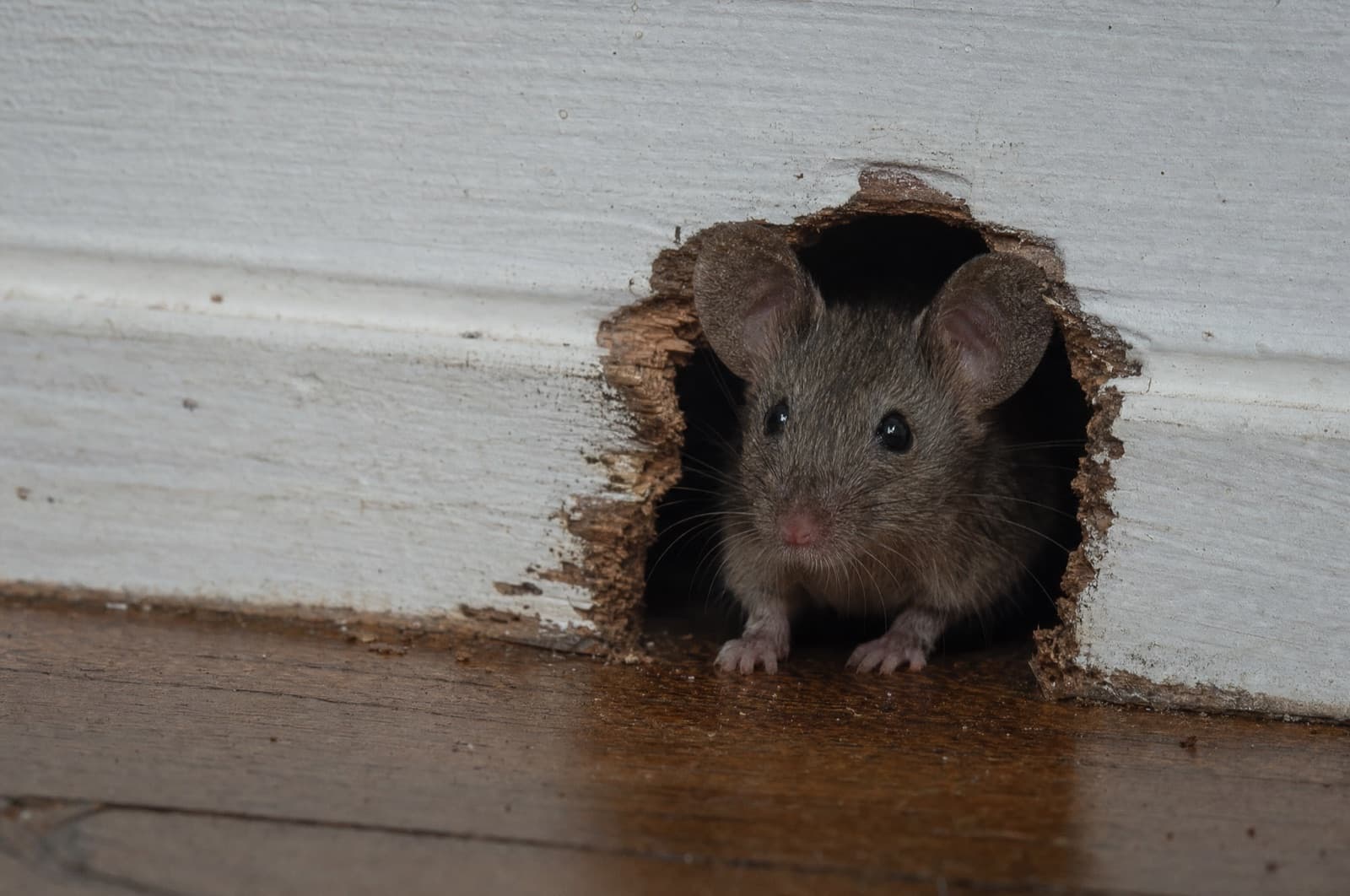
Does Steel Wool Stop Mice From Entering?
At a Glance
- Short answer: Yes, but only when packed tight and sealed with caulk or foam — never as a standalone plug.
- Key fact: Unsecured steel wool can be pulled loose; sealant is what makes it hold.
- NH relevance: NH's damp basements and exterior weep holes are exactly where plain steel wool rusts fastest — use copper mesh there instead.
- Action needed: Pack any small gap with steel wool AND seal the edges with caulk or spray foam — don't stop at one or the other.
The short of it
Steel wool works against mice, and the CDC endorses it — but with one non-negotiable condition: it must be anchored. Packed tightly into a gap and sealed around the edges with caulk or expanding foam, steel wool grades moderate-to-high as an exclusion material. Left loose and unsealed, mice can work it out or push past it over time, and it rusts in damp locations, dropping it to low effectiveness. The sealant isn't optional trim — it's half of what makes steel wool work.
Does Steel Wool Stop Mice From Entering — By the Numbers
Moderate-High
Efficacy rating for steel wool packed tight + sealed
Low
Efficacy rating for loose, unsecured steel wool
¼ in
Minimum mouse-passable gap this method targets
High
Efficacy rating for copper mesh + sealant in damp spots
Materials rodents can — and can't — chew through
Steel wool is a genuine efficacy-grading question, not a flat yes/no — the sealant around it is what separates a lasting fix from a temporary one.
Steel wool, packed tight + caulk or foam
Rodent-proofCDC-endorsed method; metal fibers deter gnawing and sealant prevents it from being worked loose. Rates moderate-to-high.
Steel wool, loose/unsecured
Can chewCan be pulled out or pushed through by a persistent mouse; rates low as a standalone fix.
Copper mesh + sealant (damp locations)
Rodent-proofRust-resistant alternative for weep holes and exterior penetrations; holds its structure longer than steel wool outdoors. Rates high.
¼-inch, 24-gauge hardware cloth
Rodent-proofBetter suited to larger openings than steel wool can practically fill.
Caulk or foam alone (no steel wool/mesh)
Can chewNo mechanical deterrent on its own; a mouse gnaws through it without the metal fiber barrier.
Bottom line — Steel wool works only as a combination product: pack it tight and seal the edges with caulk or foam. In damp spots, use rust-resistant copper mesh instead, and always pair either material with sealant.
The full picture
Why it works — when it's secured
The mechanism is mechanical irritation, not toxicity: coarse metal fibers are unpleasant and injurious to a mouse's mouth, discouraging gnawing, while the caulk or foam does the structural job of holding the plug in place and denying a bitable edge. The correct method is to pack the wool tightly into the gap with a screwdriver, recess it slightly, and cap it with sealant. Done this way, steel wool grades moderate-to-high for small gaps — a genuinely effective, low-cost fix.
Where it fails
Used alone and unsecured, steel wool can be worked loose, pushed out, or pulled apart by a persistent mouse, and fine grades can even end up repurposed as nesting material. Its other main weakness is rust: in damp locations like weep holes and exterior penetrations, it corrodes, loses its abrasiveness, and can stain masonry. That combination — no anchor, or long-term moisture exposure — is why unsecured steel wool grades only low as a standalone barrier.
Better alternatives for damp spots
Where moisture is a factor, professionals reach for copper mesh, which is rust-resistant and holds its knit structure far longer outdoors, or stainless-steel-reinforced fill fabric for higher-durability applications. Copper mesh offers the same tooth-irritation deterrent as steel wool with much better longevity in wet locations, and it should still be paired with sealant for the same reason steel wool is.
Bottom line — Steel wool stops mice, but only as a combination product: pack it tight, then seal the edges with caulk or foam. Left loose or exposed to persistent moisture, it fails. For damp exterior spots, copper mesh plus sealant is the more durable choice.
Not sure your seal-up will hold?
Anchor's licensed NH technicians use the properly anchored materials mice can't defeat — not just a loose plug of steel wool.
Why this matters in New Hampshire
New England's damp basements, freeze-thaw cycles, and exterior weep holes accelerate steel wool rust faster than in drier climates, which makes the caulk-or-foam step and periodic inspection especially important across Anchor's southern and central NH service area. Completing this seal-up work before Manchester's first hard frost (~Oct 19 at 50% probability, ~Oct 29 at 80%, NOAA 1991–2020) closes off gaps before mice press indoors for the winter.
Key local data
Much of southern and central NH's older housing stock has fieldstone or rubble foundations and wood sill plates that give rodents ground-level entry (UNH Cooperative Extension exclusion guidance).
- NH-licensed applicator · #782664
- Same-day service
- Family-owned since 2017
Service Area Map
Southern New Hampshire
Frequently asked
Sources (4)
- [1]
- [2]
- [3]
- [4]
Written & reviewed by
VerifiedDaniel Brady
NH-Licensed Pesticide Applicator · License #782664 (NHDAMF, RSA 430)
Daniel Brady is the New Hampshire–licensed applicator behind Anchor Pest Services, a family-owned pest control company serving the Manchester area since 2017.
Professional Rodent Control
Steel Wool Only Works If It's Sealed In
Anchor Pest Services packs and seals every entry point correctly the first time — steel wool and caulk where it fits, copper mesh where moisture demands it. Family-owned since 2017, NH license #782664.
- Same-day service across southern NH
- NH-licensed applicators (#782664)
- Free inspection — no flat-price guesswork
NH License #782664 · No obligation · We answer in person
Your next step
- Book a NH pro
Rodent Control
Book now - Next step
Are rodents more likely to breed indoors during winter?
Read the answer - Related guide
How Small of a Hole Can a Mouse Get Through?
Read the answer - Related guide
What Materials Can Rats Not Chew Through?
Read the answer - Related guide
What Steps Prevent Mice From Entering a Home?
Read the answer - Related guide
What Materials Can Rats Not Chew Through?
Read the answer