
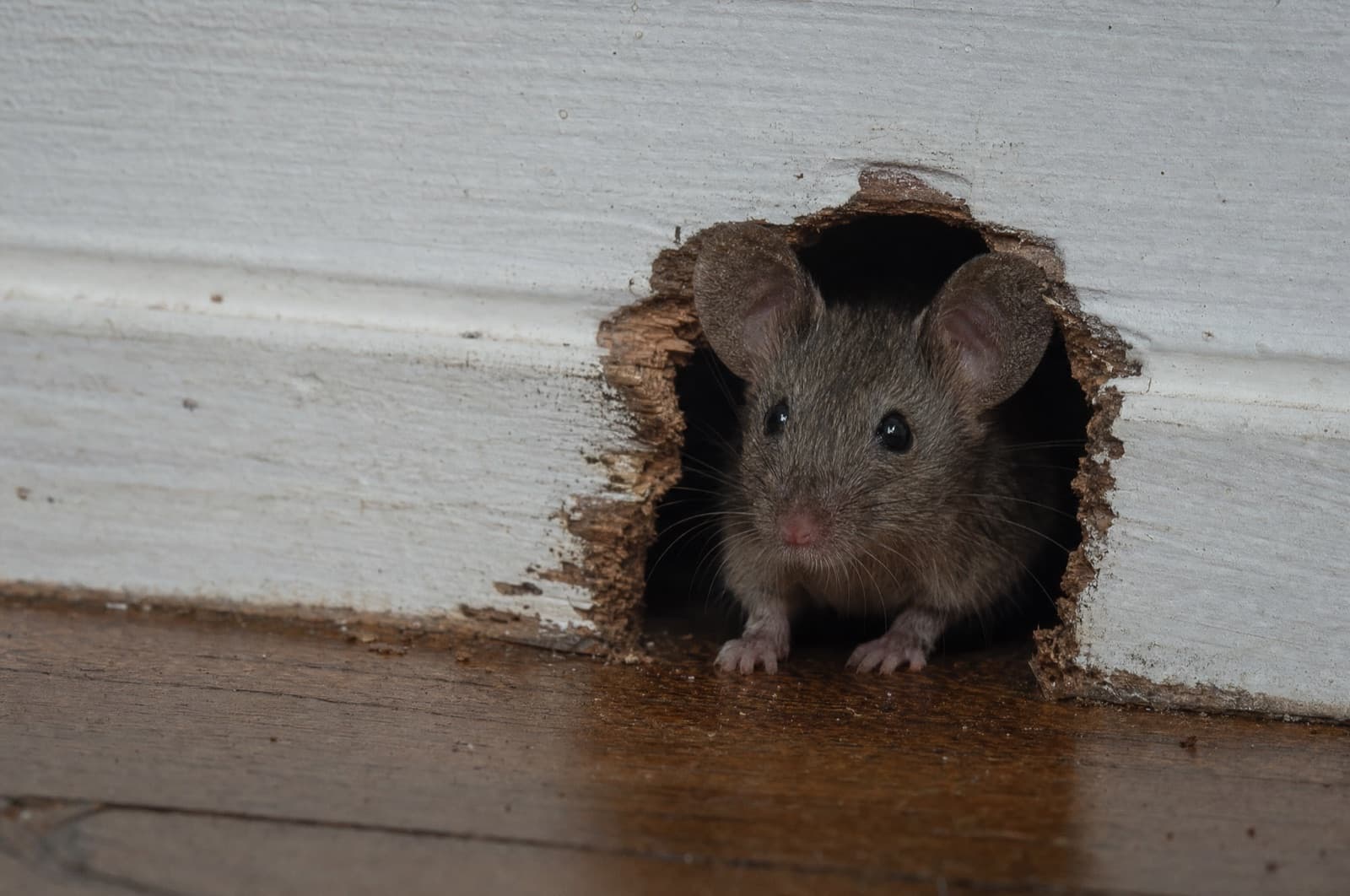
How Do I Eliminate Mice From a Garage?
At a Glance
- Short answer: Seal the under-door gap, store food/seed in hard containers, and trap along the walls.
- Key fact: The gap under a garage door is the most commonly cited entry point for garage mice.
- NH relevance: NH garages storing birdseed and grass seed over winter are a classic mouse food source.
- Action needed: Declutter cardboard and boxes — they're nesting material, not just storage.
The short of it
Garages combine three things mice love: stored food, clutter for cover, and an easy way in — most garage doors leave a gap wide enough for a mouse to walk through. The fix follows the same shape as the rest of the hub, adapted to a garage's specific vulnerabilities: move stored food (birdseed, pet food, grass seed) into sealed metal or hard-plastic containers, add or replace weather stripping and door sweeps to close the under-door gap, declutter cardboard and boxes that provide nesting cover, and set traps along the walls where mice actually travel.
How Do I Eliminate Mice From a Garage — By the Numbers
#1
Most common garage mouse entry point: the under-door gap
¼ in
Smallest gap a mouse needs to enter around windows/vents
3
Core steps: seal the door, secure food, trap the walls
5–10
Litters a house mouse can produce per year if left unaddressed
The full picture
Close the under-door gap first
Consumer Reports and extension sources consistently flag the garage-door gap as the prime entry point for rodents; most roll-up doors leave a gap wide enough for a mouse to walk through, especially as the bottom seal wears down. Add or replace the weather stripping along the bottom, inspect the vertical seals on the sides of the door, and seal gaps around any windows and side doors while you're at it.
Secure stored food and seed
Birdseed, pet food, and grass seed are exactly the calorie-dense, easy-access food mice look for, and bags are no barrier — move all of it into sealed metal or hard-plastic containers with tight lids. Don't store food-waste trash in the garage, and clean up any spilled seed or kibble promptly.
Clear the clutter that shelters them
Cardboard boxes, stacked newspaper, and general clutter aren't just storage to a mouse — they're nesting material and cover from predators. Get items off the floor onto shelving where possible, and switch long-term storage from cardboard to sealed plastic bins, which mice can't shred into nesting material.
Seal remaining gaps and trap what's inside
Pack any ¼-inch or larger gaps around windows, vents, and utility penetrations with steel wool and caulk, and screen vents. Set snap traps flush against the walls where mice actually travel — not in the open middle of the garage — to remove any mice already present, and check them regularly.
Bottom line — Seal the under-door gap and other ¼-inch openings, move stored food and seed into hard sealed containers, declutter nesting material, and trap along the walls. Skipping the door seal is the most common reason garage mice keep coming back.
Mice in the garage?
Anchor seals the door gap and other entry points, then traps what's already inside — a garage-specific fix, not a generic one.
Why this matters in New Hampshire
NH garages commonly store birdseed and grass seed over the winter — exactly the food source that draws mice in as temperatures drop toward Manchester's first hard frost, about October 19 at 50% probability, October 29 at 80% (NOAA 1991–2020). Sealing the garage door gap and switching seed storage to hard containers before that fall push meaningfully reduces the odds of a winter garage infestation.
Key local data
Deer mice (Peromyscus) are the hantavirus-relevant species in NH; NH DHHS reports no confirmed case acquired in-state to date.
- NH-licensed applicator · #782664
- Same-day service
- Family-owned since 2017
Service Area Map
Southern New Hampshire
Frequently asked
Written & reviewed by
VerifiedDaniel Brady
NH-Licensed Pesticide Applicator · License #782664 (NHDAMF, RSA 430)
Daniel Brady is the New Hampshire–licensed applicator behind Anchor Pest Services, a family-owned pest control company serving the Manchester area since 2017.
Professional Rodent Control
Garage-Specific Mouse Exclusion
Anchor Pest Services targets the entry points unique to garages — door gaps, vents, utility penetrations — alongside trapping and sanitation guidance. Family-owned since 2017, NH license #782664.
- Same-day service across southern NH
- NH-licensed applicators (#782664)
- Free inspection — no flat-price guesswork
NH License #782664 · No obligation · We answer in person
Your next step
- Book a NH pro
Rodent Control
Book now - Next step
Rodent Mites After Mice or Rats Are Removed
Read the answer - Related guide
How Do I Get Rid of Rats in a Car Engine?
Read the answer - Related guide
Does Steel Wool Stop Mice From Entering?
Read the answer - Related guide
How Small of a Hole Can a Mouse Get Through?
Read the answer - Related guide
How Do I Store Food to Keep Mice Away?
Read the answer