
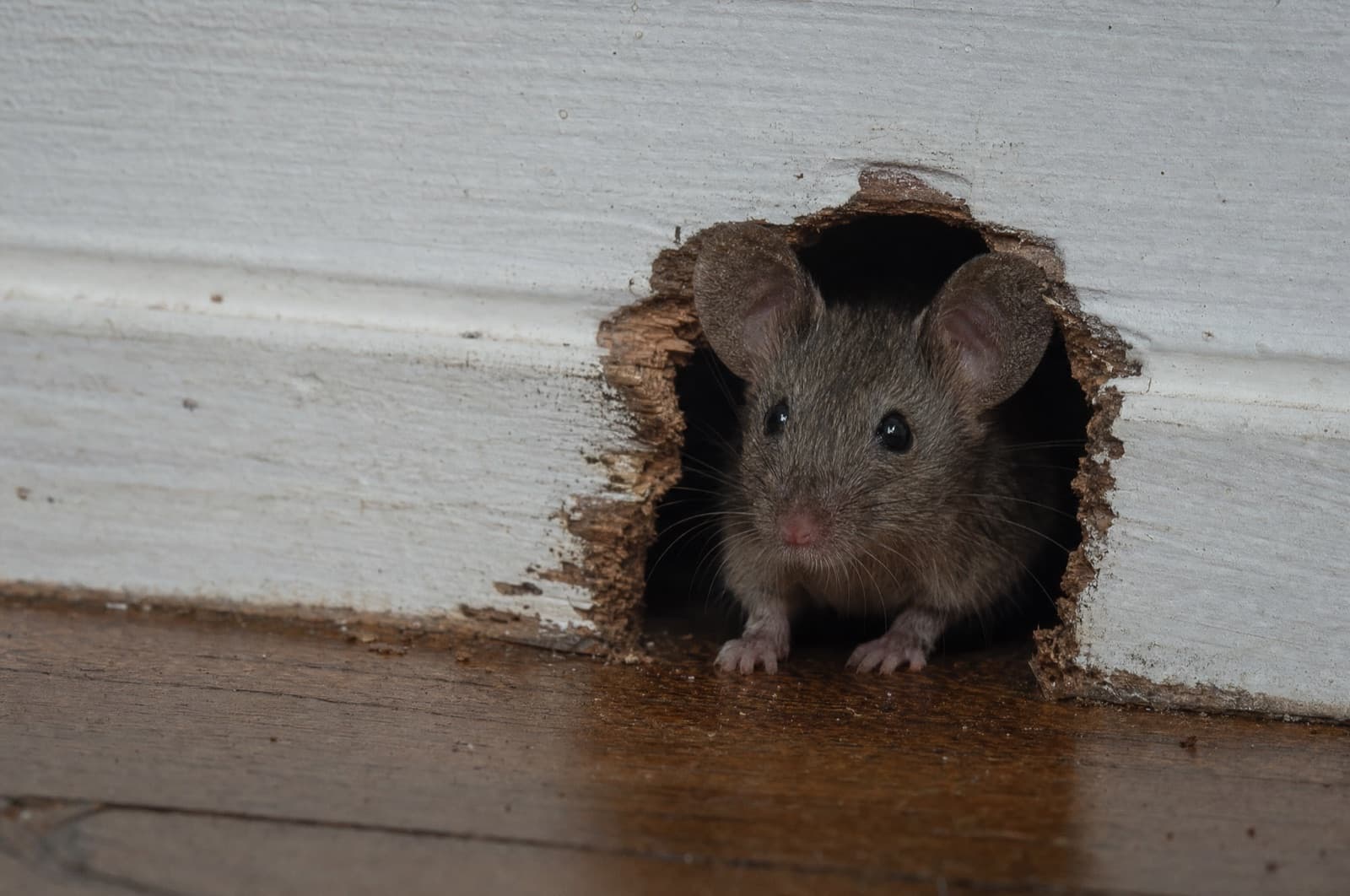
Do Rats Move Indoors During Cold Weather?
At a Glance
- Short answer: Yes — triggered by the first sustained cold snap each fall.
- Key fact: Rats don't hibernate; cold and food scarcity outdoors, not a date on a calendar, is the actual trigger.
- NH relevance: Manchester's first hard frost (~Oct 19 at 50%, Oct 29 at 80%, NOAA 1991–2020) is the practical exclusion deadline.
- Action needed: Complete exterior exclusion before the first hard frost — waiting until you hear scratching means rats are already inside.
The short of it
Rats don't hibernate, so as fall temperatures drop and outdoor food declines, they seek shelter, warmth, and food inside buildings — a surge that begins with the first sustained cold spell. In Manchester, NH, that trigger aligns closely with the first hard frost, about October 19 to 29.
Do Rats Move Indoors During Cold Weather — By the Numbers
Oct 19
Manchester first hard frost, 50% probability (NOAA)
Oct 29
Manchester first hard frost, 80% probability (NOAA)
No hibernation
Rats stay active and seek indoor shelter all winter
The full picture
Why cold drives rats indoors
DC Health's public-health guidance states directly that rats and mice seek winter shelter inside buildings following the first cold spell each fall. The mechanism is survival: rodents are warm-blooded and don't hibernate, so as outdoor temperatures fall and natural food — seeds, insects, vegetation — becomes scarce, a heated home with pantry food and water becomes the best option available.
NH's practical trigger: the first hard frost
The first hard frost is a practical trigger because it kills back the vegetation and insects rodents rely on outdoors and sharply raises the survival value of getting inside. For Anchor's service area, NOAA 1991–2020 climate normals put Manchester's first hard frost at roughly October 19 (50% probability) and October 29 (80% probability) — the window to have exclusion completed.
Bottom line — Complete exterior exclusion in early fall, before the first hard frost drives rodents in. Waiting until you hear scratching means the animals are already inside and breeding.
Beat the first frost
Once cold weather hits, rats are already looking for a way in. Anchor's licensed NH technicians seal entry points before the fall rush.
Why this matters in New Hampshire
This is the hub's frost-anchor page — Manchester's roughly October 19 to 29 first-hard-frost window (NOAA 1991–2020) is the concrete local cue for when rodent pressure on homes peaks each year, and the deadline to finish sealing entry points before it does.
Key local data
Manchester first hard frost ~Oct 19 (50%) / Oct 29 (80%), NOAA 1991–2020
- NH-licensed applicator · #782664
- Same-day service
- Family-owned since 2017
Service Area Map
Southern New Hampshire
Frequently asked
Sources (2)
- [1]
- [2]
Written & reviewed by
VerifiedDaniel Brady
NH-Licensed Pesticide Applicator · License #782664 (NHDAMF, RSA 430)
Daniel Brady is the New Hampshire–licensed applicator behind Anchor Pest Services, a family-owned pest control company serving the Manchester area since 2017.
Professional Rodent Control
The First Frost Is a Deadline, Not Just a Date
Rats move indoors the moment outdoor conditions turn against them. Anchor Pest Services seals entry points ahead of Manchester's frost window, so your home isn't the easy option. Family-owned since 2017, NH license #782664.
- Same-day service across southern NH
- NH-licensed applicators (#782664)
- Free inspection — no flat-price guesswork
NH License #782664 · No obligation · We answer in person
Your next step
- Book a NH pro
Rodent Control
Book now - Next step
Are rodents more likely to breed indoors during winter?
Read the answer - Related guide
How Long Do Rats Survive Indoors?
Read the answer - Related guide
Can Mice Survive Winter in a House?
Read the answer - Related guide
When Are Rats Most Active Indoors?
Read the answer - In your area
Where Do Rats Go In The Winter?
Read the answer