
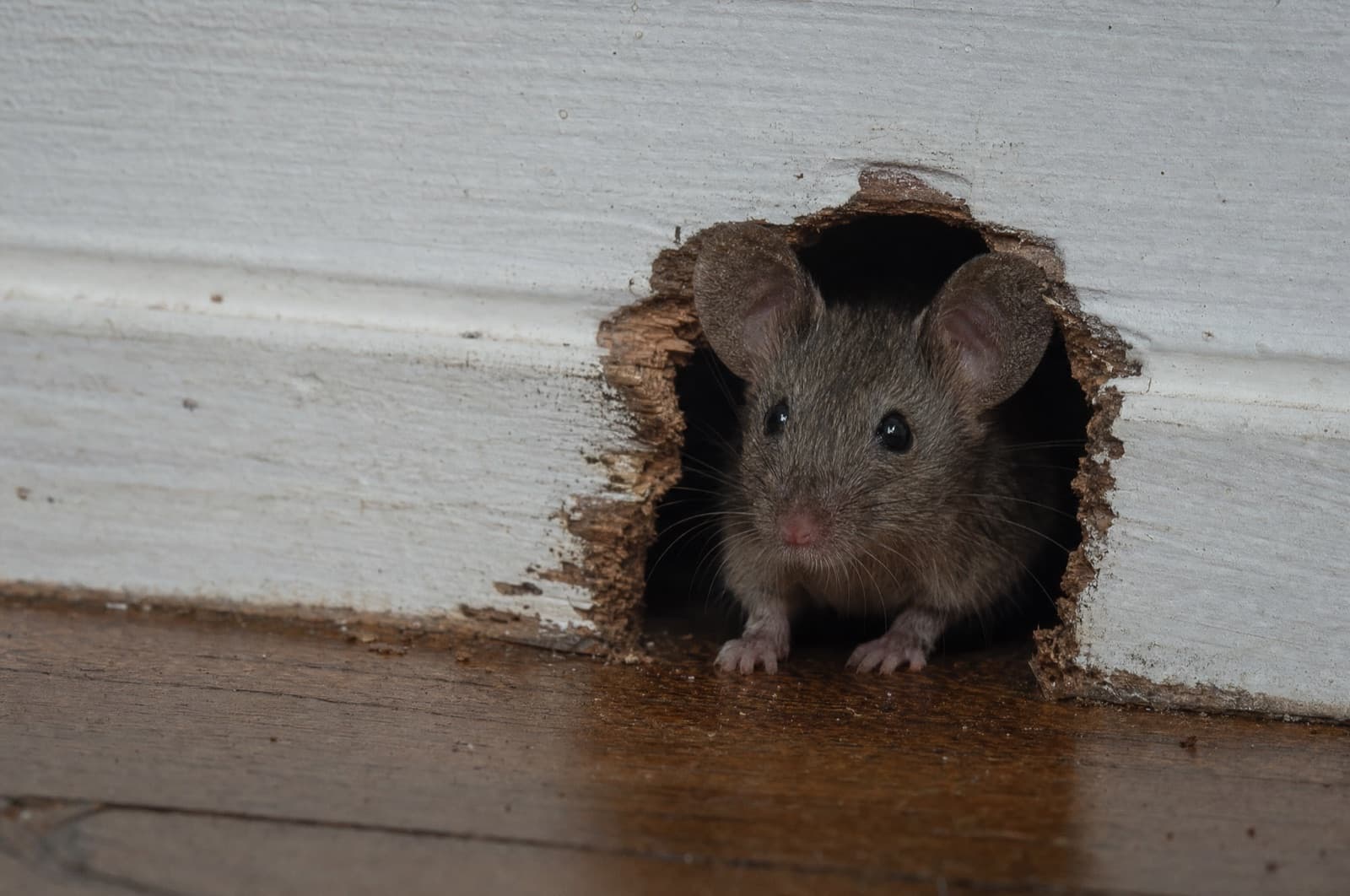
What Foods Attract Rats the Most?
At a Glance
- Short answer: Garbage, pet food, cereal grains, birdseed, and compost — roughly in that order.
- Key fact: Garbage ranks highest because it supplies both food and the water a rat needs daily.
- NH relevance: As outdoor food dwindles ahead of Manchester's fall frost (~Oct 19), rats intensify their search for these reliable sources near structures.
- Action needed: Secure garbage and pet food now; pair with sealing gaps ½ inch or larger for lasting control.
The short of it
Rats aren't picky, but they're not indiscriminate either. UC IPM research ranks their preferences as cereal grains, meats, fish, nuts, and some fruits — with garbage and pet food the strongest everyday draws in a home, because garbage combines a balanced diet with moisture in one place. Norway rats, New Hampshire's dominant species, lean toward high-protein and high-carbohydrate items like meat scraps and pet kibble, while roof rats favor fruit and nuts. Removing these attractants is the sanitation half of prevention — it has to pair with sealing entry gaps larger than ½ inch to actually keep rats out.
What Foods Attract Rats the Most — By the Numbers
#1
Top rat attractant: household garbage
½–1 oz
Water a rat needs daily on dry food
5
Top attractant categories: garbage, pet food, grains, birdseed, compost
2 species
Norway rats favor protein/grain; roof rats favor fruit/nuts
The full picture
The ranked list of rat attractants
In order of typical household impact: garbage tops the list, because it offers a balanced diet and moisture in one place. Pet food is a close second, especially bowls left out overnight or bulk kibble stored in unsealed bags — rat problems frequently track with outdoor dog feeding. Cereal grains and dry goods in gnawable packaging rank third. Birdseed and fallen seed under feeders are fourth, and compost with kitchen scraps or fallen fruit and nuts rounds out the top five. UC IPM specifically lists cereal grains, meats, fish, nuts, and some fruits as preferred items.
Norway rats vs. roof rats: different tastes
New Hampshire's dominant commensal species is the Norway rat — a ground-dwelling burrower found in basements, crawlspaces, and under decks. Norway rats favor high-carbohydrate and high-protein foods: cereal grains, meat scraps, fish, and especially pet food. Roof rats, an arboreal climber less common in the Northeast, prefer fruits, tree nuts, berries, snails, and even bird eggs, reflecting their tree-and-attic foraging habits. A ground-level rat problem in a Manchester-area basement is almost always a Norway rat drawn by grain, garbage, or pet food, not fruit.
Why water matters as much as food
A rat needs about ½ to 1 ounce of water per day on a dry diet — less if it's eating moist food like garbage. That's why leaky pipes, pet water bowls, and condensation matter alongside food: a home that supplies both removes the two main constraints on rat survival. Cutting off food sources without also addressing water and structural gaps rarely resolves an active problem on its own.
Bottom line — Garbage and pet food are the two biggest rat magnets around a New Hampshire home, followed by grains, birdseed, and compost. Removing these sources is the sanitation half of prevention — it reduces the draw, but only sealing entry points larger than ½ inch actually keeps rats from getting in to reach them.
Rats already finding food around your home?
Sanitation cuts the draw, but Anchor's licensed NH technicians handle the exclusion and trapping that actually clears a rat problem for good.
Why this matters in New Hampshire
As outdoor food sources — insects, seeds, garden scraps — decline heading into fall, rats near Manchester, Nashua, and Concord intensify their search for reliable food close to structures. That seasonal pressure peaks around the region's first hard frost (~Oct 19 at 50% probability, ~Oct 29 at 80%, NOAA 1991–2020), which is why securing garbage and pet food by early fall pays off more than doing it mid-winter after rats are already established.
Key local data
Norway rats are established across New Hampshire's cities and towns (UNH Cooperative Extension); roof rats are essentially absent from the Northeast (Cornell).
- NH-licensed applicator · #782664
- Same-day service
- Family-owned since 2017
Service Area Map
Southern New Hampshire
Frequently asked
Written & reviewed by
VerifiedDaniel Brady
NH-Licensed Pesticide Applicator · License #782664 (NHDAMF, RSA 430)
Daniel Brady is the New Hampshire–licensed applicator behind Anchor Pest Services, a family-owned pest control company serving the Manchester area since 2017.
Preventive Rodent Control
Cut Off the Food, Then Seal the Gaps
Anchor Pest Services helps southern and central NH homeowners identify what's drawing rats in and close the structural gaps sanitation alone can't fix. Family-owned since 2017, NH license #782664.
- Free inspection — no flat-price guesswork
- NH-licensed applicators (#782664)
- Preventive plans across southern & central NH
NH License #782664 · No obligation · We answer in person
Your next step
- Book a NH pro
Rodent Control
Book now - Next step
Are rodents more likely to breed indoors during winter?
Read the answer - Related guide
How Do I Store Garbage to Keep Rats Away?
Read the answer - Related guide
What Steps Prevent Rats From Coming Back?
Read the answer - Related guide
How Big of a Hole Can a Rat Squeeze Through?
Read the answer - Also relevant
When Are Rats Most Active? NH Rat Timing Guide
Read the answer