
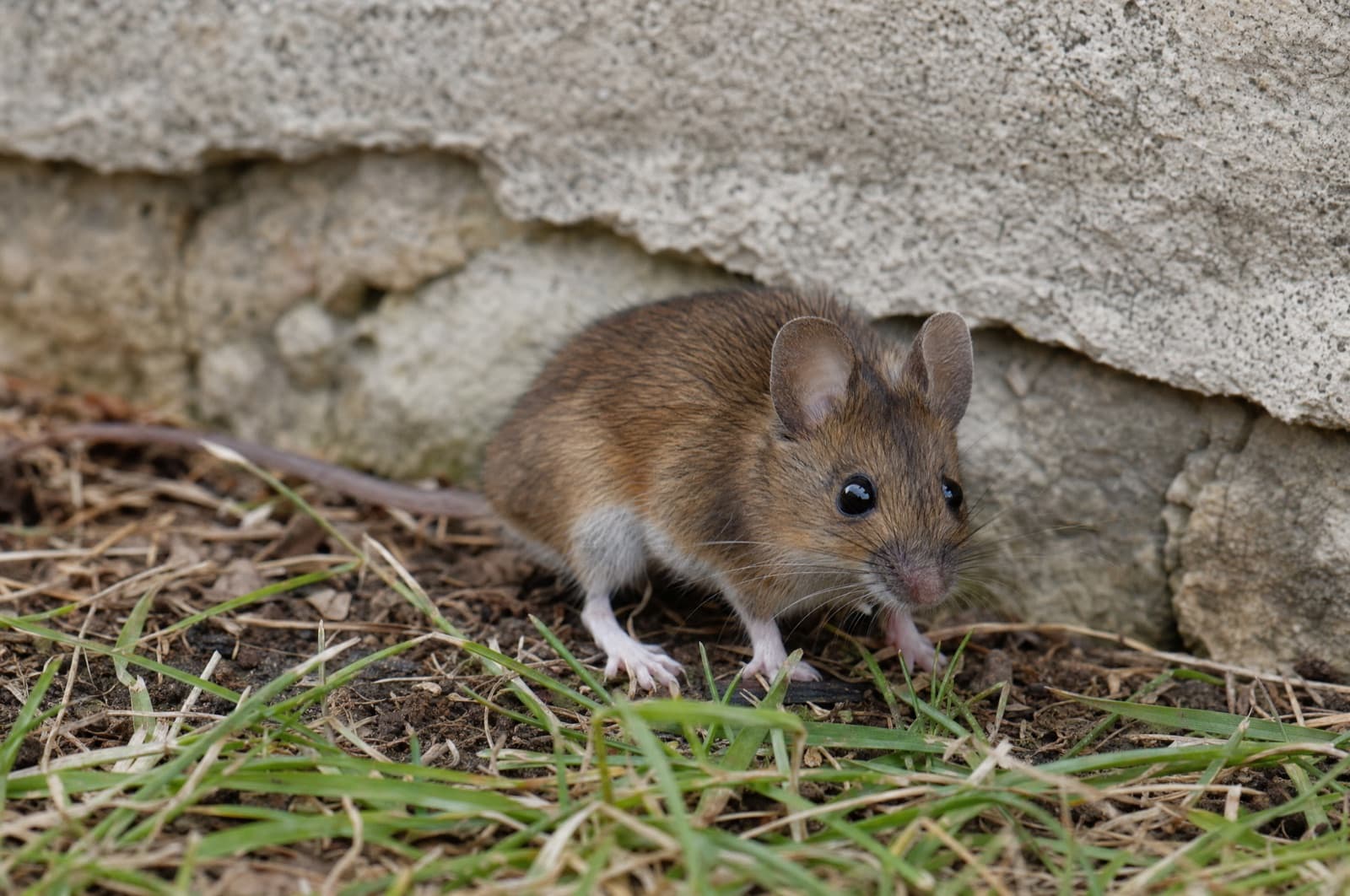
How to Get Rid of Field Mice
At a glance
- Difficulty: Intermediate
- Time: A weekend for exclusion; cleanup and trapping typically resolve within 1-2 weeks
- Cost: Low — steel wool, caulk, snap traps, gloves, and an EPA-registered disinfectant or diluted bleach
- Success: Good for trapping and exclusion with correct technique; safety depends on confirming ID and following the cleanup protocol exactly
Can you DIY Field Mouse?
The verdict on Field Mouse DIY
"Field mouse" is a colloquial name — identify it first, because the correct risk level depends on which animal you actually have.
"Field mouse" isn't a single scientific species — it's most often used for a Peromyscus mouse (deer mouse or white-footed mouse), though people also apply it loosely to the meadow vole. That matters because the correct risk grade and cleanup protocol hinge on which one you actually have: a Peromyscus mouse carries the CDC hantavirus cleanup requirement, while a vole does not and is a much lower-stakes yard pest. Because the Peromyscus interpretation is the health-relevant one, this page treats 'field mouse' as a deer/white-footed mouse and applies the same cleanup protocol — confirm the animal's ID first if you're unsure, using the identification notes below.
The 5 DIY methods — honestly graded
Every approach graded for this species, in IPM order — prevention first, chemistry late. Pick a method to see how it works, the steps, and what it actually takes.
Prevention / Exclusion
Works wellHighly effective — identical approach to deer mouse and white-footed mouse: seal gaps over 1/4 inch and reduce exterior harborage.
If the animal is a Peromyscus mouse, it enters through gaps over about 1/4 inch and presses toward structures from surrounding fields and woods. Sealing gaps and reducing exterior harborage removes both the entry points and the draw.
Best for: Stopping entry from adjacent fields and woods
Seal every gap over 1/4 inch
Seal sill-plate seams, utility penetrations, weep holes, and other gaps larger than 1/4 inch with steel wool packed in and sealed over with caulk, or hardware cloth/sheet metal for larger openings.
Cut back exterior harborage
Store food and pet food in hard sealed containers, and clear woodpiles, brush, and debris away from the foundation to reduce continual re-entry from surrounding habitat.
Tools & materials
Why DIY falls short here
Not scare tactics — the specific, proportionate reasons a home attempt can stall for this species.
ID ambiguity drives the wrong risk response
Control and risk grade differ sharply between a Peromyscus mouse (hantavirus cleanup required) and a meadow vole (garden pest, no meaningful cleanup risk) — confirm which animal you have before deciding how cautious to be.
Hantavirus aerosol risk from improper cleanup (if Peromyscus)
Dry sweeping or vacuuming droppings, urine, or nesting material is the main way people are exposed to hantavirus — treat any 'field mouse' droppings as Peromyscus-level risk unless you've confirmed it's a vole.
Rural reinvasion
Both Peromyscus mice and voles continually re-enter from surrounding fields and woods, so a single sealing pass without ongoing harborage management doesn't hold.
How risky is it, really?
An honest read — most nuisance species are genuinely low risk, and we say so.
Correctly calibrated by identification: if this is a Peromyscus mouse (the more likely, health-relevant interpretation), the risk is moderate for the same hantavirus reason as deer mouse and white-footed mouse. If it's actually a meadow vole, the risk is genuinely low — a garden pest, not a disease concern. Confirm which one you have.
- Hantavirus from aerosolized droppings, urine, or nest dust — if the animal is a deer mouse or white-footed mouseRare
Rare but potentially severe. Follow the identical CDC wet-cleanup protocol used for those two species.
CDC — Hantavirus
- Food contamination from droppings and urineCommon
Standard sanitation controls this, using the CDC wet-cleanup method rather than dry sweeping.
CDC
- Direct human disease risk — if the animal is actually a meadow voleRare
Voles have minimal direct health relevance; if ID points to a vole, this is primarily a lawn/garden problem, not a cleanup-safety one.
UNH Cooperative Extension
Uncertain Identification or Heavy Droppings Accumulation?
When 'field mouse' could mean a hantavirus-reservoir species, getting the ID right matters. Anchor Pest Services serves southern and central New Hampshire. Family-owned since 2017, NH license #782664.
Call a pro when…
- You can't confidently tell whether the animal is a Peromyscus mouse or a vole
- Droppings or nesting material found in an enclosed space like a cabin, shed, or crawl space with heavy accumulation
- You're not confident performing the exact CDC wet-cleanup protocol safely
- Anyone in the household develops flu-like symptoms after a known exposure — seek medical care promptly and mention it
General Pest Control
Exclusion and correctly handled trapping are DIY-doable once you've confirmed which animal you have. The deciding factor for calling a pro is usually ID uncertainty combined with heavy droppings accumulation, or comfort with the cleanup protocol.
Keep them out
- Seal every gap over 1/4 inch with steel wool and caulk
- Store all food, including pet food, in hard sealed containers
- Never dry-sweep or vacuum droppings or nesting material until ID is confirmed as low-risk
"Field mice" in New Hampshire
Homeowners in New Hampshire commonly use 'field mouse' for whichever small mouse they find in a shed, garage, or field-edge structure — usually a deer mouse or white-footed mouse, both common statewide, occasionally a meadow vole. Activity increases as animals seek shelter toward Manchester's first hard frost (~Oct 19-29, NOAA). When in doubt, treat it as a Peromyscus mouse for cleanup purposes — the safety margin costs little and the alternative (treating a hantavirus-reservoir species' droppings casually) is the real risk.
Peak season
Fall through winter, as small mammals seek indoor and outbuilding shelter
First-frost anchor
Manchester first hard frost ~Oct 19 (50%) / Oct 29 (80%), NOAA 1991-2020
Make sure it's a Field Mouse
Two quick detours worth taking — confirm the ID, then learn what drew it in so it doesn't come back.
Frequently asked
Sources & further reading(4)
- [1]CDC — Cleaning Up After Rodents
Exact hantavirus-safe cleanup protocol: ventilate, wet-disinfect, never dry-sweep or vacuum
govverified 2026-07-13 - [2]New Mexico Department of Health — Hantavirus Guide
Cabin/shed cleanup guidance and respirator recommendation for heavy infestations
govverified 2026-07-13 - [3]UNH Cooperative Extension — Mole or Vole?
Vole identification and low direct human-health relevance, for ID-triage contrast
extensionverified 2026-07-13 - [4]PMC (National Library of Medicine) — Peromyscus Reservoir Research
Peromyscus mice as hantavirus reservoirs
academicverified 2026-07-13
Written & reviewed by
VerifiedDaniel Brady
NH-Licensed Pesticide Applicator · License #782664 (NHDAMF, RSA 430)
Daniel Brady is the New Hampshire–licensed applicator behind Anchor Pest Services, a family-owned pest control company serving the Manchester area since 2017.
Last updated July 2026
Other species you can tackle
Same category — the dot shows each one's DIY verdict at a glance (green = friendly, amber = doable with care, red = call a pro).
Professional Pest Control
Uncertain Identification or Heavy Droppings Accumulation?
When 'field mouse' could mean a hantavirus-reservoir species, getting the ID right matters. Anchor Pest Services serves southern and central New Hampshire. Family-owned since 2017, NH license #782664.
- Species ID + safe-cleanup guidance
- NH-licensed applicators (#782664)
- Free inspection — same-day service across southern NH
NH License #782664 · No obligation · We answer in person
Your next step
- What to do next
Deer Mouse in New Hampshire — Hantavirus & Safe Cleanup
Read the answer - What to do next
House Mouse in New Hampshire — ID, Signs & Control
Read the answer - What to do next
White-Footed Mouse — NH's Key Lyme Disease Reservoir
Read the answer - Also relevant
What Attracts Field Mouse to Your House?
Read the answer - Related guide
What Is the Safest Way to Dispose of a Dead Mouse?
Read the answer