
What Noises Do Mice Make at Night?
At a Glance
- Short answer: Light scratching, scurrying, gnawing, and occasional squeaks — most of their sound is ultrasonic and inaudible.
- Key fact: Mice communicate mainly at 30–110 kHz, well above human hearing (~20 kHz max).
- NH relevance: Wall and ceiling noise reports climb in NH after the fall entry period around the first hard frost (~Oct 19).
- Action needed: Recurring noise from the same wall or ceiling area, especially with droppings nearby, confirms active rodents worth investigating.
The short of it
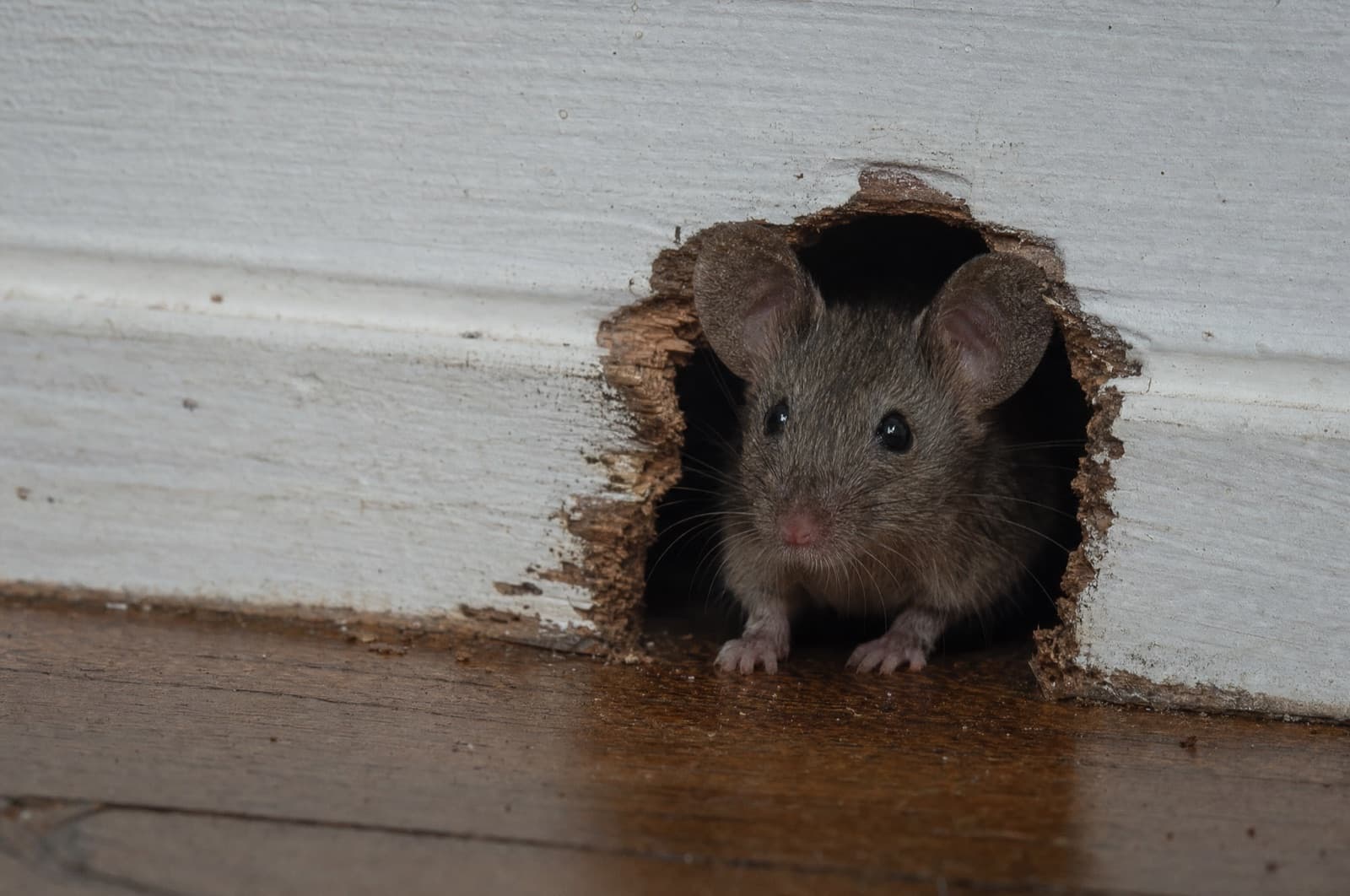
At night, mice typically produce light scratching, scurrying, gnawing, and occasional high-pitched squeaks from inside walls, ceilings, and behind appliances. Peer-reviewed research shows most mouse communication is actually ultrasonic (30–110 kHz), well above the roughly 20 kHz ceiling of human hearing, so what you hear is only a fraction of their real activity. Rat noises are noticeably heavier — louder scratching, scrambling, and sometimes thumps.
What Noises Do Mice Make at Night — By the Numbers
30–110 kHz
Frequency range of mouse ultrasonic vocalizations
~20 kHz
Upper limit of human hearing
~200
Small "nibble" meals a mouse eats per night
Nocturnal
Mice are active mostly after dark
The full picture
What you can actually hear
UC IPM notes mice are active mostly at night, and the audible signs are light scratching and scurrying (small feet on wood or drywall), gnawing — a persistent scraping sound as they chew — and occasional thin squeaks. Because mice feed in roughly 200 small "nibble" meals across the night, movement is near-constant rather than a single event, which is why the scratching can seem to travel around a wall cavity over the course of an evening.
The sound you mostly can't hear
What most people don't realize is that the bulk of mouse vocal communication is ultrasonic. Peer-reviewed research (Holy & Guo, 2005, cited in a PMC review) documents that mice "predominantly communicate using ultrasonic vocalizations (USVs) with a frequency from 30 to 110 kHz" — well above the roughly 20 kHz ceiling of human hearing. So the audible squeaks you notice are only a fraction of the actual communication happening in the wall.
Telling mouse noise from rat noise
Sound location and weight are useful diagnostics. Rats produce noticeably heavier sounds than mice — louder scratching, scrambling, gnawing, and sometimes thumps or a tooth-grinding noise — while mouse sounds stay light and fast. High ceiling or attic noise suggests climbing rodents in wall voids or above the ceiling; low, along-the-floor sounds point to ground-level travel.
Bottom line — Expect light scratching, scurrying, gnawing, and occasional squeaks from mice, with most of their real communication inaudible to humans. Recurring noise from the same wall or ceiling area, especially alongside droppings, confirms active rodents and calls for inspection, not a shrug.
Same wall, same scratching, every night?
That's not the house settling — it's an active mouse nest close by. Anchor's licensed NH technicians find it and clear it.
Why this matters in New Hampshire
Wall and ceiling noise reports climb across southern and central NH after the fall shelter-seeking period around Manchester's first hard frost — about October 19 (50%) to October 29 (80%), NOAA 1991–2020 — as outdoor mice move indoors for the winter.
Key local data
NH DHHS: no confirmed hantavirus case acquired in New Hampshire to date; the deer mouse (Peromyscus) is the regional reservoir species.
- NH-licensed applicator · #782664
- Same-day service
- Family-owned since 2017
Service Area Map
Southern New Hampshire
Frequently asked
Written & reviewed by
VerifiedDaniel Brady
NH-Licensed Pesticide Applicator · License #782664 (NHDAMF, RSA 430)
Daniel Brady is the New Hampshire–licensed applicator behind Anchor Pest Services, a family-owned pest control company serving the Manchester area since 2017.
Professional Rodent Control
You're Only Hearing Part of the Activity
Most mouse communication is ultrasonic — the scratching you do hear is a fraction of what's happening in your walls. Anchor Pest Services inspects, traps, and seals entry points so the noise actually stops. Family-owned since 2017, NH license #782664.
- Same-day service across southern NH
- NH-licensed applicators (#782664)
- Free inspection — no flat-price guesswork
NH License #782664 · No obligation · We answer in person
Your next step
- Book a NH pro
Rodent Control
Book now - Next step
Rodent Mites After Mice or Rats Are Removed
Read the answer - Related guide
What Are the Signs of a Mouse Infestation?
Read the answer - Related guide
When Are Rats Most Active Indoors?
Read the answer - Related guide
How Do I Get Rid of Mice in Walls?
Read the answer - Related guide
What Noises Do Rats Make in Walls?
Read the answer