
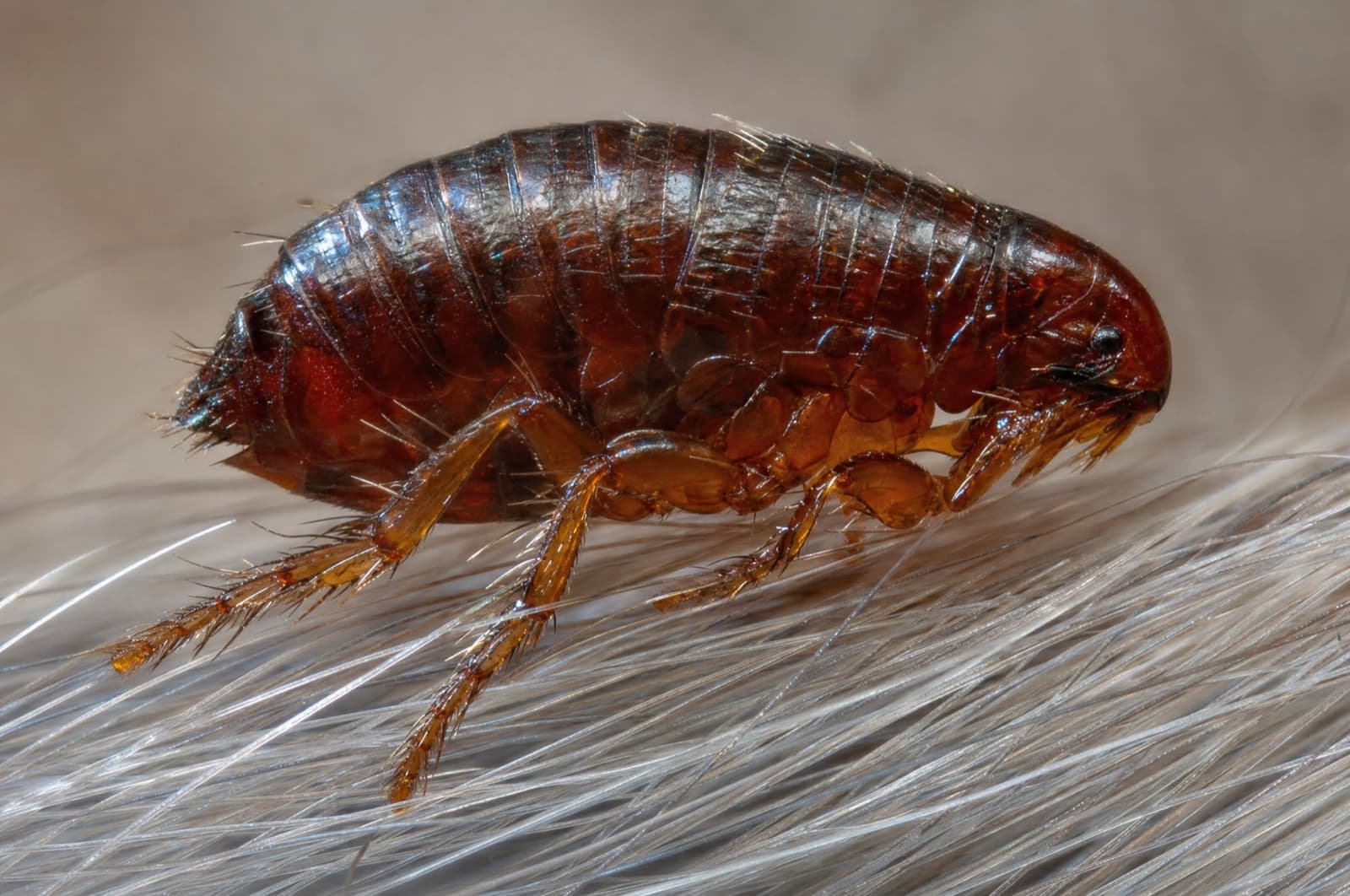
When Is Flea Season? Do Fleas Die in Winter? (NH Guide)
At a glance
- Outdoor peak: Late summer–early fall (Aug–Sep)Season can run spring–November in the Northeast — CAPC / CDC
- Optimal conditions: ~70–75°F with high humidityFull life cycle completes in a few weeks at ~75°F — CAPC / CDC
- Indoor survival: Year-round in heated homes (>~68°F)Fleas do NOT reliably die in winter indoors — PetMD / Dr. Drake, Elanco
- Dormant pupae: Up to ~5 months in the cocoonEmerge on vibration/heat/CO2 trigger — spring 'explosions' (Dr. Drake)
Outdoor peak
Late summer–early fall (Aug–Sep)
Season can run spring–November in the Northeast — CAPC / CDC
Optimal conditions
~70–75°F with high humidity
Full life cycle completes in a few weeks at ~75°F — CAPC / CDC
Indoor survival
Year-round in heated homes (>~68°F)
Fleas do NOT reliably die in winter indoors — PetMD / Dr. Drake, Elanco
Dormant pupae
Up to ~5 months in the cocoon
Emerge on vibration/heat/CO2 trigger — spring 'explosions' (Dr. Drake)
The short of it
Flea season in NH peaks in late summer and early fall (Aug–Sep) — you're heading into it now — but heated homes keep fleas breeding year-round, so they don't reliably die off in winter.
When are they active — the whole year at a glance
Fleas in New Hampshire follow a split calendar: outdoor stages slow down in the cold, but heated homes keep every life stage active all winter.
Best window to act · Year-round veterinarian-recommended pet prevention — including through winter — is the foundation. In spring, vacuum carpets, baseboards, and furniture frequently and empty the canister immediately, wash pet bedding in hot water (140°F or hotter), and treat yard shade or harborage areas if pets go outdoors.
Fleas peak outdoors in late summer (Aug–Sep) but do NOT collapse at frost the way mosquitoes and wasps do — heated NH homes keep them breeding year-round. Frost anchor: Manchester ~Oct 19 (NOAA).
A year in the life
Flea timing in New Hampshire is really two calendars at once — an outdoor calendar governed by temperature, and an indoor calendar that barely changes at all.
- 01
Spring
Dormant winter pupae emerge and outdoor populations rebuild as temperatures rise. This is a common 'explosion' point — pupae that have waited out the cold in a cocoon for months can all hatch together when a host returns or a home is reoccupied. It's a good time to start or continue year-round preventives before the summer climb.
- 02
Summer
Warm, humid weather accelerates the flea life cycle, which can complete in just a few weeks at around 75°F. Outdoor exposure from wildlife and other pets increases through June, July, and into the August–September peak.
- 03
Fall
The outdoor peak tapers as temperatures cool, but this is the key transfer window — fleas move indoors on pets and wildlife seeking warmth ahead of winter, seeding infestations that show up later in the season.
- 04
Winter
This is the direct answer to 'do fleas die in winter?' — outdoors, yes: cold eventually kills exposed adult stages. Indoors, no: a heated home above roughly 68°F sustains eggs, larvae, pupae, and adults all winter. Skipping winter prevention lets an infestation build unnoticed until spring.
Fleas in southern New Hampshire
NH's cold winters lead many homeowners to assume fleas die off — but heated Manchester, Nashua, and Concord homes keep every flea life stage alive year-round. Outdoor populations peak in the humid late summer, then ride pets and wildlife indoors in fall, where cocooned pupae can wait months before erupting into a visible infestation.
Key local data
Fleas thrive at roughly 70–75°F and, indoors above about 68°F, breed through every month of a NH winter — which is why CAPC calls for monthly, year-round flea prevention for the life of the pet rather than a warm-season-only product (CAPC).
We serve these communities
- NH-licensed applicator · #782664
- Same-day service
- Family-owned since 2017
Service Area Map
Southern New Hampshire
Timing your treatment
The core message with fleas differs from the other biters in this cluster: control has to be year-round, because heated homes never give fleas a frost 'off switch.' Don't stop prevention in winter.
Tick Control
Free inspection and same-day flea service across southern New Hampshire. NH-licensed #782664.
Learn more about this pestFrequently asked
Sources & references
- PetMD — Do Fleas Survive Winter?
indoor winter survival, cold tolerance of flea life stages
- Flea Science — At What Temperature Do Fleas Die?
temperature thresholds, life-stage cold tolerance
- Adams Pet Care — Flea & Tick Season 101
Northeast season span, peak conditions
- CAPC — Fleas (Companion Animal Parasite Council Guidelines)
flea life cycle, ~70–75°F optimum, year-round monthly prevention, IGRs (lufenuron/methoprene/pyriproxyfen), months-long control timeline
- CDC — Fleas
flea biology and seasonal activity, disease-vector context
- NOAA/NWS Gray — Frost/Freeze Program
frost anchor context (frost does NOT end indoor fleas)
Editorial disclaimer: This content is provided for informational purposes only and does not constitute pest control advice. Every property is unique — consult a licensed professional for guidance specific to your situation. Anchor Pest Services is licensed in New Hampshire (#782664).
Written & reviewed by
VerifiedDaniel Brady
NH-Licensed Pesticide Applicator · License #782664 (NHDAMF, RSA 430)
Daniel Brady is the New Hampshire–licensed applicator behind Anchor Pest Services, a family-owned pest control company serving the Manchester area since 2017.
Last updated Jul 2026
Anchor Pest Services
Whatever the season — we handle the timing for you.
Same-day service across Southern New Hampshire. NH-licensed #782664, family-owned since 2017. We track the local calendar so you don't have to guess the right window.
- NH-licensed applicator
- Same-day service
- Pet & family-conscious
NH License #782664 · No obligation · We answer in person
Your next step
- Next step
How to Get Rid of Bird Mites
Read the answer - Related guide
When Is Mosquito Season in NH? Timing & Risk Guide
Read the answer - Also relevant
Flea — Quick ID for New Hampshire Homeowners
Read the answer - In your area
How to Get Rid of Fleas
Read the answer - In your area
When Are Fleas Most Common in Homes?
Read the answer - In your area
Can Fleas Infest Humans Without Pets in a House?
Read the answer