
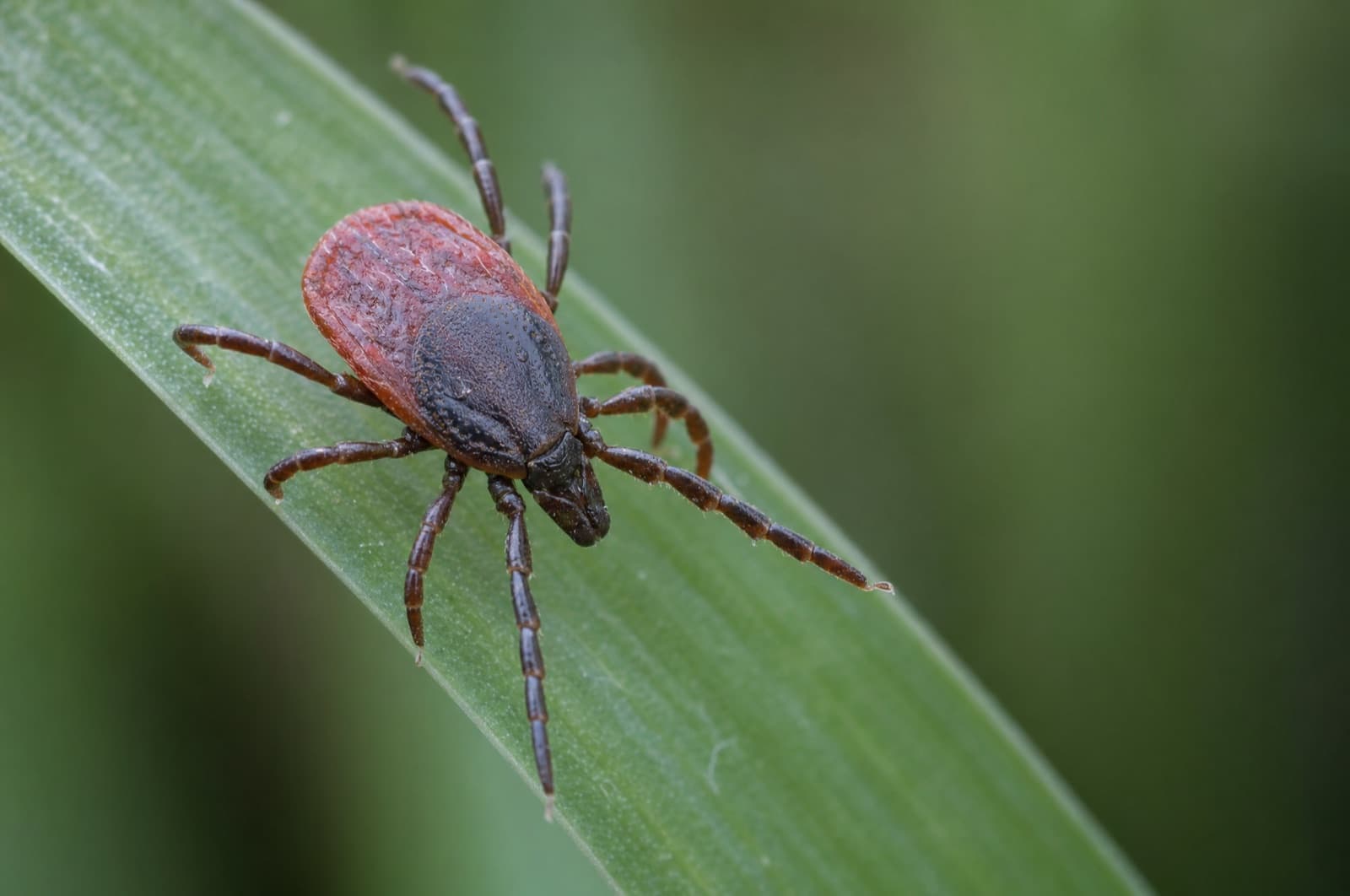
When Are Ticks Most Active in NH? Tick & Lyme Timing
At a glance
- Activity threshold: Any day above 40°F, snow-freeEffectively year-round, not just summer — NH DHHS
- Adult activity (bimodal): Oct–late Nov & late Mar–MayBlacklegged tick adult peaks — UNH Extension
- Nymph window: May 15–mid-JulyDrives most Lyme transmission; peak June–July — UNH Extension; NH DHHS
- NH infection rate: ~60% of blacklegged ticks carry the Lyme bacteriumBorrelia burgdorferi — NH DHHS
Activity threshold
Any day above 40°F, snow-free
Effectively year-round, not just summer — NH DHHS
Adult activity (bimodal)
Oct–late Nov & late Mar–May
Blacklegged tick adult peaks — UNH Extension
Nymph window
May 15–mid-July
Drives most Lyme transmission; peak June–July — UNH Extension; NH DHHS
NH infection rate
~60% of blacklegged ticks carry the Lyme bacterium
Borrelia burgdorferi — NH DHHS
The short of it
Ticks are active any NH day above ~40°F — effectively year-round — but you're in the most dangerous stretch right now: nymph-driven Lyme risk peaks May–July.
When are they active — the whole year at a glance
Unlike mosquitoes and wasps, ticks never fully shut down in New Hampshire — they simply slow down in the cold and quest again on any mild, snow-free day.
Best window to act · Early June acaricide/leaf-litter barrier treatment to yard edges targets blacklegged nymphs (UNH Extension); a mid-May treatment also hits American dog ticks; an October treatment targets fall adults. Build a tick-safe zone in April: a 3-foot wood-chip or gravel border between lawn and woods, short grass, and woodpiles/feeders moved away from the house.
Unlike mosquitoes and wasps, ticks do NOT die at frost — they quest any day above ~40°F without snow, so winter cold is only partial relief. Nymph-driven Lyme risk peaks May–July; adults peak again Oct–Nov (NH DHHS / UNH Extension; frost anchor Manchester ~Oct 19, NOAA).
A year in the life
Tick risk in New Hampshire is bimodal and never fully disappears, which sets it apart from the other pests in this cluster.
- 01
Spring
Adults quest first as snow melts in March, then nymphs emerge around mid-May. This is the window to start tick checks and yard management, and the best time to schedule a barrier treatment before the dangerous nymph season arrives.
- 02
Summer
The dangerous nymph season. Most Lyme, anaplasmosis, and babesiosis exposures happen here, peaking in June and July. Nymphs are poppy-seed-sized and easy to miss, so daily tick checks after outdoor time are essential.
- 03
Fall
Adult ticks surge again from early October through late November. Hunters, hikers, and gardeners face renewed bite risk well after mosquito and wasp seasons have ended for the year.
- 04
Winter
Ticks do not truly hibernate. Adults quest on any day above 40°F with no snow cover, so cold snaps offer only partial relief — a mild, low-snow winter can mean tick exposure even in January.
Ticks in southern New Hampshire
NH is a CDC-designated high-incidence Lyme state — 1,085 reported cases in 2022 (78.8 per 100,000), above the high-incidence-state median. Blacklegged (deer) ticks dominate wooded and edge habitat across Manchester, Nashua, and Concord, with the American dog tick common in open fields and the lone star tick now expanding into the state. Because ticks quest any day above 40°F, the risk window is far longer than most homeowners assume.
Key local data
About 60% of NH blacklegged ticks carry the Lyme bacterium; ticks quest any day above ~40°F without snow — NH DHHS. Frost (~Oct 19, Manchester) does NOT end tick season — NOAA.
We serve these communities
- NH-licensed applicator · #782664
- Same-day service
- Family-owned since 2017
Service Area Map
Southern New Hampshire
Timing your treatment
The cheapest, most effective play is a spring/early-summer yard barrier plus year-round pet prevention — before nymph season hits full force.
Tick Control
Free inspection and same-day tick service across southern New Hampshire. NH-licensed #782664.
Learn more about this pestFrequently asked
Sources & references
- UNH Extension — Biology and Management of Ticks in New Hampshire
activity windows, 40°F floor, nymph/adult peaks, June/May/Oct control timing
- NH DHHS — Tickborne Diseases
40°F activity floor, April–Nov peak, 60% infection rate, NH tickborne diseases
- CDC MMWR (Feb 15, 2024)
NH 1,085 Lyme cases in 2022; 78.8/100,000; high-incidence median 68.3
- Tick Free NH — Identify
lone star tick confirmed in NH (2020), species identification
- NH DHHS — Mosquito and Tick Transmitted Infections Announcement
tickborne infection surveillance context
- NOAA/NWS Gray — Frost/Freeze Program
frost anchor context (frost does NOT end tick season)
Editorial disclaimer: This content is provided for informational purposes only and does not constitute pest control advice. Every property is unique — consult a licensed professional for guidance specific to your situation. Anchor Pest Services is licensed in New Hampshire (#782664).
Written & reviewed by
VerifiedDaniel Brady
NH-Licensed Pesticide Applicator · License #782664 (NHDAMF, RSA 430)
Daniel Brady is the New Hampshire–licensed applicator behind Anchor Pest Services, a family-owned pest control company serving the Manchester area since 2017.
Last updated Jul 2026
Anchor Pest Services
Whatever the season — we handle the timing for you.
Same-day service across Southern New Hampshire. NH-licensed #782664, family-owned since 2017. We track the local calendar so you don't have to guess the right window.
- NH-licensed applicator
- Same-day service
- Pet & family-conscious
NH License #782664 · No obligation · We answer in person
Your next step
- Book a NH pro
Tick Control in New Hampshire
Adult deer ticks peak in fall. Yard tick control across Manchester and southern NH.
Book now - Also relevant
What Time of Year Are Ticks Most Active?
Read the answer - Also relevant
What Diseases Can Ticks Transmit to Dogs?
Read the answer - Also relevant
What Diseases Can Ticks Transmit to Cats?
Read the answer - In your area
Can Ticks Survive Winter in a Yard?
Read the answer