
Skip to content
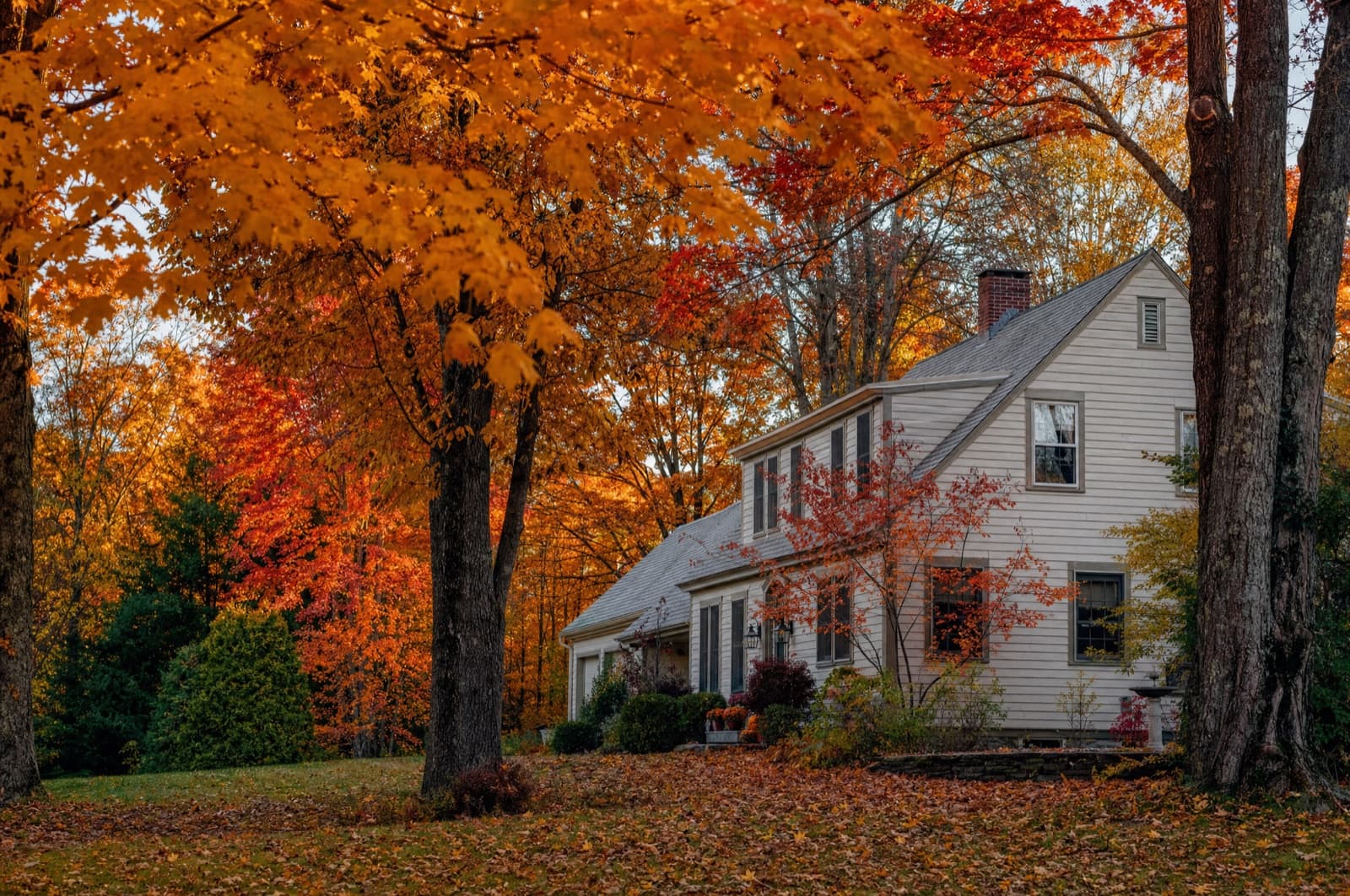
October in a New Hampshire yard
Daniel Brady · NH-Licensed Pesticide Applicator · License #782664
Reviewed by Daniel Brady

What Pests Are Actually Active in October in New Hampshire?

The big monthThe hinge of the pest year — more species at peak than any other month.
October is the busiest month on this calendar: ten species are at their peak, more than any other month of the year. One event drives nearly all of it. Manchester's first hard frost lands around October 19-29, and that single date works in two directions at once — it collapses wasp colonies and ends the mosquito season, while pushing mice, rats, squirrels and the overwintering insects out of the cold and into your walls. Seven things turned up this month. Three wound down. That is a real change, and it is the only month on this calendar where the honest answer is that a lot is happening.

October at a glance

  • Species at peak: 10
  • Turned up: 7 newly active
  • Turned down: 3 winding down
  • The floor: 4 here year-round
  • Oct 19-29

    When Manchester's first hard freeze normally lands — the single most load-bearing date in the NH pest year

    NOAA/NWS

  • early Oct to late Nov

    Adult blacklegged (deer) tick peak — the frost opens tick season rather than ending it

    UNH Cooperative Extension

  • 2 human cases, 1 death

    New Hampshire's 2024 EEE outbreak, its first human cases in a decade

    NH DHHS

  • 7 batches

    EEE-positive mosquito batches confirmed statewide in the 2024 season

    NH DHHS

Where in the year

You are here · October

A pest year has a shape. This strip is the whole of it — the season you’re in, the months on either side, and the one you’re reading now.

The New Hampshire pest year
FallYou are here · Oct
This monthSame seasonOther months10 at peak this month
The changelog

What changed in October

Not a list of seven pests re-served every month. A release log: what turned up, what wound down, what’s always here, and what isn’t here at all — 10 species at peak this month.

Turned up

newly active — more than last month

7
micePeak

The pre-frost cool-down pushes house mice indoors in force. Outdoor food and cover collapse at the same moment night temperatures fall, and a mouse loses body heat fast at its size — a heated building is the nearest solution to both problems at once.

Do this · This is the month exclusion actually pays. Seal gaps at the foundation, sill and utility penetrations before the frost date, not after.

ratsPeak

The same frost-driven ingress as mice, and for the same reason. In New Hampshire this is the Norway rat — see the retraction below.

Do this · Same as mice: this is the exclusion window. Norway rats work at ground level, so the foundation line is where it matters.

The largest wall aggregations of the year. Asian lady beetles mass on sun-warmed south and west walls ahead of the frost and enter on warm days. They are orienting to visual contrast on the siding, not to light — the warmth is what triggers the flight, not what points them at the wall.

Do this · Exclusion only, and only before they are inside. Once they are in the wall void, October's window has closed.

bugsPeak

Heaviest wall aggregation and indoor entry of the year for boxelder bugs, western conifer seed bugs and brown marmorated stink bugs — the same pre-frost cue, the same sun-warmed walls. This is the one month a boxelder-bug listing is honest.

Do this · Screen vents and seal around window and door frames on the sunny walls. Do not spray the siding.

Caching peaks and attic entry surges ahead of the frost. Unlike the insects, a squirrel is looking for a den, not a crevice — so the entry points are roofline-scale.

Do this · Check the roofline, soffit and gable vents now. A squirrel in the attic in October is a squirrel in the attic in January.

ticksPeak

Adult blacklegged (deer) ticks hit their fall peak. Per UNH Extension, adults are most active from early October to late November — and they quest on any day above freezing.

Do this · Keep checking after time in tall grass and at the woods edge. Frost does not end tick season, and that is the most commonly wrong belief about this month.

mitesPeak

The fall clover-mite migration onto sunny walls — the same warm-wall behaviour as the beetles and bugs, and often mistaken for them.

Nothing worth doing this month.

Turned down

winding down — you can stop worrying

3
waspsDeclining

Workers die off and the colony collapses at the first hard frost. The nest is finished. It will not be reused next year — not by this colony, not by another.

Do this · Nothing. If the nest is somewhere you can ignore, ignore it. Paying to remove a dead nest in late October buys you nothing.

mosquitoesDeclining

Activity ends at the first hard frost. A warm autumn stretches it a week or two; the frost date ends it. Until that freeze, though, October is still inside NH DHHS's June–October EEE and West Nile surveillance window, and the early-fall stretch it caps is historically the peak risk period for Eastern Equine Encephalitis — the same window that in 2024 produced New Hampshire's fatal EEE case (an adult from Hampstead — one of 2 human cases that year, 1 fatal, with a Kensington case who survived; the first human cases in ten years), one infected horse, and seven EEE-positive mosquito batches.

Do this · Keep using personal protection on mild pre-frost days, then stop treating once the frost lands. Whatever you are paying for mosquito service in late October, after the freeze, is buying a service against an animal the weather already handled.

fleasDeclining

Cooling knocks back the outdoor stages after the late-summer peak. Indoor risk does not follow the weather down — fleas ride the host, and your house is still warm.

Do this · Keep pets on their veterinarian's schedule. The outdoor drop is not an indoor all-clear.

The floor

here every month — not this month’s news

4

These are in and around New Hampshire homes every month of the year, October included. They are not October news, and any calendar that lists them as October's pests is padding a list. We know, because ours did.

  • cockroaches

    German cockroaches never had a winter to survive. Your heating is their season — indoors, October is not meaningfully different from July.

  • moths

    Pantry and clothes moths breed on stored food and fabric in a heated building, which is a year-round climate.

  • birds

    Roosting and structural nuisance continue through the fall; the nesting-season protections are a spring problem, not an October one.

  • opossum

    Opossums stay active all year — they do not hibernate — and shelter-seeking near buildings rises quietly through the fall.

Not here

our own old page said otherwise

1
  • Black Rat

    Our old claim: Our own legacy October page listed the Black Rat — and so did the other eleven months, usually first. It was the single most-featured pest on this calendar.

    The black rat (also called the roof or ship rat, Rattus rattus) is not established in New Hampshire. Its documented US range is warm and coastal — the lower East Coast, the Gulf States, the Pacific Coast and Hawaii — and in cooler regions it was displaced by the larger, more cold-tolerant Norway rat. We are saying not established rather than never recorded: isolated cargo introductions are documented elsewhere in the country, and we could not verify an occurrence count for this state. The honest claim is that there is no established population here.

    Internet Center for Wildlife Damage Management — roof rat range (icwdm.org); ScienceDirect (citing CDC) — Rattus rattus displaced by Rattus norvegicus in temperate regions

    What you actually have: The Norway rat (Rattus norvegicus). If you have a rat in New Hampshire, that is the one — and it is at its peak this month.

The bottom line
The big month — 10 species at peak

October is the hinge of the pest year: one frost date shuts down the things that sting you outdoors and moves the things that live with you indoors.

The calendar behind the calendar

Seasonal anchors

The sourced New Hampshire dates and thresholds that actually move the pest year — frost, moratoria, surveillance windows.

  1. 01

    Manchester's first hard freeze normally lands around October 19-29.

    This is the single most load-bearing date in the New Hampshire pest year, and it works in both directions at once: it ends the wasp and mosquito seasons and simultaneously drives rodents and overwintering insects indoors. Nearly everything on this page is downstream of it.

    NOAA/NWS — Manchester, NH first hard freeze climatology (weather.gov/gyx/climate_f6)

  2. 02

    Adult blacklegged (deer) ticks are most active from early October to late November.

    Frost does not end tick season — it starts the adult peak. Ticks quest on any day above freezing, so the assumption that the first cold snap is an all-clear is exactly backwards this month.

    UNH Cooperative Extension — ticks in New Hampshire (extension.unh.edu)

  3. 03

    October closes NH DHHS's June–October arboviral surveillance season for Eastern Equine Encephalitis (EEE) and West Nile virus, and until the first hard frost the pre-frost weeks are still active transmission risk — the tail end of the year's peak EEE window. In 2024 that window produced New Hampshire's first human EEE cases in a decade: 2 human cases and 1 death — a fatal infection in an adult from Hampstead and a Kensington case who survived — plus one infected horse and seven EEE-positive mosquito batches statewide.

    It sets the honest boundary on the 'stop treating' advice: personal protection still matters on mild days before the freeze, but once the frost lands it genuinely ends the mosquito season and paid mosquito service after that point is buying nothing.

    NH DHHS — mosquito-borne illnesses (dhhs.nh.gov); NH DHHS 2024 EEE case announcement (Aug 2024)

The full picture

October, in plain terms

01

One date does almost all the work

There is a temptation to write October as a list of ten separate problems. It isn't. It is one event with ten consequences.

Manchester's first hard freeze normally arrives between roughly October 19 and October 29. Every species on this page is responding to the same approaching cold, just in opposite directions. The wasps and mosquitoes are ending — an annual wasp colony has no overwintering plan beyond the queen, and the frost is simply the end of it. The mice, rats and squirrels are arriving — because a heated building is the warmest, driest thing for miles, and they can feel it. The beetles and stink bugs are arriving for a different reason: they aren't chasing your furnace, they're looking for a crevice to sit out the winter in, and your sunlit wall is the landmark that leads them to one.

That is why the same week can bring you a dead nest under the eaves and a mouse in the kitchen. Nothing has gone wrong. The frost did both.

02

What the frost does NOT end

Ticks. This is the most commonly wrong belief about October in New Hampshire, and it runs in the opposite direction from the rest of the month: the frost does not end tick season, it opens the adult peak. UNH Extension puts adult blacklegged tick activity from early October to late November, and adults quest on any day above freezing — including the mild days that follow a cold snap.

The things that were already inside. Cockroaches, pantry moths and anything else living on your heating did not notice the frost. They are the floor of this calendar in every month, October included.

So the honest October summary is narrower than the old page's seven-item list: seal the building before the frost, keep checking for ticks after it, and stop paying for mosquito treatment.

03

Why we deleted our own October pages

The old version of this page listed seven pests. So did the other eleven months — and it was very nearly the same seven every time. Black Rat appeared on all twelve. Boxelder Bugs appeared on all twelve, including June, when they are outdoors on host trees and nowhere near your house.

A calendar whose answer never changes is not a calendar. It is a list wearing a calendar's clothes, and Google noticed before we did: these twelve pages earned zero impressions in sixteen months.

Honesty cuts both ways here, so it is worth saying plainly: October was the old calendar's most accurate month. Boxelder bugs, cluster flies, stink bugs, western conifer seed bugs, yellowjackets and house mice are all genuinely October stories. The problem was never that the October list was wrong. The problem was that the same list was served in March — and the Black Rat at the top of it doesn't live in New Hampshire at all.

The short version

Key takeaways

  • 01Ten species are at peak — more than any other month. One frost date, around October 19-29, drives nearly all of it.
  • 02The frost works both ways: it ends wasps and mosquitoes, and pushes mice, rats, squirrels and overwintering insects indoors.
  • 03Frost does NOT end tick season. Adult deer ticks peak from early October to late November and quest above freezing.
  • 04Exclusion is worth doing this month and much less worth doing next month. The window closes when they are already in the wall.
  • 05A dead wasp nest in late October needs nothing. The colony is finished and the nest will not be reused.

Sealing up before the frost?

October is the month exclusion actually pays. We serve southern and central New Hampshire from Manchester.

Common questions

Follow-up questions

The other half of this calendar

Already know what you’re dealing with?

This page is month-first — it answers “what changed in October?” Every species named here also has a species-first page in the timing guide: the same sourced facts, the full year, one species at a time. If you already know what you’re dealing with, that’s the faster route.

  • NH-licensed applicator · #782664
  • Same-day service
  • Family-owned since 2017

Sources & references

  1. NOAA/NWS — Manchester, NH first hard freeze climatology

    Manchester's first hard frost normally lands ~Oct 19-29 — the anchor for the whole fall arc

    govverified 2026-07-17
  2. UNH Cooperative Extension — ticks in New Hampshire

    Adult blacklegged ticks most active early October to late November; questing above freezing

    extensionverified 2026-07-17
  3. Internet Center for Wildlife Damage Management — roof rats

    Roof rat (Rattus rattus) US range is the lower East Coast, Gulf States, Pacific Coast and Hawaii; most of the interior is free of roof rats

    extensionverified 2026-07-17
  4. UNH Cooperative Extension — seasonal insect invaders of New Hampshire homes

    Fall aggregation of lady beetles, boxelder bugs, stink bugs and conifer seed bugs on sun-warmed walls and entry into structures

    extensionverified 2026-07-17
  5. NH DHHS — mosquito-borne illnesses (EEE / West Nile)

    NH June–October arboviral surveillance season and 2024 EEE outbreak — 2 human cases and 1 death (fatal Hampstead case, Kensington case survived, first in 10 years), one horse, seven positive mosquito batches; pre-frost early fall as peak EEE risk

    govverified 2026-07-17
  6. Nalepa, Kennedy & Brownie 2005 — Environmental Entomology 34(2):425–431, "Role of Visual Contrast in the Alighting Behavior of Harmonia axyridis (Coleoptera: Coccinellidae) at Overwintering Sites"

    Asian lady beetles orient to dark-on-light visual contrast when alighting at overwintering sites, not to radiant heat or light

    academicverified 2026-07-17

Editorial disclaimer: This content is provided for informational purposes only and does not constitute pest control or medical advice. Every property is unique — consult a licensed professional for guidance specific to your situation. Anchor Pest Services is licensed in New Hampshire (#782664).

Written & reviewed by

Verified

Daniel Brady

NH-Licensed Pesticide Applicator · License #782664 (NHDAMF, RSA 430)

Daniel Brady is the New Hampshire–licensed applicator behind Anchor Pest Services, a family-owned pest control company serving the Manchester area since 2017.

Verify license

Last updated Jul 2026

The one month it genuinely matters

Get the building sealed before the frost date

After the frost, they are already in the wall and the job changes. Same-day service available across southern and central NH.

  • Family-owned in Manchester since 2017
  • NH commercial applicator #782664, category F1
  • We will tell you when the answer is to do nothing

NH License #782664 · No obligation · We answer in person