
Skip to content
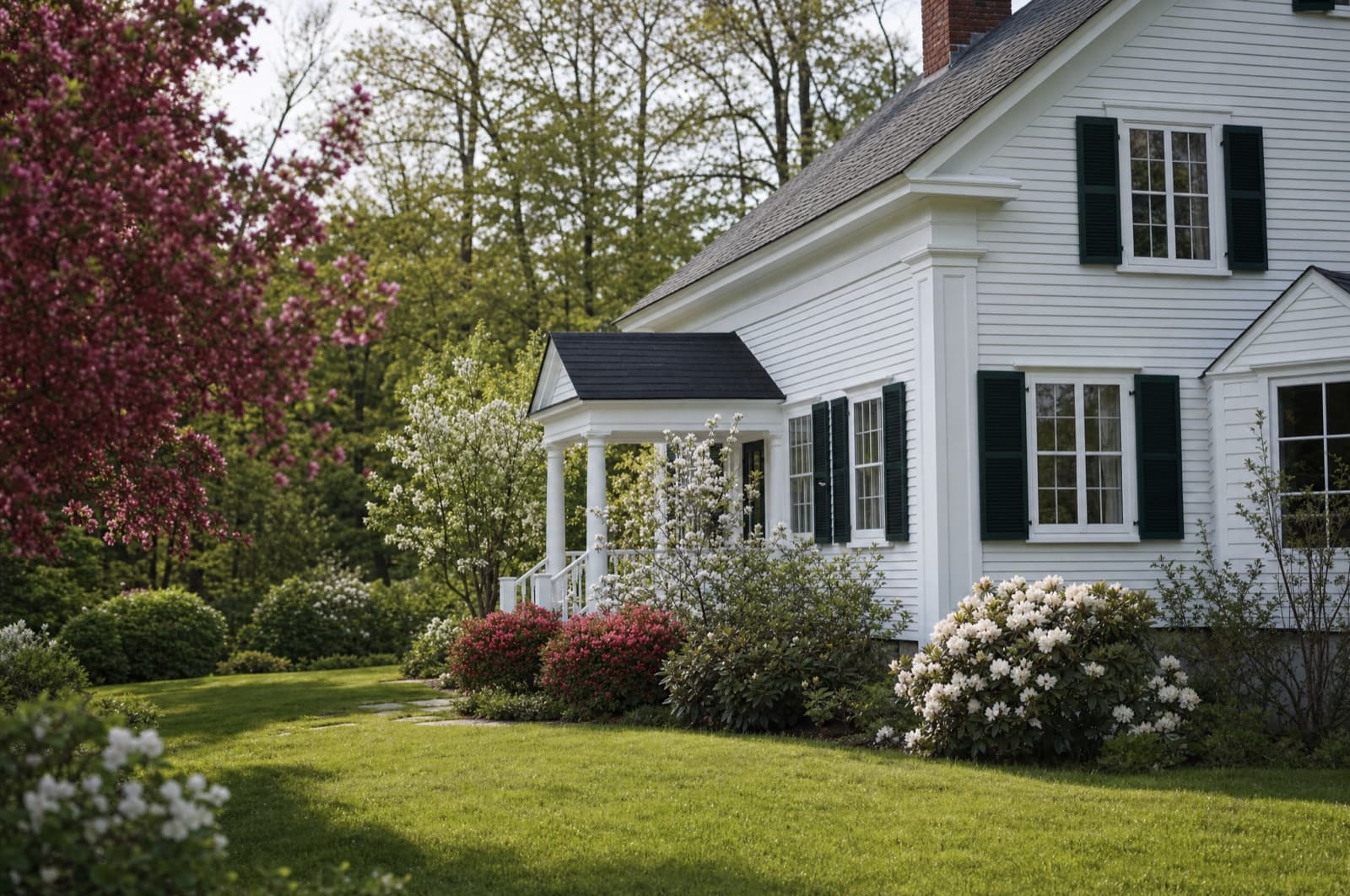
May in a New Hampshire yard
Daniel Brady · NH-Licensed Pesticide Applicator · License #782664
Reviewed by Daniel Brady

What Pests Are Actually Active in May in New Hampshire?

Shoulder monthThe season is turning — a few real changes, not many.
May turns down more than it turns up. Six species — beetles, boxelder bugs and their cluster, crickets, cluster flies, mites and raccoons — settle from their spring flicker into a quieter, fully-outdoor pattern. Only one species genuinely turns up: ticks, as nymphs emerge alongside already-active adults. That single change matters more than the other six combined, because nymphal ticks are the life stage most often responsible for Lyme disease in New Hampshire. Birds remain at their nesting peak from April. This is a moderately active month dominated by one real health story.

May at a glance

  • Species at peak: 2
  • Turned up: 1 newly active
  • Turned down: 6 winding down
  • The floor: 8 here year-round
  • ~60%

    Share of New Hampshire's sampled blacklegged ticks carrying the bacterium that causes Lyme disease

    NH DHHS

  • 2 human cases, 1 death

    New Hampshire's 2024 EEE outbreak, the worst in a decade, driven by the mosquito species building through May

    NH DHHS

  • 7 batches

    EEE-positive mosquito batches confirmed statewide in the 2024 season

    NH DHHS

Where in the year

You are here · May

A pest year has a shape. This strip is the whole of it — the season you’re in, the months on either side, and the one you’re reading now.

The New Hampshire pest year
SpringYou are here · May
This monthSame seasonOther months2 at peak this month
The changelog

What changed in May

Not a list of seven pests re-served every month. A release log: what turned up, what wound down, what’s always here, and what isn’t here at all — 2 species at peak this month.

Turned up

newly active — more than last month

1
ticksPeak

Nymphal blacklegged ticks emerge around mid-May alongside already-active adults. Nymphs are the stage most linked to Lyme transmission in New Hampshire — small enough to go unnoticed, active through summer.

Do this · Check yourself, kids and pets after time in tall grass or at the woods edge. Keep lawns mown and maintain a clear buffer between lawn and treeline.

Turned down

winding down — you can stop worrying

6
beetlesDormant

Asian lady beetles are outdoors laying eggs on aphid-rich plants, functioning as a beneficial predator rather than a wall-massing nuisance. The indoor story is over until fall.

Nothing worth doing this month.

bugsDormant

Boxelder bugs, western conifer seed bugs and stink bugs are all laying eggs outdoors on their host trees and conifers. None of the three are anywhere near a structure right now.

Nothing worth doing this month.

cricketsDormant

Cricket nymphs are developing outdoors. Very few crickets are indoors this month at all.

Nothing worth doing this month.

fliesDormant

Cluster flies are entirely outdoors now, with the first summer generation developing in the soil. None are indoors this month.

Nothing worth doing this month.

mitesActive

Clover-mite activity winds down by late May as temperatures move past their comfort range — April's sunny-wall nuisance is ending, not building further.

Nothing worth doing this month.

raccoonsActive

April's birthing peak has passed. Mothers are rearing kits and foraging, sometimes even by day, but the loud denning commotion of the last two months is behind them.

Nothing worth doing this month.

The floor

here every month — not this month’s news

8

These eight are in and around New Hampshire homes every month of the year, May included. They are not May news, and any calendar that lists them as this month's pests is padding a list. We know, because ours did.

  • birds

    Nesting continues at a high level through May, a continuation of April's peak rather than a new event.

  • cockroaches

    German cockroaches keep breeding indoors regardless of the season outside; May isn't meaningfully different from any other month.

  • fleas

    Outdoor flea populations grow with the warmth, but fleas never stopped riding indoor hosts through the spring in the first place.

  • mice

    House mice continue breeding indoors as outdoor populations also expand — an indoor presence that doesn't pause for warmer weather.

  • moths

    Pantry and clothes moths keep breeding on stored food and fabric in a heated building, a climate with no May in it.

  • opossum

    Opossums remain active with juveniles now present in the pouch — a continuation of a year-round pattern, not a new event.

  • rats

    Norway rats continue sheltering and breeding indoors even as outdoor populations grow through spring.

  • squirrels

    Squirrels are moving into their second annual breeding season — a quiet stretch between the winter and summer peaks, present but not making noise.

Not here

our own old page said otherwise

2
  • Black Rat

    Our old claim: Our own legacy calendar listed the Black Rat on all twelve months, usually first — including May.

    The black rat (also called the roof or ship rat, Rattus rattus) is not established in New Hampshire. Its documented US range is warm and coastal — the lower East Coast, the Gulf States, the Pacific Coast and Hawaii — and in cooler regions it was displaced by the larger, more cold-tolerant Norway rat. We say not established rather than never recorded: isolated cargo introductions are documented elsewhere in the country, and we could not verify an occurrence count for this state. The honest claim is that there is no established population here. May is a good month to make the point plainly: the outdoor Norway rat population is expanding with spring foraging and breeding right now, so any rat sign around a property this month traces to that spreading Norway rat population — never to a warm-climate roof rat that has no foothold in the state at all.

    Internet Center for Wildlife Damage Management — roof rats (icwdm.org/species/rodents/roof-rats/); ScienceDirect — Rattus rattus displaced by Rattus norvegicus in temperate regions

    What you actually have: The Norway rat (Rattus norvegicus). If you have a rat in New Hampshire, that's the one, still sheltering indoors even as outdoor populations grow.

  • Boxelder Bugs

    Our old claim: Our own legacy calendar listed Boxelder Bugs on all twelve months, including May.

    By May, overwintered boxelder bugs are outdoors laying eggs on host trees — not aggregating on or entering buildings. May is arguably the emptiest month of the year for a boxelder-bug home listing: the spring emergence and dispersal from wall voids that briefly makes them visible in April is finished, and the fall wall-aggregation is still four to five months out, so a May sighting is an adult on a boxelder or maple, laying eggs, with no connection to a structure at all. They become a noticeable household pest again only in fall, when adults mass on warm walls to overwinter.

    UNH Cooperative Extension — boxelder bug fact sheet (extension.unh.edu/resource/boxelder-bug-fact-sheet)

The bottom line
The tick month — 2 species at peak, and one of them is the whole story

May belongs to ticks — the nymphs are out, they're the size of a poppy seed, and they're the ones that most often make people sick.

The calendar behind the calendar

Seasonal anchors

The sourced New Hampshire dates and thresholds that actually move the pest year — frost, moratoria, surveillance windows.

  1. 01

    Blacklegged tick nymphs emerge in New Hampshire around mid-May, and roughly 60 percent of blacklegged ticks sampled in the state carry the bacterium that causes Lyme disease.

    Nymphs are the stage most responsible for Lyme transmission because they're tiny enough to go unnoticed for the hours of attachment it typically takes to transmit infection.

    NH DHHS — tickborne diseases (dhhs.nh.gov/programs-services/disease-prevention/infectious-disease-control/tickborne-diseases)

  2. 02

    Mosquito populations build through May toward the June–October window when NH DHHS runs its active Eastern Equine Encephalitis (EEE) and West Nile virus surveillance. In 2024, that surveillance season produced the state's worst EEE year in a decade: 2 human cases and 1 death (a fatal Hampstead case; a Kensington case survived) — the state's first human cases in ten years — plus one infected horse and seven EEE-positive mosquito batches.

    May itself is not a mosquito-virus risk month — ticks are the real story now — but it is the last easy window to empty standing water before the broods that feed that surveillance season multiply, and 2024 is the reason the state takes that season seriously.

    NH DHHS — mosquito-borne illnesses (dhhs.nh.gov); NH DHHS 2024 EEE case announcement (Aug 2024)

The full picture

May, in plain terms

01

May belongs to ticks

Everything else on this page is secondary to one change: nymphal blacklegged ticks emerge around mid-May, joining adults that have been active since spring. Nymphs are the tick stage most responsible for Lyme disease in New Hampshire, precisely because they're the size of a poppy seed and easy to miss during the window it takes to transmit infection. Roughly 60 percent of blacklegged ticks sampled in the state carry the bacterium.

This is one of the few months on this calendar where there is genuinely something worth doing: check yourself, your kids and your pets after time in tall grass or at the woods edge, and keep a mown buffer between lawn and treeline.

02

Six things moved fully outdoors

The rest of May's changelog is almost entirely species settling downward, not up. Beetles, the boxelder-bug cluster, crickets and cluster flies are all fully outdoors now — laying eggs, developing as nymphs, or simply absent from the house — which ends the brief spring flicker each showed in March and April. Clover mites and raccoons are winding down from their own April peaks rather than building toward anything: mite activity fades as it warms past their comfort range, and raccoon mothers have shifted from denning commotion to daytime foraging with kits in tow.

None of these six needed anything done about them in April, and none need anything done about them now.

03

What's still genuinely high

Birds remain at their nesting peak, unchanged from April — still worth remembering before disturbing an active nest, since federal protection doesn't lift until fledging. Everything else at a steady, always-present level this month is the floor: cockroaches, mice, rats and the rest of the year-round baseline that would make any month look busy if a calendar chose to relist it as news.

The short version

Key takeaways

  • 01Only ticks genuinely turned up in May, but it's the month's whole story: nymphs emerge and roughly 60 percent of NH's blacklegged ticks carry Lyme disease.
  • 02Six species — beetles, the boxelder-bug cluster, crickets, cluster flies, mites and raccoons — settled downward into a fully outdoor or quieter pattern.
  • 03Birds remain at their April nesting peak; active nests stay federally protected until fledging.
  • 04The old calendar's Black Rat and Boxelder Bugs listings don't belong on this page.

Tick season is here in earnest.

Nymphs are out and easy to miss. We serve southern and central New Hampshire from Manchester.

Common questions

Follow-up questions

The other half of this calendar

Already know what you’re dealing with?

This page is month-first — it answers “what changed in May?” Every species named here also has a species-first page in the timing guide: the same sourced facts, the full year, one species at a time. If you already know what you’re dealing with, that’s the faster route.

  • NH-licensed applicator · #782664
  • Same-day service
  • Family-owned since 2017

Sources & references

  1. NH DHHS — tickborne diseases

    Nymphal blacklegged tick emergence timing and NH infection rate (~60%)

    stateverified 2026-07-17
  2. UNH Cooperative Extension — biology and management of ticks in New Hampshire

    Nymph and adult blacklegged tick seasonal activity windows

    extensionverified 2026-07-17
  3. UNH Cooperative Extension — boxelder bug fact sheet

    Boxelder bugs lay eggs outdoors on host trees in spring, not aggregating on structures

    extensionverified 2026-07-17
  4. Internet Center for Wildlife Damage Management — roof rats

    Roof rat (Rattus rattus) US range is warm/coastal; displaced by Norway rat in cooler regions

    extensionverified 2026-07-17
  5. NH DHHS — mosquito-borne illnesses (EEE / West Nile)

    NH arboviral surveillance season and 2024 EEE outbreak — 2 human cases and 1 death (fatal Hampstead case, Kensington case survived, first in 10 years), one horse, seven positive mosquito batches

    govverified 2026-07-17

Editorial disclaimer: This content is provided for informational purposes only and does not constitute pest control or medical advice. Every property is unique — consult a licensed professional for guidance specific to your situation. Anchor Pest Services is licensed in New Hampshire (#782664).

Written & reviewed by

Verified

Daniel Brady

NH-Licensed Pesticide Applicator · License #782664 (NHDAMF, RSA 430)

Daniel Brady is the New Hampshire–licensed applicator behind Anchor Pest Services, a family-owned pest control company serving the Manchester area since 2017.

Verify license

Last updated Jul 2026

One real story this month

Get ahead of tick season before summer

Yard treatment and property checks matter most in May, while nymphs are active and hard to spot. Same-day service available across southern and central NH.

  • Family-owned in Manchester since 2017
  • NH commercial applicator #782664, category F1
  • We will tell you when the answer is to do nothing

NH License #782664 · No obligation · We answer in person