
Chicken Mites in NH: Night Bites Mean a Bird Roost
Also called Red poultry mite · Pigeon mite · Dermanyssus mite
The chicken mite (Dermanyssus gallinae), also called the red poultry mite, hides in poultry houses and pigeon nests by day and emerges at night to feed on blood. People get bitten mainly when poultry or pigeon nests are abandoned and the mites move into adjacent living spaces. Humans are accidental hosts who cannot sustain a mite life cycle, so removing or treating the roost source ends the infestation.
- Size
- ~0.7–1 mm (pinhead specks)
- red when engorged; sciencedirect.com (Dermanyssidae)
- Feeding time
- Mostly at night
- from nest harborage; sciencedirect.com
- What bites mean
- A poultry/pigeon nest or roost nearby
- sciencedirect.com
- Live on humans?
- No — humans are accidental hosts
- pmc.ncbi.nlm.nih.gov/articles/PMC8456244/
- Off-host survival
- Months in an abandoned nest
- mdedge.com
Night-time bites and a bird roost: the connection you need to know
The chicken mite (Dermanyssus gallinae) is a blood-feeding arachnid that spends its days hidden in cracks and crevices near its nest harborage — inside a poultry coop, behind roosting ledges, or deep in a pigeon nest — then ventures out at night to feed. That nocturnal behavior makes it one of the most confusing pest mites homeowners encounter: bites arrive at night with no visible culprit in sight, and the usual suspects (bed bugs, mosquitoes) don't pan out. The same nest-decoder logic applies here as with bird mites: unexplained night bites near a ledge, vent, or exhaust are telling you a poultry or pigeon roost is very close.
In New Hampshire, the chicken mite shows up in two main settings: backyard poultry coops, which are growing in popularity across Hillsborough and Rockingham counties, and older buildings in Manchester, Nashua, and Concord where pigeons roost on ledges, in attic gaps, or on building-mounted equipment. Problems peak in late spring through early summer at fledging, when nests are abandoned and mites begin seeking a new host. Chicken mites can survive for months in an empty nest, meaning bites can continue long after the birds have moved on.
How to identify chicken mites
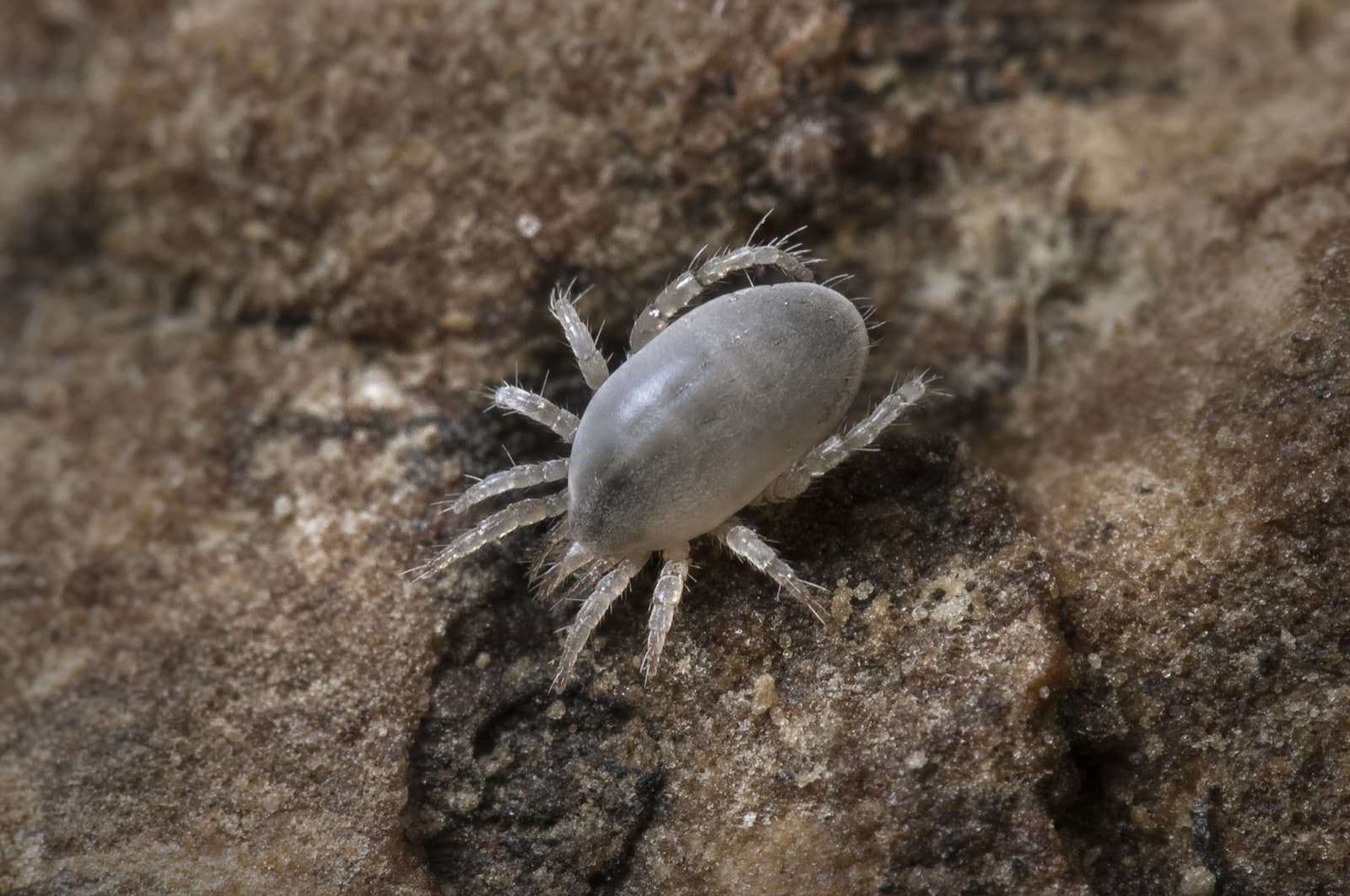
Chicken mites (Dermanyssus gallinae) are closely related to the northern fowl mite but differ in one critical behavior: they hide in the nest or coop structure by day and only emerge at night to feed, then retreat before dawn. This off-host hiding makes them invisible during daytime inspections of the bite victim's room. They are slightly larger than Ornithonyssus mites at 0.7–1 mm and cycle through gray (unfed) to bright red or dark red (engorged). Distinguishing them from bed bugs is straightforward — bed bugs are flat, apple-seed-shaped insects four to five times larger, and they hide in mattress seams rather than in nests or behind ledges.
Chicken mite
- Scientific name
- Dermanyssus gallinae
- Family
- Dermanyssidae
- Size
- ~0.7–1 mm
- Coloration
- Gray when unfed; red to dark red when engorged
- Habitat
- Poultry houses, pigeon nests/roosts, cracks and crevices near bird harborage
- Active season
- Late spring through early summer; year-round in heated coops
- Diet
- Bird blood at night; humans are accidental hosts
- Reproduction
- In nests and coops; cannot reproduce on human blood
- Lifespan
- Short-lived; survives months off-host in abandoned nests
Cosmopolitan; present wherever poultry and pigeons are kept
The tells — key ID features
- Tiny gray/red specks that swarm at night near their nest harborage — the defining behavioral tell
- Turn reddish after a blood meal; gray or white when unfed
- Trail from ledges, eave nests, or coops into adjacent rooms
- Bites cause itchy red papules, typically on exposed skin areas at night
Size, to scale
~0.7–1 mm
Pinhead-sized red or gray specks
Bird mite (Ornithonyssus sylviarum)
How to tell — Closely related and nearly identical for practical purposes; the same nest-decoder logic applies. Ornithonyssus associates more with songbirds; Dermanyssus with poultry and pigeons. Both are managed by removing the nest/roost source.
Bed bug
How to tell — Bed bugs are much larger (~4–5 mm), flat, and apple-seed-shaped; they hide in mattress seams and box springs, not in bird nests or on ledges.
Scabies mite
How to tell — Scabies burrows into skin and causes a distinctive burrow-track rash; chicken mites do not burrow and the source is an external nest or coop, not the person.
Signs of a problem
Night-time bites from chicken mites are a decoder: each sign points to a specific roost or nest source.
Night-time itchy bites on exposed skin + specks trailing from a window ledge or exterior vent
What it means — Pigeons or sparrows are nesting directly on or above that ledge or vent.
Bites among backyard poultry-keepers, or mites found on clothing after coop visits
What it means — Mites are carried in from an infested coop; the coop needs inspection and treatment.
Red specks visible on a bedroom windowsill in the early morning
What it means — Mites fed overnight and are retreating toward a nest above or adjacent to the window.
Specks trailing from a wall void near a roost or eave
What it means — An abandoned nest in the wall void is releasing mites into living space.
Night-time bites begin suddenly in late spring or early summer
What it means — Fledging season — pigeon or sparrow nests on the building are likely being abandoned and releasing mites.
The real risks, calibrated
Chicken mites cause itchy bites but are not a serious human health threat. The underlying roost is the real problem to address.
Itchy papular dermatitis (bites)
Low riskOnset: Night-time, after nest abandonment or fledging
Irritating, itchy bite reactions on exposed skin — primarily an annoyance. Humans are accidental hosts; the mites cannot sustain on human blood. Self-limiting once the roost source is removed. Persistent or spreading reactions warrant a doctor visit.
Poultry flock impacts (coops)
ModerateOnset: Ongoing in an active coop
Heavy infestations in backyard coops cause stress, anemia, and reduced production in poultry; coordinate with a veterinarian or agricultural extension service for flock treatment alongside any home remediation.
DIY — what works, what backfires
Chicken mite control focuses on the roost or coop — not on treating yourself or spraying indoor surfaces.
What actually works
- Find the roost or nest: inspect ledges, eaves, attic vents, and soffit areas where pigeons or sparrows might be nesting near the bite area.
- Remove abandoned nests once you confirm no active eggs or young are present; treat the coop or roost area with an approved acaricide if managing a backyard flock.
- Vacuum affected indoor surfaces and immediately seal and discard the bag to prevent escape.
- Launder bedding, clothing, and any fabrics in the affected room in hot water.
What backfires
- Do not rely on indoor insecticide sprays alone — the mites will keep emerging from the unaddressed roost or nest source.
- Do not disturb active nests with eggs or young — federally protected songbirds cannot legally have active nests disturbed.
- Do not ignore the coop if you keep poultry; heavy infestations can stress a flock and require veterinary-guided treatment.
Chicken mites in New Hampshire homes and coops
Across Manchester, Nashua, and Concord, chicken mites surface in two main contexts: backyard poultry flocks kept in residential yards, and pigeons roosting on older commercial and residential buildings. When coops are left unmanaged or pigeon ledges go untreated, mite populations build rapidly. At fledging — typically late May through early July — nests are abandoned and mites migrate into adjacent living spaces through wall voids, vents, and windows. The infestation is almost always traceable to a specific ledge, vent, or coop wall within a short distance of the affected room.
Peak season
Late spring through early summer, peaking at fledging
You might actually have
- Bird mite (Ornithonyssus sylviarum — songbird nests)
- Bed bug (larger; hides in mattress seams, also bites at night)
- Clover mite (harmless red dots, no bites)
We serve these communities
- NH-licensed applicator · #782664
- Same-day service
- Family-owned since 2017
Service Area Map
Southern New Hampshire
When to call a pro for chicken mites
If you can't locate the roost source or mites persist after cleanup, Anchor's General Pest Control team can identify the source, treat the affected areas, and advise on bird exclusion to prevent recurrence.
When to call a pro
- Night-time bites tied to a ledge, eave, or exhaust vent and you cannot safely access or remove the nest.
- Mites persist more than a few days after you cleaned the area — the roost or nest source may not have been fully eliminated.
- A backyard coop infestation that has spread into the home.
Bird-proof ledges and eaves
Install bird netting, slope strips, or exclusion spikes on ledges, window air conditioners, and eaves to prevent pigeons from roosting against your building.
Manage your coop proactively
Clean and inspect backyard coops regularly; remove old bedding and treat for mites before an infestation builds up. Consult your veterinarian or UNH Extension for flock-safe acaricide options.
Remove old nests after fledging
Clear old nests from vents, fixtures, and eaves in late summer once all young have left, so nests cannot be reused and mites have no harborage to overwinter in.
Not sure it's a chicken mite?
A licensed NH technician can confirm the species and tell you honestly whether it's a DIY fix or a job for a pro — free inspection, same-day service across Southern New Hampshire.
Frequently asked questions
Sources(6)
- [1]ScienceDirect — Dermanyssidae (Mites)
hides by day; bites at night; enters from pigeon roosts; fledging timing
academicverified 2026-06-30 - [2]MDEdge Dermatology — Chicken Mite Dermatitis
off-host survival months; clinical bite presentation
medicalverified 2026-06-30 - [3]PMC — Mites and Human Skin (PMC8456244)
humans as accidental hosts; cannot reproduce on human blood
medicalverified 2026-06-30 - [4]PMC — Dermanyssus gallinae Human Infestation Case (PMC7767827)
coop-to-home transmission; case documentation
medicalverified 2026-06-30 - [5]
- [6]Penn State Extension — Bird and Rodent Mites
mites enter the home after host birds leave the nest; bites are a sign of a nearby roost/nest
extensionverified 2026-06-30
Written & reviewed by
VerifiedDaniel Brady
NH-Licensed Pesticide Applicator · License #782664 (NHDAMF, RSA 430)
Daniel Brady is the New Hampshire–licensed applicator behind Anchor Pest Services, a family-owned pest control company serving the Manchester area since 2017.
Last updated 2026-06-30

New Hampshire pest control
Dealing with chicken mites in your home?
Anchor Pest Services identifies and handles chicken mite problems across southern and central New Hampshire. Family-owned since 2017, NH license #782664.
- NH-licensed applicators (#782664)
- Same-day service · free inspection
- Family-owned since 2017
Your next step
- What to do next
What Attracts Chicken Mites to Your House?
Read the answer - What to do next
How to Get Rid of Chicken Mites
Read the answer - What to do next
Do Mites Die in the Winter? NH Mite Activity Guide
Read the answer - What to do next
How to Get Rid of Bird Mites
Read the answer - Related guide
Bird Mites in New Hampshire: Bites Mean a Nest Nearby
Read the answer