
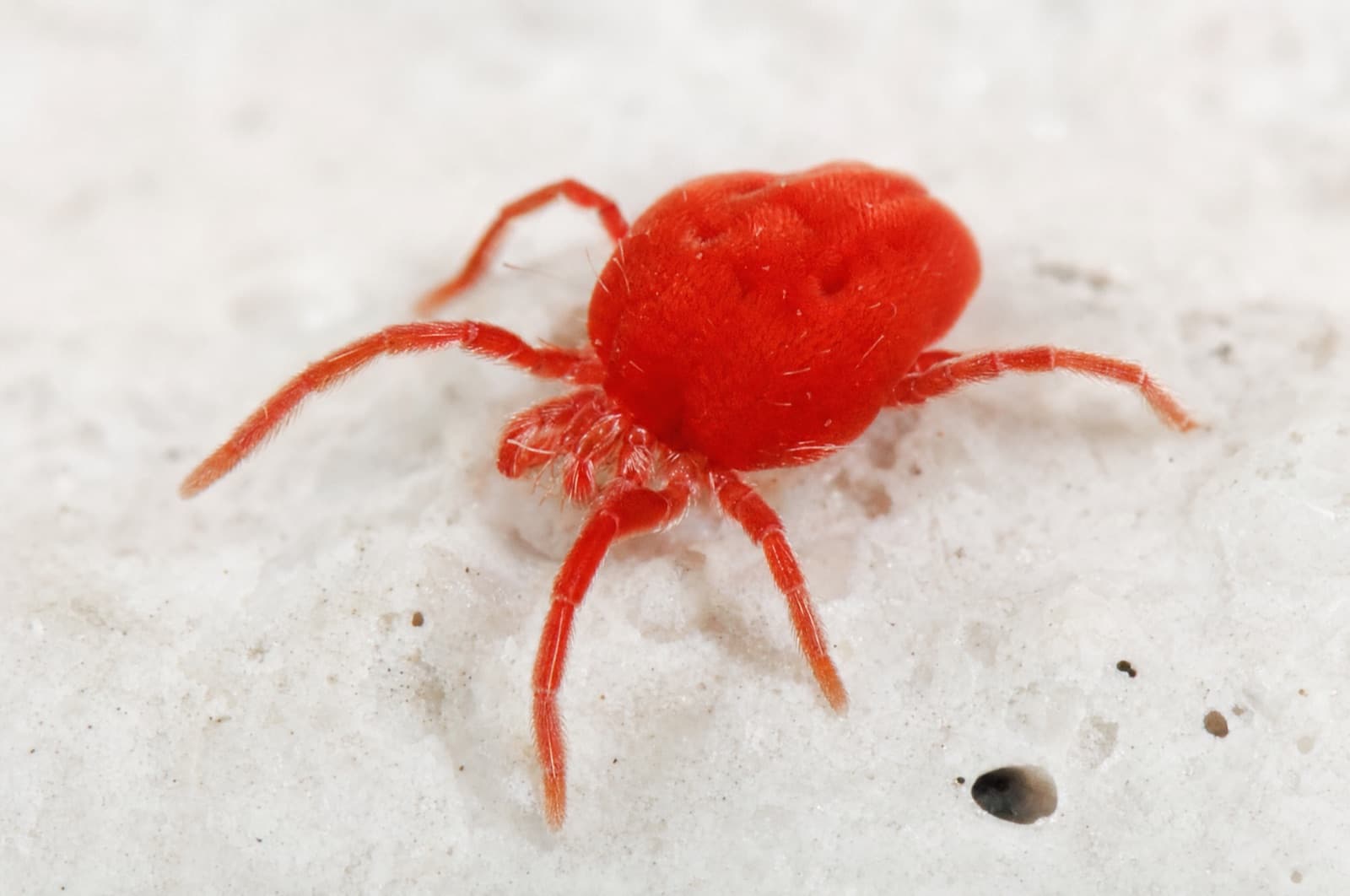
Do Mites Die in the Winter? NH Mite Activity Guide
At a glance
- Clover mite season: Spring & fall, ~45–80°FCrawl up sunny south/west walls; eggs hatch around April 1 or once temps exceed 45°F (Univ. of Maryland Extension; Penn State Extension)
- Clover mite harm: Don't bite or damageNo bites, no disease, no structural damage; only a red stain if crushed (Univ. of Maryland Extension; MU Extension)
- Chigger season: Summer, ground 77–86°FBiting larvae are killed below 42°F and inactive below 60°F (Univ. of Minnesota Extension; Missouri Dept. of Conservation)
- Dust mite conditions: Year-round indoors, ~65–80°F, ≥40–50% RHDon't bite; roughly 95% of the allergen comes from fecal particles (Thermo Fisher; American Lung Association)
Clover mite season
Spring & fall, ~45–80°F
Crawl up sunny south/west walls; eggs hatch around April 1 or once temps exceed 45°F (Univ. of Maryland Extension; Penn State Extension)
Clover mite harm
Don't bite or damage
No bites, no disease, no structural damage; only a red stain if crushed (Univ. of Maryland Extension; MU Extension)
Chigger season
Summer, ground 77–86°F
Biting larvae are killed below 42°F and inactive below 60°F (Univ. of Minnesota Extension; Missouri Dept. of Conservation)
Dust mite conditions
Year-round indoors, ~65–80°F, ≥40–50% RH
Don't bite; roughly 95% of the allergen comes from fecal particles (Thermo Fisher; American Lung Association)
The short of it
It depends on the mite: clover mites overwinter as eggs (active spring/fall), biting chigger larvae die below 42°F, and dust mites persist indoors year-round.
When are they active — the whole year at a glance
This calendar overlays three separate mite stories at once: outdoor-seasonal clover mites (spring and fall), summer-only chiggers, and year-round indoor dust mites. Each month's note names which mite drives that month's activity.
Best window to act · Clover mites: early spring, before the April hatch — install an 18–24 inch grass-free barrier (bare soil, mulch, or pea gravel) around the foundation, especially on south, southwest, and east-facing sides, and caulk cracks around windows and the foundation; indoors, vacuum rather than crush them to avoid staining. Chiggers: summer avoidance — stay out of tall grass, use permethrin-treated clothing and repellents, and mow or reduce brushy edges. Dust mites: a year-round routine — keep indoor relative humidity below ~50%, use allergen-proof mattress and pillow encasements, and wash bedding weekly in hot water (at least 130°F).
This grid overlays clover mites (spring and fall peaks), chiggers (summer peak), and year-round indoor dust mites; outdoor peaks are anchored to NH temperature thresholds and Manchester's first hard frost (~Oct 19, NOAA 1991–2020).
A year in the life
Because 'mites' covers three very different pests in New Hampshire, each season tells a different story depending on which one you're asking about.
- 01
Spring
Clover mites are the headline: overwintered eggs hatch around April 1 and the spring generation swarms sunny south- and west-facing walls and windowsills, often in large numbers, especially near well-fertilized lawns. They're a harmless staining nuisance, not a threat. Dust mites continue their steady indoor presence unaffected.
- 02
Summer
Clover mites go dormant (aestivate) in the heat, essentially disappearing until fall. Chiggers take over as the summer outdoor biting mite, active in tall grass and brushy edges once the ground reaches 77–86°F. Indoor dust-mite allergen levels often rise along with summer humidity.
- 03
Fall
A second clover-mite generation emerges and migrates onto and into buildings before cold weather sets in, producing another wave of sunny-wall sightings. Chiggers decline as the ground cools. Dust mites persist indoors, unaffected by the outdoor shift.
- 04
Winter
Clover mites overwinter as eggs, tucked into cracks, under bark, and in foundation crevices — with occasional adult sightings on warm winter days. Chiggers are gone entirely; the biting larvae die once ground temperatures drop below 42°F. Dust mites are the real winter story: they persist in heated homes but can be knocked back if indoor relative humidity drops below roughly 50%, which is common in cold, dry New Hampshire winters.
Mites in southern New Hampshire homes
New Hampshire homeowners in Manchester, Nashua, and Concord most commonly encounter three unrelated mites at very different times of year. Clover mites are the classic spring and fall nuisance — tiny reddish mites crawling by the hundreds up sunny exterior walls and slipping in through window and foundation cracks; they're completely harmless, and the only 'damage' they cause is a red stain if crushed against fabric or walls. Chiggers are a summer outdoor pest picked up in tall grass or brushy areas, and their bite-causing larval stage can't survive New Hampshire's cold. Dust mites are an entirely indoor, entirely different problem — an allergen source in bedding and upholstery that has nothing to do with outdoor temperature.
Key local data
Manchester's first hard frost falls around October 19 (50% probability), which lines up with the fall clover-mite migration onto sunny walls, and chigger larvae die once ground temperatures fall below 42°F — NOAA 1991–2020 normals; Univ. of Minnesota Extension.
We serve these communities
- NH-licensed applicator · #782664
- Same-day service
- Family-owned since 2017
Service Area Map
Southern New Hampshire
Timing your treatment
There's no single 'mite treatment' — the right move depends entirely on which mite you're dealing with.
General Pest Control
Free inspection and same-day pest service across southern New Hampshire. NH-licensed #782664.
Learn more about this pestFrequently asked
Sources & references
- Univ. of Maryland Extension — Clover Mites
clover mite spring activity range (45–80°F), no bite/no damage
- Penn State Extension — Clover Mites
eggs hatch around April 1 or above 45°F; spring and fall activity
- MU Extension — Clover Mites (G7358)
red stain only if crushed; no structural damage
- Maine DACF — Got Pests? Clover Mites
Northeast-comparable clover-mite guidance
- Univ. of Minnesota Extension / Missouri Dept. of Conservation — Chiggers
chigger activity 77–86°F, larvae killed below 42°F
- Thermo Fisher / Allergy Insider — Dust Mite
dust mite conditions (65–80°F, ≥40–50% RH), fecal-particle allergen
- American Lung Association — Dust Mites
dust mites don't bite; allergen and asthma concern
- Lawrence Berkeley National Laboratory (Indoor Air) — Humidity and Dust Mite Allergies
dust mite decline below ~50% indoor relative humidity
Editorial disclaimer: This content is provided for informational purposes only and does not constitute pest control advice. Every property is unique — consult a licensed professional for guidance specific to your situation. Anchor Pest Services is licensed in New Hampshire (#782664).
Written & reviewed by
VerifiedDaniel Brady
NH-Licensed Pesticide Applicator · License #782664 (NHDAMF, RSA 430)
Daniel Brady is the New Hampshire–licensed applicator behind Anchor Pest Services, a family-owned pest control company serving the Manchester area since 2017.
Last updated Jul 2026
Anchor Pest Services
Whatever the season — we handle the timing for you.
Same-day service across Southern New Hampshire. NH-licensed #782664, family-owned since 2017. We track the local calendar so you don't have to guess the right window.
- NH-licensed applicator
- Same-day service
- Pet & family-conscious
NH License #782664 · No obligation · We answer in person
Your next step
- Fall guide
Fall Pest Control in New Hampshire
What matters before frost: the fall invader window, mice at the foundation, and what to seal first.
Read the answer - Next step
Mechanical Tick & Mite Control: Barriers, Removal, Heat
Read the answer - What to do next
Dust Mites in NH: The Allergen You Can't See or Find
Read the answer - Related guide
Are Cockroaches Active at Night? NH Roach Timing Guide
Read the answer - Related guide
When Are Spiders Most Active in the House? NH Spider Guide
Read the answer - Also relevant
Clover Mites in NH: Tiny Red Bugs That Don't Bite
Read the answer