
What Attracts Chicken Mites to Your House?
At a glance
- Short answer: A chicken mite in your house is a sign a bird nested nearby — not that your home attracted it.
- The verdict: Something specific
4-5 months
How long unfed adult chicken mites survive without a blood meal — why they keep appearing long after birds are gone
Michigan State University Extension
The attractant verdict
Four possible answers to why this species turned up. Three stay unlit — and that's the argument: the honest answer could have been any of them, and for this species it wasn't.
A chicken mite in your house is a sign a bird nested nearby — not that your home attracted it.
Most advice, including our own previous page, frames chicken mites as being drawn indoors by "optimal living conditions and food sources" inside the home. That description treats the house as the goal, when the mite's biology is built entirely around a bird host it feeds on outside the house.
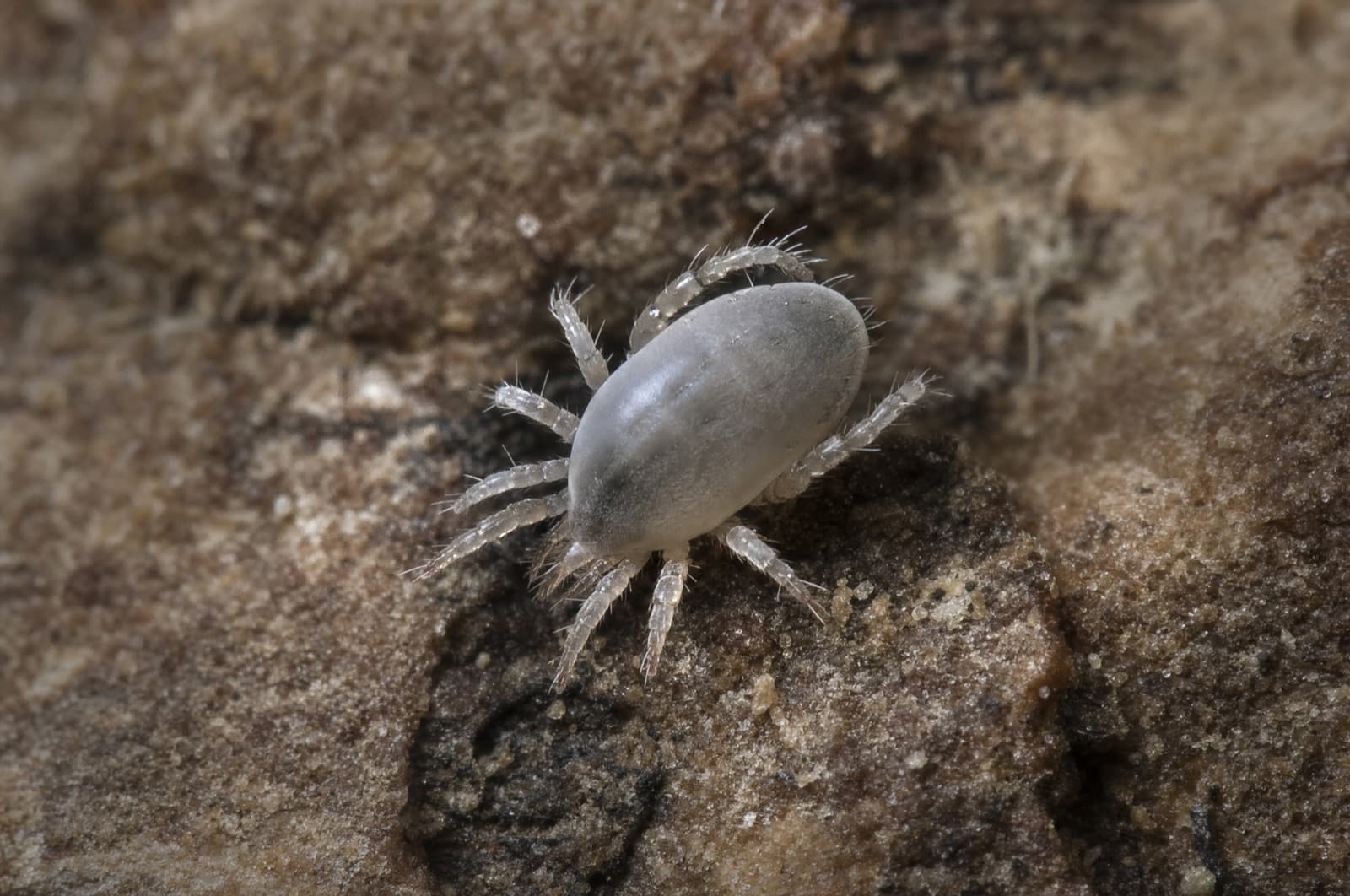
The chicken mite (Dermanyssus gallinae) is an external blood parasite of poultry and wild birds. It feeds on its host mainly at night and hides in cracks and crevices near the roost or nest during the day, which is already a strategy for staying with the bird, not for reaching a house. It reaches people only when its bird hosts are removed, relocated, or a wild-bird nest on or near the structure is abandoned — and because adults can survive four to five months without a blood meal, they can persist and keep showing up well after the birds themselves are gone.
“A chicken mite in your house is a sign a bird nested nearby — not that your home attracted it.”
A poultry coop, or a wild-bird nest on or near the structure (soffit, eave, coop wall) that the mite population was feeding from until the birds were removed or the nest emptied.
It moves the search away from anything inside the house — food, warmth, moisture — toward one specific outdoor source: a bird or poultry host that is now gone. Because adults can survive months without feeding, the mites can keep turning up long after the coop is empty or the nest has fallen apart, which otherwise looks mysterious without knowing this mechanism.
Calibrated from: Michigan State University Extension and Washington State University's PestSense: Dermanyssus gallinae is a nocturnal poultry/bird parasite that can survive four to five months without a blood meal and invades a structure once its bird hosts are no longer present.
Why it's here, in full
Same mechanism as bird mites — a lost host, not a hospitable house
Chicken mites and bird mites share the same underlying biology: both are blood parasites tied to a bird host, and both show up indoors only after that host is gone. Michigan State University Extension describes Dermanyssus gallinae as a parasite of poultry and wild birds that hides in cracks near the roost by day and feeds at night, and notes it can survive an extended period — four to five months — without feeding, which is why mites can keep appearing well after a coop is emptied or a nest is removed. Washington State University's PestSense fact sheet on bird mites covers the same invade-on-host-loss pattern.
That timeline is the useful part: if chicken mites are turning up in a house near a backyard coop, or in a structure with a nearby wild-bird nest, the real cause is upstream — the birds, not the building. A coop that's been cleared of hens, or a nest that emptied out weeks ago, can still be shedding hungry adult mites into a nearby structure long after anyone would think to connect the two events.
How to tell it's actually this species
Real signs only — a species with four honest tells gets four, and stops. Where a sign is weak on its own, we say so.
A poultry coop, wild-bird nest, or roosting site on or very near the structure, active recently or in the past few months
Tiny reddish-brown to gray specks visible in cracks, crevices, or bedding near where birds were kept or nested
Itchy bite marks appearing on skin, usually worst at night, in a room close to a coop wall or a former bird nest
Could be something else: Nighttime bite marks alone are not diagnostic; other small parasites bite at night too, and confirming a nearby bird or poultry source is what actually points to chicken mites.
Mite activity that continues for weeks after birds are removed or a nest is gone, because unfed adults can survive for months waiting for a host
Want chicken mite gone?
This page only answers why it's here. Every removal step for this exact species — what to seal, what to set, what actually works — lives on its own dedicated guide.
Two questions, two pages
Here: why it turned up at all — the honest answer, blame removed.
There: the step-by-step removal guide for this exact species.
Key takeaways
- Chicken mites are poultry/bird parasites — the attractant is a nearby coop or nest, not the house.
- They invade only after the bird host is removed or the nest is abandoned.
- Adults can survive four to five months without feeding, so mites can appear well after the birds are gone.
- Coop and nest management, plus removal steps, are covered at /top-diy-methods/chicken-mite.
Cleared out a coop and still finding mites?
This page is about why chicken mites show up. Removal and coop management are covered at /top-diy-methods/chicken-mite.
Frequently asked
Sources(2)
- [1]Michigan State University Extension — Parasitic Bird Mites
Dermanyssus gallinae biology, nocturnal feeding, and survival without a host for four to five months
extensionverified 2026-07-17 - [2]Washington State University — PestSense: Bird Mites
Bird/poultry-mite host dependence and dispersal into structures after host loss
extensionverified 2026-07-17
Written & reviewed by
VerifiedDaniel Brady
NH-Licensed Pesticide Applicator · License #782664 (NHDAMF, RSA 430)
Daniel Brady is the New Hampshire–licensed applicator behind Anchor Pest Services, a family-owned pest control company serving the Manchester area since 2017.
Last updated Jul 2026
It's the host, not the house
We trace mite problems back to the coop or nest
Inspections across southern and central New Hampshire for backyard-poultry and bird-mite problems alike.
- Family-owned in Manchester since 2017
- NH commercial applicator #782664, category F1
- We will tell you when the answer is do nothing
NH License #782664 · No obligation · We answer in person
Your next step
- What to do next
Chicken Mites in NH: Night Bites Mean a Bird Roost
Read the answer - What to do next
Bird Mites in New Hampshire: Bites Mean a Nest Nearby
Read the answer - Also relevant
How to Get Rid of Chicken Mites
Read the answer - Also relevant
How to Get Rid of Bird Mites
Read the answer - Also relevant
Natural Mite & Tick Control: The Honest, No-Instant-Cure Guide
Read the answer