
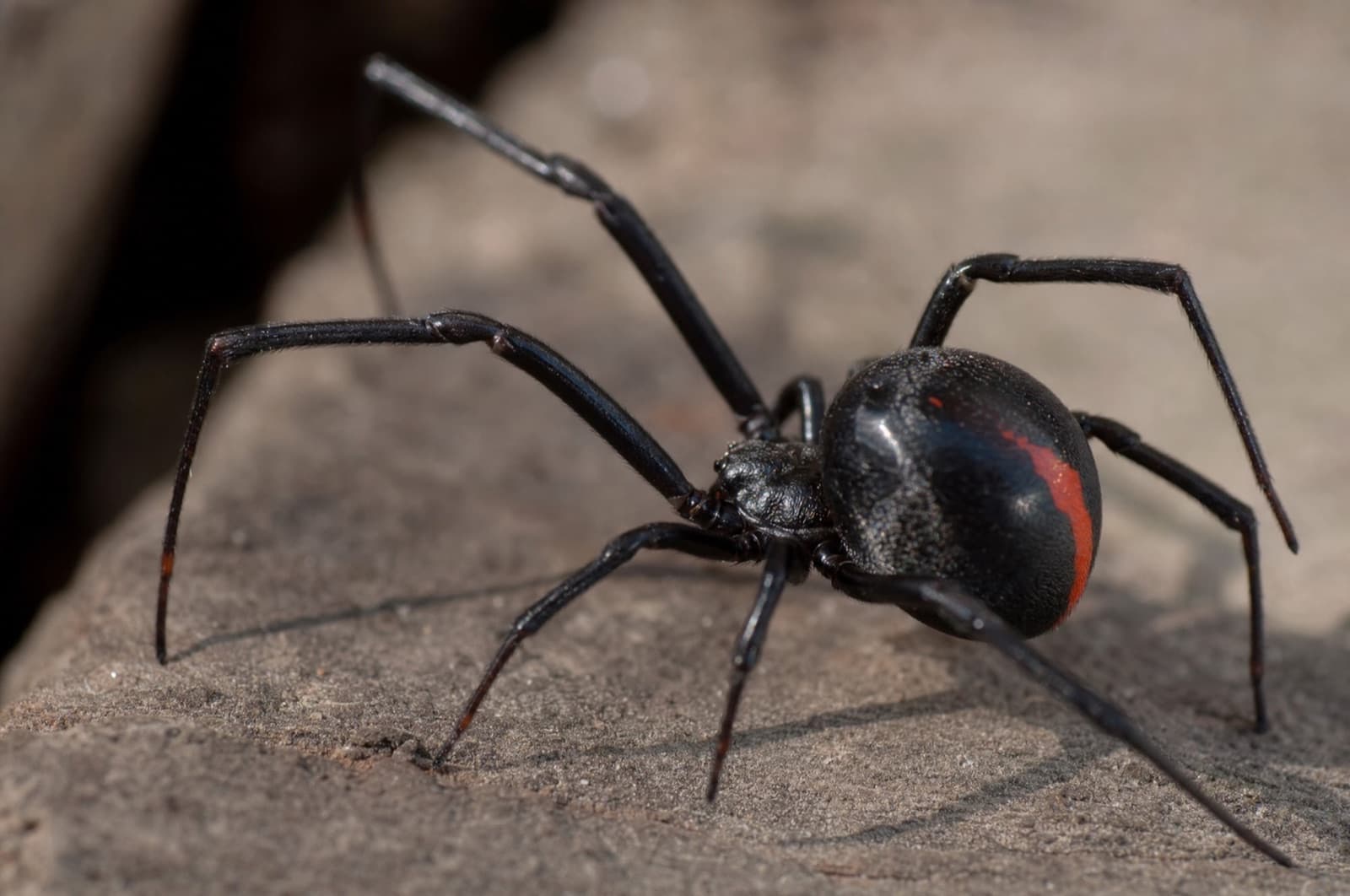
Black Widow Spider in New Hampshire: ID, Risk & Control
Also called Northern widow · Widow spider
The northern black widow is the only New Hampshire spider with medically significant venom — but it is shy, uncommon, and almost always flees rather than bites. A female's glossy black body and split red hourglass mark are the fast ID, and symptoms (muscle cramps, pain) begin within an hour and last 3–7 days but are treatable; no US death has been recorded since 1983.
- Female body size
- ~½ inch (13 mm)
- males half that & can't envenomate; Rutgers NJAES FS1121
- Symptom onset
- 30 min–few hours after bite
- University of Utah Poison Control
- US deaths since 1983
- None recorded
- 2012 AAPCC review; Penn State Extension
- NH status
- Present but uncommon (southern NH)
- Latrodectus variolus; MSU Extension
- Hourglass
- Often split into two spots (northern)
- MSU Extension
- Venom type
- Neurotoxin (latrodectism)
- NIH StatPearls NBK499987
NH's only medically significant spider — and it's genuinely rare
The northern black widow (Latrodectus variolus) is the only New Hampshire spider whose venom is considered medically significant — but the reputation requires calibration. It is shy, uncommon in NH, almost never bites without extreme provocation, and has not caused a documented death in the United States since 1983. The honest starting point is: medically relevant, yes; routine danger to NH residents, no.
Identification is fast if you know the two key marks: a glossy, jet-black, pea-sized round abdomen and a split red hourglass (often two separate spots rather than a joined shape) on the underside of the abdomen. The web is equally distinctive — messy, irregular, and built just inches off the ground inside woodpiles, sheds, and crawlspaces, nothing like the tidy orb of a garden spider.
In New Hampshire the northern black widow is most likely to turn up in southern and coastal areas, sheltering in stone walls, fieldstone foundations, woodpiles, and undisturbed outdoor corners. The risk frame matters: the spider's venom is a genuine neurotoxin that causes painful muscle cramps and can require medical treatment, but symptoms are treatable and males — half the size and typically brownish — cannot envenomate humans at all. A confirmed sighting warrants respect and caution, not panic.
How to identify a northern black widow
Three features clinch the ID in order of reliability: the split red hourglass on the underside, the glossy jet-black round abdomen, and the tangled irregular web built low to the ground. All three together are definitive; none alone is sufficient.
Northern Black Widow
- Scientific name
- Latrodectus variolus
- Family
- Theridiidae
- Size
- Female ~13 mm (½ inch); male ~6 mm
- Coloration
- Female: glossy jet-black; red hourglass (often split into two spots) on underside of abdomen. Male: smaller, brownish or spotted, less distinctive.
- Habitat
- Stone walls, woodpiles, outdoor sheds, crawlspaces, and fieldstone foundations — low to the ground, undisturbed, and dark.
- Active season
- Warm months outdoors; may shelter indoors year-round in enclosed harborage
- Diet
- Insects caught in irregular tangled webs
- Reproduction
- Female lays 100–400 eggs per papery tan egg sac; multiple sacs possible per season
- Lifespan
- Female up to 3 years; male much shorter
Southern and coastal New Hampshire at the northern edge of species range; wider range in southern and coastal US.
The tells — key ID features
- Split or incomplete red hourglass on underside of abdomen — the single definitive ID mark (turn the spider over or see it hanging inverted).
- Glossy, jet-black, round globe-like abdomen — unlike any other NH spider.
- Irregular, messy tangled web built very low (inches off the ground) in woodpiles, sheds, and crawlspaces.
- Hangs upside-down (inverted) in the web at rest.
- Flees rather than attacks — bites almost always result from accidental contact or being trapped against skin.
- Papery tan egg sac inside or near the web, roughly marble-sized.
Size, to scale
Female ~½ inch (13 mm) body
About the size of a pea — long shiny black legs make the spider appear larger
False widow (Steatoda spp.)
How to tell — Similar dark round abdomen but no red hourglass — Steatoda has pale spots or bands instead. Not medically significant.
Common house spider
How to tell — Mottled tan or brown coloration; no glossy black body; no hourglass marking. Found in similar areas but completely harmless.
Cellar spider
How to tell — Extremely long thin legs with a tiny pale body — no resemblance to the stout black widow. Harmless.
Signs of a problem
Black widows are more likely to be detected by their web and egg sac than by the spider itself, which hides in dark undisturbed corners. These signs point to widow activity near a woodpile, shed, or foundation.
Tangled, irregular web built very low (a few inches off the ground) in a woodpile, shed, or crawlspace
What it means — The messy, non-orb structure is distinctive — not the regular circular web of a garden or orb-weaver spider.
Papery tan egg sac inside or near a tangled web at ground level
What it means — Widow egg sacs are papery and slightly spiky, roughly marble-sized — often the first discoverable sign inside a crawlspace or foundation void.
Glossy black spider hanging upside-down in the web
What it means — The inverted resting posture combined with the jet-black coloration are immediate red flags — confirm the split red hourglass on the underside before concluding.
The real risks, calibrated
The northern black widow is NH's only spider with venom of medical concern. Bites are rare, almost always result from accidental contact, and have not caused a US death since 1983. For any suspected bite, contact NNEPC at 1-800-222-1222 or seek physician evaluation.
Latrodectism (neurotoxin envenomation)
SevereOnset: 30 minutes to a few hours after bite
Muscle cramps and spasms (especially abdomen), pain spreading from the bite site, sweating, nausea, abdominal rigidity, and elevated blood pressure. Symptoms typically peak at 24 hours and resolve over 3–7 days with supportive care. Contact NNEPC (1-800-222-1222) or see a physician immediately for any suspected widow bite.
Misidentification (unnecessary alarm)
Low riskOnset: Immediate
Most 'black widows' reported in NH are harmless species — false widows, house spiders, or orb-weavers. Confirm the split red hourglass before escalating.
DIY — what works, what backfires
Black widow control is more about reducing harborage and exposure than chemical treatment. Most meaningful prevention happens outdoors before the spider ever comes close to living areas.
What actually works
- Wear heavy leather gloves when moving firewood, stacked lumber, or stones — the most common bite situation.
- Store firewood at least 20 feet from the house and keep it elevated off the ground.
- Reduce clutter and debris piles in sheds, garages, and crawlspaces to eliminate undisturbed harborage.
- Shake out gloves, shoes, and clothing left in garages or sheds before wearing.
- If you find a widow, trap it in a sealed jar for professional or extension confirmation — then decide on next steps.
What backfires
- Never probe a web or dark woodpile corner with a bare or gloved hand — use a stick or broom handle first.
- Don't assume every glossy black spider is a widow — check the underside for the split red hourglass before alarming the household.
- Don't ignore a confirmed egg sac indoors — a single sac can contain 100–400 eggs.
Black widow activity in southern New Hampshire
The northern black widow reaches the edge of its range in southern and coastal New Hampshire. It is not a common backyard spider — it shows up in specific harborage conditions: gaps in fieldstone foundations, the dark interior of woodpiles, undersides of rocks or stacked timber, and the corners of unheated outdoor sheds. Activity peaks from late spring through early fall, but a widow sheltered in an enclosed crawlspace or wall void can persist through NH winters. Most residents are unlikely to encounter one unless actively disturbing these harborage sites; a confirmed sighting is unusual enough to warrant professional follow-up.
Peak season
Warm months outdoors; harborage year-round in enclosed spaces
You might actually have
- Cellar spider (long-legged, pale — harmless)
- Common house spider (tan/brown mottled — harmless)
- Wolf spider (large, ground-hunting — harmless)
We serve these communities
- NH-licensed applicator · #782664
- Same-day service
- Family-owned since 2017
Service Area Map
Southern New Hampshire
When to call a pro for black widows
A confirmed widow near a woodpile or foundation is not an emergency, but repeated sightings or egg sacs inside living areas warrant a professional inspection to locate harborage and reduce ongoing risk.
When to call a pro
- Repeated widow sightings near the foundation, woodpile, or crawlspace access point.
- An egg sac found inside the home, attached garage, or finished crawlspace.
- Young children or pets regularly play near suspected harborage sites.
- You are not confident in your ID — have a professional confirm before escalating treatment.
Relocate woodpiles away from the foundation
Move stacked firewood and lumber at least 20 feet from the house and elevate it off the ground — this removes the single most common black widow harborage in NH.
Seal foundation cracks and crawlspace entries
Fill gaps in fieldstone foundations, sill plates, and crawlspace entries to block harborage points and reduce spider access to the home interior.
Adopt the gloves-and-shake-out habit
Make heavy gloves standard for outdoor work around sheds and woodpiles, and shake out shoes and gloves that have been left in unheated spaces.
Not sure it's a northern black widow?
A licensed NH technician can confirm the species and tell you honestly whether it's a DIY fix or a job for a pro — free inspection, same-day service across Southern New Hampshire.
Frequently asked questions
Sources(6)
- [1]Rutgers NJAES — Black Widow Spider FS1121
female/male size; male cannot envenomate
extensionverified 2026-06-30 - [2]NIH StatPearls — Latrodectism (NBK499987)
venom mechanism, symptom onset, clinical presentation
govverified 2026-06-30 - [3]University of Utah Poison Control — Black Widow
symptom onset 30 min–few hours; duration 3–7 days
govverified 2026-06-30 - [4]Penn State Extension — Black Widow Spiders
US bite statistics; no deaths since 1983 (2012 AAPCC review)
extensionverified 2026-06-30 - [5]MSU Extension — Northern Black Widow Spiders in Michigan
hourglass often split in northern species; northern-species range notes including NH
extensionverified 2026-06-30 - [6]Colonial Pest Control — Black Widow in New England
widows dying over NH winter in unheated buildings (Tillinghast research)
industryverified 2026-06-30
Written & reviewed by
VerifiedDaniel Brady
NH-Licensed Pesticide Applicator · License #782664 (NHDAMF, RSA 430)
Daniel Brady is the New Hampshire–licensed applicator behind Anchor Pest Services, a family-owned pest control company serving the Manchester area since 2017.
Last updated 2026-06-30

New Hampshire pest control
Dealing with northern black widows in your home?
Anchor Pest Services identifies and handles northern black widow problems across southern and central New Hampshire. Family-owned since 2017, NH license #782664.
- NH-licensed applicators (#782664)
- Same-day service · free inspection
- Family-owned since 2017
Your next step
- Book a NH pro
Spider Control in New Hampshire
Spider sightings peak in fall. We treat hiding spots and seal the gaps they use.
Book now - Next step
Do spiders cause property damage?
Read the answer - What to do next
How to Get Rid of Black Widow Spiders
Read the answer - Related guide
House Spider in New Hampshire: ID, Webs & Control
Read the answer - Also relevant
What are the big black ants in my house?
Read the answer - Related guide
Black Rat in New Hampshire — Is It Even Here?
Read the answer