
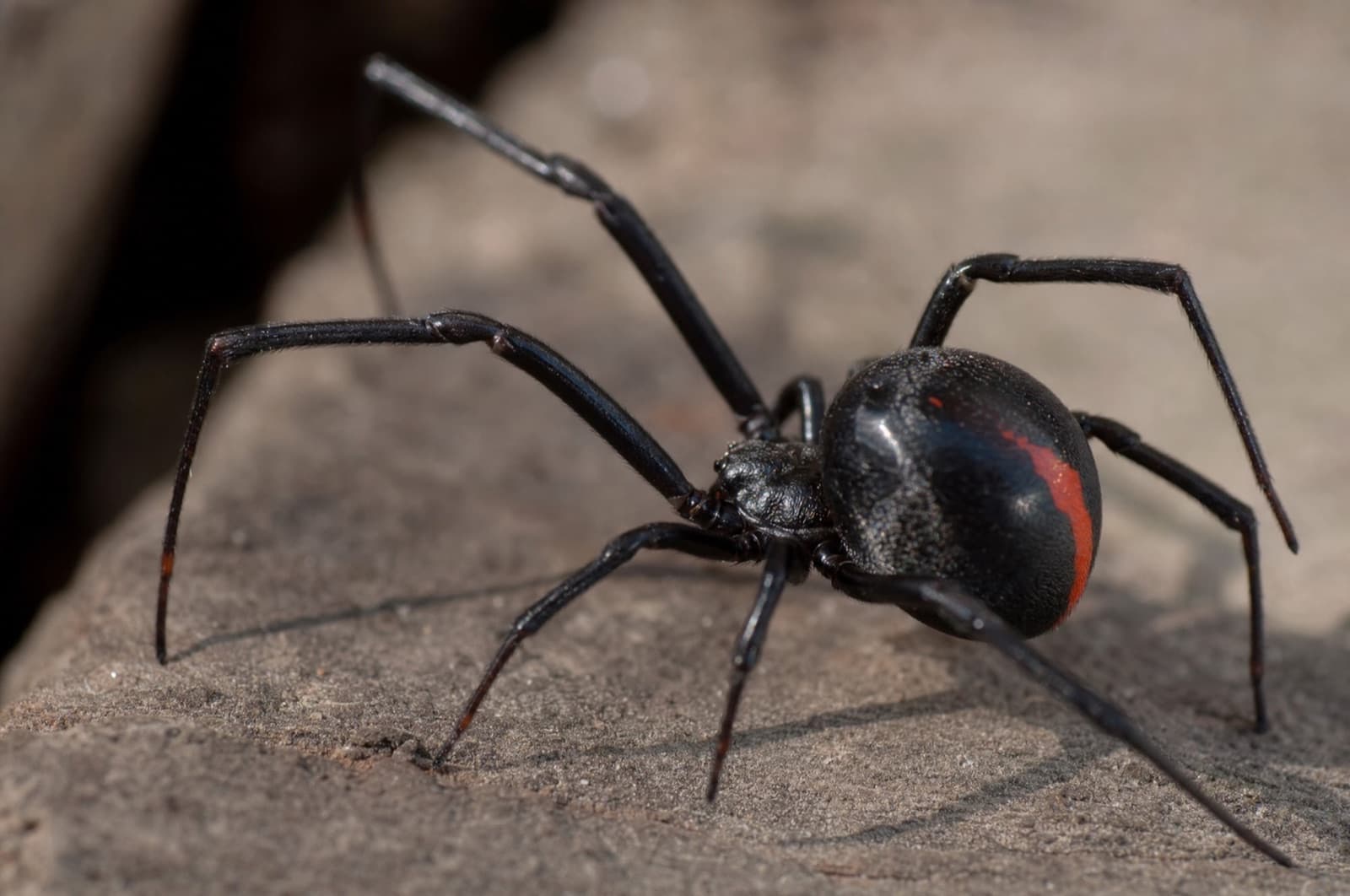
How to Get Rid of Black Widow Spiders
At a glance
- Difficulty: Intermediate
- Time: An afternoon for exclusion and inspection of storage areas
- Cost: Low for prevention; variable if professional treatment is needed
- Success: Good for exclusion and prevention; a confirmed population near the home is best handed to a pro
Can you DIY Black Widow Spider?
The verdict on Black Widow Spider DIY
Real venom, genuinely rare in New Hampshire — careful DIY for exclusion, a professional for any confirmed active population.
The northern black widow (Latrodectus variolus) is the one native widow species found in New Hampshire, but it's genuinely uncommon at the edge of its range — not absent, but rare enough that Colonial Pest describes encountering one here as similar to seeing a timber rattlesnake on a hiking trail. The bite is a genuine medical event (a neurotoxin that can cause muscle cramping and other systemic symptoms), but modern treatment makes fatalities rare. That combination — real but rare, real but treatable — is why this page is doable_with_care for exclusion and web/egg-sac removal with proper precautions, and pro_recommended the moment you suspect an actual established population near living space.
The 5 DIY methods — honestly graded
Every approach graded for this species, in IPM order — prevention first, chemistry late. Pick a method to see how it works, the steps, and what it actually takes.
Prevention / Exclusion
Works wellThe safest and most effective track — reduces the clutter and undisturbed spaces black widows favor.
Black widows favor undisturbed, cluttered spots like stacked firewood, storage boxes, and garage or shed corners. Wearing gloves when handling these areas and decluttering removes both their habitat and your direct contact risk.
Best for: Reducing your risk of an accidental encounter, the highest-value step here
Wear gloves around storage and firewood
Always wear leather gloves when moving stored boxes, firewood, or items in garages, sheds, and crawl spaces.
CautionThis is the single most important safety habit — most bites happen when a spider is pressed against skin while handling something it's hiding in.Declutter and seal
Reduce clutter in garages and sheds, and seal gaps that offer entry into structures.
Tools & materials
Why DIY falls short here
Not scare tactics — the specific, proportionate reasons a home attempt can stall for this species.
Handling risk is real and instinctive
A black widow bite happens when the spider is pressed or touched against skin — careless removal, especially with bare hands, risks a genuine envenomation.
Misidentification cuts both ways
False widows (Steatoda species) are far more common in New Hampshire and are often mistaken for true black widows — acting without a careful ID either causes unnecessary panic over a harmless look-alike or, more rarely, underestimates a genuine risk.
How risky is it, really?
An honest read — most nuisance species are genuinely low risk, and we say so.
A black widow bite is genuinely medically significant — this is the one spider in the New Hampshire spider cluster with real, documented venom toxicity. At the same time, encountering one here is rare, and modern medical treatment (including antivenom availability) makes fatalities uncommon. The correct calibration is neither the old 'death' framing nor a dismissive 'harmless' one: real, but rare, and treatable.
- Neurotoxic envenomation (latrodectism)Rare
Can cause pain radiating from the bite site, muscle cramping, nausea, sweating, and in severe cases labored breathing; per Rutgers, treated bites 'are rarely fatal except occasionally in small children'
Rutgers NJAES
- Genuine encounter with an established populationRare
The northern black widow is native to NH but described as extremely rare here, with New England encounters reported only occasionally at the edge of the species' range
Colonial Pest Control
- Misidentification of a harmless false widow as a true widow (or vice versa)Occasional
False widows (Steatoda) are far more common in NH and often mistaken for true black widows
Rutgers NJAES
Confirmed Black Widow Sighting? Call the Pros.
A genuine black widow encounter is rare in New Hampshire, but the bite is real and worth taking seriously. Anchor Pest Services can confirm identification and treat safely across southern and central New Hampshire. Family-owned since 2017, NH license #782664.
Call a pro when…
- A suspected active population (multiple webs/egg sacs) near an entry, porch, or frequently used area
- You're not confident distinguishing a true black widow from a far more common false widow
- Anyone in the household has a heightened medical concern about venomous bites
General Pest Control
Exclusion and cautious web removal are reasonable DIY steps for a single suspected sighting. Call a professional the moment you suspect an active, established population near your home — this is the one species in this cluster where the honest answer shifts firmly toward professional help.
Keep them out
- Wear gloves when handling stored boxes, firewood, or items in garages and sheds
- Declutter garages, sheds, and crawl spaces where widows favor undisturbed spots
- Inspect outdoor furniture and equipment before handling, especially items left outside over winter
Black widow spiders in New Hampshire
The northern black widow is native to New Hampshire but genuinely uncommon at the edge of its range, with New England sightings described in the entomological literature as extremely rare. Southern and western widow species occasionally arrive as stowaways in produce shipments but don't establish local populations. If you do find a suspected widow, it's most likely in an undisturbed spot like a woodpile, garage corner, or shed — not somewhere you'd encounter it casually.
Peak season
Warmer months, in undisturbed outdoor storage areas
First-frost anchor
Manchester first hard frost ~Oct 19 (50%) / Oct 29 (80%), NOAA 1991–2020
Make sure it's a Black Widow Spider
Two quick detours worth taking — confirm the ID, then learn what drew it in so it doesn't come back.
Frequently asked
Sources & further reading(4)
- [1]Colonial Pest Control — Do We Have Dangerous Spiders in New England?
NH black widow rarity and regional encounter context
industryverified 2026-07-13 - [2]Rutgers NJAES — Black Widow Spiders
Venom effects, rarely fatal with treatment except occasionally in small children
extensionverified 2026-07-13 - [3]University of Maryland Extension — Spiders
Web/egg-sac removal guidance with a tool
extensionverified 2026-07-13 - [4]Sciencing — Common Spiders of New England
Regional species distribution context
encyclopediaverified 2026-07-13
Written & reviewed by
VerifiedDaniel Brady
NH-Licensed Pesticide Applicator · License #782664 (NHDAMF, RSA 430)
Daniel Brady is the New Hampshire–licensed applicator behind Anchor Pest Services, a family-owned pest control company serving the Manchester area since 2017.
Last updated July 2026
Other species you can tackle
Same category — the dot shows each one's DIY verdict at a glance (green = friendly, amber = doable with care, red = call a pro).
Professional Pest Control
Confirmed Black Widow Sighting? Call the Pros.
A genuine black widow encounter is rare in New Hampshire, but the bite is real and worth taking seriously. Anchor Pest Services can confirm identification and treat safely across southern and central New Hampshire. Family-owned since 2017, NH license #782664.
- Careful, confirmed identification
- NH-licensed applicators (#782664)
- Free inspection — same-day service across southern NH
NH License #782664 · No obligation · We answer in person
Your next step
- Book a NH pro
Spider Control in New Hampshire
Spider sightings peak in fall. We treat hiding spots and seal the gaps they use.
Book now - What to do next
Black Widow Spider in New Hampshire: ID, Risk & Control
Read the answer - What to do next
House Spider in New Hampshire: ID, Webs & Control
Read the answer - What to do next
Black Rat in New Hampshire — Is It Even Here?
Read the answer - Also relevant
Black Widow Spider in New Hampshire: ID, Risk & Control
Read the answer - Also relevant
Chemical Spider Control: Why Sprays Mostly Don't Work
Read the answer