
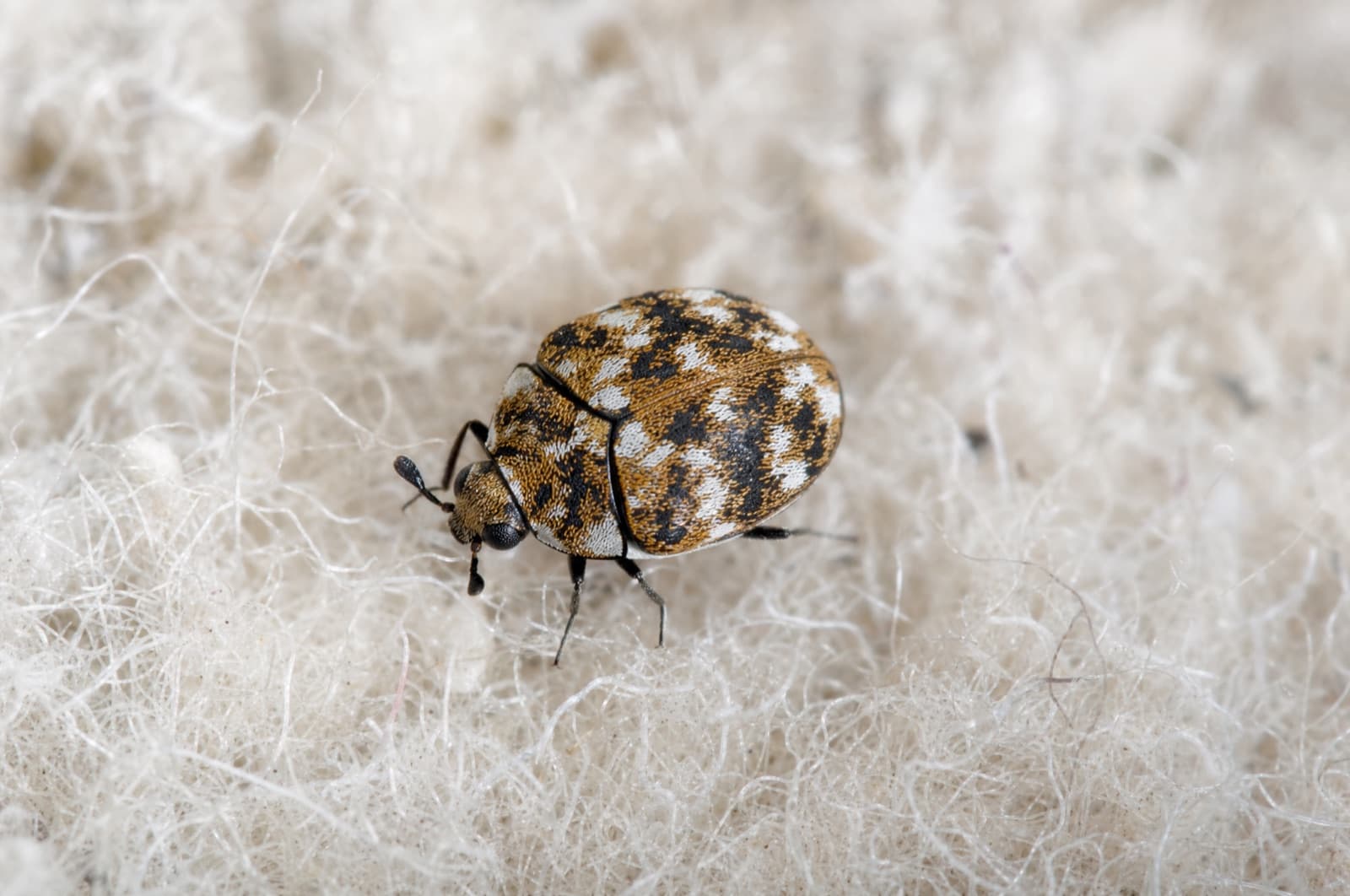
Carpet Beetles in New Hampshire: Damage, the 'Bite' Myth & Control
Also called Varied carpet beetle · Black carpet beetle · Furniture carpet beetle
Carpet beetles ruin wool, silk, fur, feathers, and leather — but only the fuzzy larvae do the damage; adults eat pollen outdoors and are harmless. They do not bite. The itchy rash often blamed on them is an allergic reaction to barbed larval hairs (hastisetae), not a bite. The fix is find-and-clean: locate the infested item, heat or freeze it, vacuum hidden edges, and store clean woolens sealed.
- Adult size
- About 1/16–1/8 inch (1.5–3 mm), oval
- UC IPM; University of Maryland Extension
- Who damages fabric
- Larvae only — adults eat pollen and don't harm textiles
- University of Kentucky Entomology, Entfact-601
- Larval diet
- Keratin — wool, fur, felt, silk, feathers, leather
- University of Kentucky Entomology
- Eggs per female
- ~50–100 eggs near larval food
- University of Kentucky Entomology; Penn State Extension (42–114 avg ~50)
- Biting?
- Does NOT bite — rash is barbed larval hairs (dermestid dermatitis)
- Penn State Extension; PMC case report PMC8237892
- Freeze treatment
- 0°F for one week kills all life stages
- University of Kentucky Entomology, Entfact-601
The 'bite' that isn't a bite — and what's really eating your wool
Carpet beetles are one of the most misidentified pests in New Hampshire homes. Two things send people down the wrong path: the 'bite' and the bed-bug fear.
Carpet beetles do not bite. The red, itchy skin reaction that prompts people to suspect bed bugs is an allergic response to barbed larval hairs — hastisetae — not a bite at all. It shows up as scattered papules across skin that touched infested fabric, without the clustered-pattern-on-exposed-skin signature of a true bed bug bite. Getting this distinction right prevents expensive, unnecessary treatment for the wrong pest.
The damage they do is real but targeted: larvae eat natural protein fibers — wool, fur, silk, feathers, felt, and leather. Synthetics alone are left alone; it's the wool sweater in the back of the closet, soiled with food or sweat, that gets hit. Adults, by contrast, are harmless pollen feeders who do most of their business outside. The fix is finding the specific infested item, treating it with heat or cold, and vacuuming the hidden edges where larvae actually feed.
How to identify carpet beetles — and separate them from bed bugs
Two species are common in New Hampshire: the varied carpet beetle (Anthrenus verbasci) — small, mottled calico adult — and the black carpet beetle (Attagenus unicolor). The telltale sign is not the adult; it's the cast larval skins and irregular holes in natural-fiber fabric. Larvae are the hairy, bristly 'woolly bear' stage that does all the damage. Adults showing up at windows in spring are migrating outdoors to feed on pollen.
Carpet beetle
- Scientific name
- Anthrenus verbasci (varied); Attagenus unicolor (black carpet beetle)
- Family
- Dermestidae
- Size
- Adult 1.5–3 mm; larva up to ~6 mm
- Coloration
- Varied: mottled white/brown/yellow (calico) adult; black carpet beetle: shiny black adult with tan-to-brown bristly larvae
- Habitat
- Closets, under rugs and furniture, along baseboards, in air ducts, stored textiles and furs
- Active season
- Year-round indoors; adults emerge at windows in spring to feed on pollen
- Diet
- Larvae: keratin — wool, fur, feathers, silk, leather, lint, dead insects; adults: pollen
- Reproduction
- ~50–100 eggs per female placed near larval food sources
- Lifespan
- Varied carpet beetle approximately 1 year; larval feeding period can span several months
Worldwide; common in New Hampshire homes year-round
The tells — key ID features
- Cast shed larval skins and irregular holes in wool or fur — the top indicator of an active infestation.
- Small, tan-to-brown, densely bristly larvae ('woolly bear'-like) in fabric folds.
- Round, 1.5–3 mm, mottled calico adults found at windows in spring.
- Damage concentrated in hidden fabric folds — collars, cuffs, hems — and rug edges and undersides.
- Threadbare, grazed surfaces rather than clean-cut holes.
- Black carpet beetle larva has a distinctive long 'tail' of hairs at the rear.
Size, to scale
1.5–3 mm (adult)
About the size of a pinhead or a coarse grain of sand — smaller than a sesame seed
Clothes moth
How to tell — Moths damage the same fabrics but leave silk webbing/larval cases, not shed beetle skins. No hard-bodied beetle adult is associated with a clothes-moth infestation.
Bed bug
How to tell — Bed bugs bite everyone sleeping in the bed, in lines/clusters on sleep-exposed skin, and leave no fabric damage. Carpet beetles don't bite; the rash is scattered, affects only some people, and is paired with holes in fabric and shed larval skins.
Lady beetle (ladybug)
How to tell — Lady beetles are larger and clearly domed; carpet beetle adults are tiny and calico-patterned and found in closets rather than on sunny walls.
Signs of a problem
Carpet beetles are often well-established before anyone notices. These signs, paired together, confirm an active population.
Irregular holes or threadbare spots in stored wool, cashmere, or silk
What it means — Active larval feeding — the primary damage sign of carpet beetles.
Tiny hollow 'shells' (shed larval skins) in drawers, rug edges, or closet corners
What it means — Molting larvae are present and actively feeding nearby.
Small mottled beetles at windowsills in spring
What it means — Adults emerging and attempting to fly outdoors to feed on pollen — the infestation has been active indoors.
A scattered, itchy rash with no clear bite pattern
What it means — Possible dermestid dermatitis from contact with barbed larval hairs — not bed bugs.
Damage under furniture and along baseboards
What it means — Larvae feeding on accumulated lint, pet hair, and dead insects in undisturbed spots.
Bare patches on rug edges or undersides
What it means — Preferred undisturbed feeding zones; carpet beetle larvae avoid light and movement.
The real risks, calibrated
Carpet beetles are a fabric and property risk, not a health risk. The main harm is to cherished textiles.
Fabric loss
HighOnset: Over weeks to months
Irreparable holes and bare patches in wool, silk, fur, feathers, and felt; stored or undisturbed items are most vulnerable.
Dermestid dermatitis
Low riskOnset: On skin contact with larval hairs
Itchy red papules easily mistaken for insect bites; affects only some people who contact infested fabric.
Respiratory and eye irritation
ModerateOnset: With heavy exposure to larval hairs
Shed hairs and cast skins can irritate airways and eyes in sensitive individuals.
Misdiagnosis as bed bugs
Low riskOnset: Ongoing
The 'bite' myth sends people to bed-bug treatments while carpet beetles continue undisturbed — delays the real fix.
Heirloom and taxidermy loss
HighOnset: Over months
Museum-quality rugs, tapestries, antique furs, and taxidermy are particularly vulnerable to irreversible damage.
Biting or disease transmission
Low riskOnset: N/A
None — carpet beetles do not bite people and do not transmit disease.
DIY — what works, what backfires
Carpet beetle control is about finding and treating the infested item and cleaning the hidden harborage — not spraying bedding or clothing.
What actually works
- Find and identify the source item — check stored wool sweaters, cashmere, fur coats, feather pillows, leather goods, and taxidermy, especially items that haven't been moved in months.
- Launder infested washable items in hot water, or dry-clean items that can't be washed.
- Freeze infested items at 0°F for at least one week to kill all life stages.
- For items that can tolerate it, heat in an oven or hot dryer above 120°F for 30+ minutes.
- Vacuum rug edges, baseboards, closet floors, air duct registers, and under furniture thoroughly — the physical removal of larvae, cast skins, and lint is critical.
- Store clean woolens in tightly sealed bags or containers to prevent reinfestation.
What backfires
- Don't spray insecticide on clothing or bedding — it's neither recommended nor effective for this pest.
- Don't assume a rash means bed bugs — the scatter pattern, fabric damage, and shed skins point to carpet beetles.
- Don't store soiled woolens; food, sweat, and oil stains are exactly what larvae seek out before they attack the fiber itself.
Carpet beetles in New Hampshire closets and homes
New Hampshire's long heating season keeps homes warm enough for year-round larval activity in closets and under furniture. Rashes from barbed larval hairs often flare in late winter and spring, when stored woolens haven't been checked in months. UNH Cooperative Extension notes carpet beetles among New Hampshire structure-scavenging insects that feed on organic debris in cracks and behind appliances. Cedar closets and older homes with accumulated lint are classic NH harborage. The webbing-versus-shed-skins distinction separates carpet beetles (shed skins) from clothes moths (silk webbing) — both are present in NH.
Peak season
Year-round indoors; adults appear at windows in spring; rashes most noticeable late winter through spring
You might actually have
- Clothes moths (same fabrics, but leave silk webbing not shed larval skins)
- Bed bugs (bite in clustered lines on exposed skin — very different from carpet-beetle dermatitis)
We serve these communities
- NH-licensed applicator · #782664
- Same-day service
- Family-owned since 2017
Service Area Map
Southern New Hampshire
When to call a pro for carpet beetles
If damage recurs across multiple rooms or you can't locate the source item despite a thorough search, the infestation likely has a secondary harborage — dead insects in a wall void, accumulated lint in heating ducts, or a forgotten stored item. A licensed technician can inspect and treat these hidden sites without spraying fabrics. Anchor Pest Services (NH #782664, F1) offers General Pest Control with a free quote and same-day service.
When to call a pro
- Damage keeps appearing in multiple rooms despite cleaning and removing obvious source items.
- You cannot find the source item despite a thorough inspection of all stored natural-fiber goods.
- Larvae or cast skins are appearing from heating ducts or wall voids.
- An heirloom rug, antique textile, or taxidermy collection requires a careful professional approach.
Store clean woolens sealed
Launder or dry-clean woolens before storing for the season; seal in airtight bags or hard containers. Larvae attack soiled or sweaty fabric first.
Vacuum closet floors and rug edges regularly
Target the undisturbed zones — rug undersides, closet corners, under furniture — where lint, pet hair, and dead insects accumulate. These are the primary larval harborage.
Clear organic debris from quiet corners
Dead insects, hair, and lint in heating-duct registers and wall-to-wall carpet edges feed larvae year-round. Periodic deep cleaning removes this reservoir.
Not sure it's a carpet beetle?
A licensed NH technician can confirm the species and tell you honestly whether it's a DIY fix or a job for a pro — free inspection, same-day service across Southern New Hampshire.
Frequently asked questions
Sources(7)
- [1]UC IPM — Carpet Beetles
identification, life cycle, treatment, larval hiding spots
extensionverified 2026-06-30 - [2]University of Kentucky Entomology — Carpet Beetles (Entfact-601)
larval diet (keratin), eggs per female, adults eat pollen, freeze treatment
extensionverified 2026-06-30 - [3]University of Maryland Extension — Carpet Beetles
adult size/coloration, black carpet beetle larva, heirloom damage
extensionverified 2026-06-30 - [4]Northeastern IPM Center — Carpet Beetles
no bite / no disease, regional context
industryverified 2026-06-30 - [5]PMC — Dermestid Dermatitis Case Report (PMC8237892)
larval-hair dermatitis — not a bite; allergic dermatitis mechanism
academicverified 2026-06-30 - [6]Penn State Extension — Carpet Beetles (Cumberland County)
dermestid dermatitis, egg count, respiratory irritation
extensionverified 2026-06-30 - [7]UNH Cooperative Extension — Kitchen Pests Fact Sheet
NH presence, structure-scavenging context
extensionverified 2026-06-30
Written & reviewed by
VerifiedDaniel Brady
NH-Licensed Pesticide Applicator · License #782664 (NHDAMF, RSA 430)
Daniel Brady is the New Hampshire–licensed applicator behind Anchor Pest Services, a family-owned pest control company serving the Manchester area since 2017.
Last updated 2026-06-30

New Hampshire pest control
Dealing with carpet beetles in your home?
Anchor Pest Services identifies and handles carpet beetle problems across southern and central New Hampshire. Family-owned since 2017, NH license #782664.
- NH-licensed applicators (#782664)
- Same-day service · free inspection
- Family-owned since 2017
Your next step
- What to do next
How to Get Rid of Carpet Beetles
Read the answer - What to do next
Natural Pantry Beetle Control: What Actually Works in NH
Read the answer - What to do next
Chemical Pantry Beetle Control: Why You Shouldn't Spray
Read the answer - Also relevant
Can They Damage My House?
Read the answer - Related guide
Spider Beetles in New Hampshire: Not a Spider — Here's the Real ID
Read the answer