
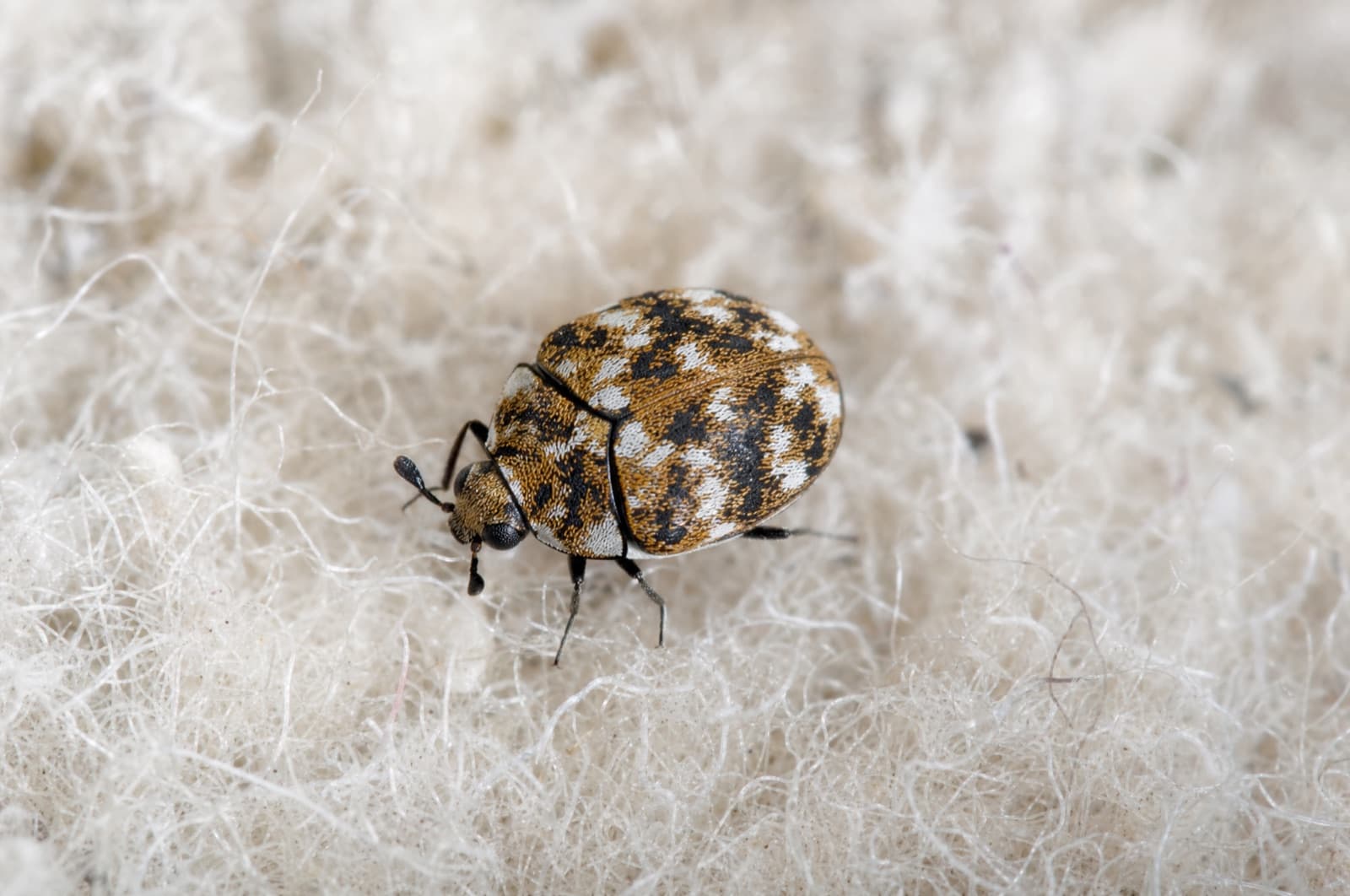
How to Get Rid of Carpet Beetles
At a glance
- Difficulty: Intermediate
- Time: A weekend of deep-cleaning closets, baseboards, and vents; ongoing vacuuming
- Cost: Low — vacuum, laundering, and airtight storage
- Success: Good once every larval hot spot is found; recurring if hidden debris (old wool, feathers, dead insects) is missed
Can you DIY Carpet Beetle?
The verdict on Carpet Beetle DIY
A doable DIY once you find where the larvae are hiding — vacuuming and laundering do the real work.
Carpet beetle larvae feed on keratin — wool, silk, fur, feathers, leather — plus lint, pet hair, and dead-insect debris, usually in dark, undisturbed spots like closet floors, under baseboards, and floor registers. There's a genuine, minor health angle: the larvae's detachable hairs (hastisetae) can cause contact dermatitis in sensitive people, sometimes mistaken for bites. None of that requires a pesticide — thorough vacuuming, laundering or freezing infested textiles, and removing hidden debris resolves a typical case.
The 5 DIY methods — honestly graded
Every approach graded for this species, in IPM order — prevention first, chemistry late. Pick a method to see how it works, the steps, and what it actually takes.
Prevention / Exclusion
Works wellAirtight storage of wool and animal-fiber items plus routine debris removal prevents the vast majority of infestations.
Carpet beetle larvae need keratin-based food and undisturbed harborage. Sealing vulnerable textiles away from access and keeping lint/hair/dead-insect debris from accumulating removes both the food and the hiding spots.
Best for: Stopping infestations before they start, especially for stored wool/heirloom textiles
Store animal-fiber items airtight
Keep wool, silk, fur, feather, and leather items — clothing, rugs, taxidermy, felt — clean and in sealed containers when not in use.
TipLarvae are drawn to soiled fabric more than clean fabric, so laundering before storage matters.Cut off the debris supply
Vacuum up lint, pet hair, and dead-insect accumulations regularly, especially around baseboards, floor registers, and under furniture — larvae feed on this debris even without a textile source.
CautionDead insects trapped in wall voids or light fixtures are a hidden, easy-to-miss food source.
Tools & materials
Why DIY falls short here
Not scare tactics — the specific, proportionate reasons a home attempt can stall for this species.
Hidden larvae
Larvae feed in undisturbed, dark spots — closet floors, under baseboards, inside vents — so a surface clean can miss the actual population.
Non-textile food sources overlooked
Taxidermy, felt, brushes, and pet hair harbor larvae just as well as wool clothing, so people who only check their closet miss the real source.
Dermatitis mistaken for bites
Hastisetae-triggered skin irritation is often misdiagnosed as insect bites, which sends people looking for a biting pest instead of doing the cleaning that actually fixes it.
How risky is it, really?
An honest read — most nuisance species are genuinely low risk, and we say so.
Carpet beetles don't bite. The one genuine, sourced health angle is larval-hair dermatitis — a mild, itchy skin reaction in sensitive people that resolves with thorough cleaning, not medical treatment for a bite that isn't happening. The bigger practical risk is fabric damage.
- Larval-hair (hastisetae) contact dermatitis — itchy skin weltsOccasional
Occurs in sensitive individuals from contact with shed larval hairs; resolves with thorough vacuuming and laundering, not insect-bite treatment
Cutis / MDedge dermatology
- Rhinoconjunctivitis or asthma-like symptoms from chronic heavy exposureRare
Documented in peer-reviewed literature for prolonged, heavy indoor exposure — uncommon for a typical household case
PMC (peer-reviewed dermatology literature)
- Damage to wool, silk, fur, and feather textilesCommon
The main practical harm if an infestation goes unaddressed
Cutis / MDedge dermatology
Carpet Beetles Keep Coming Back?
A persistent infestation usually means a hidden debris or textile source. Anchor Pest Services offers inspection across southern and central New Hampshire. Family-owned since 2017, NH license #782664.
Call a pro when…
- Larvae keep reappearing after a full vacuum-and-launder cleanout
- Valuable wool rugs, fur, or taxidermy items are involved and you want expert handling
- Skin irritation persists despite cleaning and you want to rule out other causes
General Pest Control
Most carpet beetle cases are a cleaning project, not a pro job. Call one if larvae keep reappearing after a thorough clean-out, or if you're dealing with valuable heirloom textiles (rugs, furs, taxidermy) you don't want to risk treating yourself.
Keep them out
- Store wool, fur, and feather items clean and airtight
- Vacuum lint, pet hair, and dead-insect debris regularly, especially baseboards and vents
- Launder or dry-clean animal-fiber items before long-term storage
Carpet beetles in New Hampshire
Carpet beetles are active in New Hampshire homes year-round, but adults are commonly noticed at windows in spring as they move indoors from flowering plants outside to lay eggs. That makes spring a good trigger to inspect closets, wool rugs, and vents — before larvae have all summer to build a population undisturbed.
Peak season
Spring adult activity; larvae active year-round indoors
Make sure it's a Carpet Beetle
Two quick detours worth taking — confirm the ID, then learn what drew it in so it doesn't come back.
Frequently asked
Sources & further reading(2)
- [1]Cutis / MDedge — "What's Eating You? Carpet Beetles (Dermestidae)"
Hastisetae dermatitis mechanism, misdiagnosis as bites
medicalverified 2026-07-13 - [2]PMC — Peer-reviewed dermatology literature on dermestid-related dermatitis
Rhinoconjunctivitis/asthma from chronic heavy exposure
academicverified 2026-07-13
Written & reviewed by
VerifiedDaniel Brady
NH-Licensed Pesticide Applicator · License #782664 (NHDAMF, RSA 430)
Daniel Brady is the New Hampshire–licensed applicator behind Anchor Pest Services, a family-owned pest control company serving the Manchester area since 2017.
Last updated July 2026
Other species you can tackle
Same category — the dot shows each one's DIY verdict at a glance (green = friendly, amber = doable with care, red = call a pro).
Professional Pest Control
Carpet Beetles Keep Coming Back?
A persistent infestation usually means a hidden debris or textile source. Anchor Pest Services offers inspection across southern and central New Hampshire. Family-owned since 2017, NH license #782664.
- Hidden-source inspection
- NH-licensed applicators (#782664)
- Free inspection — same-day service across southern NH
NH License #782664 · No obligation · We answer in person
Your next step
- What to do next
Carpet Beetles in New Hampshire: Damage, the 'Bite' Myth & Control
Read the answer - What to do next
How Can I Get Rid of Fleas in Carpets?
Read the answer - Also relevant
What Attracts Carpet Beetles to Your House?
Read the answer - Also relevant
Chemical Pantry Beetle Control: Why You Shouldn't Spray
Read the answer