
Crazy Ant — Quick ID & New Hampshire Verdict
Also called Tawny crazy ant · Rasberry crazy ant
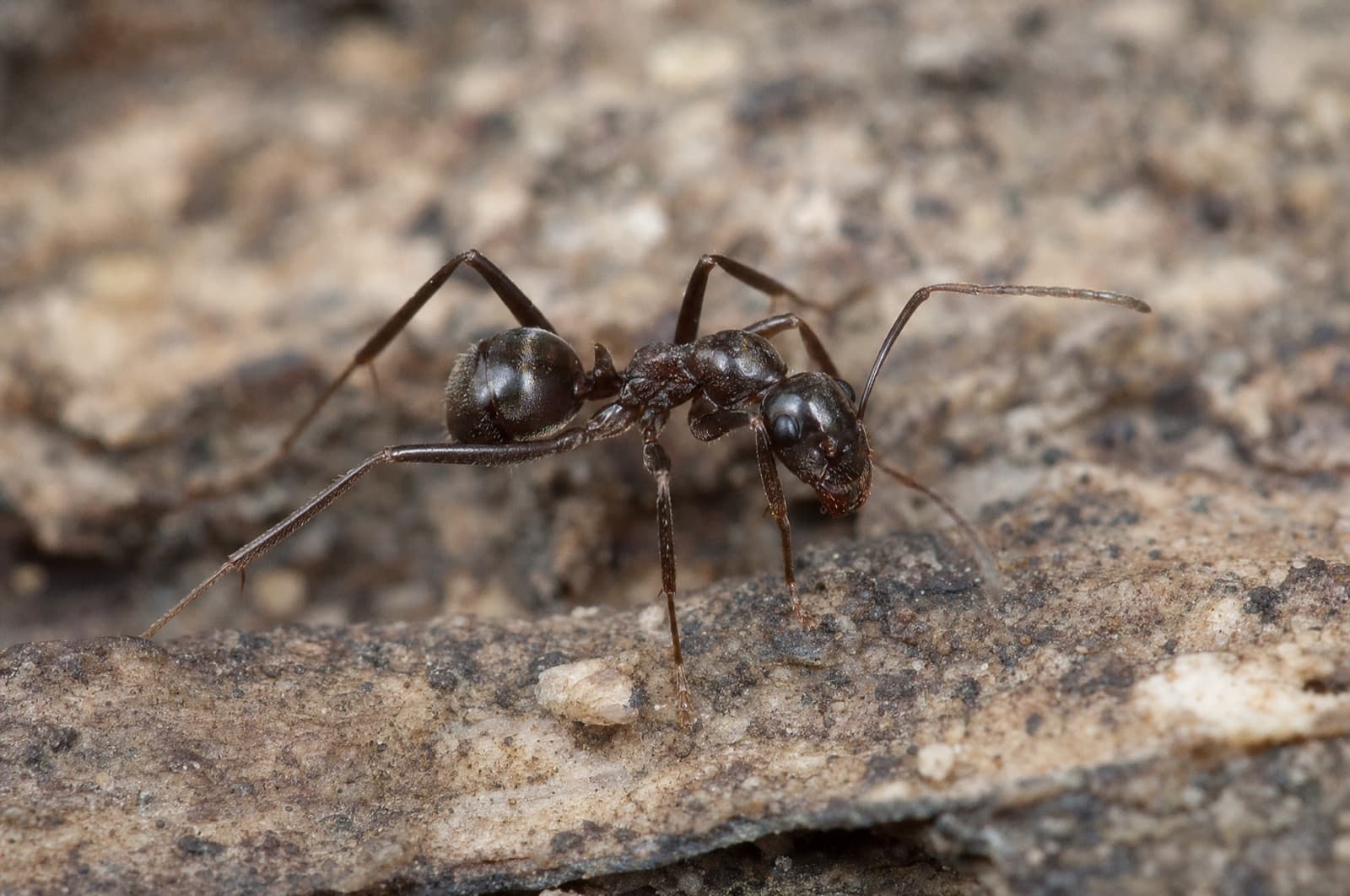
Crazy ants are small, dark ants with long legs and antennae that run in fast, erratic zigzags rather than orderly trails. The invasive tawny crazy ant (Nylanderia fulva) is not established in New Hampshire or New England — our winters are too cold. If you are seeing erratic ants in NH, you likely have a pavement ant or odorous house ant. This is the fast identifier; see the full ant guide for a confirmed ID.
- Size
- 2–3 mm
- small; Nylanderia spp.
- Behavior
- Frantic zigzag runs
- the namesake tell; no orderly trail
- NH status
- Not established
- tawny crazy ant (N. fulva) is a Gulf/Southeast species
- Legs/antennae
- Disproportionately long
- relative to body size
Crazy ants and New Hampshire — the honest verdict
Crazy ants are named for the frantic, zigzagging way they move — no orderly pheromone trail, just fast, erratic scattering in every direction. The invasive tawny crazy ant (Nylanderia fulva) has received significant attention for damage in the Gulf Coast and Southeast, but it is not established in New Hampshire or anywhere in New England. Our winters eliminate it.
This page explains what crazy ants look like and delivers the NH verdict plainly. If you have erratic small ants in your New Hampshire home, the full ant guide will help you confirm what species you actually have.
Quick crazy ant ID
Behavior is the primary tell — but confirm the species carefully in New Hampshire.
Crazy ant
- Scientific name
- Nylanderia spp. (invasive N. fulva not in NH; native N. faisonensis at range margin)
- Family
- Formicidae
- Size
- 2–3 mm
- Coloration
- Dark brown to blackish, often with a faint sheen; covered in fine setae (hairs)
- Habitat
- Invasive forms thrive in warm, moist Southern climates; native woodland species at northern range edge in leaf litter and stumps
- Active season
- Tropical invasive species not cold-hardy; potential transient introduction via shipped plants only
- Diet
- Highly varied — insects, sweets, proteins, plant material
The destructive invasive tawny crazy ant (Nylanderia fulva) is established in the Gulf Coast and Southeast U.S. — not in New Hampshire or New England. NH winters regularly fall well below the survival threshold for established populations.
The tells — key ID features
- Frantic, erratic, zigzagging movement with no consistent trail direction — the namesake 'crazy' behavior.
- Disproportionately long legs and antennae relative to the small body.
- Very small and dark with no orderly foraging line.
- Not established in NH — if you see erratic small ants in New Hampshire, confirm the ID; you likely have a pavement or odorous house ant.
Odorous house ant
How to tell — Odorous house ants are similar in size and color but move in orderly trails and emit a rotten-coconut smell when crushed; crazy ants scatter erratically and have no distinctive odor.
Pavement ant
How to tell — Pavement ants are slightly larger (2.5–4 mm), dark with fine grooves on the head, and form orderly trails to food sources — they do not zigzag.
Signs of a problem
Behavior is the key tell — and an honest NH verdict is essential.
Small dark ants scattering in fast, non-linear, erratic directions rather than in a trail
What it means — Crazy-ant behavior — but confirm species: in NH this is most likely a misidentified pavement or odorous house ant.
Sudden large numbers of small dark ants appearing after a delivery of potted plants or produce from the South
What it means — Possible transient introduction of crazy ants, not an established NH outdoor colony — should self-limit in cold weather.
Erratic ant ID and control in New Hampshire
If you are seeing erratic, fast-moving small ants in New Hampshire, the first step is a confirmed species ID — the invasive tawny crazy ant is not established here. A professional ID prevents misdiagnosis and ensures the right treatment for whatever species is actually present. The full ant guide covers NH species and treatment approaches.
When to call a pro
- You want a positive species ID on unusual erratic ants.
- Erratic ants persist indoors and cannot be linked to an obvious entry point.
- You need to rule out a misidentified pavement ant or odorous house ant before treatment.
Not sure it's a crazy ant?
A licensed NH technician can confirm the species and tell you honestly whether it's a DIY fix or a job for a pro — free inspection, same-day service across Southern New Hampshire.
Frequently asked questions
Sources(2)
- [1]USDA Forest Service — Tawny Crazy Ant Range
tawny crazy ant range limited to Gulf/Southeast; not in New England
govverified 2026-06-30 - [2]
Written & reviewed by
VerifiedDaniel Brady
NH-Licensed Pesticide Applicator · License #782664 (NHDAMF, RSA 430)
Daniel Brady is the New Hampshire–licensed applicator behind Anchor Pest Services, a family-owned pest control company serving the Manchester area since 2017.
Last updated 2026-06-30

New Hampshire pest control
Dealing with crazy ants in your home?
Anchor Pest Services identifies and handles crazy ant problems across southern and central New Hampshire. Family-owned since 2017, NH license #782664.
- NH-licensed applicators (#782664)
- Same-day service · free inspection
- Family-owned since 2017
Your next step
- Next step
Is Spectracide Ant Shield Granules Safe for Pets?
Read the answer - What to do next
How to Get Rid of Crazy Ants
Read the answer - Related guide
Fire Ant — Quick ID & New Hampshire Verdict
Read the answer - Related guide
Carpenter Ant — Quick ID for New Hampshire Homeowners
Read the answer - Also relevant
Ant Infestation Signs: How to Tell What Species You Have and How Bad It Is
Read the answer