
How to Get Rid of Crazy Ants
At a glance
- Difficulty: Intermediate
- Time: Days to weeks for bait; ongoing sanitation
- Cost: Low — sanitation and a labeled bait product
- Success: Good once correctly identified and if the infestation is fully accessible indoors
Can you DIY Crazy Ant?
The verdict on Crazy Ant DIY
Start with identification — this isn't a routine outdoor NH pest.
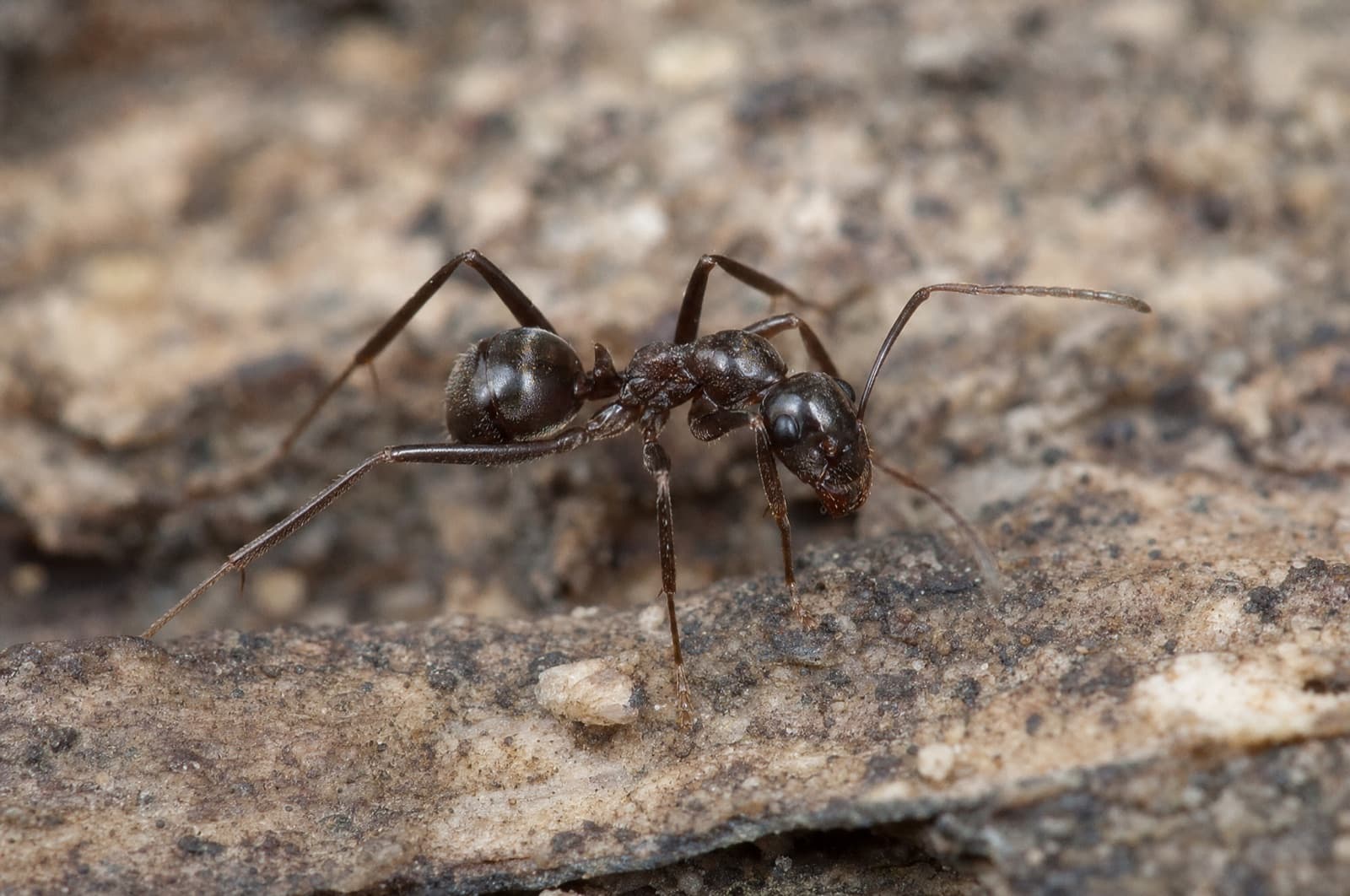
"Crazy ant" in most U.S. pest content refers to the longhorn crazy ant (Paratrechina longicornis), a tropical/subtropical species well-established in the Southeast but unable to survive cold winters outdoors. In New Hampshire, it can only persist indoors in a heated structure — so a fast, erratic ant seen outdoors in NH is more likely a look-alike like the odorous house ant or pavement ant. If you've genuinely confirmed longhorn crazy ants indoors, exclusion, sanitation, and labeled bait (matched to the season's protein/sugar preference) are doable, but identification comes first.
The 5 DIY methods — honestly graded
Every approach graded for this species, in IPM order — prevention first, chemistry late. Pick a method to see how it works, the steps, and what it actually takes.
Prevention / Exclusion
ModerateThe primary NH lever — because this species survives locally only indoors, sealing entry and removing food/moisture does most of the work.
Since longhorn crazy ants can't establish outdoors in NH's climate, an indoor sighting depends on continued access to a heated structure and food/moisture. Closing that access limits the population directly.
Best for: The dominant control lever for a species that can't establish outdoors here
Seal entry points
Caulk gaps around doors, windows, and utility penetrations.
Remove indoor food and moisture sources
Store food sealed, clean up spills promptly, and fix any indoor leaks.
Inspect incoming plants and goods
Tramp ants like this species commonly arrive via potted plants, mulch, or shipped goods — inspect these before bringing them inside.
Tools & materials
Why DIY falls short here
Not scare tactics — the specific, proportionate reasons a home attempt can stall for this species.
Misidentification
Most "crazy" ants seen in NH yards are likely native look-alikes, not the longhorn crazy ant — treating the wrong species wastes effort and money.
Single-bait-type assumption
Because of this species' seasonal protein/sugar diet shift, a sweet-only bait may be ignored outright — bait acceptance has to be confirmed, not assumed.
Mobile, diffuse colonies
There's no single mound to treat, so untreated harborage elsewhere in the structure lets the population rebound after a partial treatment.
How risky is it, really?
An honest read — most nuisance species are genuinely low risk, and we say so.
The longhorn crazy ant cannot sting — it belongs to a subfamily lacking a functional sting. Workers are described in extension literature as too feeble to harm humans. There is no meaningful health risk.
- A trivial bite with a formic-acid dabRare
Harmless; workers are described as too feeble to harm humans
University of Florida IFAS
- Nuisance foraging and food contamination
Store food sealed and clean up spills promptly
Texas A&M Urban Entomology
- Nesting in and shorting out electrical equipmentOccasional
A documented tendency of this ant genus; watch for activity near outlets or appliances
Texas A&M Urban Entomology
Persistent Indoor Ant Activity?
If exclusion and bait haven't resolved an indoor infestation, Anchor Pest Services provides inspection and species-correct treatment across southern and central New Hampshire. Family-owned since 2017, NH license #782664.
Call a pro when…
- You're unsure whether you actually have longhorn crazy ants versus a look-alike
- An indoor infestation persists despite exclusion and bait
- Activity near electrical equipment raises a shorting concern
General Pest Control
If you can't confirm the species yourself, or an indoor infestation persists despite sealing entry points and correctly matched bait, a professional inspection sorts out identification and locates harborage you may be missing.
Keep them out
- Inspect potted plants and shipped goods before bringing them inside
- Seal entry points and remove indoor food/moisture sources
- Confirm species identification before committing to a treatment plan
Crazy ants in New Hampshire — confirm the species first
The longhorn crazy ant is well established in the Southeastern U.S. but cannot survive NH winters outdoors; its distribution is sporadic in northern, colder areas, where it can only survive indoors in heated structures. Most fast, erratic ants encountered outdoors in a NH yard are more likely a common local species like the odorous house ant. Genuine longhorn crazy ant activity in NH would be an indoor, heated-structure situation.
Peak season
Indoor sightings possible year-round in a heated structure; outdoor activity, if any, limited to warm months
First-frost anchor
Manchester first hard frost ~Oct 19 (50%) / Oct 29 (80%), NOAA 1991–2020
Make sure it's a Crazy Ant
Two quick detours worth taking — confirm the ID, then learn what drew it in so it doesn't come back.
Frequently asked
Sources & further reading(2)
- [1]Texas A&M AgriLife Urban Entomology — Crazy Ants (Longhorn Crazy Ant)
Distribution limits, seasonal diet shift, colony behavior
extensionverified 2026-07-13 - [2]University of Florida IFAS — Longhorn Crazy Ant
Indoor-only survival in temperate/cold climates; lacks functional sting
extensionverified 2026-07-13
Written & reviewed by
VerifiedDaniel Brady
NH-Licensed Pesticide Applicator · License #782664 (NHDAMF, RSA 430)
Daniel Brady is the New Hampshire–licensed applicator behind Anchor Pest Services, a family-owned pest control company serving the Manchester area since 2017.
Last updated July 2026
Other species you can tackle
Same category — the dot shows each one's DIY verdict at a glance (green = friendly, amber = doable with care, red = call a pro).
Professional Pest Control
Persistent Indoor Ant Activity?
If exclusion and bait haven't resolved an indoor infestation, Anchor Pest Services provides inspection and species-correct treatment across southern and central New Hampshire. Family-owned since 2017, NH license #782664.
- Species ID before treatment
- NH-licensed applicators (#782664)
- Free inspection — same-day service across southern NH
NH License #782664 · No obligation · We answer in person
Your next step
- What to do next
Crazy Ant — Quick ID & New Hampshire Verdict
Read the answer - What to do next
Common Ants in New Hampshire: 12 Species You'll Actually See (And 4 You Won't)
Read the answer - Also relevant
Chemical Ant Control: Why Bait Beats Spray
Read the answer - Related guide
How to Get Rid of Carpenter Ants
Read the answer