
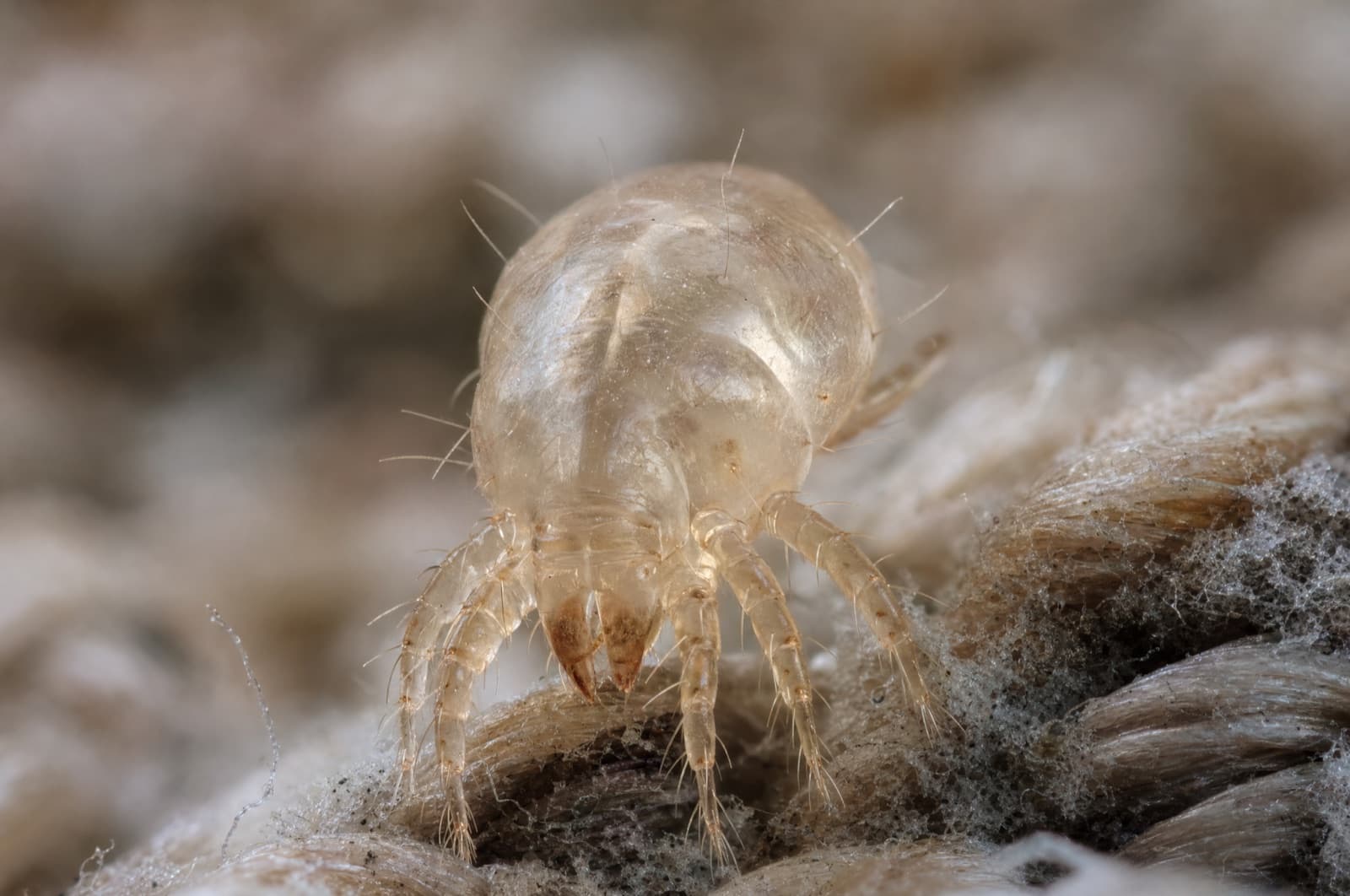
Dust Mites in NH: The Allergen You Can't See or Find
Dust mites (Dermatophagoides farinae and D. pteronyssinus) are microscopic at 0.2–0.3 mm — completely invisible to the naked eye. They do not bite and you will never see them crawling. They are a leading indoor allergen source that triggers allergic rhinitis, asthma, and eczema in sensitized people. Control is environmental: allergen-proof mattress and pillow encasements, weekly hot-water washing of bedding, dehumidifying below 50% RH, and HEPA filtration — not pesticide sprays.
- Size
- 0.2–0.3 mm (microscopic — invisible)
- researchgate.net (Dermatophagoides review)
- Bites?
- None — an allergen source, not a biting bug
- sciencedirect.com
- Main species
- D. farinae & D. pteronyssinus
- major US indoor allergens; sciencedirect.com
- Health effect
- Asthma, rhinitis, and eczema trigger
- researchgate.net
- Diet
- Shed human skin flakes (dander)
- sciencedirect.com
The allergen in your bedding — not a bug you can find or spray
Dust mites (Dermatophagoides farinae and D. pteronyssinus) are not a bug you will ever find crawling around. At 0.2–0.3 mm they are completely invisible to the naked eye, and they live deep inside the fibers of mattresses, pillows, upholstered furniture, carpet, and HVAC dust — not on the surface where you could see or reach them with a spray. They do not bite: the health impact is entirely from microscopic allergen particles (fecal proteins and shed body fragments) that become airborne in the bedroom and are inhaled.
The honest verdict for New Hampshire homes: dust mites are present in essentially every home, everywhere. The issue is not "do I have them" but "how high is the allergen load in my bedroom?" NH heating-season conditions — tight insulation, closed windows, variable indoor humidity, and wall-to-wall carpet — can build significant allergen loads. The evidence-based response is environmental: encase mattresses and pillows, hot-wash bedding weekly, dehumidify below 50% RH, and HEPA-vacuum and filter. Route allergy and asthma management to your doctor.
How to identify a dust-mite problem
You cannot identify dust mites by sight. At 0.2–0.3 mm they are microscopic and completely invisible without laboratory equipment. Identification is by symptoms — particularly morning sneezing, bedroom-specific allergy or asthma symptoms, and eczema worse after sleep — and confirmed by an allergist with skin or blood testing. Dust mites do not bite, so 'bites' point to a different cause. Distinguish from mold allergy (tied to damp areas) and pet-dander allergy (tied to contact with animals).
House dust mite
- Scientific name
- Dermatophagoides farinae / D. pteronyssinus
- Family
- Pyroglyphidae
- Size
- 0.2–0.3 mm
- Coloration
- Translucent — completely invisible to the naked eye
- Habitat
- Mattresses, pillows, upholstered furniture, carpets, and HVAC dust
- Active season
- Year-round indoors; populations peak in humid conditions
- Diet
- Shed human skin flakes (dander)
- Reproduction
- Female lays 60–100 eggs over her lifetime
- Lifespan
- ~65–100 days per mite
Cosmopolitan — present in essentially all homes worldwide
The tells — key ID features
- Invisible — you will never see a dust mite; diagnosis is by symptoms, not sightings
- Allergens concentrate in bedding and mattresses — bedroom symptoms are the primary clue
- Symptoms are typically worst in the morning after overnight allergen exposure or after making the bed
- Triggers sneezing, congestion, asthma flares, and eczema in sensitized people — not bites or visible pest activity
Size, to scale
0.2–0.3 mm
Far smaller than a grain of salt — completely microscopic
Mold allergy
How to tell — Mold allergy symptoms are similar (sneezing, congestion, asthma) but tied to damp areas — bathrooms, basements, window frames — rather than bedding. An allergist can differentiate with skin testing.
Pet dander allergy
How to tell — Pet dander symptoms are triggered by time with animals or in rooms they use; dust-mite symptoms concentrate in the bedroom and are worst in the morning. Both can coexist.
Clover mite or bird mite
How to tell — Those mites are visible (moving specks on surfaces) and cause bites or staining. Dust mites are completely invisible and do not bite.
Signs of a problem
Dust mites show up in symptoms, not sightings. These are the household patterns that suggest a high allergen load.
Sneezing and nasal congestion worst in the morning or immediately after waking
What it means — Overnight exposure to dust-mite allergen in the mattress and pillow — the bedroom is the main reservoir and the overnight sleeping period is peak exposure time.
Asthma symptoms that flare in bed or worsen at night
What it means — Bedding is a concentrated allergen source; mattress encasement and weekly hot-water washing are the primary response to reduce nighttime exposure.
Eczema or skin irritation worse after sleep
What it means — Allergen contact from bedding aggravating atopic dermatitis; an allergist can confirm with skin or blood testing.
Allergy symptoms worst during NH heating season when windows are closed
What it means — Reduced ventilation and humidity fluctuations during NH winters concentrate airborne allergens and support mite populations in sealed-up homes.
The real risks, calibrated
Dust mites are not dangerous in the conventional pest sense — they do not bite, sting, or damage property. Their risk is entirely as an allergen source.
Allergic rhinitis and asthma exacerbation
ModerateOnset: Ongoing and cumulative; worse with sustained bedroom exposure
A leading trigger of indoor allergic rhinitis, asthma flares, and disrupted sleep in sensitized people. Particularly significant for children with asthma. Medical management belongs with your doctor — no dosages here. Environmental reduction (encasements + hot-wash + dehumidify) is the practical pest-management contribution.
Atopic dermatitis (eczema) aggravation
Low riskOnset: Ongoing; worst after extended bedding contact
Dust-mite allergen is a known trigger for eczema flares in sensitized individuals. See an allergist or dermatologist for management guidance.
DIY — what works, what backfires
Dust-mite control is environmental, not chemical. These are the evidence-based steps that measurably reduce allergen burden.
What actually works
- Encase mattresses and pillows in allergen-proof covers (woven microporous or allergen-barrier fabric) — the single most effective bedroom step for reducing exposure.
- Wash all bedding (sheets, pillowcases, duvet covers) weekly in hot water (130°F / 54°C) to kill mites and remove allergen.
- Dehumidify the bedroom to below 50% relative humidity — dust mites cannot survive well below 50% RH; a hygrometer helps monitor this year-round in NH.
- HEPA-vacuum mattresses, upholstered furniture, and carpets regularly to reduce surface allergen load.
- Reduce carpet and upholstered furniture in the bedroom where possible — hard flooring accumulates significantly less dust-mite allergen.
What backfires
- Do not expect pesticide sprays, foggers, or 'anti-mite' sprays to solve the problem — the evidence base supports allergen reduction (encasements, hot-wash, dehumidify), not chemical treatment (ncbi.nlm.nih.gov/pmc/articles/PMC3829998/).
- Do not ignore bedroom humidity — above 50% RH feeds mite populations; use a dehumidifier in summer and monitor during NH's variable heating season.
- Do not self-diagnose based on 'bites' alone — dust mites do not bite; consult a doctor or allergist if you suspect dust-mite allergy.
Dust mites in New Hampshire homes
In NH's heating season — roughly October through April — tight, well-insulated homes with wall-to-wall carpet, older forced-air HVAC systems, and limited humidity control can accumulate significant dust-mite allergen loads. Bedrooms and mattresses are the primary reservoirs. The pattern is consistent across Manchester, Nashua, Concord, and surrounding communities: closed-up winter homes with limited fresh air create the conditions dust mites prefer.
Peak season
Year-round indoors; allergen loads highest during NH heating season (October–April) when homes are closed up
You might actually have
- Mold spores (similar allergy triggers; check for bathroom/basement moisture)
- Pet dander (another common NH indoor allergen)
We serve these communities
- NH-licensed applicator · #782664
- Same-day service
- Family-owned since 2017
Service Area Map
Southern New Hampshire
When to call a pro about dust mites
Anchor's General Pest Control team can advise on environmental allergen-reduction strategies and assess your indoor environment. For allergy and asthma medical management, work with your doctor or an allergist — that is the clinical side of the equation.
When to call a pro
- Persistent indoor allergy or asthma symptoms tied to the bedroom or HVAC system despite encasement, hot-washing, and basic humidity control steps.
- You want a professional assessment of your NH home's indoor environment and integrated guidance on allergen reduction.
Encase and hot-wash — the core protocol
Allergen-proof mattress and pillow encasements plus weekly hot-water washing of bedding are the most effective, evidence-based steps for reducing dust-mite allergen burden. Start here before anything else (sciencedirect.com).
Keep bedroom humidity below 50% RH
Dust mites need humidity to survive and reproduce. A bedroom dehumidifier or properly set HVAC system helps. NH winters can create low-humidity conditions that naturally suppress mite populations — monitor with an inexpensive hygrometer.
HEPA filtration in the bedroom
A HEPA air purifier in the bedroom can reduce airborne allergen particles. Use HEPA-filter vacuum attachments when cleaning mattresses and upholstered furniture.
Not sure it's a house dust mite?
A licensed NH technician can confirm the species and tell you honestly whether it's a DIY fix or a job for a pro — free inspection, same-day service across Southern New Hampshire.
Frequently asked questions
Sources(6)
- [1]ResearchGate — Dermatophagoides Review
size 0.2–0.3 mm; microscopic; associated with asthma, rhinitis, eczema
academicverified 2026-06-30 - [2]ScienceDirect — Dermatophagoides pteronyssinus
D. farinae and D. pteronyssinus as major US indoor allergens; encasements + hot-wash reduce exposure; no bites
academicverified 2026-06-30 - [3]PMC — Dust Mite Allergen Control (PMC3829998)
allergen-reduction evidence base; pesticides not effective
medicalverified 2026-06-30 - [4]UNH Cooperative Extension
NH indoor allergen context; heating-season framing
extensionverified 2026-06-30 - [5]American Academy of Allergy, Asthma & Immunology (AAAAI)
dust mite as a leading indoor allergen trigger; clinical overview
medicalverified 2026-06-30 - [6]EPA — Care for Your Air / Dust Mites
environmental control of dust mites (humidity, encasements, hot-washing); not controlled by pesticide spraying
govverified 2026-06-30
Written & reviewed by
VerifiedDaniel Brady
NH-Licensed Pesticide Applicator · License #782664 (NHDAMF, RSA 430)
Daniel Brady is the New Hampshire–licensed applicator behind Anchor Pest Services, a family-owned pest control company serving the Manchester area since 2017.
Last updated 2026-06-30

New Hampshire pest control
Dealing with house dust mites in your home?
Anchor Pest Services identifies and handles house dust mite problems across southern and central New Hampshire. Family-owned since 2017, NH license #782664.
- NH-licensed applicators (#782664)
- Same-day service · free inspection
- Family-owned since 2017
Your next step
- What to do next
How to Get Rid of Dust Mites
Read the answer - What to do next
What Attracts Dust Mites to Your House?
Read the answer - What to do next
Do Mites Die in the Winter? NH Mite Activity Guide
Read the answer - What to do next
How to Use Ant Dust Insect Killer (T600) by Terro
Read the answer - What to do next
Mechanical Tick & Mite Control: Barriers, Removal, Heat
Read the answer