
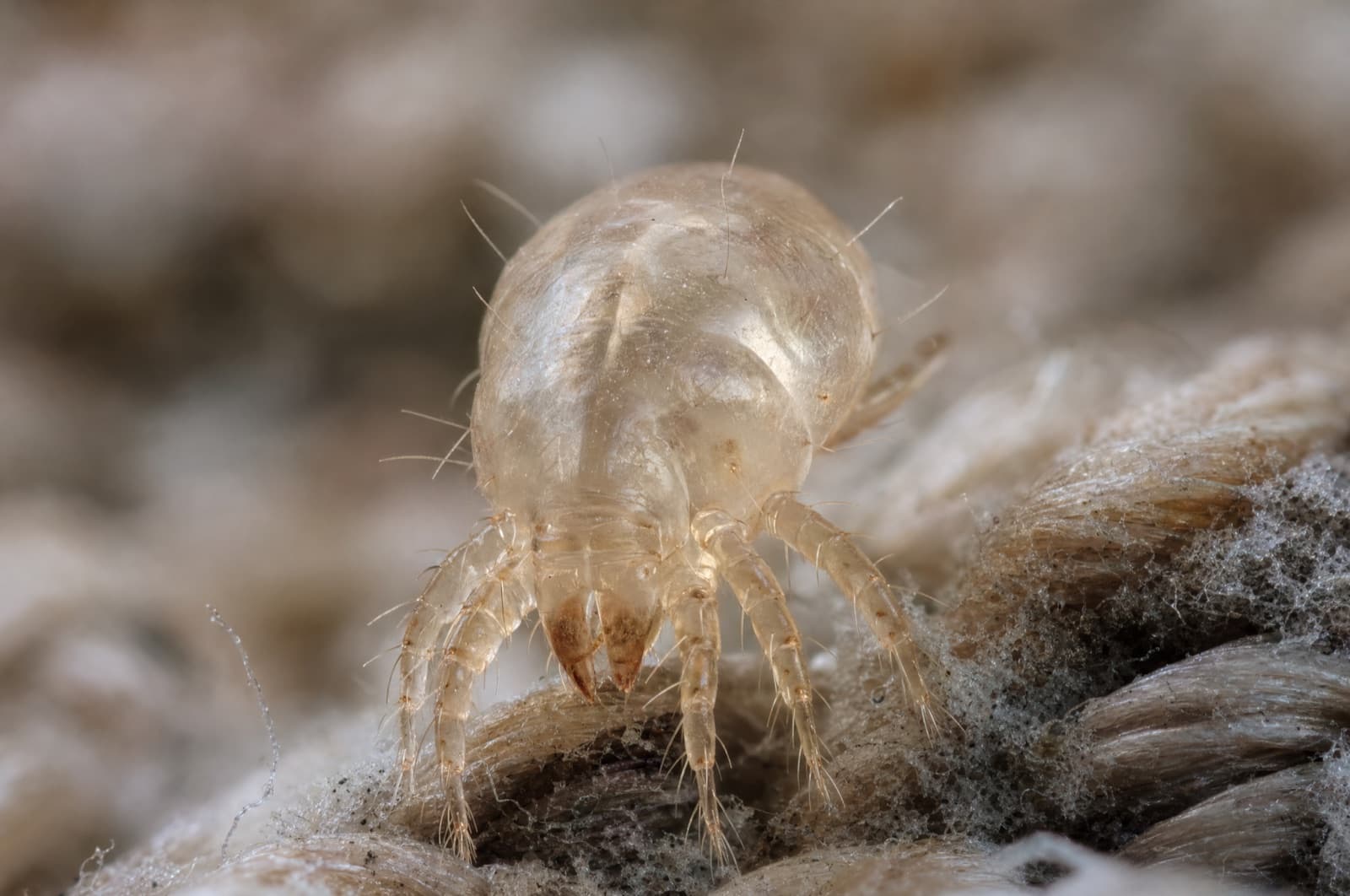
How to Get Rid of Dust Mites
At a glance
- Difficulty: Intermediate
- Time: Ongoing — humidity control is continuous; weekly laundering; encasements are a one-time purchase
- Cost: Low to moderate — a dehumidifier and encasements are the main costs
- Success: Good for reducing allergen load and symptoms with consistent humidity control and encasements; full elimination isn't realistic or the actual goal
Can you DIY Dust Mite?
The verdict on Dust Mite DIY
Not an eradication problem — an allergen-management problem, and a genuinely effective one to DIY.
Dust mites (Dermatophagoides species) don't bite or transmit disease; their fecal particles and body fragments trigger asthma and allergic rhinitis in sensitized people. There's no realistic path to eliminating them entirely, but humidity control below 50% relative humidity, allergen-impermeable encasements, and hot-water laundering are proven, DIY-achievable interventions that meaningfully reduce allergen exposure.
The 5 DIY methods — honestly graded
Every approach graded for this species, in IPM order — prevention first, chemistry late. Pick a method to see how it works, the steps, and what it actually takes.
Prevention / Exclusion
Works wellThe single most effective intervention — humidity control below 50% kills mites and is the foundation everything else builds on.
Dust mites need moisture to survive; dropping indoor relative humidity below 50% causes measurable die-off within days to weeks, cutting the population producing allergen at the source.
Best for: Every household managing dust-mite allergy symptoms
Monitor indoor humidity
Use a hygrometer to track indoor relative humidity, targeting 35-50%.
Run a dehumidifier or A/C
Use air conditioning or a dehumidifier to keep humidity below 50%, especially in bedrooms and basements — mites die within about 6 to 11 days at that level.
Tools & materials
Why DIY falls short here
Not scare tactics — the specific, proportionate reasons a home attempt can stall for this species.
Chasing eradication instead of managing allergen exposure
Dust mites can't realistically be eliminated from an indoor environment — the honest goal is reducing the population and the allergen it produces, via humidity control and encasements, not a one-time extermination.
Buying acaricide sprays
These show poor effectiveness against dust mites according to allergy-specialist guidance; the money is better spent on a dehumidifier and allergen-impermeable encasements, which have documented efficacy.
Vacuuming without addressing humidity
Surface vacuuming doesn't reach mites deep in a mattress core and does nothing to slow the population's regrowth if indoor humidity stays above 50% — humidity control is the step that actually changes the trend.
How risky is it, really?
An honest read — most nuisance species are genuinely low risk, and we say so.
Dust mites don't bite and don't transmit disease — this is purely an indoor-allergen and asthma-trigger issue for people who are sensitized to their fecal and body-fragment proteins. It's genuinely low risk in the disease sense, but a real and manageable allergy concern.
- Asthma and allergic rhinitis flares in sensitized individualsCommon
The dominant symptom pathway; triggered by accumulated allergen exposure, especially in bedding
AAAAI practice parameter
- Bites or infectionRare
None documented — dust mites don't bite
National Jewish Health
Persistent Home Humidity Undermining Your Allergy Control?
If a damp basement or crawlspace keeps indoor humidity high no matter what you do in the bedroom, that's a structural issue worth a professional look. Anchor serves southern and central New Hampshire. Family-owned since 2017, NH license #782664.
Call a pro when…
- Persistent high indoor humidity despite a dehumidifier, suggesting a structural moisture source
- A damp basement or crawlspace feeding humidity into living space
- Ongoing allergy/asthma symptoms despite consistent encasement and laundering habits — also worth discussing with a physician
General Pest Control
Dust mite control is genuinely a DIY win — most households manage it fully with humidity control, encasements, and laundering. A pro adds value mainly for whole-home moisture issues (a persistently damp basement or crawlspace) that undermine your humidity control no matter what you do indoors.
Keep them out
- Keep indoor relative humidity below 50% year-round
- Encase mattresses, pillows, and box springs
- Wash bedding weekly in hot water (130°F/54°C or above)
Dust mites in New Hampshire homes
NH's humid summers and well-sealed winter homes both create conditions dust mites tolerate well indoors year-round, unlike outdoor pests with a clear seasonal pattern. A dehumidifier is especially useful during New Hampshire's muggy summer months, when indoor humidity can climb above the 50% threshold even with windows closed, and basements are a common humidity source worth checking if allergy symptoms persist despite bedroom-focused efforts.
Peak season
Year-round indoors; humidity control is most challenged during humid NH summers
Make sure it's a Dust Mite
Two quick detours worth taking — confirm the ID, then learn what drew it in so it doesn't come back.
Frequently asked
Sources & further reading(3)
- [1]AAAAI Practice Parameter — Dust Mite Allergen Avoidance (PMC5156485)
Humidity threshold, encasement/laundering efficacy, acaricide ineffectiveness
medicalverified 2026-07-13 - [2]Mission: Allergy — Humidity and Dust Mite Control
Mite die-off timeline at controlled humidity
industryverified 2026-07-13 - [3]National Jewish Health — Reducing Dust Mite Allergens at Home
Encasements, hot-wash temperature, HEPA vacuuming
medicalverified 2026-07-13
Written & reviewed by
VerifiedDaniel Brady
NH-Licensed Pesticide Applicator · License #782664 (NHDAMF, RSA 430)
Daniel Brady is the New Hampshire–licensed applicator behind Anchor Pest Services, a family-owned pest control company serving the Manchester area since 2017.
Last updated July 2026
Other species you can tackle
Same category — the dot shows each one's DIY verdict at a glance (green = friendly, amber = doable with care, red = call a pro).
Professional Pest Control
Persistent Home Humidity Undermining Your Allergy Control?
If a damp basement or crawlspace keeps indoor humidity high no matter what you do in the bedroom, that's a structural issue worth a professional look. Anchor serves southern and central New Hampshire. Family-owned since 2017, NH license #782664.
- Moisture-source assessment for allergen control
- NH-licensed applicators (#782664)
- Free inspection — same-day service across southern NH
NH License #782664 · No obligation · We answer in person
Your next step
- Book a NH pro
Tick Control
Book now - What to do next
Dust Mites in NH: The Allergen You Can't See or Find
Read the answer - Also relevant
Dust Mites in NH: The Allergen You Can't See or Find
Read the answer - Also relevant
Tick Prevention in NH: Tickscaping + Personal Protection
Read the answer - Also relevant
What Attracts Dust Mites to Your House?
Read the answer - Also relevant
Do Mites Die in the Winter? NH Mite Activity Guide
Read the answer