
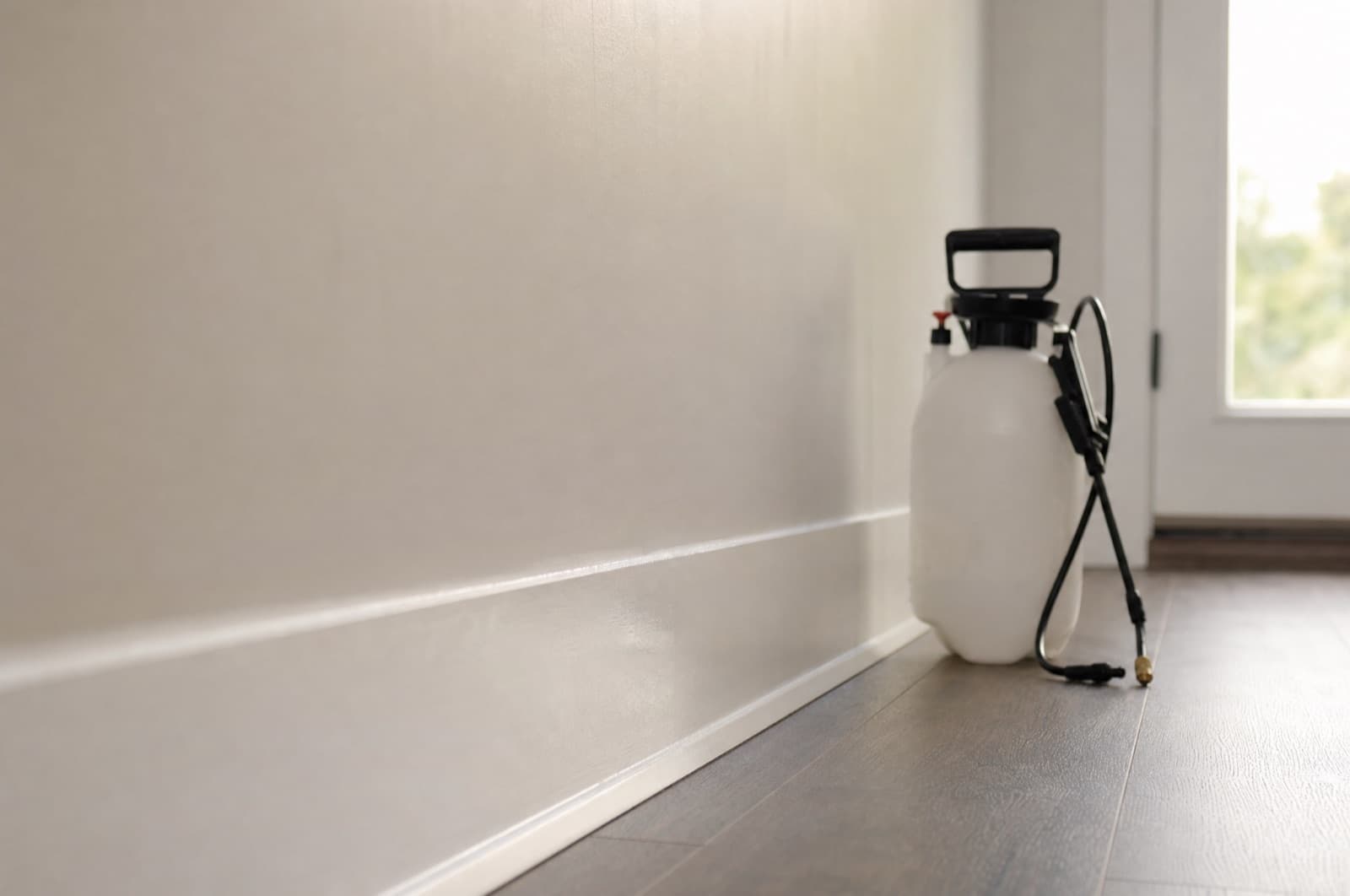
Why Does It Smell After Pest Treatment? What's Normal and What's Not
A mild solvent or chemical smell for a few hours up to about a day or two after treatment, that gets noticeably weaker each day, is normal — it's the product's carrier evaporating as treated surfaces dry, and ventilation (open windows, fans) is the main thing that helps it along. A faint, fading smell of a dead pest in the days right after treatment is also a normal, even reassuring, sign that the treatment worked. What's not normal: a rot smell that grows stronger rather than fading, which can mean several pests died in an enclosed void at once; a chemical smell that doesn't decline within the expected window; or, unrelated to the treatment itself, any burning smell, which should always be treated as electrical, not pesticide.
A faint chemical or solvent smell right after your technician leaves is expected — it's the product's carrier off-gassing as treated surfaces dry, and modern products are formulated to be low-odor to begin with. This page is about setting the right expectation: what's genuinely normal and fades on its own, and the specific, honest signs that mean something else is going on and it's worth a call, not a wait-and-see.
At a Glance
- Diagnosing: Post-treatment smell
- Top cause: Other
A faint solvent or carrier smell from the treatment that fades within a day or two as surfaces dry — normal, and not a sign anything went wrong.
Ranked causes — and how to tell them apart
Like a doctor's differential: the candidate causes for this smell, ranked most-likely first, each with the tell-tale sign that distinguishes it and who actually fixes it.
- Most likelyOther
Normal solvent or carrier off-gassing
How to tell it's this
A mild chemical or solvent smell for hours up to roughly a day or two, weakening noticeably each day with ventilation.
Who fixes itYou can handle itOpen windows and use fans; this is expected and fades on its own.
- PossiblePest
A brief, fading dead-pest note
How to tell it's this
A small, fading decomposition smell in the day or two after an effective treatment — a sign the treatment worked, not a problem.
Who fixes itYou can handle itMonitor; this should keep fading, not grow.
- PossiblePest
Decay that grows stronger (several pests died in an enclosed void)
How to tell it's this
A rot smell that intensifies over days rather than fading, suggesting more than one animal died in a wall void or similar enclosed space and is now decomposing.
Who fixes itPest → AnchorWorth a callback — see the dead-animal page for what to expect.
- Less likelyOther
Chemical smell that doesn't fade within the expected window
How to tell it's this
A solvent odor that stays flat or doesn't noticeably weaken over the days following treatment, rather than declining as expected.
Who fixes itPest → AnchorWorth reporting so the technician can review the product used.
- Less likelyOther
An unrelated smell noticed only after the visit (mold, sewer gas, electrical)
How to tell it's this
A smell that isn't actually related to the treatment at all, but happened to be noticed for the first time around the same visit.
Who fixes itYou can handle itUse the lingering-smell triage page to route it to the right cause.
What each clue points to
Notice one of these and you can narrow the differential fast.
- Other
If you notice: Mild chemical smell getting weaker each day
Normal carrier off-gassing — keep ventilating and it will finish fading.
- Pest
If you notice: Faint dead-bug or dead-rodent note that fades within a day or two
The treatment worked — this is expected, not a problem to report.
- Pest
If you notice: Rot smell getting stronger over several days rather than weaker
Likely several pests died in an enclosed void and are decomposing — worth a callback.
- Electrical
If you notice: Any burning or hot-plastic smell appearing after service
Not related to the pesticide — treat it as a possible electrical issue.
How Anchor finds and fixes it
In the one scenario that warrants a callback — a rot smell that's growing rather than fading — here's what happens next:
Confirm it's growing, not fading
A technician distinguishes a normal, brief dead-pest note (fading) from a genuine multi-animal die-off (intensifying) before doing anything further.
Localize the source
Follow the odor to the specific void or wall spot, using a borescope or thermal camera to confirm before opening anything.
Remove the source
Open the void at the confirmed spot and remove the carcasses and any contaminated nesting material.
Disinfect and enzymatic cleanup
Following CDC rodent-cleanup practice, contaminated material is dampened with disinfectant rather than dry-vacuumed, then wiped, bagged, and treated with enzyme-based cleaners on porous surfaces.
Reseal and confirm
The opening is patched, and the technician confirms the treatment area is otherwise resolving as expected.
This callback scenario is uncommon — most post-treatment smells fade on their own within a day or two of ventilation and don't require a return visit.
Smell growing instead of fading after treatment?
Call Anchor for same-day guidance — if pests died in an enclosed void, we'll locate, remove, and clean it up.
Who to call for the other causes
The honest routing: when the smell points somewhere other than a pest, here's the right trade and the conservative next step.
- Pest → Anchor
The solvent or chemical smell doesn't fade within the expected day-or-two window
Call your technician to review the product used and confirm whether ventilation or a return visit is needed.
- Electrician
A burning or hot-plastic smell appears after service
Treat this as unrelated to the treatment. Stop using the nearest outlet or appliance, and call a licensed electrician; call 911 if you see smoke.
- You can handle it
You notice a musty, sewer-gas, or otherwise unrelated smell around the same time as your visit
Use the lingering-smell diagnostic page to identify the actual cause — it likely isn't related to your pest treatment at all.
How Anchor applies treatments in NH
Anchor applies products under NH commercial applicator license #782664 (category F1, RSA 430, via the NHDAMF Division of Pesticide Control) and follows each product's label ventilation and re-entry directions. If a post-service smell isn't fading the way it should, call (603) 785-0118 for same-day guidance — across Manchester, Nashua, Concord, and 12 more towns in Southern and Central NH.
NH-licensed applicator #782664 (NHDAMF, RSA 430) · NEPMA member · family-owned since 2017.
Frequently asked
Sources(3)
- [1]
- [2]
- [3]
Written & reviewed by
VerifiedDaniel Brady
NH-Licensed Pesticide Applicator · License #782664 (NHDAMF, RSA 430)
Daniel Brady is the New Hampshire–licensed applicator behind Anchor Pest Services, a family-owned pest control company serving the Manchester area since 2017.
Last updated 2026-07-14
Post-Treatment Guidance
We'll Tell You What's Normal — and Come Back When It Isn't
Most post-treatment smells are normal and fade within a day or two. When they don't, Anchor Pest Services returns, locates the source, and does enzymatic cleanup, across southern and central New Hampshire. Family-owned since 2017, NH license #782664.
- Honest normal-vs-callback guidance
- Same-day follow-up when needed
- Licensed applicator #782664, NEPMA member
NH License #782664 · No obligation · We answer in person
Your next step
- Book a NH pro
Pest Control Services
Licensed, family-owned pest control across southern NH.
Book now - What to do next
What do I do if fall invaders return after treatment?
Read the answer - Related guide
What Is That Smell in My Walls or Ceiling?
Read the answer - Related guide
Dead Animal Smell in Your House: How to Find It and Get Rid of It
Read the answer - Related guide
Why Does My Attic Smell Bad? Common Causes and What to Do
Read the answer - Related guide
Why Do My Vents Smell Bad? Common Causes and How to Fix Them
Read the answer