
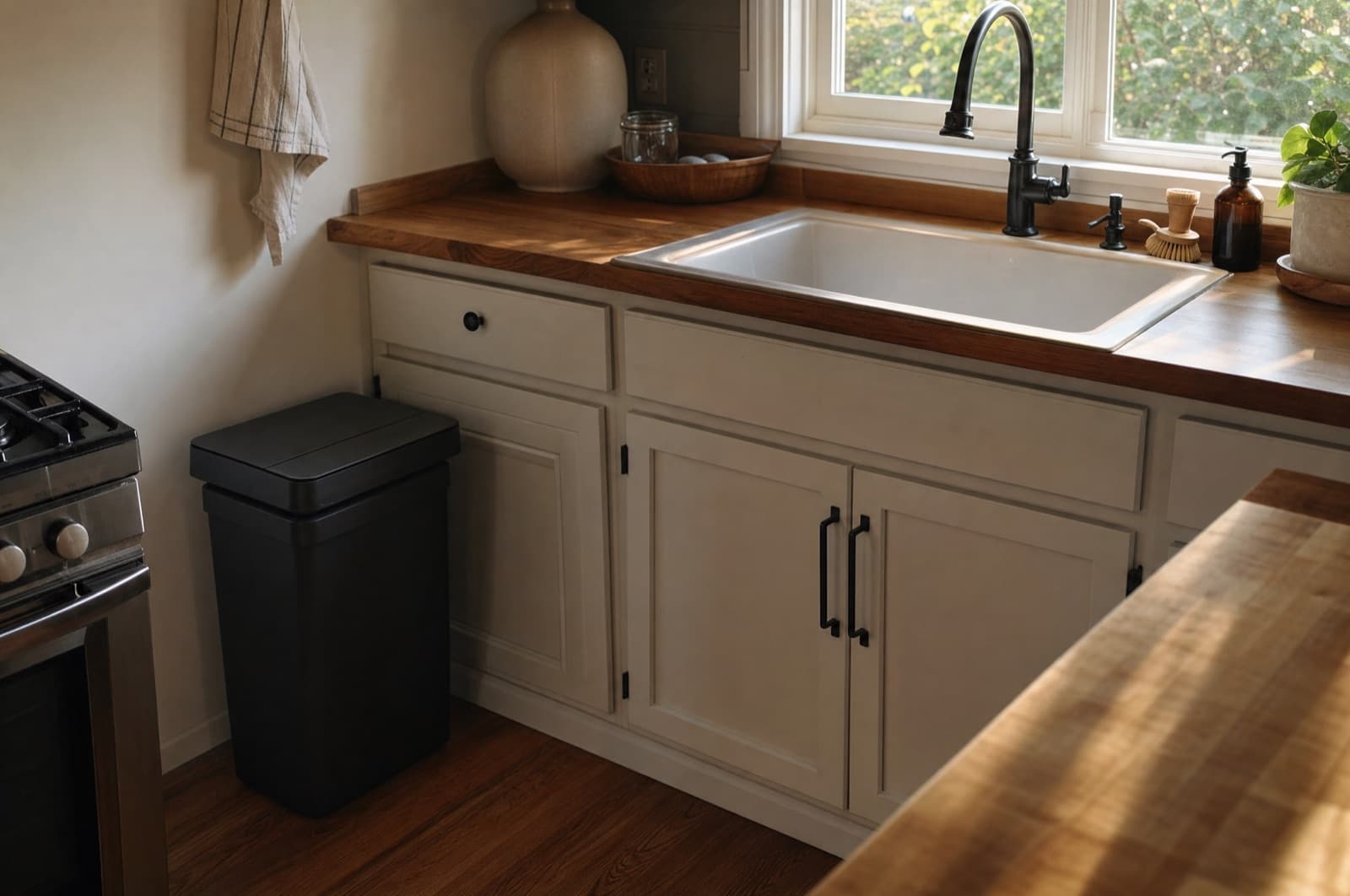
Why Does It Smell Like Rotten Meat or Spoiled Food in My House?
If the smell traces to the fridge, trash, or disposal, it's almost certainly spoiled food — the cheapest and fastest thing to check first. If it's a genuine rotten-meat smell that isn't traceable to the kitchen, and instead is localized to a wall, ceiling, or blasting from vents, a dead rodent or other animal decomposing somewhere out of sight is the most likely cause. The one distinction that matters most: a rotten-*egg* or sulfur smell is not the same as rotten meat. That can be sewer gas from a dry drain trap (a plumbing nuisance) or, less commonly but seriously, a natural-gas leak — and a gassy, spreading rotten-egg smell should be treated as a possible leak rather than assumed to be food or a dead animal.
Before you start opening walls, check the kitchen — spoiled food, a full trash can, or a garbage disposal with trapped debris is the fastest, cheapest thing to rule out, and it's genuinely the most common cause of a rotten smell. But there's one distinction worth making before anything else: a rotten-*egg* smell is different from rotten meat, and it can mean something more serious than food or even a dead animal. This page walks through both branches.
At a Glance
- Diagnosing: Rotten meat / spoiled food smell
- Top cause: Decay / Food
- Safety: A real hazard may apply — read the red band below
Spoiled food, garbage, or a disposal if it traces to the kitchen; a dead animal in a wall, duct, or crawl space if it doesn't.
Ranked causes — and how to tell them apart
Like a doctor's differential: the candidate causes for this smell, ranked most-likely first, each with the tell-tale sign that distinguishes it and who actually fixes it.
- Most likelyDecay / Food
Spoiled food, garbage, or a garbage disposal
How to tell it's this
Traces directly to the fridge, trash, or disposal; worsens when the disposal runs; clears when the source is removed.
Who fixes itYou can handle itCheapest and fastest thing to check first.
- Most likelyPest
Dead animal in a wall, duct, or crawl space
How to tell it's this
Sickly-sweet-then-rotting odor not traceable to the kitchen, localized to one spot or blasting from vents when the blower runs; blow flies may appear.
Who fixes itPest → AnchorSee the dead-animal page for the full decomposition timeline.
- PossiblePlumbing / Sewer
Sewer gas from a dry or biofilm-coated drain trap
How to tell it's this
Rotten-egg/sulfur from a specific drain; a dry-trap smell clears within minutes of running water, while a biofilm smell returns and worsens when the drain is agitated.
Who fixes itPlumberRefill the trap first; call a plumber if it's biofilm, a vent, or a line issue.
- PossibleGas
Natural-gas leak
How to tell it's this
Rotten-egg smell (added mercaptan), often with a hissing sound, that's gassy and spreading rather than tied to one drain.
Who fixes itGas utilityRule this out first if the smell isn't clearly a drain issue — leave and call the utility.
- Less likelyPest
Dead pests in bulk (e.g., a die-off of overwintering insects, a treated nest)
How to tell it's this
Faint rot in an attic or wall following a large insect die-off, rather than a single carcass.
Who fixes itPest → AnchorLocate and remove the concentration; enzymatic cleanup if needed.
What each clue points to
Notice one of these and you can narrow the differential fast.
- Pest
If you notice: Rotten-meat smell, not traceable to the kitchen, localized to a wall or blasting from vents
A dead animal decomposing out of sight — see the dead-animal page.
- Plumbing / Sewer
If you notice: Rotten-egg smell from a specific drain, clears fast when you run water
A dry P-trap — refill it and monitor.
- Gas
If you notice: Rotten-egg smell that's gassy, spreading, possibly with a hiss
A possible natural-gas leak — leave and call the utility or 911, don't investigate further.
- Decay / Food
If you notice: Smell only from the disposal, and only when it runs
Trapped food debris in the disposal — clean it out.
How Anchor finds and fixes it
Once food and drains are ruled out and the smell is confirmed to be decay rather than gas, here's how Anchor locates and removes the source:
Localize the source
Trace the odor gradient along baseboards and stud bays, watch for blow-fly activity, and check for fluid staining on drywall or ceilings to narrow down the location before opening anything.
Confirm with tools, then open the void
A borescope or thermal camera confirms the exact spot; a controlled cut is made at that location, large enough to reach the carcass or nest.
Remove and disinfect
The carcass, nest, or dead-pest concentration is removed; following CDC rodent-cleanup practice, contaminated material is dampened with disinfectant, never dry-vacuumed or swept, then wiped and bagged.
Enzymatic cleanup
Enzyme-based cleaners break down residual odor compounds on porous surfaces where fluids soaked in.
Seal entry points
Find and close the gaps that let the animal or pests in, so the same thing doesn't happen again.
Once a confirmed decay source is removed and the area is cleaned, odor typically clears over several days to about two weeks with ventilation.
Ruled out food and gas, and it's still rotten?
Anchor's NH technicians locate and remove the dead-animal or dead-pest source and do enzymatic cleanup. Free inspection, same-day service.
Who to call for the other causes
The honest routing: when the smell points somewhere other than a pest, here's the right trade and the conservative next step.
- You can handle it
The smell clearly traces to the kitchen — fridge, trash, or disposal
Toss spoiled food, empty the trash, and clean out the disposal; the smell should clear once the source is gone.
- Plumber
The smell is rotten-egg from a specific, seldom-used drain
Refill the drain's trap with a quart of water; if the smell persists or returns, call a licensed plumber to check for a biofilm, vent, or line issue.
Why dry-trap smells spike in NH winters
Sewer traps in seldom-used basement or guest-bathroom drains dry out quickly during New Hampshire's dry-heat winter months, which is why a sudden rotten-egg smell in a Merrimack or Strafford County home is often just a dry P-trap — refilled and gone in minutes. Still, treat any gassy or spreading version of that smell as a possible leak until your gas utility clears it, rather than assuming it's the trap.
NH-licensed applicator #782664 (NHDAMF, RSA 430) · NEPMA member · family-owned since 2017.
Frequently asked
Sources(3)
- [1]CDC — Clean Up and Prevent Rodent Infestations
Disinfect-before-cleanup protocol for decay/rodent contamination
gov - [2]CDC/ATSDR — Hydrogen Sulfide ToxFAQs
Rotten-egg odor at low levels; olfactory fatigue with continued exposure
gov - [3]Liberty Utilities (NH) — Natural Gas Safety
Leave and call the utility/911 if you smell gas indoors
utility
Written & reviewed by
VerifiedDaniel Brady
NH-Licensed Pesticide Applicator · License #782664 (NHDAMF, RSA 430)
Daniel Brady is the New Hampshire–licensed applicator behind Anchor Pest Services, a family-owned pest control company serving the Manchester area since 2017.
Last updated 2026-07-14
Odor-Source Diagnosis & Removal
Rule Out Food and Gas First — Then We'll Find the Rest
A rotten smell that isn't from your kitchen, and isn't a gas leak, is usually a dead animal somewhere out of sight. Anchor Pest Services locates it, removes it, and cleans up, across southern and central New Hampshire. Family-owned since 2017, NH license #782664.
- Honest gas-leak and drain-trap ruling-out first
- Thermal + borescope source location
- CDC-aligned cleanup + enzymatic odor removal
NH License #782664 · No obligation · We answer in person
Your next step
- Related guide
What Is That Smell in My Walls or Ceiling?
Read the answer - Related guide
Dead Animal Smell in Your House: How to Find It and Get Rid of It
Read the answer - Related guide
Why Does It Smell After Pest Treatment? What's Normal and What's Not
Read the answer - Related guide
What Is That Smell Outside My Home? Yard, Porch & Outdoor Odors Explained
Read the answer - Related guide
Why Does My Garage Smell Bad? Common Causes and Solutions
Read the answer