
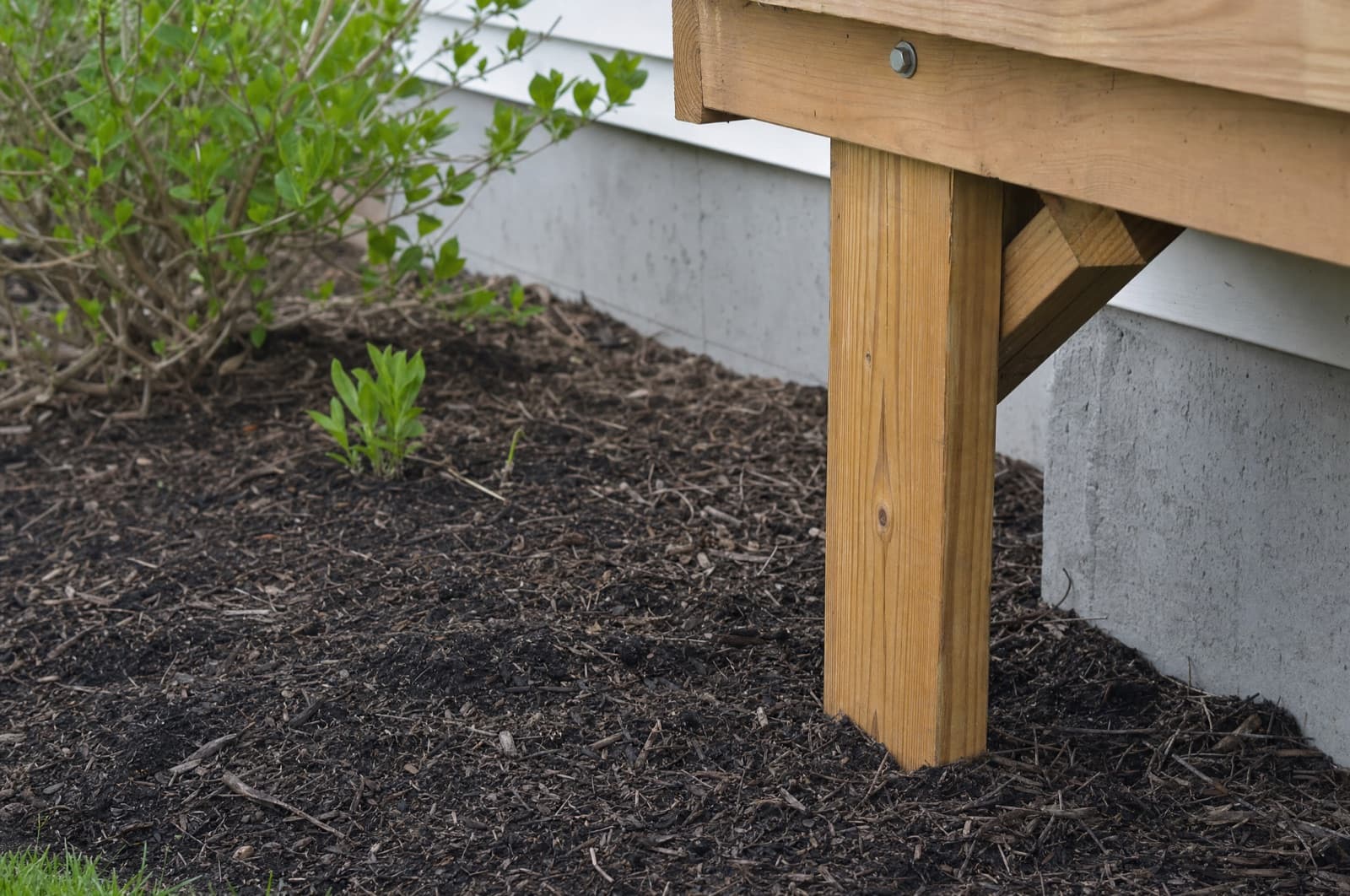
How to Prevent Termites in Fence Posts and Wooden Privacy Fences
This is a genuine risk with an honest severity note: a fence line is almost always intentional, permanent wood-in-soil, so it's a legitimate feeder site for a yard colony — but a fence fully detached from the house is a low structural threat on its own.
Real where posts sit in wet soil, but it mainly matters where the fence physically ties into the house, a deck, or an attached structure. A detached fence line rarely warrants urgent action.
At a glance
- What it is: Real termite risk
- The driver: Fence posts buried by design in soil
- Who fixes it: You can handle this
This is a genuine risk with an honest severity note: a fence line is almost always intentional, permanent wood-in-soil, so it's a legitimate feeder site for a yard colony — but a fence fully detached from the house is a low structural threat on its own.
Real where posts sit in wet soil, but it mainly matters where the fence physically ties into the house, a deck, or an attached structure. A detached fence line rarely warrants urgent action.
Pull the right lever, not the sprayer
The organism is downstream of one condition. Remove that condition and it has no foothold — which is why prevention here is rarely a pesticide.
The driver
Fence posts buried by design in soil
Fence posts are buried in soil by design, giving a colony continuous, moist, hidden access to cellulose. Extension resources name posts and attached fences as recognized wood-to-ground contact points, and untreated posts set directly in soil are considered a high risk for termite activity.
Source:Mississippi State University Extension— Methods of Termite Control
3 levers, honestly ranked
Sorted by what actually moves the driver — primary first, theatre last. Effort is graded so you know what's a five-minute fix and what's a real project.
- Primary — moves the driverWeekend project
Use ground-contact-rated posts or non-wood posts, and keep the fence structurally separate from the house
Posts destined for soil must be rated for ground contact, or better, use metal or concrete posts with wood panels held above grade. The single biggest risk reducer for the house itself is making sure the fence does not physically connect to house framing, a deck, or an attached structure, so that a fence-line colony cannot bridge into the building. Remember pressure treatment is not immunity — the buried cut end is still the weak point.
- SupportingWeekend project
Set posts to shed water, not hold it
Set posts so water drains away rather than pooling in the post hole, and avoid burying untreated wood, form boards, or scrap material in the fence line. Persistently wet post bases are what let a colony persist there long-term rather than pass through.
- SupportingQuick DIY
Keep the fence-to-house junction inspectable
Where a fence meets the house, keep a visible gap and clear vegetation so mud tubes are detectable; don't let the fence trap mulch or debris against the siding at that connection point.
Whose job is this, really?
Who actually fixes it
You can handle this
Post selection and setting are largely a homeowner or general contractor job; a building or moisture professional can help if regrading around post holes is needed. For the house itself, a fully detached fence with no active signs needs no action at all.
The fence connects to the house or deck AND you find mud tubes, hollow posts, or swarmers — then call a licensed pest professional.
How this calibrates for NH
Fence posts rot readily in New Hampshire's wet soils and freeze-thaw cycles, and decay shares the same wet-soil driver as subterranean termite activity. Detached fences remain a low structural risk at this latitude, where the Eastern subterranean termite sits near the northern edge of its persistent range.
NH-licensed applicator #782664 (NHDAMF, RSA 430) · NEPMA member · family-owned since 2017.
Frequently asked
Sources(4)
- [1]Mississippi State University Extension
Methods of Termite Control
- [2]UF/IFAS Extension
ENY-2044/IN1277: Termite Prevention and Control
- [3]University of Kentucky Entomology
ENT-605: Protecting Your Home Against Termites
- [4]Ask Extension (national Extension Q&A)
Detached wood structures with termite activity and no structural connection
Written & reviewed by
VerifiedDaniel Brady
NH-Licensed Pesticide Applicator · License #782664 (NHDAMF, RSA 430)
Daniel Brady is the New Hampshire–licensed applicator behind Anchor Pest Services, a family-owned pest control company serving the Manchester area since 2017.
Your next step
- termite-mite-prevention-guides
Preventing termites in landscape timbers and garden beds near a home
Read the answer - termite-mite-prevention-guides
Preventing termites in pergolas, gazebos, and outdoor wood structures
Read the answer - termite-mite-prevention-guides
What to check if mud tubes appear on a foundation wall
Read the answer - faq-pest-damage-and-risks
Can termites or ants damage fences or sheds?
Read the answer
Anchor Pest Services
Have a different pest question?
This one may not be a pesticide job — but if you're facing something that is, we serve Southern New Hampshire with a free inspection and same-day service.
- NH-licensed applicator
- Same-day service
- Pet & family-conscious
NH License #782664 · No obligation · We answer in person