
How to Prevent Termites in Pergolas, Gazebos, and Other Outdoor Wood Structures
This is a genuine risk — pergolas, gazebos, and arbors are permanent structures whose posts are typically set at or in grade, which is the same wood-to-soil vulnerability seen on decks and fences.
Real but generally low structural risk, since these structures are usually freestanding. It matters much more if the structure is attached to, or shares footings with, the house.
At a glance
- What it is: Real termite risk
- The driver: Post bases set at or in grade
- Who fixes it: You can handle this
This is a genuine risk — pergolas, gazebos, and arbors are permanent structures whose posts are typically set at or in grade, which is the same wood-to-soil vulnerability seen on decks and fences.
Real but generally low structural risk, since these structures are usually freestanding. It matters much more if the structure is attached to, or shares footings with, the house.
Pull the right lever, not the sprayer
The organism is downstream of one condition. Remove that condition and it has no foothold — which is why prevention here is rarely a pesticide.
The driver
Post bases set at or in grade
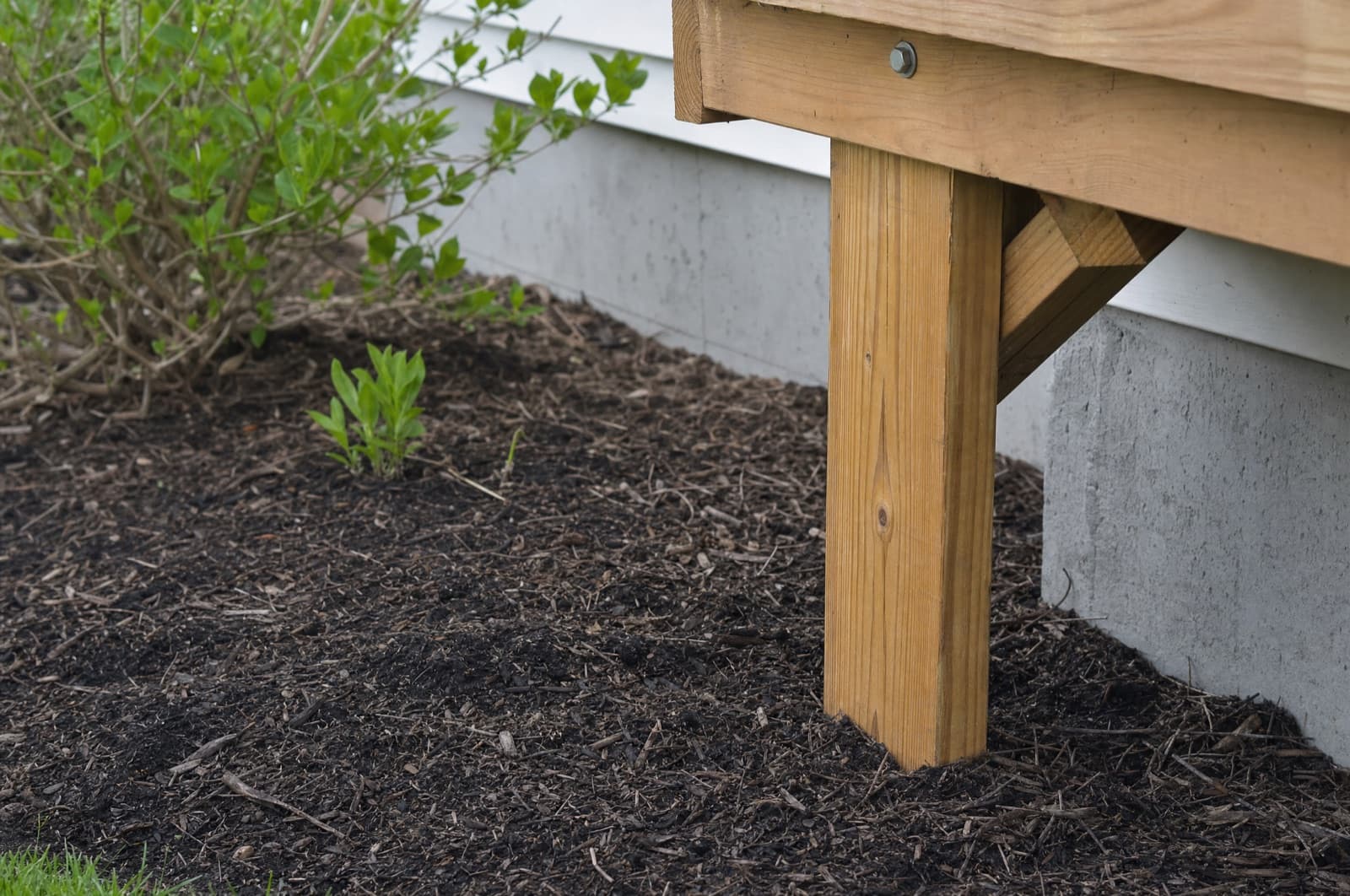
Like decks and fences, the vulnerability is at the post base in soil — a moist, shaded, uninspected junction that gives foraging termites hidden entry into the structure's wood. Extension resources list posts and outdoor wood construction generally among the highest-risk ground-contact points around a home.
Source:Mississippi State University Extension— Methods of Termite Control
3 levers, honestly ranked
Sorted by what actually moves the driver — primary first, theatre last. Effort is graded so you know what's a five-minute fix and what's a real project.
- Primary — moves the driverWeekend project
Elevate posts on footings or anchors above grade
Set posts on concrete footings or metal standoff post bases so the wood stays above soil; do not bury untreated posts or rely on pressure treatment alone at the buried cut end. This removes the wood-to-soil bridge that is the entire driver of risk for this type of structure.
- SupportingQuick DIY
Keep the structure detached from the house and its base clear
If the structure is freestanding, keep it that way so any post-base colony cannot bridge into the house; clear leaf litter, stored wood, and dense vegetation from the base so the posts stay dry and easy to inspect.
- OptionalWeekend project
Choose durable materials and re-seal exposed wood
Composite or naturally durable, ground-contact-rated members, plus maintained sealant, slow decay and reduce the wood's appeal to moisture-seeking pests. Treat this as a decay-and-maintenance benefit, not termite immunity — it doesn't replace elevating the posts.
Whose job is this, really?
Who actually fixes it
You can handle this
Clearing debris and vegetation around the base is homeowner-level; setting posts on proper footings or anchors is best handled by a building or moisture professional, especially for an existing structure being retrofitted.
You find mud tubes on posts, hollow post bases, or the structure ties into the house and shows activity — call a licensed pest professional. A fully detached structure with no signs needs no action.
How this calibrates for NH
Freestanding garden structures are low structural risk at New Hampshire's latitude, where the Eastern subterranean termite sits near the northern edge of its persistent range; the fix is the same cheap wood-off-soil detailing used successfully for decks and fences.
NH-licensed applicator #782664 (NHDAMF, RSA 430) · NEPMA member · family-owned since 2017.
Frequently asked
Sources(3)
- [1]Mississippi State University Extension
Methods of Termite Control
- [2]University of Kentucky Entomology
ENT-605: Protecting Your Home Against Termites
- [3]Building America Solution Center (DOE/PNNL)
Termite-Resistant Foundations and Walls
Written & reviewed by
VerifiedDaniel Brady
NH-Licensed Pesticide Applicator · License #782664 (NHDAMF, RSA 430)
Daniel Brady is the New Hampshire–licensed applicator behind Anchor Pest Services, a family-owned pest control company serving the Manchester area since 2017.
Your next step
- termite-mite-prevention-guides
Preventing termites in a wooden deck attached to a house
Read the answer - termite-mite-prevention-guides
Preventing termites in fence posts and wooden privacy fences
Read the answer - termite-mite-prevention-guides
Preventing termites in wooden stairs and stringers near ground level
Read the answer - faq-pest-damage-and-risks
Can termites or ants damage fences or sheds?
Read the answer
Anchor Pest Services
Have a different pest question?
This one may not be a pesticide job — but if you're facing something that is, we serve Southern New Hampshire with a free inspection and same-day service.
- NH-licensed applicator
- Same-day service
- Pet & family-conscious
NH License #782664 · No obligation · We answer in person