
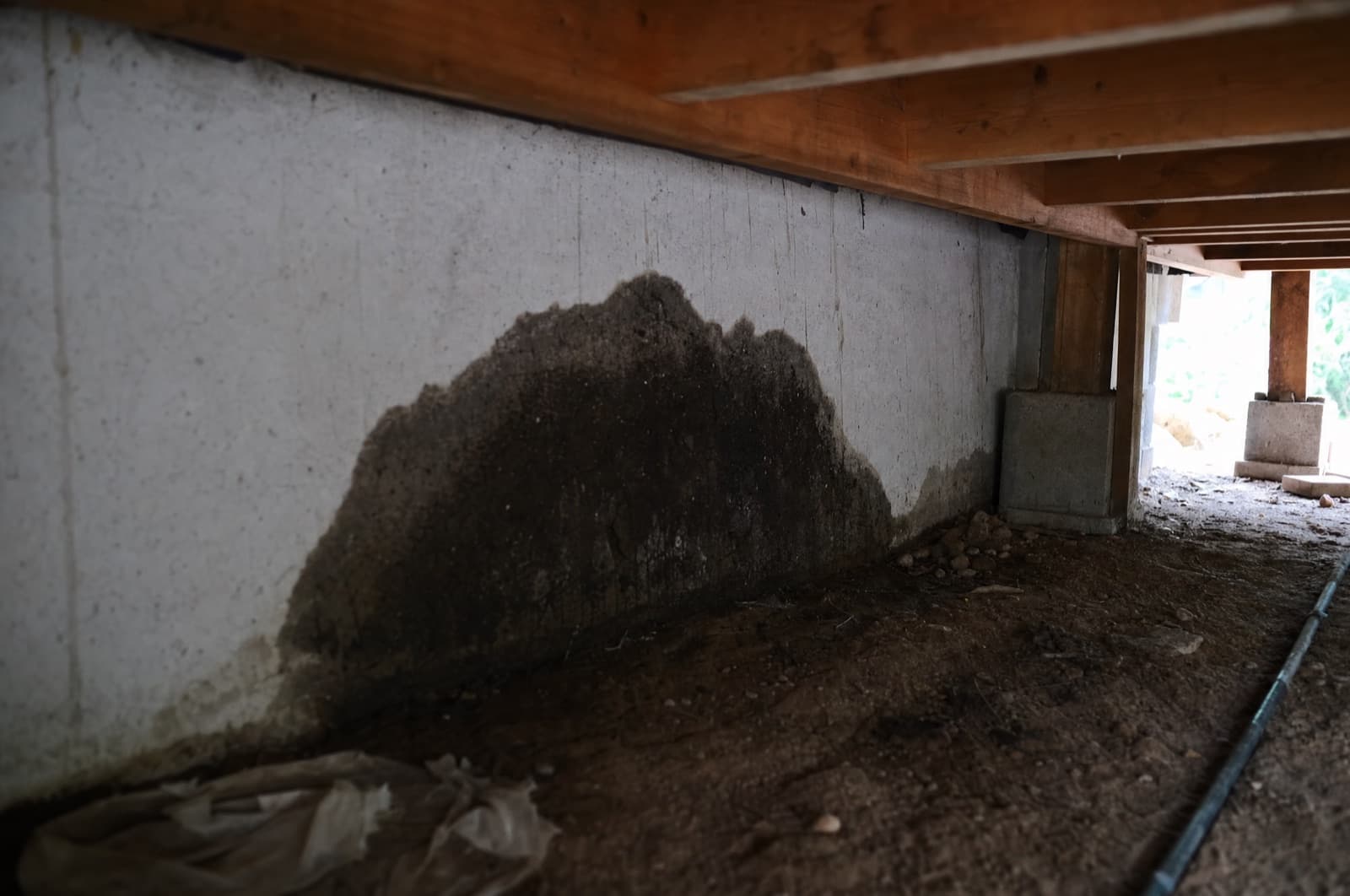
Why Does Termite Activity Increase After Heavy Rain or Flooding?
Heavy rain and flooding genuinely correlate with more visible termite activity — chiefly swarming and expanded foraging — because they relieve the moisture constraint that otherwise limits these desiccation-prone insects.
Rain makes existing activity more apparent and conditions more favorable; it does not conjure termites out of nowhere where a colony, moisture, and a wood route don't already exist.
At a glance
- What it is: Real termite risk
- The driver: Moisture
- Who fixes it: A moisture or building pro
Heavy rain and flooding genuinely correlate with more visible termite activity — chiefly swarming and expanded foraging — because they relieve the moisture constraint that otherwise limits these desiccation-prone insects.
Rain makes existing activity more apparent and conditions more favorable; it does not conjure termites out of nowhere where a colony, moisture, and a wood route don't already exist.
Pull the right lever, not the sprayer
The organism is downstream of one condition. Remove that condition and it has no foothold — which is why prevention here is rarely a pesticide.
The driver
Moisture
Rain saturates soil, raises humidity, and softens ground — all of which reduce the desiccation risk that otherwise confines subterranean termites to deeper, drier-safe soil, cueing mature colonies to release winged reproductives and letting workers forage closer to the surface.
Source:University of Kentucky Entomology— ENTFACT-604: Termite Control — Answers for Homeowners (M. Potter)
4 levers, honestly ranked
Sorted by what actually moves the driver — primary first, theatre last. Effort is graded so you know what's a five-minute fix and what's a real project.
- Primary — moves the driverWeekend project
Fix drainage and grading so water leaves the foundation
Before and after heavy rain, make sure gutters, downspouts, splash blocks, and the grading around your home's perimeter move water decisively away from the foundation. Eliminate pooling and any chronic wet zone hugging the wall. This directly removes the post-rain moisture surplus that makes the site attractive and lets termites forage nearer the surface than they otherwise would.
- Primary — moves the driverWeekend project
Dry out crawl spaces and basements promptly
After flooding or a heavy rain event, ventilate and dry any crawl space or basement, add or repair a vapor barrier, and replace any water-saturated wood or cardboard debris — that debris is both food and a moisture source in one.
- SupportingQuick DIY
Watch for post-rain swarms and mud tubes
Inspect the foundation, sills, and window areas during the warm days following spring rains for swarmers, shed wings, and fresh mud tubes. Document what you find and identify it correctly rather than assuming the worst.
- OptionalQuick DIY
Reduce night lighting during wet, warm swarm windows
Dim or redirect exterior lights near doors and windows during the periods when swarms are likely, since swarmers are drawn to light and this reduces how many are pulled toward the house.
Whose job is this, really?
Who actually fixes it
A moisture or building pro
You can't control the rain, but where that water goes afterward is a fixable drainage and building issue — grading, gutters, and crawl-space drying are the actual lever. A pest professional's role is confirming and treating activity if a post-rain inspection turns up a swarm or new mud tubes.
Swarmers emerge indoors or at the foundation after a rain event, or new mud tubes appear — both call for a professional termite inspection.
How this calibrates for NH
New Hampshire's spring rains coincide with the March-through-May Eastern subterranean termite swarm window, and because NH sits near the species' cold-limited northern range edge, activity is seasonally compressed and concentrated in southern and central NH. A post-rain swarm or fresh mud tube near the foundation in that part of the state is worth a prompt inspection.
NH-licensed applicator #782664 (NHDAMF, RSA 430) · NEPMA member · family-owned since 2017.
Frequently asked
Sources(3)
- [1]University of Kentucky Entomology
ENTFACT-604: Termite Control — Answers for Homeowners
- [2]NC State Extension
Monitoring and Management of Eastern Subterranean Termites
- [3]Mississippi State University Extension
Protect Your House from Termites — desiccation vulnerability
Written & reviewed by
VerifiedDaniel Brady
NH-Licensed Pesticide Applicator · License #782664 (NHDAMF, RSA 430)
Daniel Brady is the New Hampshire–licensed applicator behind Anchor Pest Services, a family-owned pest control company serving the Manchester area since 2017.
Your next step
- termite-mite-prevention-guides
Why termite activity increases near leaking outdoor faucets
Read the answer - termite-mite-prevention-guides
What to check if mud tubes appear on a foundation wall
Read the answer - termite-mite-prevention-guides
Preventing termites around downspouts and poor drainage
Read the answer - faq-pest-damage-and-risks
Do termites really eat wood inside houses?
Read the answer
Anchor Pest Services
Have a different pest question?
This one may not be a pesticide job — but if you're facing something that is, we serve Southern New Hampshire with a free inspection and same-day service.
- NH-licensed applicator
- Same-day service
- Pet & family-conscious
NH License #782664 · No obligation · We answer in person