
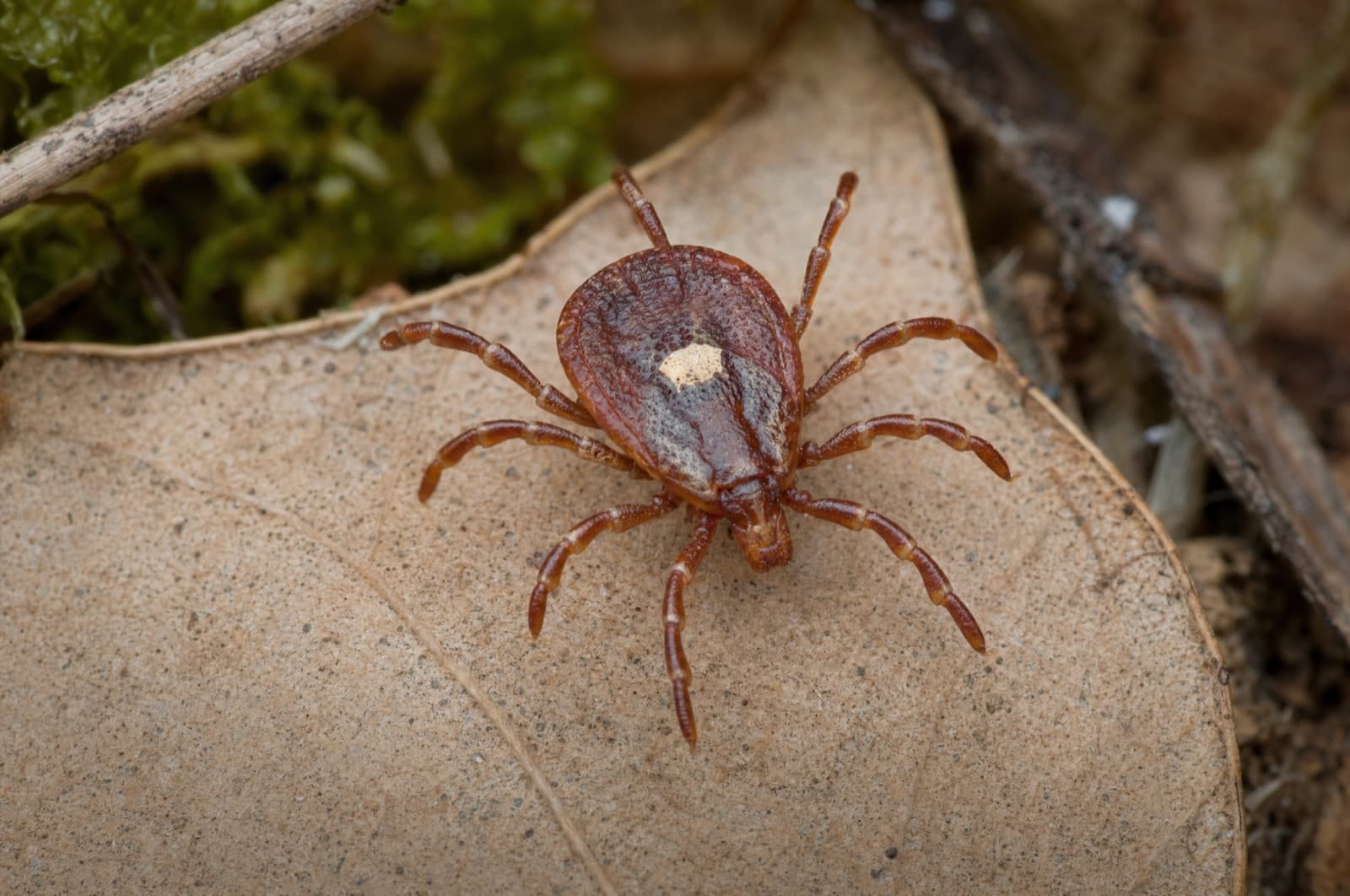
How to Get Rid of Lone Star Ticks
At a glance
- Difficulty: Advanced
- Time: Ongoing through the active season — repellent application and tick checks after every outdoor exposure
- Cost: Low for personal protection (repellents, treated clothing); moderate if adding yard management
- Success: Good for personal protection with consistent habits; lower for full property-wide suppression without professional help
Can you DIY Lone Star Tick?
The verdict on Lone Star Tick DIY
Personal protection is genuinely DIY — but this is a range-expanding tick with a health risk you should not underestimate.
The lone star tick (Amblyomma americanum) is an aggressive, actively-questing human-biter that CDC confirmed present in NH as of 2020, and UNH Extension's diagnostic program now considers it established in at least Merrimack County. It doesn't transmit Lyme disease, but it's a documented vector of ehrlichiosis, tularemia, and STARI, and its bite is linked to alpha-gal syndrome — a real, growing, sometimes serious red-meat allergy. Personal protection, tick checks, and correct removal are DIY-friendly; suppressing an established population across your whole property is harder to do well yourself.
The 5 DIY methods — honestly graded
Every approach graded for this species, in IPM order — prevention first, chemistry late. Pick a method to see how it works, the steps, and what it actually takes.
Prevention / Exclusion
Works wellHabitat and clothing measures reliably cut exposure — the highest-value, most DIY-friendly track for this species.
Lone star ticks quest from vegetation at ground level to about knee height, so denying them a path onto skin and reducing the habitat where they wait for a host both meaningfully lower your risk.
Best for: Every household in a wooded or brushy NH property
Dress to block access
Wear light-colored clothing (ticks show up easier) and tuck pants into socks before hiking, gardening, or working in brush or tall grass.
Manage the yard
Mow lawns regularly, prune shrubs for airflow, clear leaf litter, and build an 18-24 inch mulch or gravel barrier between lawn and woods to slow tick movement into the yard.
Check yourself and pets
Do a full-body tick check immediately after coming indoors — lone star ticks quest aggressively and are easy to pick up without noticing.
Tools & materials
Why DIY falls short here
Not scare tactics — the specific, proportionate reasons a home attempt can stall for this species.
Aggressive questing catches people off guard
Lone star ticks actively pursue hosts rather than waiting passively for one to brush by, so casual precautions (staying on trails, avoiding brush) are less protective against this species than against others.
Alpha-gal symptoms are easy to misattribute
Delayed allergic reactions to red meat hours after a bite are easily mistaken for something else entirely, delaying the medical diagnosis needed to confirm and manage alpha-gal syndrome.
Property-wide suppression outpaces DIY spraying
Broadcast yard spraying is easy to under-apply, mistime, or miss the tick-favored edges where questing actually happens — a correctly-timed professional perimeter treatment performs more reliably.
How risky is it, really?
An honest read — most nuisance species are genuinely low risk, and we say so.
This risk is correctly elevated, not fear-mongering. The lone star tick does not transmit Lyme disease, but it is a documented vector of ehrlichiosis, tularemia, and STARI, and its bite is linked to alpha-gal syndrome — a real, growing, and potentially serious red-meat and dairy allergy. This should not be graded as a low-risk nuisance.
- EhrlichiosisOccasional
NH's ehrlichiosis cases (28 total 2010–2014) have historically been mostly travel-associated rather than locally acquired, per UNH Extension
UNH Extension
- Alpha-gal syndrome (red-meat/dairy allergy)Occasional
Documented and growing, but not a universal outcome of a bite — real and potentially serious for those affected; NH has only recently begun tracking AGS case reports
NNEPC; Dartmouth Health
- STARI (Southern Tick-Associated Rash Illness)Occasional
Generally milder than Lyme disease
Seacoast Gardener
Recurring Tick Encounters on Your Property?
The lone star tick is expanding into New Hampshire, and yard-wide suppression is harder to DIY than personal protection. Anchor applies correctly-timed perimeter treatment across southern and central New Hampshire. Family-owned since 2017, NH license #782664.
Call a pro when…
- Recurring tick encounters on your own property despite personal protection
- A confirmed lone star tick population on a wooded or brushy lot
- You want a correctly-timed perimeter acaricide treatment rather than DIY broadcast spraying
General Pest Control
Personal protection and tick checks are genuinely yours to own, but suppressing an established lone star tick population across your whole property is where professional help meaningfully outperforms DIY.
Keep them out
- Maintain a mulch or gravel barrier between lawn and woods
- Keep grass mowed and leaf litter cleared through the season
- Do a full-body tick check after every outdoor exposure
Lone star ticks in New Hampshire
The lone star tick's historical range was the Mid-Atlantic and South, with a northern limit around southern New Jersey — but CDC confirmed its presence in NH as of 2020, and UNH Extension's tick-diagnostic program now considers it established in at least Merrimack County, with encounters still far less common than deer or dog ticks. Documented breeding populations have expanded through southern New England in recent years, so range expansion into NH is real and ongoing, not a one-time detection.
Peak season
Spring through fall, peaking in warmer months when nymphs and adults are most active
Make sure it's a Lone Star Tick
Two quick detours worth taking — confirm the ID, then learn what drew it in so it doesn't come back.
Frequently asked
Sources & further reading(4)
- [1]
- [2]UNH Extension — Tick Talk (2026)
Merrimack County establishment, prevalence vs. other ticks
extensionverified 2026-07-13 - [3]NNEPC — Tick Risks in Northern New England
Alpha-gal syndrome, ehrlichiosis, STARI
medicalverified 2026-07-13 - [4]
Written & reviewed by
VerifiedDaniel Brady
NH-Licensed Pesticide Applicator · License #782664 (NHDAMF, RSA 430)
Daniel Brady is the New Hampshire–licensed applicator behind Anchor Pest Services, a family-owned pest control company serving the Manchester area since 2017.
Last updated July 2026
Other species you can tackle
Same category — the dot shows each one's DIY verdict at a glance (green = friendly, amber = doable with care, red = call a pro).
Professional Pest Control
Recurring Tick Encounters on Your Property?
The lone star tick is expanding into New Hampshire, and yard-wide suppression is harder to DIY than personal protection. Anchor applies correctly-timed perimeter treatment across southern and central New Hampshire. Family-owned since 2017, NH license #782664.
- Correctly-timed perimeter tick treatment
- NH-licensed applicators (#782664)
- Free inspection — same-day service across southern NH
NH License #782664 · No obligation · We answer in person
Your next step
- Book a NH pro
Tick Control
Book now - What to do next
Lone Star Tick in NH: Range-Expanding & Alpha-Gal
Read the answer - What to do next
Can Ticks Survive Indoors?
Read the answer - Also relevant
Lone Star Tick in NH: Range-Expanding & Alpha-Gal
Read the answer - Also relevant
Tick Prevention in NH: Tickscaping + Personal Protection
Read the answer - Also relevant
What Attracts Lone Star Ticks to Your House?
Read the answer