
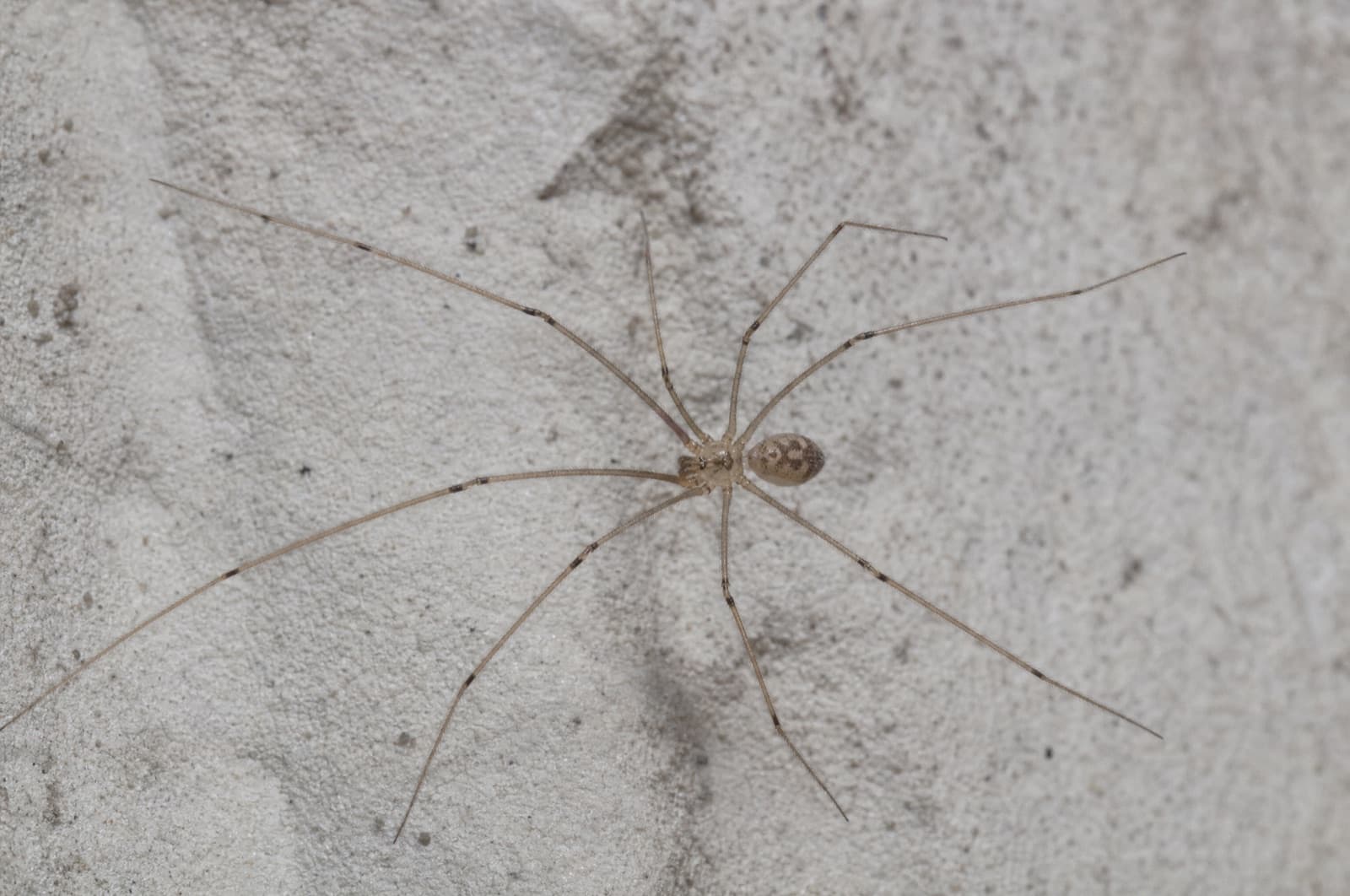
What Attracts Cellar Spiders to Your House?
At a glance
- Short answer: Cellar spiders want a quiet corner and something to eat — nothing else is going on.
- The verdict: The usual four
The attractant verdict
Four possible answers to why this species turned up. Three stay unlit — and that's the argument: the honest answer could have been any of them, and for this species it wasn't.
This is the most common answer in this hub — an answer, not a shortfall.
Cellar spiders want a quiet corner and something to eat — nothing else is going on.
Our own previous page said cellar spiders are attracted ‘primarily for two main reasons: food and shelter’ — accurate, and we're keeping it.
A dark, quiet, rarely-disturbed space — a basement corner, a garage ceiling, a crawlspace joist — where a loose web can hang undisturbed and catch whatever small flying or crawling insects wander through. Cellar spiders build a web and wait; they don't hunt or forage toward a house.
“Nothing about a cellar spider is special. It wants a quiet corner and something to eat, and a basement ceiling gives it both.”
Why it's here, in full
Why food and a quiet corner are the whole story
Cellar spiders build loose, irregular webs in dark, undisturbed places and simply wait for flying or crawling insects to blunder in, which is why basements, garages, crawlspaces, and quiet closet corners suit them so well — those spaces combine shelter from disturbance with a steady trickle of prey. They don't forage the way hunting spiders do, and they don't seek out a house for any reason beyond those two things. A cellar spider showing up is a sign that a corner of the house has gone undisturbed long enough, and has enough small insects passing through, to be worth building a web in — nothing more specific than that.
How to tell it's actually this species
Real signs only — a species with four honest tells gets four, and stops. Where a sign is weak on its own, we say so.
Loose, irregular, dusty webs in basement or garage corners, rarely repaired or rebuilt
The web's resident shaking or vibrating rapidly when the web is touched or disturbed
Could be something else: Other web-building spiders can also vibrate defensively; this alone doesn't confirm which species.
Small, dead insects — flies, mosquitoes, even other spiders — accumulating in an undisturbed web
Want cellar spiders gone?
This page only answers why it's here. Every removal step for this exact species — what to seal, what to set, what actually works — lives on its own dedicated guide.
Two questions, two pages
Here: why it turned up at all — the honest answer, blame removed.
There: the step-by-step removal guide for this exact species.
Already dealing with cellar spider?
This page is about why it's there. Getting rid of it is covered at /top-diy-methods/cellar-spider.
Frequently asked
Sources(2)
- [1]Penn State Extension — Longbodied Cellar Spider
Cellar spider habitat (cellars, garages, dark protected spots) and web-building behavior
extensionverified 2026-07-17 - [2]Clemson HGIC — Cellar Spiders
Cellar spider prey capture and harmless status
extensionverified 2026-07-17
Written & reviewed by
VerifiedDaniel Brady
NH-Licensed Pesticide Applicator · License #782664 (NHDAMF, RSA 430)
Daniel Brady is the New Hampshire–licensed applicator behind Anchor Pest Services, a family-owned pest control company serving the Manchester area since 2017.
Last updated Jul 2026
Food, water, warmth, shelter — the usual four
If it's already inside, we handle the rest
Same-day inspections across southern and central New Hampshire.
- Family-owned in Manchester since 2017
- NH commercial applicator #782664, category F1
- We will tell you when the answer is do nothing
NH License #782664 · No obligation · We answer in person