
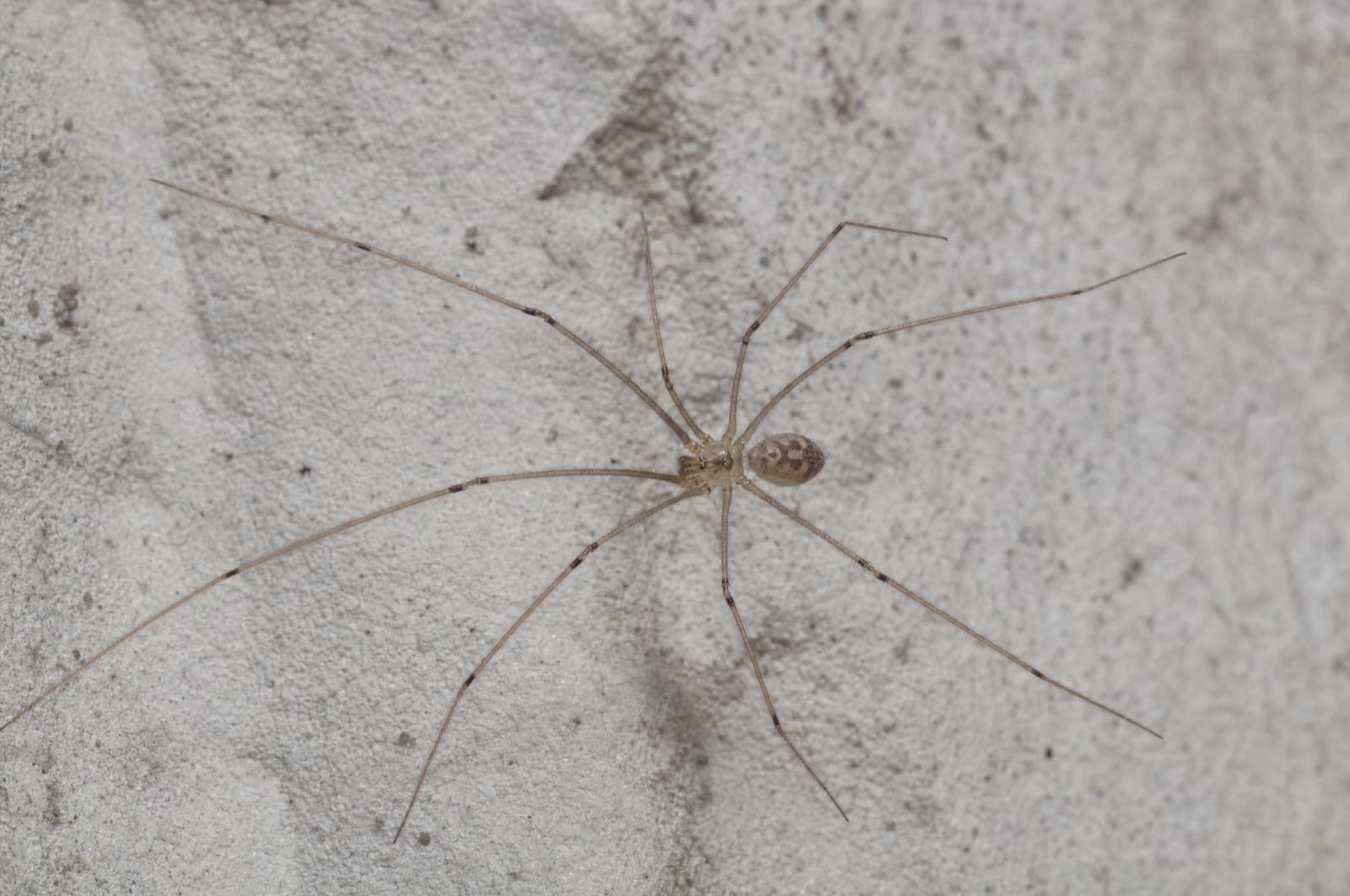
How to Get Rid of Cellar Spiders
At a glance
- Difficulty: Beginner
- Time: An hour for an initial sweep; ongoing as webs reappear
- Cost: Low — a duster or vacuum, maybe a dehumidifier
- Success: High — web removal and dehumidifying reliably clears them out
Can you DIY Cellar Spider?
The verdict on Cellar Spider DIY
A basic beginner job — and the famous 'world's most venomous spider' urban legend about them is false.
Cellar spiders (family Pholcidae, sometimes called 'daddy longlegs' spiders) are the long-legged web-builders you find in basements, corners, and crawl spaces. The widespread claim that they're 'the most venomous spider in the world, but their fangs are too short to bite humans' is false on both counts, according to spider expert Rick Vetter (UC Riverside) — there's no toxicology showing unusually potent venom, and no scientific basis for the fangs-too-short claim either. What's actually true: there's no reference to a pholcid bite causing any detrimental reaction in a human. They're harmless, and the whole job is web and egg-sac removal plus drying out the damp spots that draw them.
The 5 DIY methods — honestly graded
Every approach graded for this species, in IPM order — prevention first, chemistry late. Pick a method to see how it works, the steps, and what it actually takes.
Prevention / Exclusion
Works wellReducing basement and crawl-space humidity removes the conditions cellar spiders need to thrive.
Cellar spiders favor dark, damp, undisturbed spaces. Lowering humidity and sealing entry points removes both the environment they like and the route new spiders use to get in.
Best for: Stopping webs from reappearing in the same damp corner
Dehumidify damp spaces
Run a dehumidifier in basements and crawl spaces to bring humidity down; fix any leaks or standing moisture.
Seal entry points
Caulk foundation cracks and gaps around basement windows and utility penetrations.
Tools & materials
Why DIY falls short here
Not scare tactics — the specific, proportionate reasons a home attempt can stall for this species.
Damp basements keep drawing them back
Without addressing humidity and reducing the small insects they hunt, new webs reappear in the same spots even after a thorough cleanout.
Myth-driven overreaction
The false 'most venomous spider' legend leads some homeowners to reach for chemicals out of fear, which is unnecessary for a species with no documented harmful bites.
How risky is it, really?
An honest read — most nuisance species are genuinely low risk, and we say so.
Cellar spiders are harmless. The famous urban legend that they're 'the world's most venomous spider, but their fangs are too short to bite' is false on both counts, according to arachnologist Rick Vetter (UC Riverside) — there's no toxicological evidence of unusually potent venom, and no scientific basis for the fangs claim either (they have short fangs, but so does the brown recluse, which obviously can bite). What's actually documented: no reference to a pholcid bite ever causing a detrimental reaction in a human.
- BiteRare
Cellar spiders can bite, but there is no reference to a pholcid bite causing any detrimental reaction in a human — genuinely harmless
UC Riverside Spider Research
- "Most venomous spider in the world" mythCommon
No toxicological studies show cellar-spider venom is unusually potent; a documented mouse test found black-widow venom far more potent by comparison
UC Riverside Entomology
- Cosmetic web buildup in damp areasCommon
The actual nuisance is webbing, not any health risk — resolved with routine removal and dehumidifying
Burke Museum
Cobwebs Keep Coming Back? Fix the Root Cause.
Cellar spiders are harmless, but a persistently damp basement will keep drawing them in. Anchor Pest Services can inspect and address the underlying moisture and clutter issues across southern and central New Hampshire. Family-owned since 2017, NH license #782664.
Call a pro when…
- A chronically damp basement or crawl space that keeps drawing webs back despite dehumidifying
- You want a broader moisture and pest inspection as part of general home maintenance
General Pest Control
A pro is rarely needed for cellar spiders — this is one of the most genuinely low-stakes DIY jobs in the hub. Consider one only if a persistently damp basement or crawl space needs a bigger moisture fix than a dehumidifier can handle.
Keep them out
- Run a dehumidifier in basements and crawl spaces during humid months
- Do a periodic sweep for webs and egg sacs
- Seal foundation cracks and basement window gaps
Cellar spiders in New Hampshire
Cellar spiders are common in New Hampshire basements, crawl spaces, and other damp, undisturbed corners year-round, with webbing most noticeable in late summer and fall. Humidity control matters most in the humid summer months, while a fall cleanout ahead of the first hard frost, about October 19–29 in Manchester (NOAA), keeps webbing from accumulating over winter.
Peak season
Summer through fall, in damp basements and crawl spaces
First-frost anchor
Manchester first hard frost ~Oct 19 (50%) / Oct 29 (80%), NOAA 1991–2020
Make sure it's a Cellar Spider
Two quick detours worth taking — confirm the ID, then learn what drew it in so it doesn't come back.
Frequently asked
Sources & further reading(3)
- [1]UC Riverside Spider Research — Daddy Long-Legs
No documented detrimental bite reaction in humans
academicverified 2026-07-13 - [2]UC Riverside Entomology — Are Daddy Longlegs Really the Most Venomous Spiders in the World?
Myth-busting the venom and fang-length claims
academicverified 2026-07-13 - [3]
Written & reviewed by
VerifiedDaniel Brady
NH-Licensed Pesticide Applicator · License #782664 (NHDAMF, RSA 430)
Daniel Brady is the New Hampshire–licensed applicator behind Anchor Pest Services, a family-owned pest control company serving the Manchester area since 2017.
Last updated July 2026
Other species you can tackle
Same category — the dot shows each one's DIY verdict at a glance (green = friendly, amber = doable with care, red = call a pro).
Professional Pest Control
Cobwebs Keep Coming Back? Fix the Root Cause.
Cellar spiders are harmless, but a persistently damp basement will keep drawing them in. Anchor Pest Services can inspect and address the underlying moisture and clutter issues across southern and central New Hampshire. Family-owned since 2017, NH license #782664.
- Moisture-and-clutter root-cause inspection
- NH-licensed applicators (#782664)
- Free inspection — same-day service across southern NH
NH License #782664 · No obligation · We answer in person
Your next step
- Book a NH pro
Spider Control in New Hampshire
Spider sightings peak in fall. We treat hiding spots and seal the gaps they use.
Book now - What to do next
Cellar Spider (Daddy-Long-Legs) in NH: ID & Control
Read the answer - Also relevant
What Attracts Cellar Spiders to Your House?
Read the answer - Also relevant
When Are Spiders Most Active in the House? NH Spider Guide
Read the answer - Related guide
How to Get Rid of House Spiders
Read the answer