
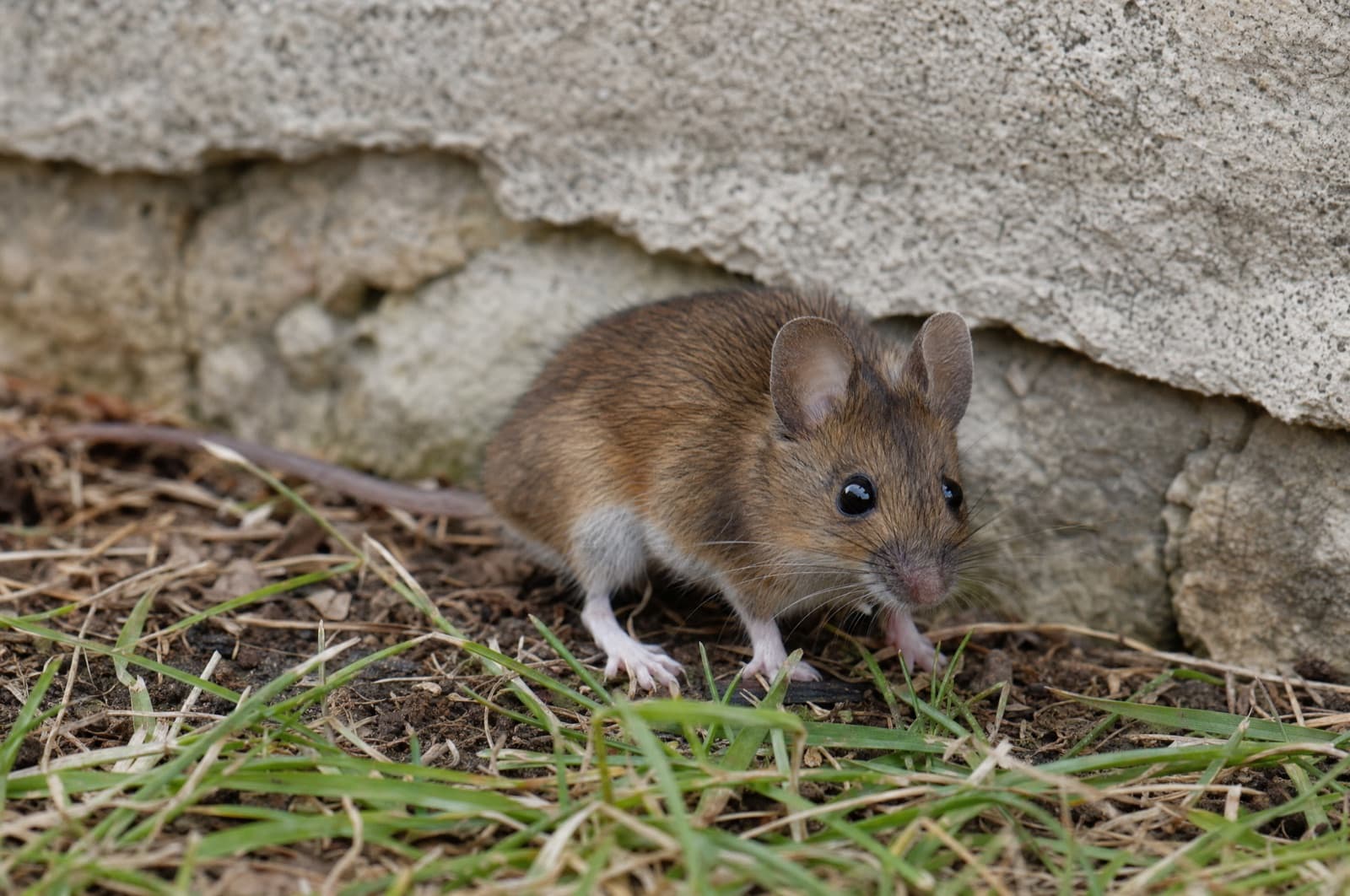
What Attracts Field Mouse to Your House?
At a glance
- Short answer: Field mice want food, shelter, and warmth — the same as almost every small rodent.
- The verdict: The usual four
The attractant verdict
Four possible answers to why this species turned up. Three stay unlit — and that's the argument: the honest answer could have been any of them, and for this species it wasn't.
This is the most common answer in this hub — an answer, not a shortfall.
Field mice want food, shelter, and warmth — the same as almost every small rodent.
Our own previous page said field mice are attracted mainly by ‘food sources, shelter, and warmth’ — accurate, and we're keeping it, while handing the food-ranking detail to our sibling page.
A gap, crack, or threshold offering entry, plus the shelter and warmth a structure provides once outdoor temperatures drop, plus any accessible food nearby — stored grain, pet food, birdseed, or garden produce. Field mice are primarily an outdoor field-and-hedgerow species, so a house at a field's edge is simply within normal range.
“Nothing about a field mouse is special. It wants food, shelter, and warmth — and a gap at a field's edge gave it a way to all three.”
Why it's here, in full
Why food, shelter, and warmth are the whole story — and where the food detail actually lives
Field mice live in fields, hedgerows, and grassy edges for most of the year, and they move toward and into structures for the same reasons most small rodents do: a gap or crack offers entry, the space provides shelter and warmth as outdoor temperatures fall, and accessible food nearby makes staying worthwhile. None of that is unique to this species. The specific, more useful question — which foods actually draw mice and rats indoors, ranked by what attracts them most — is already answered in depth at /mice-and-rats-faq, which owns that question; this page's job is only to confirm that field mice fit the ordinary pattern.
How to tell it's actually this species
Real signs only — a species with four honest tells gets four, and stops. Where a sign is weak on its own, we say so.
Small, dark, rice-grain-sized droppings along baseboards, in drawers, or near stored food
Could be something else: Droppings alone don't reliably distinguish field mice from house mice or other small rodents.
Fresh gnaw marks on stored packaging, wood trim, or wiring
A shredded-material nest tucked into an undisturbed corner of a garage, shed, or wall void
Rustling or scratching sounds in walls or storage areas, mostly after dark
Could be something else: Similar sounds can come from other small rodents or even settling structures.
Want field mouse gone?
This page only answers why it's here. Every removal step for this exact species — what to seal, what to set, what actually works — lives on its own dedicated guide.
Two questions, two pages
Here: why it turned up at all — the honest answer, blame removed.
There: the step-by-step removal guide for this exact species.
Already dealing with field mouse?
This page is about why it's there. Getting rid of it is covered at /top-diy-methods/field-mouse.
Frequently asked
Sources(2)
- [1]CDC — About Hantavirus
Wild mice as potential hantavirus carriers and seasonal movement into structures
govverified 2026-07-17 - [2]UC Statewide IPM Program — Deer Mouse
Wild-mouse entry into structures for food, shelter, and nesting material as temperatures fall
extensionverified 2026-07-17
Written & reviewed by
VerifiedDaniel Brady
NH-Licensed Pesticide Applicator · License #782664 (NHDAMF, RSA 430)
Daniel Brady is the New Hampshire–licensed applicator behind Anchor Pest Services, a family-owned pest control company serving the Manchester area since 2017.
Last updated Jul 2026
Food, water, warmth, shelter — the usual four
If it's already inside, we handle the rest
Same-day inspections across southern and central New Hampshire.
- Family-owned in Manchester since 2017
- NH commercial applicator #782664, category F1
- We will tell you when the answer is do nothing
NH License #782664 · No obligation · We answer in person