
What Attracts Yellow Sac Spiders to Your House?
At a glance
- Short answer: Prey and shelter — nothing about yellow sac spiders is special
- The verdict: The usual four
The attractant verdict
Four possible answers to why this species turned up. Three stay unlit — and that's the argument: the honest answer could have been any of them, and for this species it wasn't.
This is the most common answer in this hub — an answer, not a shortfall.
Prey and shelter — nothing about yellow sac spiders is special
Our own old page said yellow sac spiders are "attracted to places where" certain conditions exist — worded to sound specific, but the underlying reasons are the ordinary ones: insect prey to hunt and a quiet corner to build a resting sac in.
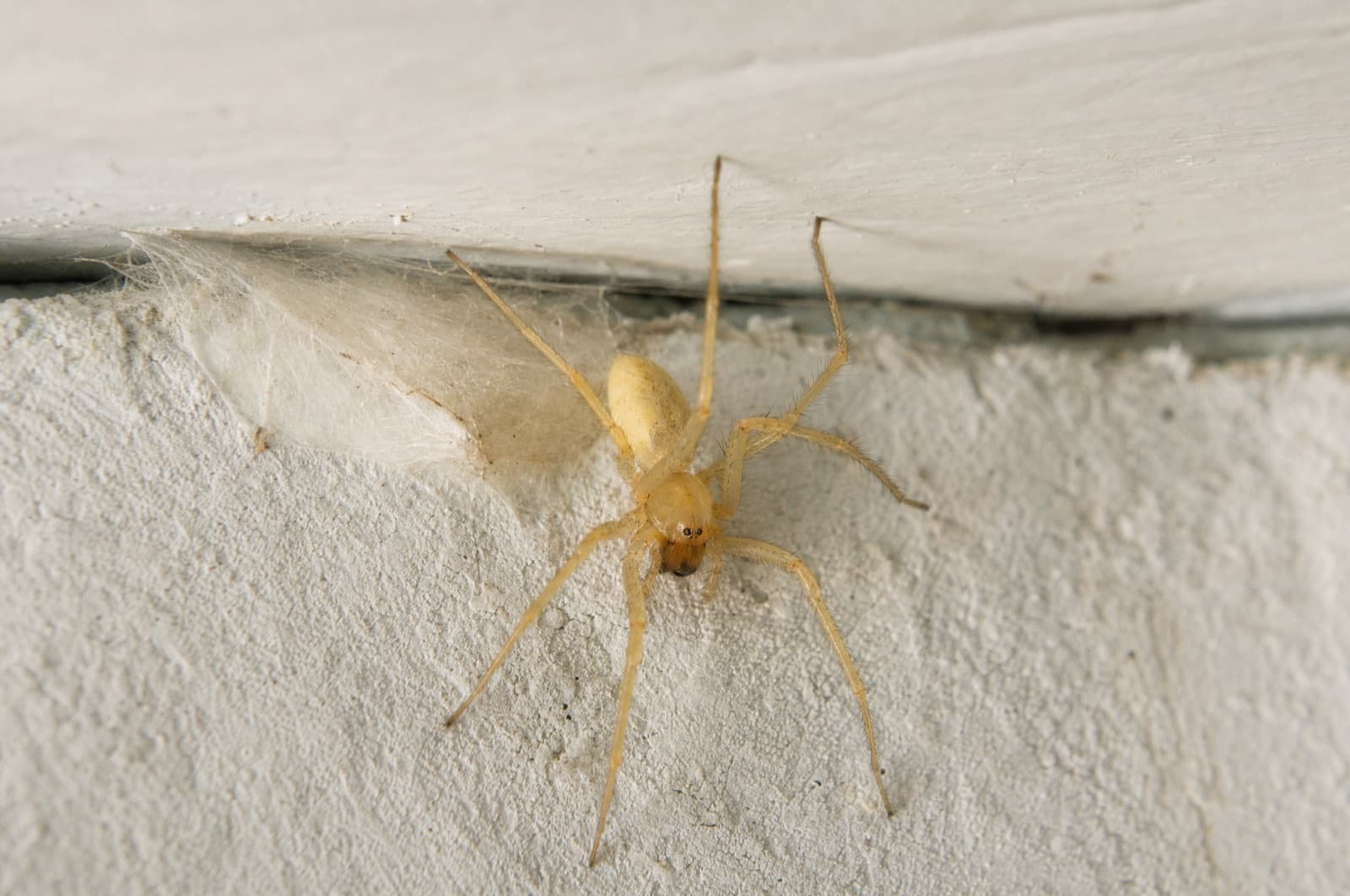
Small insect prey to hunt at night, and an undisturbed corner — often where a wall meets a ceiling, or behind a picture frame — to spin a silk sac and rest in during the day. One of the two yellow sac spider species found in North America lays its eggs almost exclusively indoors, which is why it's especially comfortable living in structures year-round.
“Prey and shelter — the same two things that attract almost every spider. Nothing about a yellow sac spider is special, and that's the honest answer.”
Why it's here, in full
Why there's no special story here
Yellow sac spiders hunt actively at night rather than sitting in a web, then retreat during the day into a small silken sac tucked into a shielded corner — commonly where a wall meets the ceiling, or behind a picture frame. One of the two species found in North America is unusually well adapted to structures and lays eggs almost entirely indoors, which is why it's one of the more commonly encountered spiders in a house across all seasons.
What draws it in is still just prey and shelter: insects to hunt overnight, and an undisturbed spot to rest during the day. Reducing other insect activity indoors is the only thing that meaningfully changes how attractive a space is.
How to tell it's actually this species
Real signs only — a species with four honest tells gets four, and stops. Where a sign is weak on its own, we say so.
A small silken tube or sac tucked where a wall meets the ceiling, in a corner, or behind a picture frame
A pale yellow or light green spider seen at night, when it's most active hunting
A mild, stinging bite with brief redness and swelling
Could be something else: Similar mild skin reactions can come from a number of other insects and irritants, so a bite alone doesn't confirm this species.
Want yellow sac spider gone?
This page only answers why it's here. Every removal step for this exact species — what to seal, what to set, what actually works — lives on its own dedicated guide.
Two questions, two pages
Here: why it turned up at all — the honest answer, blame removed.
There: the step-by-step removal guide for this exact species.
Key takeaways
- Yellow sac spiders hunt insect prey at night and rest in a silk sac by day, often at wall-ceiling corners.
- One of the two North American species is unusually well suited to living indoors year-round.
- Bites cause mild, localized symptoms and are not considered medically significant for most people.
- Removal steps live at /top-diy-methods/yellow-sac-spider.
Want it gone, not just explained?
This page is about why yellow sac spiders show up. Removal is covered at /top-diy-methods/yellow-sac-spider.
Frequently asked
Sources(2)
- [1]Michigan State University Extension — Yellow Sac Spiders
Yellow sac spiders rest in silken sacs in shielded corners by day and hunt insect prey at night; one species breeds almost exclusively indoors
extensionverified 2026-07-17 - [2]UC Statewide IPM Program — Spiders
Indoor spider presence tracks insect prey and shelter availability rather than household food
extensionverified 2026-07-17
Written & reviewed by
VerifiedDaniel Brady
NH-Licensed Pesticide Applicator · License #782664 (NHDAMF, RSA 430)
Daniel Brady is the New Hampshire–licensed applicator behind Anchor Pest Services, a family-owned pest control company serving the Manchester area since 2017.
Last updated Jul 2026
Prey and shelter — nothing unusual here
If spiders are already established, we handle the rest
Same-day inspections across southern and central New Hampshire.
- Family-owned in Manchester since 2017
- NH commercial applicator #782664, category F1
- We will tell you when the answer is do nothing
NH License #782664 · No obligation · We answer in person
Your next step
- What to do next
Yellow Sac Spider in NH: ID, Bite & When to Worry
Read the answer - Also relevant
How to Get Rid of House Spiders
Read the answer - Also relevant
When Are Spiders Most Active in the House? NH Spider Guide
Read the answer - Also relevant
Mechanical Spider Control: Web Removal That Actually Works
Read the answer - Related guide
Are Yellow Jackets Dangerous? Risk Assessment for NH Adults, Kids & Pets
Read the answer